Revision
Introduction
Definitions
One Health
The health of people is intricately connected to the health of animals and our shared environment.
The protection of one aspect of health simultaneously benefits the others.
"When we protect one, we help protect all."
Zoonotic Diseases
Diseases that can be transmitted between animals and humans. This is the case for more than half of all infections spread between human and animal
Antibiotic Resistance
The capability of bacteria to withstand the effects of antibiotics.
Food Safety and Security
Ensuring food is safe for consumption and secure from hazards.
Vector-borne Diseases
Diseases transmitted by vectors such as mosquitoes and ticks.
Environmental Health
The branch of public health concerned with all aspects of the natural and built environment affecting human health.
Chronic Diseases
Long-lasting diseases that can be controlled but not cured, such as diabetes and heart disease.
Mental Health
The psychological state of someone regarding their emotional well-being.
Occupational Health
The branch of healthcare that focuses on the safety, health, and welfare of people at work.
Zoonosis
An infectious disease that has jumped from animals to humans.
Collaboration
Working jointly across fields or with others to address issues or achieve common goals.
Global
Relating to situations or concerns that encompass the entire world.
Climate
The long-term weather patterns and typical atmospheric conditions in an area.
Biodiversity
The variety of life forms and the ecological roles they play in ecosystems.
Fluidity
The quality of being smooth, adaptable, and easily changeable.
Control
The power to influence or direct people's behaviour or the course of events; in disease, often refers to measures to reduce incidence or prevalence.
Surveillance
The close observation of a group or area, especially to monitor for the occurrence of disease or other health threats.
Module Assessments
Assessment Type:
Written Report Based on Practical’s: 2500 words / 50% of the total grade / Friday 21st November
End of Module Assessment: Take Home Assessment / 50% of Modules Total Grade / Friday 12th December / Question 1 = Essay Question / Question 2 = Data Analysis
Timetable Overview
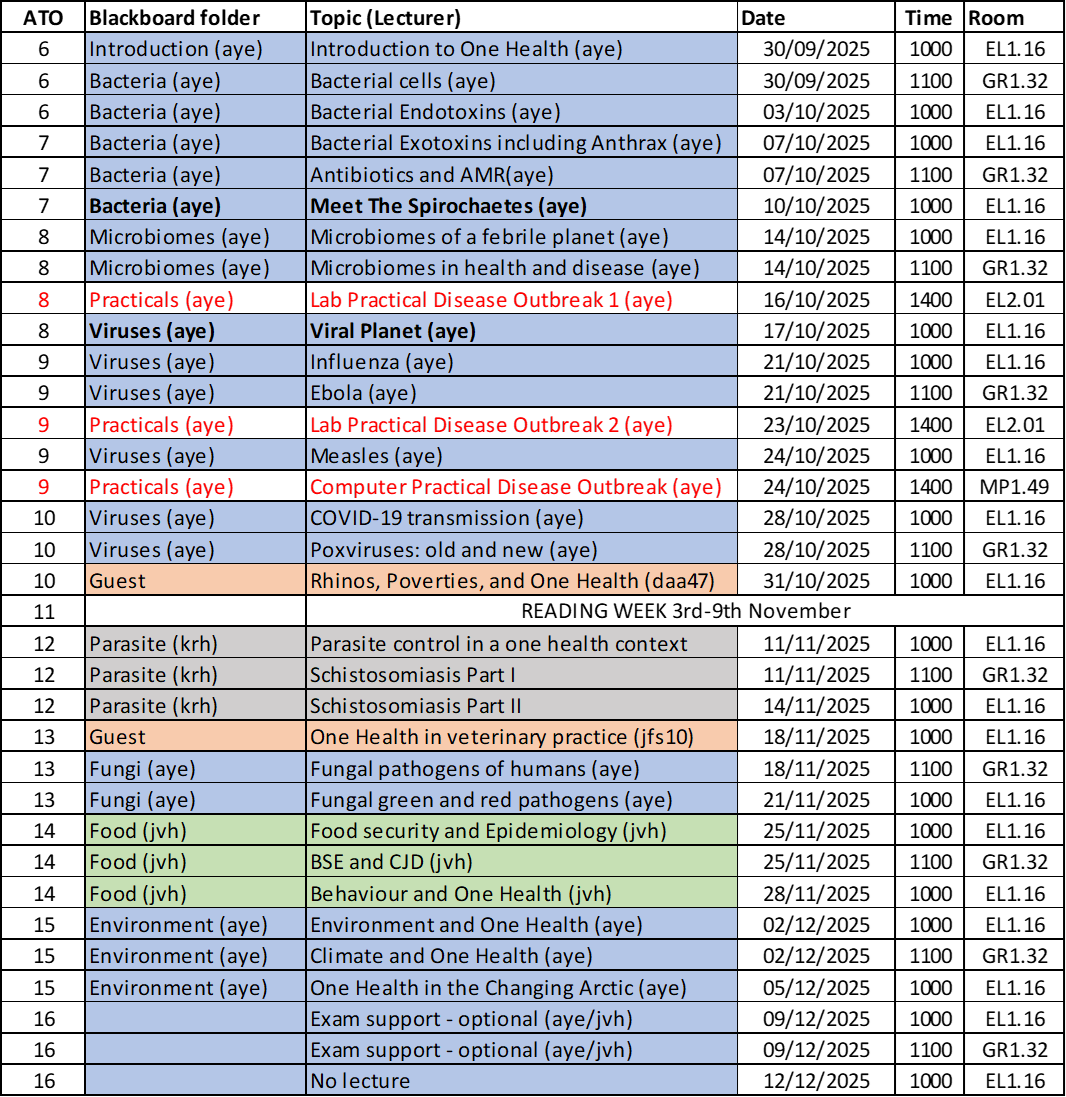
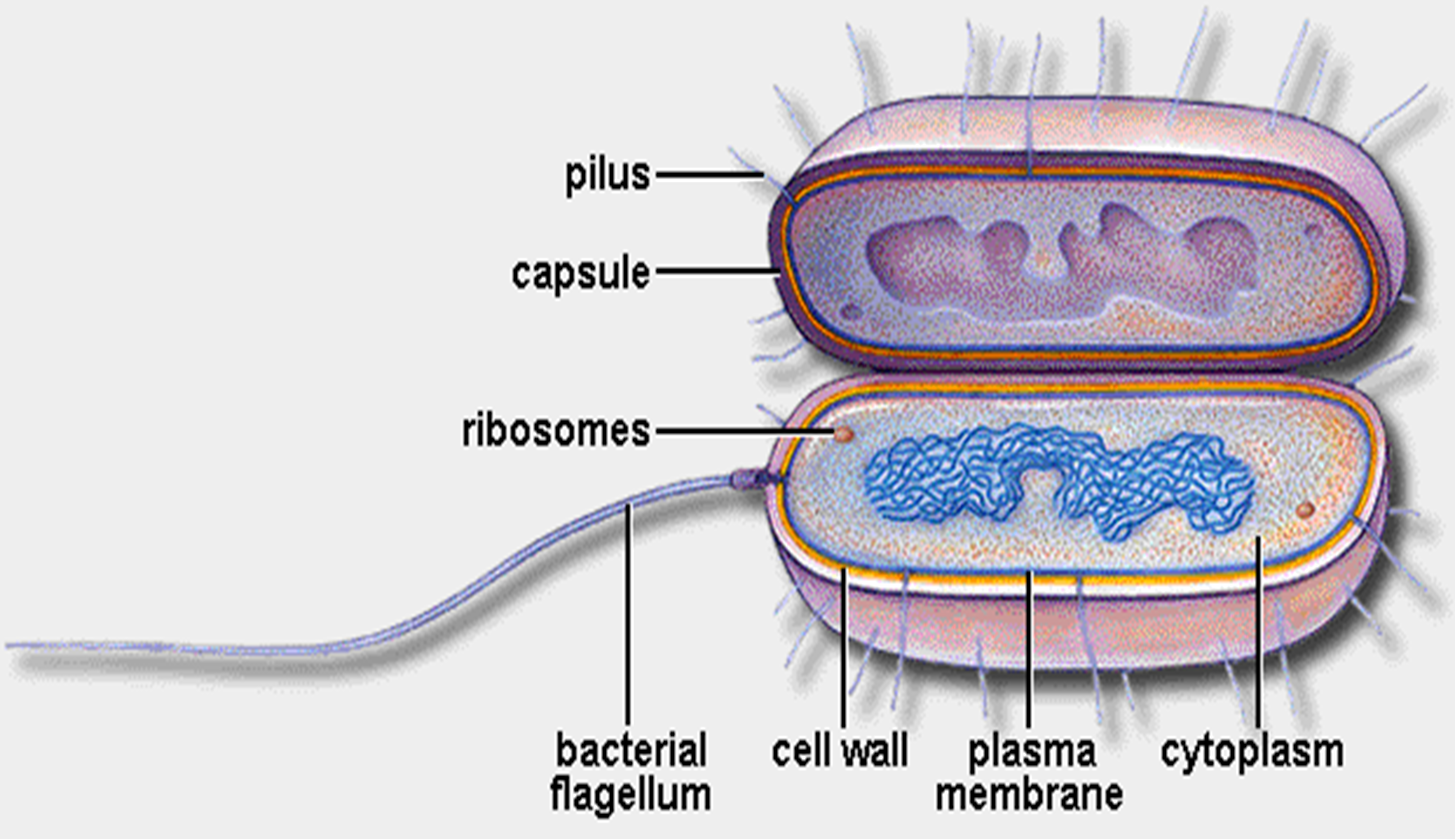
Bacteria Cells
Prokaryotes and Eukaryotes

Bacteria
Structure
Haploid
circular DNA chromosome
Nucleoid but no membrane bound organelle
Reproduction
Binary fusion
DNA replication and new membrane and cell wall is formed
Ribosomal RNA (rRNA)
A molecule in a cell that forms part of the protein synthesis organelle
It is a major structural component of ribosomes
Bacterial rRNA subunits
16s rRNA forms 30s ribosomes
23s / 5s forms 50s ribosomes
Eukaryotic rRNA subunits
18s rRNA forms 40s ribosomes
28s / 5s / 5.8s form 50s ribosomes
Cell walls of Eukaryotes
May have no cell wall
May have a cell wall composed of cellulose or chitin
Typically composed of one ingredient
Cell wall of Bacteria
Not all have cell walls but 90% do
complex structure with multiple ingredients
Typically two types : Gram Positive and Gram Negative
Both contain peptidoglycan ( also known as murein )
Peptidoglycan / Murein
Is a polysaccharide made up of 2 glucose derivatives alternated in long chains
N - acetylglucosamine ( NAG )
N - acetylmuramic acid ( NAM )
Monomer connect by beta 1,4 glycoside bond
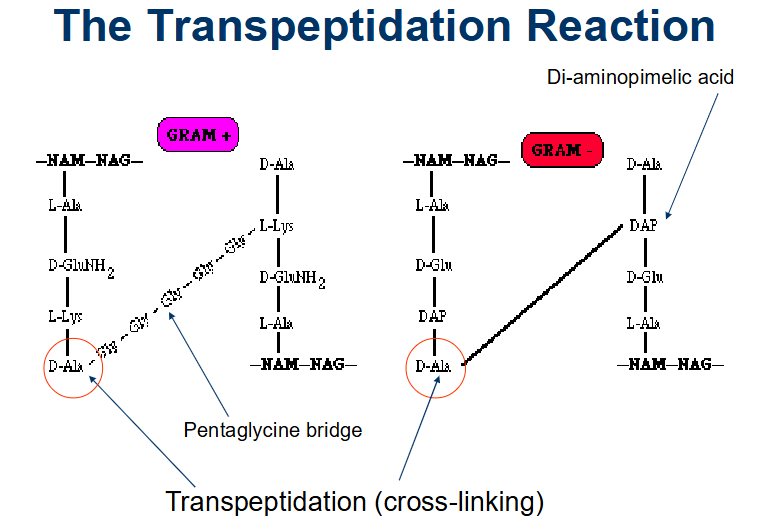
These chains are cross linked with each other by tetrapeptide extended off NAM
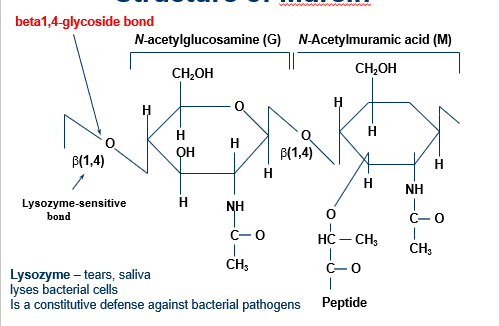
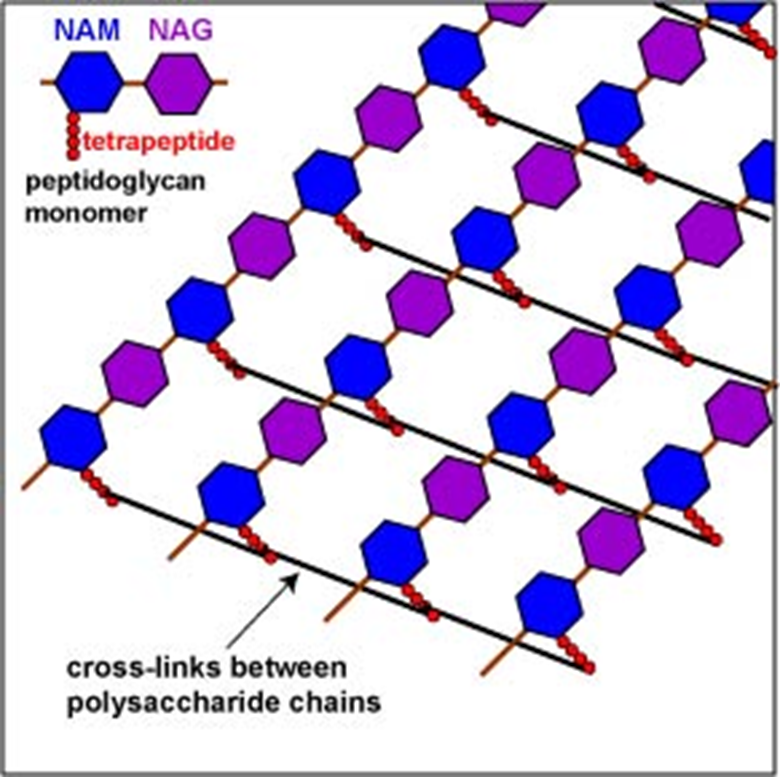
Tetrapeptide is made up of 4 amino acids
L - alanine
D - glutamine
L - lysine / meso - diaminopimelic acid ( DPA )
D - alanine
Gram Positive Cell Wall
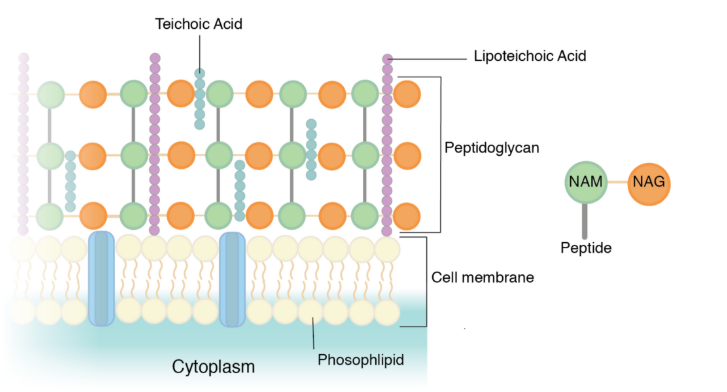
NAM tetrapeptides are cross - linked with a peptide interridge
Teichoic acid is a glycopolymer embedded with the peptidoglycan layers
Generates the net charge of the cell
Rigidity of cell wall
Resistance to high temps and salt conc
connected by covalently linked peptidoglycan or by a lipid anchor ( lipoteichoic acid )
Gram Negative Cell Wall
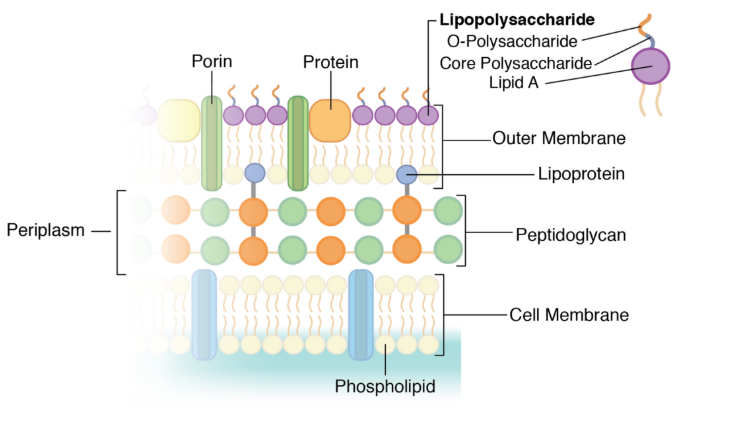
There is a plasma membrane outside of the peptidoglycan layers known as the outer membrane
The outer membrane is composed of a lipid bilayer with integrated proteins
unlike cell membranes, this lipid bilayer contains lipopolysaccharides ( LPS ) which protect the cell from is environment
LPS is made up of components
O - antigen or O - polysaccharide
Core polysaccharide
Lipid A
Gram Staining
Prepare a thin film of culture on a slide
Fix the culture via heat
Stain with crystal violet (primary stain)
Apply iodine (mordant)
Use ethanol (decolourizer)
Counterstain with safranin (secondary stain)
Outcome:
Gram-positive bacteria retain violet stain appearing purple/brown
Gram-negative bacteria lose violet stain and take up the pink/red from safranin
Exotoxins and Anthrax
Types of Toxins
Endotoxin: Toxic components of the bacterial cell envelope
Exotoxin: Heat labile ( prone to decomposition when exposed to heat ) , toxic protein produced by a bacterium as a result of its normal metabolism or because of the addition of a plasmid or prophage. Usually secreted into bacterium’s surroundings.
Characteristics of Exotoxins
potent poisons
causes diseases such as tetanus, anthrax, botulism, and diphtheria.
generally Gram-positive
Gram-negative bacteria can also produce exotoxins.
typically released into their surroundings as the bacterial pathogens grow and can travel from the site of infection to different tissues or cells, allowing them to exert their damaging effects.
specific host sites of action.
Exotoxins are highly immunogenic, ( stimulate the production of neutralizing antibodies ( antitoxins ) ) .
chemically inactivated to form immunogenic toxoids
Spirochaetes
Microbiology's Dominance in Biology
Bacterial Swimming Mechanisms
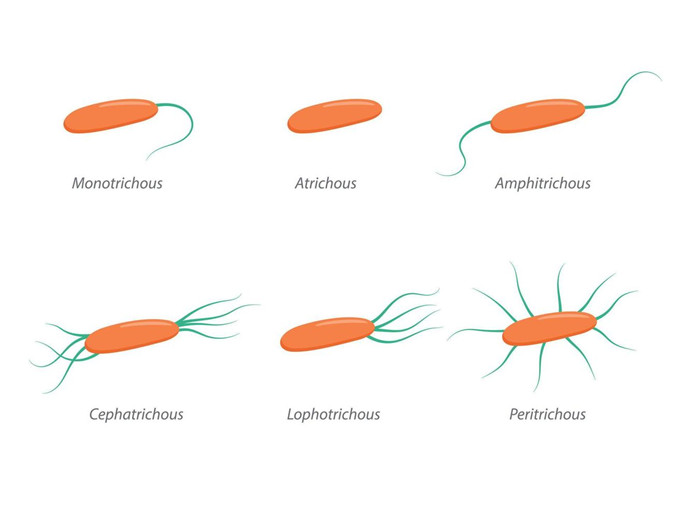
The flagellar structure is intricate and functions as a molecular motor, facilitating corkscrew motion.
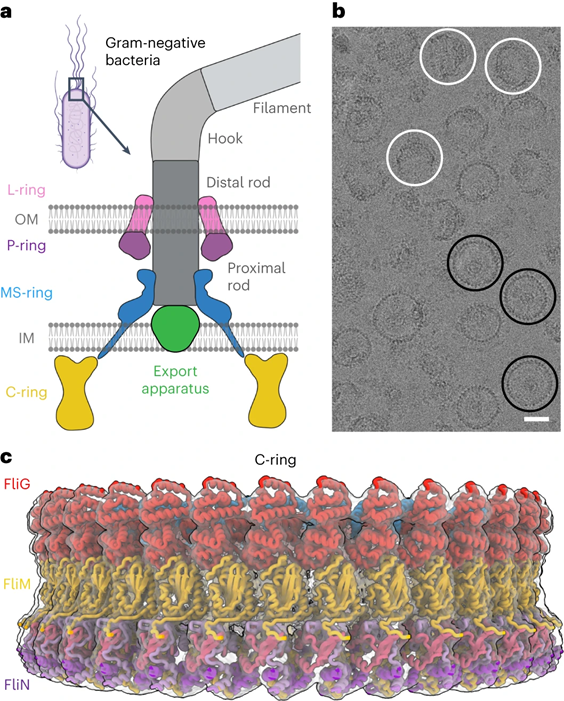
Swimming Efficiency and Calculations
A motile bacterium can swim up to 20 body lengths per second, which is comparable to a human swimming 40 meters per second.
For context, the current world record for the 50-meter freestyle is 19.90 seconds (Jordan Crooks, 2024).
Despite this efficiency, water is over 100 times more viscous for bacteria than for humans (compared to corn syrup).
The Reynolds number is critical for understanding movement in fluids;
It is the ratio between inertial force and the viscosity of the medium.
In bacterial terms, the flagellum is less than 1% efficient, losing 99% of energy as heat, yet only consumes 0.5 W per kg of biomass and about 1% of the energy of a well-fed bacterial cell.
Importance of Motility for Nutrient Acquisition
The need for bacteria to outswim diffusion is essential for nutrient absorption.
To capture 10% more nutrients than diffusion alone, bacteria must move at speeds greater than 17 times that of the fastest microswimmer.
The “Run and tumble” strategy comprises:
A quick movement (run) and a more prolonged tumble to reorient.
Time intervals for motion: runs last about 0.1 seconds, whereas tumbles last over 1 second.
Bacterial Navigation and Chemotaxis
Chemotaxis in Bacteria
Bacteria move by sensing and reacting to nutrient concentrations in their surroundings using receptor proteins located at the cell's ends.
Flagellar behavior is fundamentally determined by rotational direction:
Counterclockwise (CCW): Run
Clockwise (CW): Tumble
The phosphorylation of a specific protein, CheY, triggers tumbling behavior.
Attractive nutrients cause an increase in running frequency; while the presence of nutrients sends signals to flagella, promoting running over tumbling.
The sensors (methyl-accepting chemotaxis proteins, MCP) become saturated, leading to a reversion from running to tumbling due to methylation processes, leading to bacterial memory that lasts seconds or across hundreds of micrometers.
Response to Repellent Chemicals
Repulsive stimuli cause bacterial behavior to reverse the chemotaxis process, enhancing movement away from harmful substances.
Bacterial Motility Types
Variations in Motility
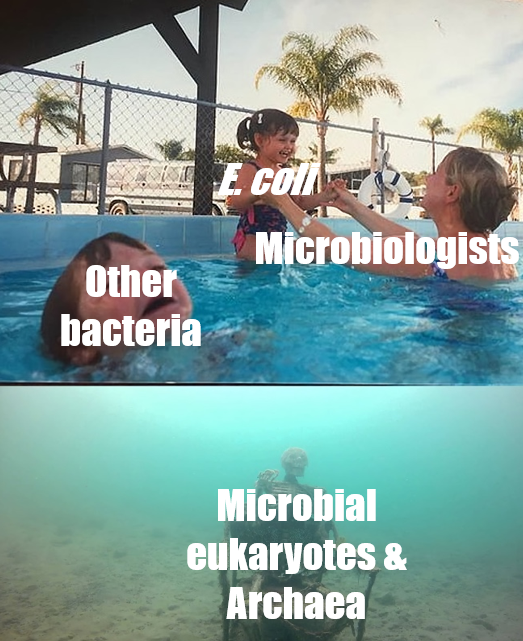
Flagellar motility represents just one method of bacterial movement, commonly researched in E. coli and Salmonella, evidencing research biases toward these species.
Other bacterial species exploit different methods of swimming, exhibiting various efficiencies regarding movement:
Spirochaetes, characterized by screw-like shapes, rely on specialized mechanisms for motility.
Examples of Spirochaetes
Key examples include the following:
Treponema pallidum
Leptospira interrogans
Borrelia burgdorferi
Structure and Motion
Spirochaetes utilize periplasmic flagella located between the cell wall and outer membrane for movement, resulting in unique, slower swimming abilities compared to standard bacteria and allowing them to navigate through viscous environments efficiently.
Understanding these mechanisms is essential for revealing how motility contributes to the virulence of spirochaetes.
Leptospira Interrogans
Health Impact
Leptospira interrogans is a prominent species among eight that cause tremendous health issues such as Leptospirosis, also known as Weil’s disease.
Transmitted mainly via rodent urine entering natural water bodies or through contaminated land post-flooding.
Human infections begin when Leptospira enter through cuts or mucous membranes, common in agricultural workers and water sports participants.
Prevalence and Statistics
Annually, an estimated 1 million severe cases of Leptospirosis occur, with a mortality rate between 5-10%.
Pathogenesis of Leptospirosis
Infected animals have circulating Leptospira in blood, ultimately colonizing kidney nephrons and being shed in urine.
In humans, Leptospira penetrates endothelial cells of capillaries leading to:
Cytokine storms involving interleukins (IL-10, TNF-α, IL-6) and macrophage activation resulting in sepsis, hemorrhaging, jaundice, kidney failure, lung hemorrhaging, and eye damage—a common aftermath in survivors.
Treatment
Treatment involves administering antibiotics (such as penicillin and doxycycline) and modulating inflammation with corticosteroids, alongside managing liver and kidney damage through supportive measures like dialysis.
Viscotaxis and Spirochaete Mobility
Spirochaete motility allows them to move through gradients of viscosity, a behavior termed positive viscotaxis.
This research illustrates that spirochaetes can navigate through different environments efficiently by adjusting their motion in response to varying viscous media.
Treponema Pallidum
Syphilis Agent
Treponema pallidum is the causative agent of syphilis, primarily affecting humans and a few primates.
It is metabolically dependent on host organisms (lacking a functioning TCA cycle), thus it is grown only in living systems and not in artificial media.
This bacterium has gained prominence due to its increasing incidence as a sexually transmitted infection.
While treatable with penicillin, there remains a risk of a Jarisch-Herxheimer reaction following treatment.
Epidemiological Data
Data indicates a notable increase in syphilis cases in England from 208 in 2015 to 515 in 2024.
Infection Stages
Stages of Infection:
Primary Syphilis: Presenting with a painless chancre at the infection site that heals spontaneously.
Secondary Syphilis: Occurs 1-3 months later with lymph node swelling and flu-like symptoms that resolve spontaneously after 2-6 weeks.
Tertiary Syphilis: Can manifest years later with severe complications involving the central nervous system (neurosyphilis), cardiovascular issues, and destructive diseases affecting various body systems.
Cultural Reference
Arthur Conan Doyle remarks on the physical manifestations of neurosyphilis, observing changes in a person's appearance and behavior indicative of serious health decline, emphasizing its grave implications.
Borrelia Burgdorferi
Pathogen Profile
Borrelia burgdorferi is a notable species causing Lyme disease, arising from tick bites (primarily from Ixodes species), typically maintained in a cycle between ticks and vertebrate hosts (including deer).
It relies solely on glycolysis, lacking a TCA cycle, which limits its metabolic versatility.
Stages of Lyme Disease
Stage 1: Characterized by the appearance of erythema migrans (the bullseye rash) within a month.
Stage 2: Involves flu-like symptoms accompanied by potential neurological and cardiovascular dysfunction.
Stage 3: Associated with chronic neurological complications, persistent fatigue, and vision problems.
Treatment and Prevention
Treatments generally include antibiotics such as doxycycline, with a similar risk of Jarisch-Herxheimer reactions.
Preventative measures involve thorough tick checks, use of permethrin, and treating pets to minimize exposure.
Life Cycle Insights
The complex life cycle involves various stages, including eggs, larvae, nymphs, and adults, with transmission mechanisms between tick stages and secondary hosts illustrated through a diagrammatic representation.
B. burgdorferi Motility
This bacterium exhibits a planar wave motion rather than a corkscrew, with essential chemotaxis linked to its virulence during transmission to vertebrates.
Loss of flagellar proteins crucial for motility corresponds with diminished virulence and altered cell morphology.
Conclusion: The Significance of Spirochaetes
Much of our scientific focus on microbes is linked to certain bacterial species, primarily E. coli.
Understanding bacterial swimming mechanisms is vital for comprehending their biology and impact.
Spirochaetes, with their unique helical morphology and motility features, emerge as important subjects for future research, particularly in public health contexts regarding their pathogenicity in various infections, including leptospirosis, syphilis, and Lyme disease.
Their adaptability and movement strategies underline their relevance in both medical and ecological studies.