HW #29 - Kognity
Intermolecular Forces
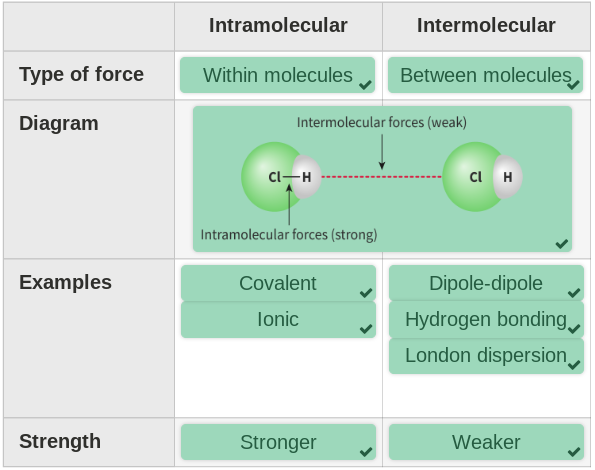
Intramolecular Forces: the covalent bonds between atoms within a molecule
EX: Ionic, Covalent, and Metallic bonds
Intermolecular Forces: Attractive (or repulsive) forces that exist between the molecules of a substance
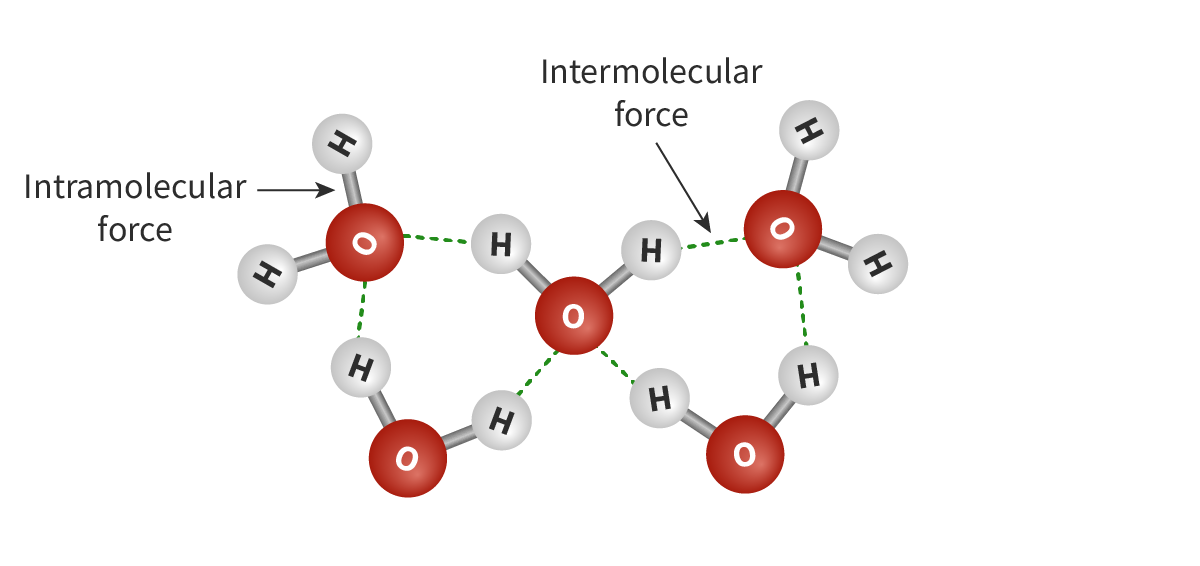
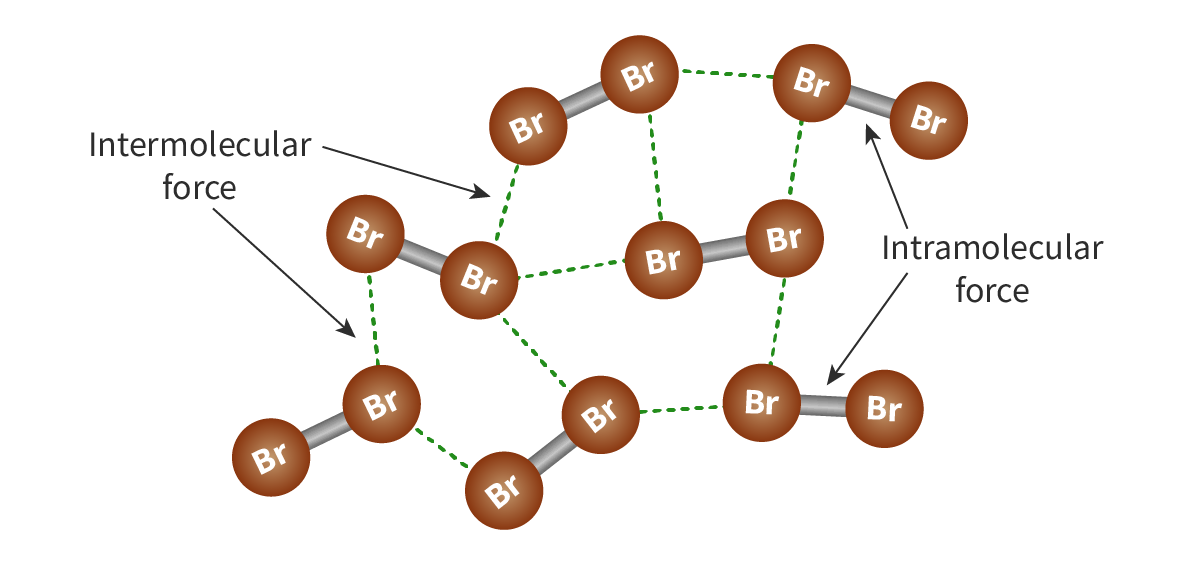
The forces acting between discrete molecules of bromine are intermolecular forces and they are responsible for the physical state of matter of covalent substances (if they are solid, liquid, or gas)
When you melt or boil a substance it is the intermolecular forces that must be overcome, not the intramolecular forces
Intramolecular forces are much stronger than intermolecular forces
there can be electrostatic forces of attraction within the molecule with regions of partial positive and negative charges which can form dipoles when there is a difference in their electronegativities
The types of intermolecular forces are:
London dispersion
Dipole-induced dipole
Dipole–dipole
Hydrogen bonding
London dispersion forces: exist between ALL molecules, regardless of whether the electronegativity difference is very low or non-existent and even if other forces are also acting
They are the weakest type of intermolecular force
Dipole-dipole forces:
if polar bonds are not arranged symmetrically in a molecule then the molecule will have a permanent dipole —> this explains why a different intermolecular force exists in asymmetrical molecules
when two polar molecules are near e/o, the opposite partial charges on the molecules are attracted to each other (like a magnet)
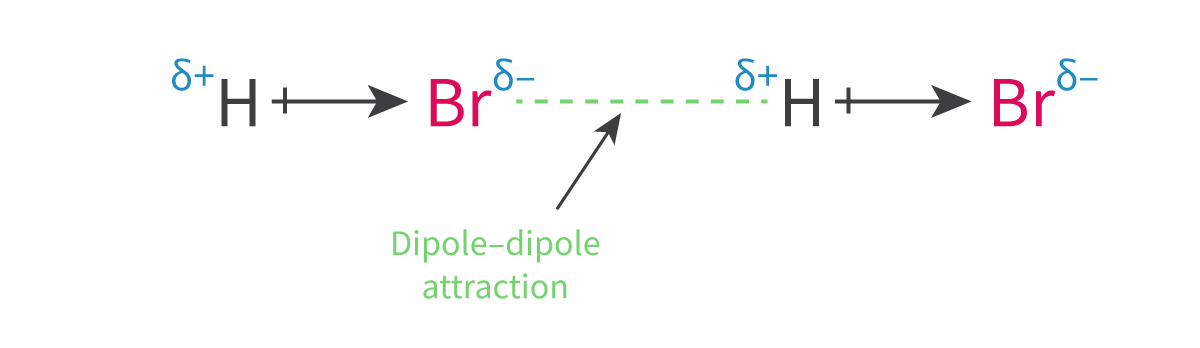
Dipole-dipole forces: intermolecular force between two polar molecules that have permanent dipoles
Attractive forces exist between the positive end of one polar molecule and the negative end of another polar molecule
Dipole-dipole forces are much stronger than London dispersion forces, but can act in unison with them
Dipole-induced-dipole force: When a polar molecule approaches an atom or a non-polar molecule, the partial charges on the polar molecule can affect the distribution of electron density in the neighboring atom or molecule. This causes the formation of a temporary dipole on the non-polar species
It is temporary as it is completely dependent on it being next to the polar molecule
How strong this dipole-induced-dipole force is will depend on how susceptible the non-polar molecule is to an electric field (the ẟ− and ẟ+ of neighboring molecule)
Hydrogen Bonding
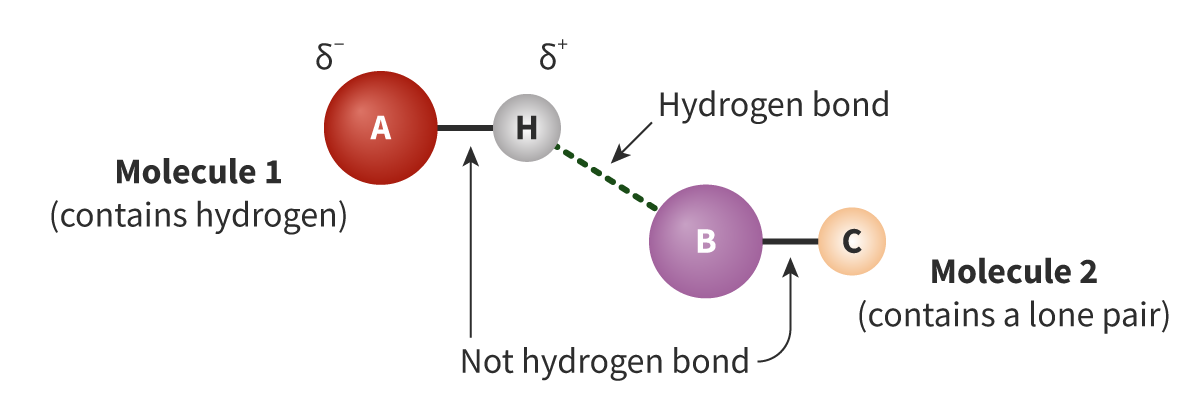
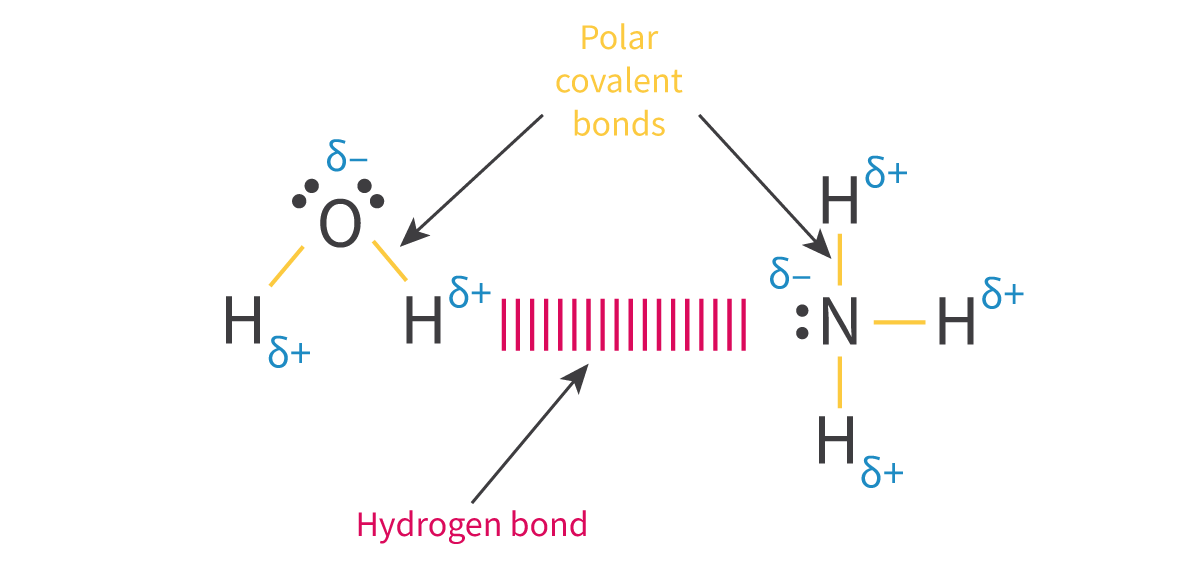
Hydrogen Bonding: The intermolecular attraction between two molecules that both contain a hydrogen bonded to a highly electronegative element such as oxygen, fluorine, or nitrogen
FON Home
Requirements for a hydrogen bond:
Hydrogen bonded to a FON element
The FON element must have a non-bonding pair of electrons
The hydrogen bond is the attraction for the ẟ+ hydrogen and the non-bonding pair of electrons on a FON element in a nearby molecule
NOT the intramolecular bond that exists between hydrogen and the FON in the same molecule.
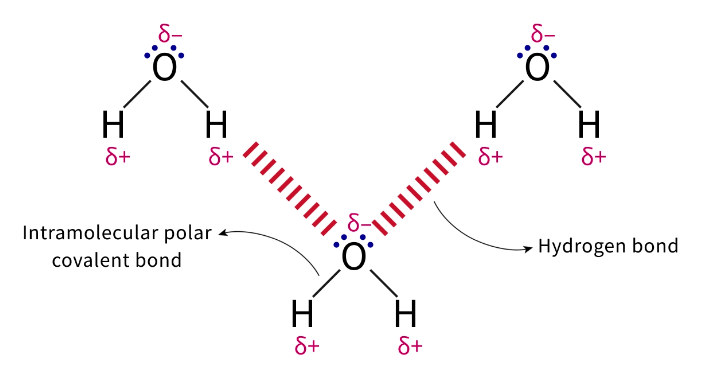
Hydrogen bonding is the strongest intermolecular force
Strength of Intermolecular Forces
When a substance boils, it is the forces of attraction between molecules being overcome
it does not involve the breaking of covalent bonds between the atoms in the molecule
A strong attraction indicates it would take a lot of energy to separate them
The compounds formed between hydrogen and the group 14 elements all experience London dispersion forces but they do not have the same boiling point
This indicates that something other than the type of intermolecular force is impacting how strong the attraction is
As the molecular size of the compound increases, so does the strength of the force it increases
The greater the number of electrons in a molecule, the greater the probability of electron distribution asymmetry and the more susceptible the molecule is to developing an induced dipole from a charge nearby
As the strength of the attraction is greater, so is the energy required to overcome it
Properties of Molecules:
Electrical conductivity and melting and boiling points
Molecules are generally not electrically conductive. They do not have charged particles present
They also do not have the same high melting and boiling points as ionic and metallic compounds
When an ionic or metallic compound is being melted or boiled, it requires a lot of energy to overcome the attractive forces within these materials
In the melting or boiling of a molecule, it is the comparatively weaker intermolecular forces being overcome, that require significantly less energy
Solubility
Two types of mixtures: homogenous and heterogenous
hetero: distinguishable components
homogenous: appear uniform throughout
Molecules that are soluble in a substance will form a homogenous mixture with it
‘like dissolves like’: polar molecules will dissolve in polar solvents and non-polar molecules will dissolve in non-polar solvents forming homogeneous mixtures
The solubility of some polar molecules will decrease as the size of the molecule increases, as the polar part of the molecule becomes relatively small compared to the size of the overall molecule
Chromatography
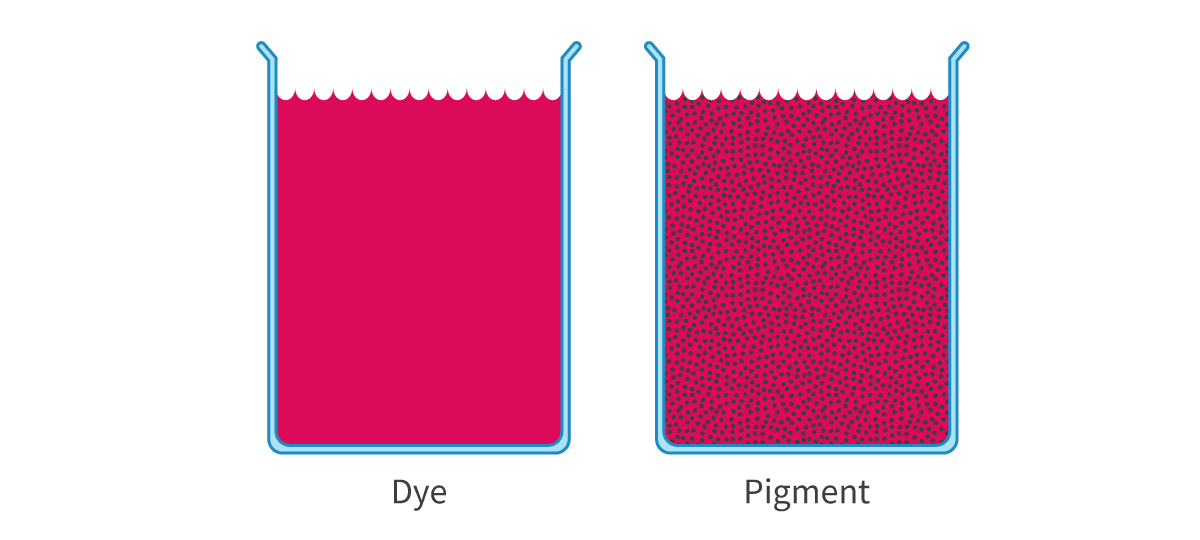
Dyes: are typically synthetically made
typically small, polar molecules
impact on solution: transparent
Pigments: derived naturally from plants
larger non-polar molecules
impact on solution: opaque
Plants have four main categories of pigments
chlorophyll
carotenoids
xanthophylls
flavonoids
Chromatography: technique used to separate the components of a mixture. The components, once separated, can then be identified using other techniques.
Chromatography can be used to identify the different pigments present in foods and other colored substances
Two types: Paper chromatography & Thin Layer chromatography
Two phases: the stationary phase and the mobile phase
stationary: the chromatography paper (bc it doesn't move)
mobile: the solvent (bc it travels up the paper)
Experimental technique
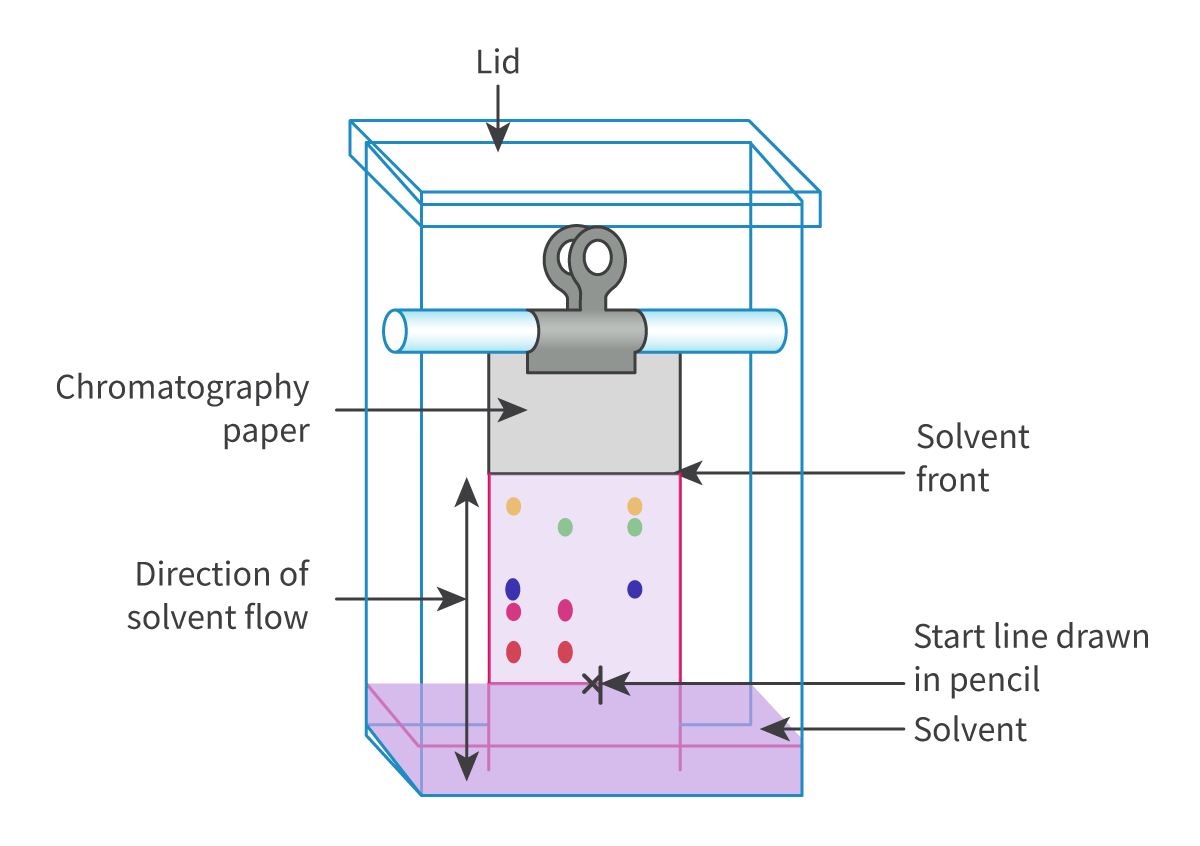
A pencil line is drawn on the piece of chromatography paper. This acts as a starting point so it is clear how far the mixture will have traveled. The piece of chromatography paper is known as the stationary phase as this medium does not move (Figure 3).
The mixture which is to be separated is placed on the pencil line on the paper. Very small spots are added.
An appropriate solvent is selected and the end of the paper is placed in the solvent. The solvent line should not reach the pencil line. The solvent will travel up the paper and carry the mixture with it. Because this medium moves, it is called the mobile phase.
Once the mobile phase (the solvent) has traveled up the paper and the mixture has been separated, the paper is removed and left to dry.
The chromatogram produced is compared to a set of known values and components are identified.
Solvent front: the distance the solvent has traveled from the pencil line to where it stopped moving
Retention factor: the distance the spot has traveled relative to the distance the solvent has traveled
Rf = distance traveled by substance/distance traveled by solvent
RF values range from 0 to 1
A value close to 0 occurs when the substance has very low attraction to the mobile phase and high attraction to the stationary phase.
The closer the value gets to 1, the higher the attraction of the substance to the mobile phase and the lower the attraction to the stationary phase.