Week B2 - Psychology as a science
Week B2 - Psychology as a science
02 February 2026
20:15
LEARNING OUTCOMES =>
Identify key theories in the understanding of knowledge and knowledge acquisition
Critically compare deductive and inductive reasoning
Critically discuss key philosophical theories on the quality of science
Differentiate between positivism and falsification in the scientific method
LEARNING OUTCOME: Identify key theories in the understanding of knowledge and knowledge acquisition
PHILOSOPHY OF SCIENCE & KNOWLEDGE
SCIENTIFIC REVOLUTION =>
Around the 16th century & 18th century, we see a boom, which we now named the scientific revolution.
What we see happening here is that different disciplines of science are becoming established within their own right (things like natural sciences, biology, physics, etc.) & we see a huge interest & investment.
Countries need to be economically stable, reasonably politically stable, stable in belief systems - what we see from that is huge investments into specific directions of scientific investigation.
As these sciences are becoming developed & established independently, they're coming up with their own rules & regulations about how that discipline should function.
For example, what is the aim of physics, what are the general rules in investigation, & then particular theories that are developed & seen as cornerstones of the discipline.
Science finds its Demarcation criteria
DEMARCATION -> setting and marking the boundaries of a concept; used, for instance, in the philosophy of science to denote attempts to define the specificity of science
At this point, science is finding itself, disciplines are finding themselves, & this is one of the problems we have with psychology: defining the boundaries of psychology.
Because psychology is very rapidly evolving, especially as we have innovations in things like neuroimaging technologies; understanding how mental health works based on those neuroimaging studies, for example.
Demarcation is about defining science & its boarders.
Once you define the boarders, it's easier for people to understand what that discipline is about & accept it as an independent science.
PHISOSOPHY OF SCIENCE -> branch of philosophy that studies the foundations of scientific research, to better understand the position of scientific research relative to other forms of information acquisition and generation
WHAT IS LOGIC & WHY IS IT NECESSARY? =>
Logic is something that's very important in scientific observation & discovery, & philosophers believe that logic is necessary for knowledge acquisition.
LOGIC -> The study of the principles of correct reasoning
It tells us how we ought to reason if we want to reason correctly
If we reason correctly, we should get to some kind of logical truth. If we reason incorrectly, then we will not arrive there.
There's a whole area of psychology exploring how people arrive at logical conclusions, etc. - the mistakes that we make, what's that based on.
Universal principles with different forms of reasoning for different circumstances
Deductive vs Inductive reasoning
When we look at the history of scientific thinking, philosophical discussions around what is the correct way to think in order to acquire true knowledge, we have deductive versus inductive reasoning & what we see before the scientific revolution is that there is a big emphasis on deductive reasoning, but during the scientific revolution we get a shift towards the inclusion of inductive reasoning.
LEARNING OUTCOME: Critically compare deductive and inductive reasoning
DEDUCTIVE REASONING =
DEDUCTIVE REASONING -> Starts from the general, uses premises to deduce specific conclusion
Taking general principles that we know about the world around us & then we use this premise to deduce specific conclusions.
General principle e.g.: Damage to a neural area will cause impairments to that area’s “function”
We generally accept that if we have brain damage, it will cause a problem to the area & it will cause a problem for the function that area manages (general principle).
Specific example = damage to a specific area of the brain.
The right fusiform gyrus is responsible for face perception
Therefore damage to the right fusiform gyrus will cause deficits in face perception
If we can conclude that part of the brain is responsible for face perception, then know that, if there's damage to that specific part of the brain, based on that general principle, can theorise that we will then get problems in face perception.
Taking broad rule about how the brain works & applying it to a specific area of the brain to try & make a conclusion that follows logical sense.
Conclusions are necessarily true, if…
premises are true (purple)
correct logical procedures are followed
If 2 premises are true, then we can say that the last one (blue) will be true too.
-> going from the general to the specific.
INDUCTIVE REASONING =
INDUCTIVE REASONING -> Going from the specific to the general
E.g.: My last two relationships ended badly…
I am bad at picking partners…
…My next relationship will end badly too
Take our experiences of the world (specific instances) and use it to develop ideas about how the world works (general principles)
For example, taking 2 specific examples (2 bad relationships), & we're not applying it to every future relationship that we'll ever enter into; applying it to the broad, to the general.
This is based on observation & experience.
Conclusions are not necessarily correct
Whereas, with deductive reasoning, conclusions more likely to be correct, with inductive reasoning, ending up with a probability of how correct that concluding statement will be.
If first statement was "My last 20 relationships ended badly" -> "I am bad at picking partners" -> "My next relationship will end badly too", you might invest more heavily into that conclusion.
For example, if a client in therapy said their last 20 relationships ended badly, therapist may want to take a deeper look at this. However, if a client said their last 2 relationships ended badly, therapist may say they're overinterpreting.
What we end up with inductive reasoning is a probability conclusion & what we need to determine is how reliable that conclusion is.
Does not mean conclusion is correct or incorrect, but need to think about where it sits between those 2 points.
LEARNING OUTCOME: Identify key theories in the understanding of knowledge and knowledge acquisition
THE SCIENTIFIC REVOLUTION IN EUROPE =>
The emergence of modern science: from 16th until 18th century
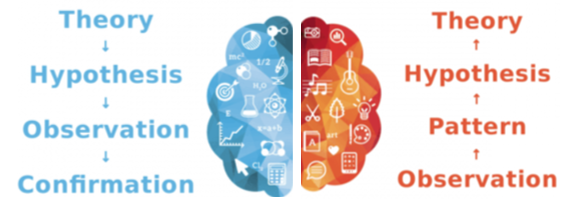
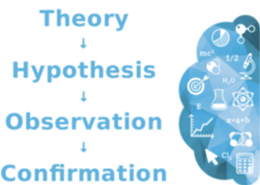
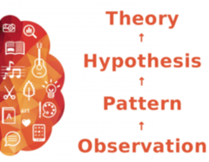
Before SR (Scientific Revolution) -> generally accepted that only deductive reasoning led to necessary truth
We can see that process & understand why that was generally accepted before then.
BUT, as we start to develop methodologies & scientific investigation, we start to rely on things more like observation & experimentation, & this is where we see inductive reasoning become more important.
Gradually, natural philosophers started to argue that inductive reasoning could lead to conclusions as probable as truth
But as probable as truth means we have to keep testing & retesting to get the reliability of that concluding statement.
What this entails & what we see through most of our research methods…
-> facts collected in large numbers, without prejudice
We would hope to try to collect as much information as possible; the bigger out pool of data, the more reliable those conclusions can be BECAUSE the more patterns we're seeing that are consistent within that dataset.
Without prejudice = biases
For example, as a scientist, fully invested in the fact that CBT & pharmacological invention combined will rehabilitate sex offender population; going to go on a mission to try to prove this.
What we need to think as scientists is how to take a step back & remove biases in terms of how we're designing data collection, etc.
-> could be replicated
Replication is further proof that the conclusion is valid.
-> Theories lead to new verifiable predictions
In research, you run your study, you come to a conclusion, & then you either need to replicate it or think about if you can improve that conclusion. Then, you redesign the stud & rerun it.
Research is never-ending in psychology, but it helps us to get to more chiselled truths.
SHIFT TOWARDS INDUCTION =>
BACON(16th-17th C) =
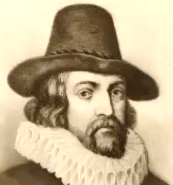
He was a philosopher & believed that true scientific knowledge could be obtained through inductive reasoning.
Wrote lots of book about this, articles, etc., disseminated a lot of information to try & promote this idea.
Credited as first in a tradition of thought called empiricism.
EMPIRICISM: states that knowledge comes only or primarily from sensory experience
Promoted idea of observation & observing the world around us to draw to conclusions - feeds directly into fields like biology & psychology.
Neither perception or reasoning alone is sufficient for understanding the world
Knowledge develops through systematic observation and experimentation, leading to axioms (theories), which in turn guide more observation and experiments
We can design an experiment, we can draw a conclusion, but we need to try & replicate that to prove its weight & we need to try & refine it. if it isn't exactly what we expected, we need to try & understand why that's happened.
Science & scientific knowledge acquisition is a series of observations & experiments going round & round.
He came up with some loose guidance…
This was before we have, in modern science, these definite rules around experimentation, how its designed, how its rolled out, how the data is collected & disseminated.
When investigating a new topic, collect as many facts as possible, without theoretical prejudice
Starting from a point where you don’t know anything; pretend, even if you know about the subject, that you don't know anything, collect as much information as possible & put them in tables for a better understanding.
Collect them into tables for a better understanding
Type of methodology that we use in psychology for observation studies; we might do thematic analysis.
Thematic analysis = grouping things in tables, looking for themes, clustering themes together.
Helps us find & observe different patterns that are emerging. This helps us to come to specific theories or groups of investigation that we might like to explore.
Don't jump to obvious conclusions
Don't search for affirming evidence
For example, as a scientist, might really want to prove something, & have to be careful not to just look for things that you want to affirm (what you're trying to prove).
Once patterns are found, expand and directly test
He described very early stages of what we would in present call the scientific method.
NEWTON (17th-18th C): DEDUCTION FROM THE PHENOMENA =
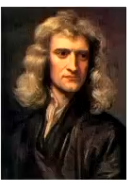
Shifted preference for deductive to inductive
First principles were developed through observation and experimentation
Example of his work: laws of the movement of objects
Took specific examples of things that he could observe, movements of objects around him & said we can apply this more broadly, more generally to everything; why don't we apply it in a general way to the celestial bodies in space?
He was taking specific information & observation from the world around him & saying we can accept this as a general principle -> THEREFORE, we can make predictions about how celestial bodies move in space.
-> he was a very influential individual & advocated for this idea of observation & experimentation.
Application of mathematical principles (deduction) to matters of practical certainty (derived from observation, inductive) using the scientific method
He started to bridge the gap between inductive & deductive reasoning
CHRISTIAAN HUYGENS (17th C): DEFENDED THE VALIDITY OF INDUCTIVE LOGIC =

Could lead to valid conclusions w/ a degree of probability
Can come to valid conclusions with inductive reasoning, but what we need to consider is that there is a degree of probability within that.
Through experimentation, we can reduce that level of probability & make it more reliable
Also started to talk about hypothesis testing
What we need to be responsible for as scientists is understanding the level or the degree of probability from the conclusions that we are arriving at through inductive reasoning.
HERSCHEL (19th C): MULTIPLE THEORIES CAN CO-EXIST =
Experiment enables a particular kind of lower-level experimental understanding of phenomena
HOW DO WE DEVELOP KNOWLEDGE? CURRENT PERSPECTIVES =>
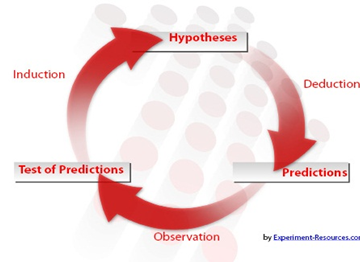
In modern science, both forms of reasoning are used to develop our understanding of the world
At the moment, how we do scientific research: inductive & deductive accepted OR mix between the two.
Know that, in psychology, observation is key; when designing experiments, observation will be most of what you do.
Through observation, we're drawn to these particular conclusions, & then we test the hypothesis. From that, in your discussion, you will say how reliable this end point is.
This process is the scientific method,
Inductive reasoning: Explain observations and develop new hypotheses
Observation: People with damage to brain area X show problems with task A
Hypothesis: Brain region X is involved in task A
Deductive reasoning: Generate testable predictions from hypotheses
Hypothesis: Brain region X is involved in task A but not task B
Prediction: Brain region X will show higher levels of activation in task A than task B
LEARNING OUTCOME: Critically discuss key philosophical theories on the quality of science
KEY IDEAS IN PHILOSOPHY OF SCIENCE
WHAT IS SCIENCE? =>
SCIENCE IS…“A process by which objectively defensible knowledge is produced and handled by humans” - Hughes (2016)
Objectively defensible knowledge = reliability of knowledge acquired
Process = methods behind how we acquire that conclusion
Does psychology achieve this?
YES or NO
Does biopsychology achieve this?
YES - biopsychology more objective in approach; something that you can hold & measure objectively.
As psychology is such a broad discipline, it can be difficult to ascertain whether it fully achieves this goal or not.
SCIENTIFIC METHOD -> asking a question (we're interested in a topic, so we probably already have some knowledge in it), doing background research, forming a hypothesis, testing, reviewing results, re-test (improve) or disseminate
For example, pharmacological interventions & talking therapy treatments combined are the strongest predictor of successful rehabilitation in sex offenders; that's what background research is telling you.
SO, you design an intervention, test it, view results.
Perhaps what happens is you design an intervention where half of your sex offenders are doing the intervention, the other half have no intervention, & you see how they change over time in their behaviours.
Perhaps first time you run it, get lots of people dropping out. MEANS need to tweak the intervention; ask why they're dropping out - participants say the CBT sessions are too long & they don't know what's going on.
Tweak the intervention; need to have a better introductory session for these individuals, need to make the CBT shorter to improve engagement. THEN, see engagement is improved.
Following up from that, we see that rehabilitation is possible, but only for 50% of people. THEN you think about how it can be improved further.
-> taking observations & researching existing interventions to see how we can improve the process.
RESEARCH QUESTION EXAMPLE: what is the best method of rehabilitation for sex offenders
Some questions from philosophy of science…
What is it about science and/or the scientific method that is “special” or unique as a way of thinking?
Scientific method has been produced as the gold standard way to acquire knowledge.
What makes it robust & what makes it better than other ways of thinking?
Being in the scientific community, we would say it is: more objective, less open to bias & that we can retest to confirm.
SO, it’s a rigorous methodology to draw to stronger conclusions.
The demarcation question…
Is science better than other ways of thinking?
-> Explored through key ideas/figures in philosophy of science.
KEY IDEAS/FIGURES IN PHILOSOPHY OF SCIENCE =
Key movements or key people in understanding what is science & how do we acquire the most reliable knowledge possible through scientific investigation…
Each of these movements have helped us to better understand what is happening in terms of how we acquire knowledge & specific methodologies that should be followed:
Positivism (18th C): Auguste Comte
Logical positivism (20th C): The Vienna Circle
Falsification (20th C): Karl Popper
Scientific revolutions: Thomas Kuhn
LEARNING OUTCOME: Differentiate between positivism and falsification in the scientific method
POSITIVISM: IS ALL KNOWLEDGE EQUAL? =>
AUGUSTE COMTE
He was a philosopher & he formed the doctrine of positivism
Suggested that we need to think about how knowledge acquisition has changed over long periods of time & are some sciences more robust or better than others?
Authentic knowledge can only be obtained through the scientific method
Cornerstones of positivism:
The law of the three stages – theory of intellectual development
The classification of the sciences – based on the idea that not all sciences are equal
THE LAW OF THE THREE STAGES =
Auguste suggests that every civilization will go through this process of trying to understand the world around them.
Talking about centuries of intellectual development.
If suddenly we had a new planet appear in space & through the process of evolution we then ended up with humans, the idea is that they would move through the same process as well.
1. Theocratic stage:
Auguste suggests that what we see early on in the history of homo sapiens initially starts at this theocratic stage
Explaining the apparent anomalies in the universe as interventions of supernatural agents (religious or spiritual)
Individuals look at what's going on in the world around them & they try & attribute understanding to something which is more religious or spiritual.
e.g., to explain a natural disaster = may say that it's happening because the gods are angry. In order to explain the natural disaster, it's something that is seem as more spiritual or religious. Might be then that some kind of sacrifice is given, for example, chop a load of crops, offer them to the gods, & hope for better weather next time.
This is theocratic theology.
2. Metaphysical stage:
Transitional stage between 1 & 3
Philosophical explanations replace supernatural agents
Explanations were based on abstract notions such as essences and the inner nature of things
People are still thinking in a spiritual way in a less supernatural way; more about the essence & inner nature of things - thinking about the soul within the body.
-> growth of natural sciences in this stage.
3. Positivistic stage:
The mind stops looking for causes of phenomena, and limits itself strictly to laws governing them
Arriving at more scientific thought; understanding what elements in specific are needed to make a fire & how that all works together rather than the "knowing how" rules of thumb stage.
Based on scientific knowledge
OVERALL: have the two polarised so for more supernatural, spiritual, religious down to scientific & the stage in the middle.
Idea being that every civilization will move through this process.
Auguste was saying that, dependent on the methodologies that different divisions of science incorporate, we can rank science in terms of its rigorousness.
suggested that what we need to think about is the complexity & generalisability.
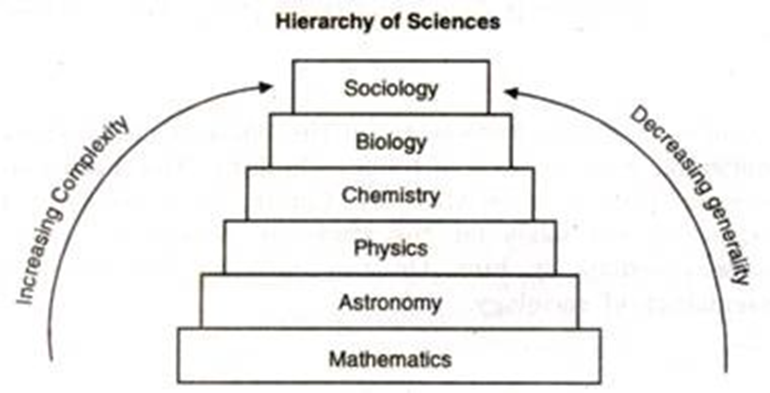
By increasing complexity, what we mean is increasing complexity in the abstractness of the theories produced.
For example, some theories in sociology might be quite abstract in terms of there might be multiple theories suggesting one particular thing.
For example, in forensic psychology, when looking at the nature of serial killers there are many theories & may just say it's a combination of these theories.
BUT, this is extremely abstract when we compare it to something like mathematics, where we have a simple formula that we can always prove goes to the correct conclusion & how generalisable it is.
If you think about physics & the law of gravity, that is universally a standard rule. If we think about other theories that we produce with human studies, then generalisability becomes an issue because humans are extremely complex individuals.
-> these are the things we consider when we're thinking about robustness of science.
LOGICAL POSITIVISM: DEMARCATING "SCIENCE" =>
Coming from idea of positivism, had a lot of individuals meeting & talking & discussing scientific method in a philosophical way, trying to agree where we should sit in terms of methodology & how we should acquire knowledge; the principles that we follow to get to the correct knowledge.
Began in the “Vienna circle” in the 1920’s
AKA Logical empiricism
Vienna circle discuss theories on thinking and obtaining scientific knowledge.
Came up w/ idea of logical positivism
What distinguishes science from other forms of thinking or knowledge acquisition?
The 1929 Manifesto:
There are two types of truths:
Empirical truths – established through inductive logic and empirical verification (observations and experiments)
Logical truths – established through deductive logic
Said we have these two types of truths, following the inductive & deductive principles, & that any statement that doesn't fit into one of these is nonsense & that we should completely ignore it.
suggested verification is a cornerstone of determining true knowledge
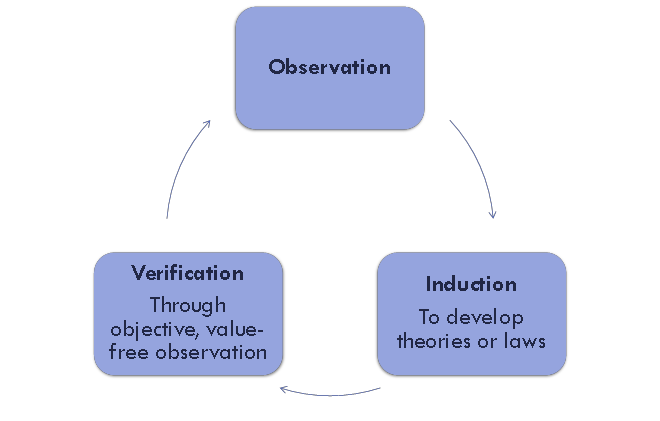
We can observe the world around us, we can develop theories of laws, but verification is what we need, continuous verification, to justify the acceptance of this knowledge that we have acquired.
CRITICISMS OF LOGICAL POSITIVISM =
Is verification possible (with inductive reasoning)?
All inductive reasoning is uncertain to some extent
What we're coming up with in our conclusion is probability. THROUGH verification, we can reduce that probability gap.
BUT, some things we can never verify, so we need to accept that with inductive reasoning we may never really be able to verify something.
-> If we go through the route of positivism verification, we've got this problem.
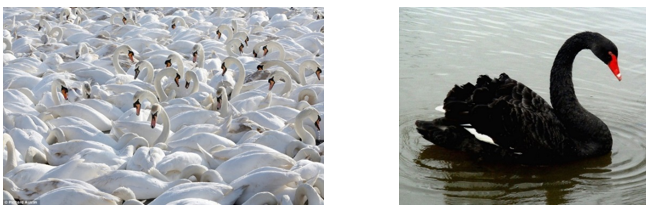
Can we really verify something? E.g., all swans are white? –If we look to verify all swans as white, we might miss the black swan
In order to verify if all swans are white truly, would have to visit every swan in the world & by the time you'd get to the end of the world, you would have to go back to the beginning because many other swans have been born; its impossible.
At what point do we say through verification that yes, it's correct?
Do you look at 10 swans & say yes, they're all white, so you can verify? Do you look at 500? What if you looked at 500 & and 501st swan was black?
THUS, verification is something that is incredibly difficult to measure.
Can our observations really be objective and ultimate in their approach?
As verification is difficult to measure, means that perhaps it becomes biased in approach because what you're looking for is some kind of confirmation
e.g., looked at 10 swans, they're all white, this makes you happy because it meets your conclusion, so you stop looking.
SO, there is this problem if we rely on verification.
Observation requires interpretation
Many variables aren’t observable, especially in psychology (e.g., consciousness), involve self-reports and experimental design
FALSIFICATION AS DEMARCATION =>
Prior to this, have the Vienna Circle discussing knowledge acquisition by verification. Cannot be 100% sure that something is true unless we fully verify BUT most of science doesn't work like that -> that becomes an impossible task.
POPPER - says falsification is the better route to go because this is something that is achievable.
What we should do INSTEAD is come up with hypotheses that we can disprove…
Hypothesis testing should not focus on confirmation/verification, but on falsification
With verification, hypothesis is 'all swans are white' & need to look at all the swans in the world to verify this
BUT, with falsification, we can keep the same hypothesis, 'all swans are white', but going to continue research until you can falsify this: as soon as you find one black swan, can say we reject the hypothesis & that is your valid conclusion, 'all swans are not white'.
Implications of falsification:
Overcomes main limitation of induction: falsification is possible, whereas conformation is not
Idea that falsification is more achievable than verification
Through that process, by falsifying hypotheses, we can then refine them; 'all swans are white or black'. Then, can look for pink swan, for example.
-> falsification is more achievable & then we can refine & move forward from that.
Falsification, according to Popper, is a more scientifically robust strategy in how we design our methodology.
Falsification is possible, confirmation is not.
But repeated failures to falsify can strengthen standing of theory
If trying to falsify theory & finding that impossible, then can say theory is more believable than when you started.
For falsification to work properly scientists must develop falsifiable hypotheses and set out to falsify their claims
e.g., if saying all swans are white, look for black swans
-> still thinking about acceptability of hypothesis, believability, probability, etc.
LEARNING OUTCOME: Critically discuss key philosophical theories on the quality of science
THE HYPOTHETICO-DEDUCTIVE METHOD =>
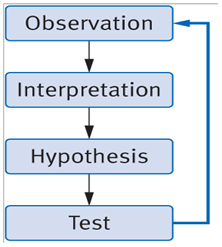
What we view as a process of induction & deduction in modern science today.
This is the methodology that you follow when you design studies in psychology
Saying that science is a product of trial & error
Observation = inductive stage that leads to interpretation.
Interpretation = by interpretation we mean theory generation.
Hypothesis = Through theory generation, so interpretation & deductive reasoning, we come up with a testable prediction or a hypothesis.
Test = we test that through experimentation. What we get from that is a new observation.
Continuously moving through test & re-test.
Science is a process of conjecture and refutation: trial and error
Observation - inductive stage that leads to theory generation
THE DEVELOPMENT OF 'SCIENCE' =>
Psychology doesn't work in a bubble, it works in response to what society wishes to understand.
Because of this, the things that individual sciences are interested in are in part governed by the demands of society.
Science was previously believed to develop slowly through a series of smaller changes that further ideas and approaches
Kuhn challenged this, suggesting science develops at a ‘crisis’ point and then experiences a revolution
Science moves through a series of paradigm shifts
Depends on what is happening in society around us, particular questions of interest that are being asked.
Psychology follows this, we can see several established approaches, a crisis point, and then a new improved psychology
Can see how psychology has moved through a series of paradigm shift in terms of what questions we focus on & what methodology we follow to try & answer these questions.
SCIENCE AS A SERIES OF PARADIGMS: KUHN =>
PARADIGM -> idea that scientists share a set of common views of what the discipline is about and how problems must be investigated
What is this scientific discipline about & how we're going to investigate it?
What are the core questions we're interested in & what is the root of those questions because that will determine how we investigate it.
A discipline needs a general theory to become scientific
Questions help define what our particular science is:
Which data are allowed?
Which methods should be used?
How are results phrased/presented?
What kinds of interpretation are legitimate?
Focus of scientific research is influenced/prescribed by the scientific community
FOR EXAMPLE: In comparative psychology, we're looking at animal versus human studies.
Methods = We know what methods should be used; there are very strict rules about how we study psychological issues when we're using live animals, for example, in terms of ethics & protection.
Results = how we disseminate the results
KUHN'S (1962) THEORY OF SCIENTIFIC PROGRESS =

Suggested that we start with pre-science
Pre-science: Data collection, disagreement on framework
This is where the scientific discipline is not solidified in terms of what it represents.
Might have different individuals suggesting different methodologies & the avenue that we should go.
Eventually, some kind of consensus is generated & so our scientific discipline settles down, levels down, it's grounded, rooted, & it becomes established - this is our new normal for that science
Normal science: General framework/shared paradigm
General shared understanding of the function of this science, how it works, how individuals operate within it.
Crisis: Leads to revolution and paradigm shift
Shift in what this science represents, the types of questions we're interesting in asking, or the way we should be investigating & collecting data.
There's some kind of crisis point where we realise, in that moment, that we need to do this type of science differently.
Revolution: Leads to revolution
A case of a change in how things are done, re-evaluation, reframing of what the science is
New normal science: series of paradigm shifts
When we get to new normal science, we could then jump back to crisis, revolution, new normal over & over.
Process very much dependent on innovations; scientific innovations or change in understanding of knowledge
Driven by society & questions that society are asking
How does Psychology fit?
PRE-SCIENCE: EARLY DEVELOPMENTS & CHALLENGES FOR PSYCHOLOGY AS A SCIENCE =>
Science born & expanded out of philosophy
Could have still remained an area of philosophy if society wasn't asking specific questions that psychology felt it could answer to make it independent.
In pre-science stage, have questions trying to think about consciousness: what is consciousness, what is the inner soul. Also have practices developed, like chronology.
Chronology = bump at back of your head at the top of your spine is your passion bump; that's how much passion you have in your life
Phrenology & mesmerism; trying to understand the inner workings of the mind - things like the paranormal but also hypnosis, etc.
Study of consciousness & introspection very abstract & difficult to understand
Difficult to measure & understand
Consciousness is still difficult to measure & understand
CONTEXT:
At the time of Wundt and James psychology was often based in departments of philosophy and theology
Should not be reduced to the study of the brain and inner thoughts.
Viewed as a ‘wannabe science’
Because it was a very subjectively based methodology…
Associated with phrenology, mesmerism, spiritualism and other paranormal subjects, making it less ‘scientific’
Difficulties getting funding or recognition
NORMAL SCIENCE: COMPARATIVE RESEARCH & BEHAVIOURISM =>
Rather than abstract notion of consciousness, there was a shift towards natural sciences & towards biology.
Topics like physics were coming up with these strong rules & regulations about how the practice should be done.
Abandon the study of consciousness as it was seen as difficult to objectively study, with poor funding in the subject area
Objective approach: observation of behaviour
-> The rise of comparative research and behaviourism
Rise in behaviourism = observing behaviour & drawing to a conclusion was something more tangible that people could understand more in the general public.
Big studies such as Pavlov's dog; study is really transferable - people who don't study psychology are familiar with this study.
Behaviourist psychologists coming in & developing clear methodologies of how observation of animal behaviour should work - more tangible.
From this observation of behaviour, got the rise of comparative research, for example comparing animal behaviour & human behaviour & had some big theories that emerged, such as conditioning.
Big theories that emerged were tangible to audience members whether they were in the scientific community or not.
-> because of this, there was a sudden interest & respect for the discipline. Meant more funding for areas to develop.
Has it’s own set of ‘rules’ and methodologies to follow, ‘big’ theories emerge
So we have our normal science; behaviourism dominated psychology for a long time until cognitive psychology emerged.
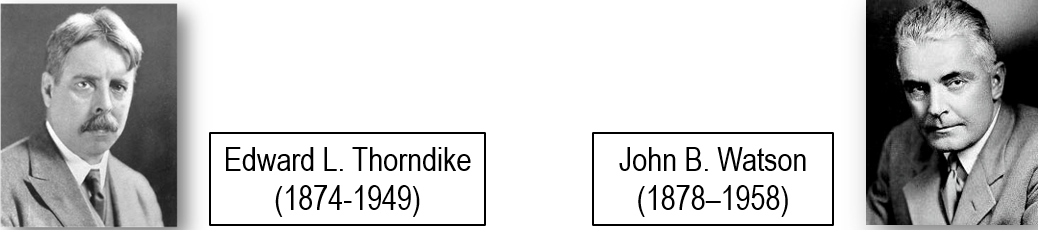
REVOLUTION & NEW SCIENCE: COGNITIVE PSYCHOLOGY =>
Crisis: Movement in psychology arguing that observable behaviours are the results of information processing in the mind.
Crisis point = cognitive psychology steps in because of innovations in neuroimaging techniques is a part of that.
Started in the 1950s and is currently the dominant form of mainstream psychology.
Behaviourist view: Stimulus -> Response
At this crisis point see new theories saying it’s not just stimulus behaviour, as we see in behavioural studies that were designed at the time. Something is happening in terms of processing between those two phases.
Cognitive view: Stimulus -> [information processing] -> response
Shift away from behaviourism towards cognition & cognitive psychology
Not because behaviourism is not important, but trying to understand information processing - need to come up with new methodologies of investigation because the ones that have been developed through behaviourism are not appropriate for this part.
Crisis point is that we're missing something important in the middle.
Around this time, interest in understanding why some individuals got depression & others didn’t
Can have the stimulus, what's happening to that person in the world around them & the response, depression, but they began to realise something else was happening; some kind of individual experience, some kind of individual difference.
From society, need to understand how thinking works, how the mind works, etc., how people make certain decisions.
Cognition suddenly became extremely important
we have it as a new science & it's still the leading focus of how we understand psychology in all different disciplines.
What we see now: AI – future integration
Trying to replicate cognitive functions through AI - e.g. consciousness
Starting to see this bridging the gap between neuro studies, cognition, & researching AI to further our understanding of how we work in the world around us.
SCIENCE AS A SERIES OF PARADIGMS: SUMMARY =>
PRE-SCIENCE TO NORMAL (ACCEPTED/ESTABLISHED) SCIENCE =
PRE-SCIENCE: BASED ON INTROSPECTION -> the study of thoughts and consciousness, the pre-science stage of psychology
SHIFTING TO BEHAVIOURISM -> Abandon the study of thoughts and consciousness (too abstract), move towards observations of measurable behaviour (more tangible) -> the rise of comparative research and behaviourism
Contributions to the establishment of psychology as a science
Gave rise to objective methods in psychology and emphasised the need for controlled lab studies, enabling reliability & validity to be tested: key facets of the scientific method
REVOLUTION & NEW NORMAL SCIENCE (E.G., NEW WAYS OF THINKING, THEORIES OR APPROACHES IN METHODOLOGY =
COGNITIVE REVOLUTION -> argued that observable behaviours are the results of information processing in the mind
Cognitive psychology lead to new breakthroughs, such as better understanding of memory and attention. Currently the dominant form of mainstream psychology
Limitations with some areas of research = when we are looking at memory & attention, much easier to measure objectively rather than self-reports about decision making - some things more tangible than others.
Change to cognitive dependent on advances in technology, funding and cultural beliefs
When we bridge this with things like neuroimaging studies or AI there's huge pots of money available at the moment
SCIENCE AS A SERIES OF PARADIGMS: IMPLICATIONS =>
Scientific knowledge is temporary?
Change in paradigms is inevitable, existing evidence may be re-interpreted
Dependent on innovations in tech around us, questions that society asks, we will continue to shift our way of thinking.
Does that mean knowledge is ever reliable?
If looking at the history of understanding serial killers = in the 50s, idea was that individuals are born evil; purely innate thing. THEN, it evolved from that to its based on the life experience of individuals.
& then we have the dance between the two - typical traditional nature versus nurture debate.
With neuroimaging studies, can take brains of several serial killers, compare it to the normal population, & map exactly what the differences are -> can improve knowledge in this way.
Might be some other innovation in tech in the future which means it completely contests that; we find it's something else, it's something genetic.
Scientific knowledge is relative?
Not driven by movement towards truth, but by social and historical factors, economy, culture
-> What are the extent of these limitations in terms of trying to find true knowledge?
SO IS PSYCHOLOGY A SCIENCE? =>
A 2005 study by Boyack aimed to determine which scientific disciplines are most influential in modern society.
It looked at the citations in over a million articles published in over 7,000 different journals.
Tried to map the different discipline or scientific contributions to see which ones contributed the most to understanding the world around us.
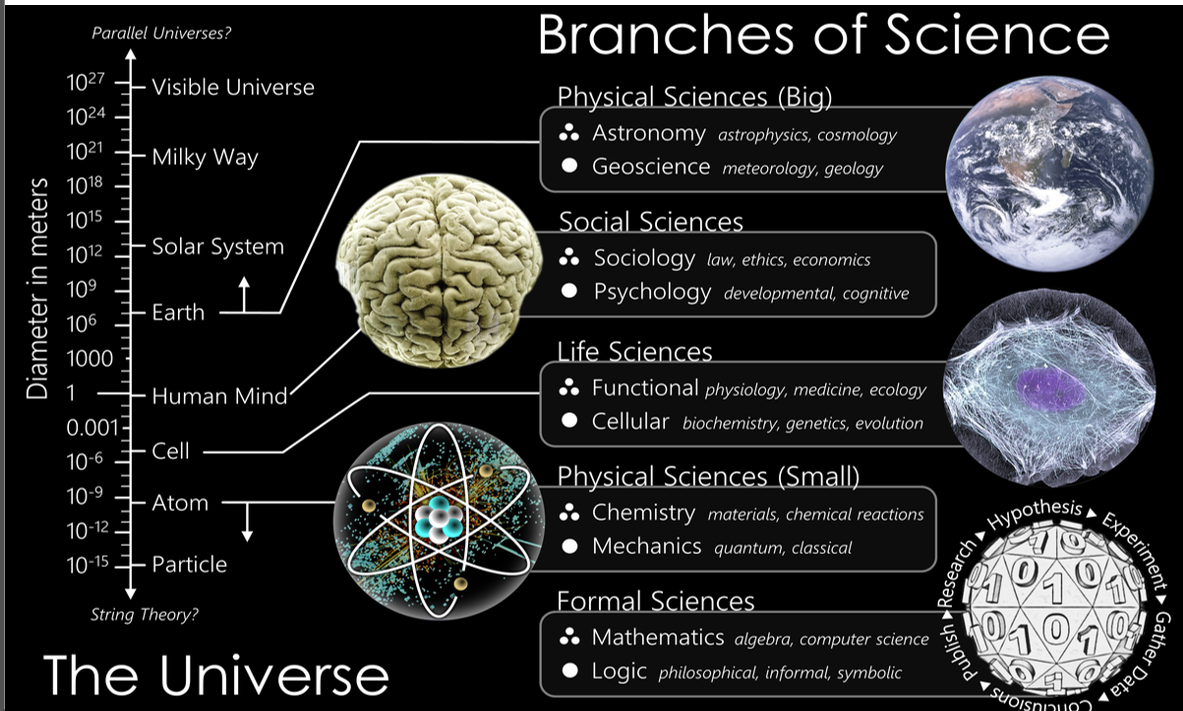
Psychology was identified as one of the seven hub sciences that underpin our understanding of the world around us alongside Mathematics, Physics, Chemistry, Medicine, Earth Sciences and Social Science.
There's also research to see what kind of articles the general public access mostly, & psychology is high up there on the list.
Psychology has contributed much to our understanding of the modern world. The use of scientific methods and empirical data mean that it meets the criteria of a science.
Psychology is certainly influential.
LEARNING OUTCOMES & SUMMARY =>
Identify key theories in the understanding of knowledge and knowledge acquisition
Critically compare deductive and inductive reasoning
The rise of scientific approach can be summarised as a shift from deductive reasoning to inductive reasoning. In modern science, both forms of reasoning are used to develop our understanding of the world.
Differentiate between positivism and falsification in the scientific method
Positivism suggests science is the only authentic way of knowing and logical positivism suggests logical truths that can be verified are the only meaningful forms of knowledge
Critically discuss key philosophical theories on the quality of science
Popper suggests falsification is the cornerstone of science
Kuhn suggests science is a series of paradigms shaped by historical and social frameworks where science goes through a series of stages and major changes (paradigm shifts)