BRAIN AND BEHAVIOR
Mon, Aug 31
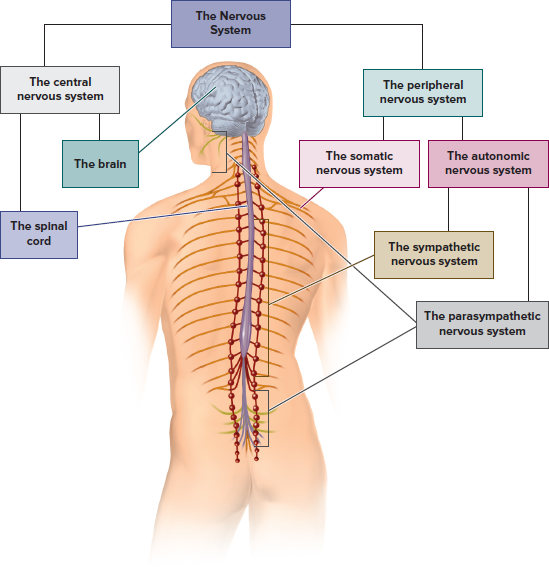
THE NERVOUS SYSTEM
Central Nervous System (CNS)
Comprises the brain and spinal cord.
Responsible for processing and integrating information.
Coordinates activities of the entire nervous system.
Main site for thoughts, emotions, and decision-making.
Peripheral Nervous System (PNS)
Consists of all nerves outside the CNS.
Includes sensory (afferent) and motor (efferent) pathways.
Connects the CNS to limbs and organs.
Assists in voluntary movements and reflex actions.

NEURONS
Neuron: a single cell in the nervous system that transmits information.
The building blocks of the nervous system
4 Basic Parts
Dendrites: receive incoming messages.
Cell body: receives info from dendrites.
Axon: carries info away from cell body.
Axon terminals: at the end of axons that form synapse with other dendrites.
Neurotransmitters: chemicals released from axon terminals that transmit signals across the synapse to other neurons.

Neuroplasticity: The ability of the nervous system to adapt and change in response to experiences.
Neurogenesis: The process of producing new brain cells.
SYMPATHETIC VS PARASYMPATHETIC
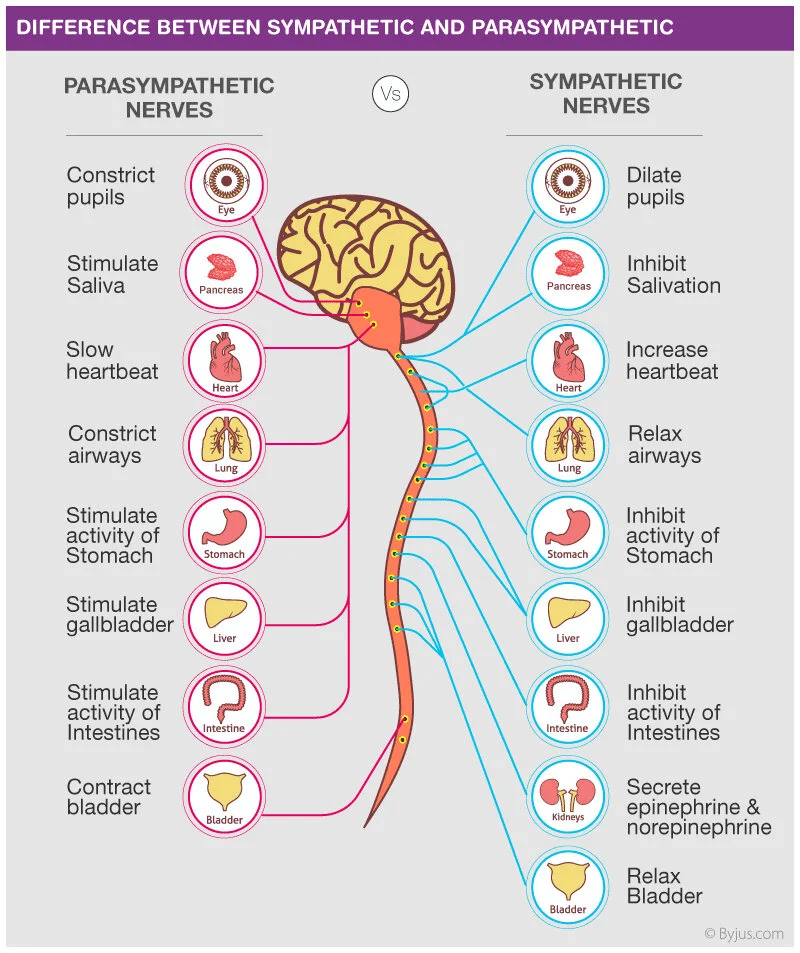
Sympathetic Nervous System
Responsible for the body's 'fight or flight' response.
Prepares the body for stressful or emergency situations.
Increases heart rate, dilates pupils, and inhibits digestion.
Activates the release of adrenaline and noradrenaline.
Parasympathetic Nervous System
Responsible for the body's 'rest and digest' functions.
Promotes calming and conserving energy.
Decreases heart rate, constricts pupils, and stimulates digestion.
Promotes recovery and maintenance of bodily functions.
BRAIN RESEARCH
The brain weighs approximately 3 pounds.
Neuroscientists and biopsychologists study the brain's structures to understand which parts are responsible for specific mental and behavioral functions.
The brain is composed of gray matter (cell bodies) and white matter (axons that connect different brain regions).
Advances in brain imaging techniques, such as fMRI and PET scans, have allowed researchers to observe brain activity in real-time, enhancing our understanding of neurophysiology.
The human brain contains around 86 billion neurons, which communicate through trillions of connections called synapses.


Wed, Sep 2
Phrenology: studying bumps on the head could reveal a person’s mental abilities.
However, this theory has been discredited; modern neuroscience emphasizes the complex interplay between brain structure and function, utilizing more sophisticated methods to understand cognitive processes.
THE ENDOCRINE SYSTEM
The endocrine system is a set of glands that secrete hormones in bloodstream.
When hormones act on the brain, they influence our interest in sex, food, and aggression.


HINDBRAIN
Medulla: controls vital functions
Pons: involved in sleep and arousal
Reticular formation: arousal and attention
Cerebellum: controls coordination and balance

The midbrain connects the hindbrain and forebrain
FOREBRAIN
Thalamus: relay station
Hypothalamus: regulates homeostasis by controlling temperature, hunger, thirst, and circadian rhythms.
Epithalamus: secretes the hormones melatonin, which is involved in the regulation of sleep-wake cycles and seasonal reproductive functions.

