Ruminant Digestive System
- What is a ruminant?
- Ruminants are animals that have one stomach with four compartments. The compartments are as follows:
- Rumen
- Reticulum
- Omasum
- Abomasum
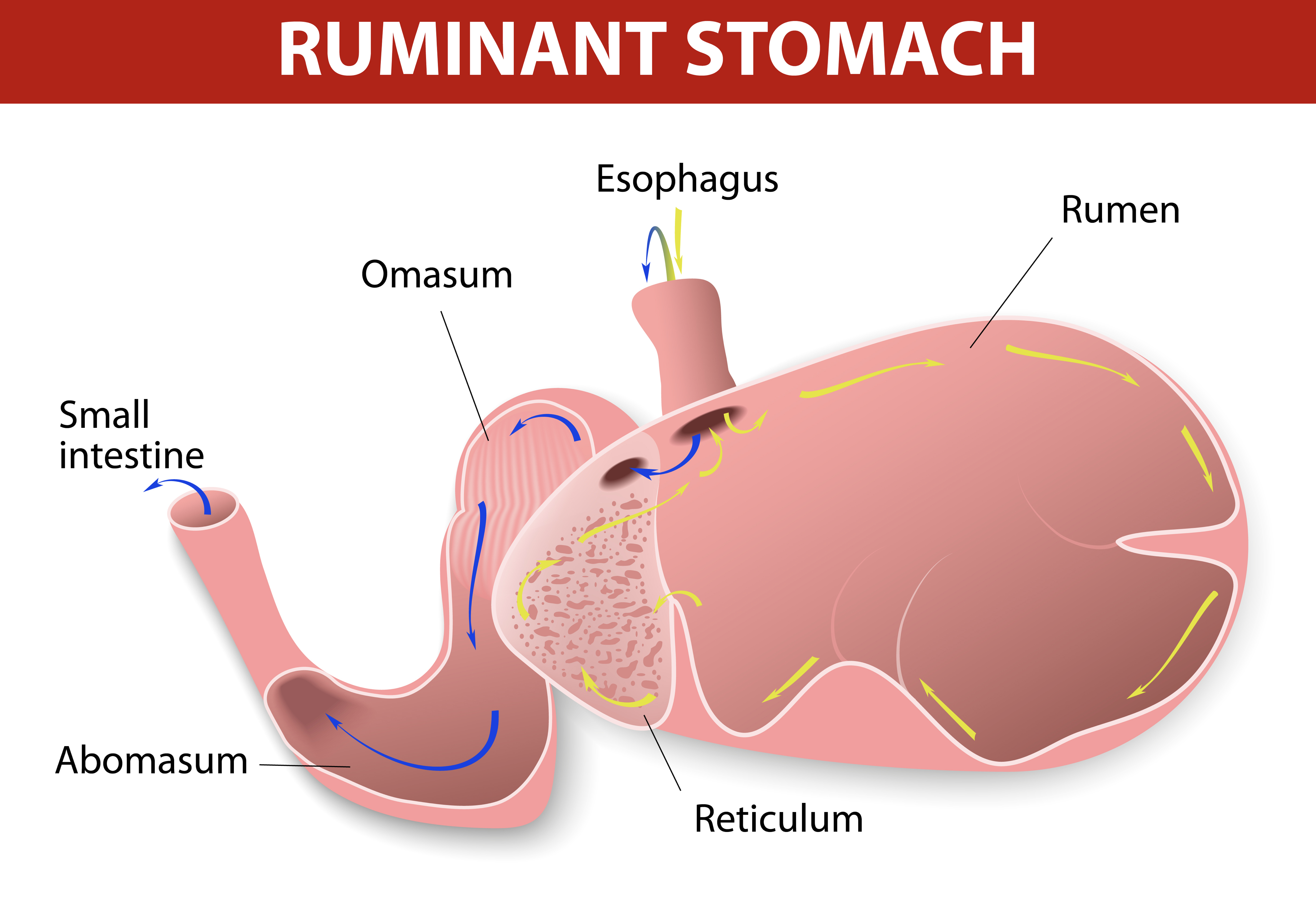
Four Compartments
- Rumen
- Largest compartment
- Storage and fermentation
- Located on left side of the cow
- Reticulum
- Resembles honeycomb
- Separated only slightly from the rumen
- Heavier objects are caught in this area
- Source of “hardware disease”
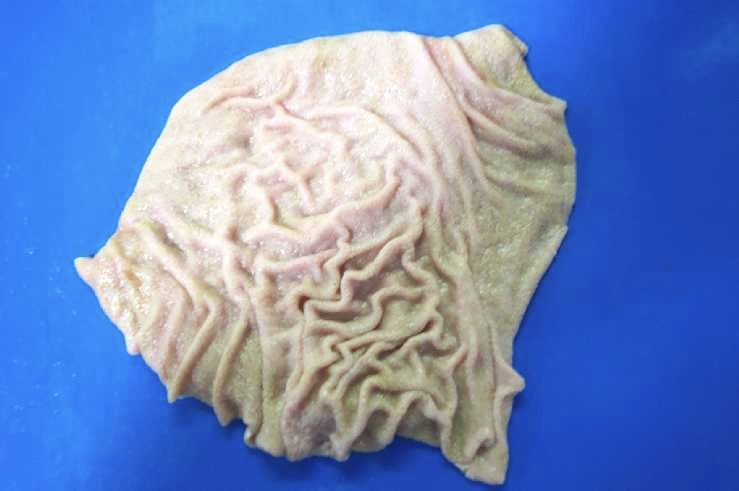
- Omasum
- Often called “many-piles,” since it is layers of tissue that resemble pages in a book
- Water/liquid absorption
- Abomasum
- Referred to as the “true stomach”; similar to the stomach in a monogastic
- Has hydrochloric acid and a glandular lining
- Digestive enzymes are introduced here
Digestive Pathway https://www.youtube.com/watch?v=SVNNJf_28KE
Food is ingested through the mouth. Cows are unique. They possess a dental pad instead of top teeth. The food is grasped by the tongue and ripped off. Food is broken into smaller pieces, mixes with saliva and is swallowed
Food moves down the pharynx or throat and through the esophagus
Esophagus, a long narrow tube connecting the throat to the stomach. Peristalsis (wavelike contraction) helps propel the food.
Food then moves into the rumen, the holding vat. Beneficial bacteria break down and digest the food, and papillae, “finger-like projections,” absorb nutrients that are created from the bacteria
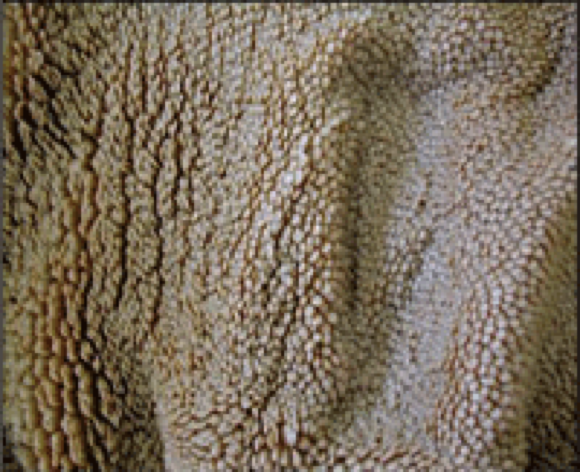
Cows lack digestive enzymes to digest plant material directly due to their inability to break down cellulose
The rumen possesses billions of beneficial bacteria that digest feed the cow had eaten
- The feed is fermented, and volatile fatty acids, proteins and B vitamins are produced
- The rumen in a cow can hold up to 50 gallons of digested feed
The reticulum is only slightly separated from the rumen. Food passes back and forth
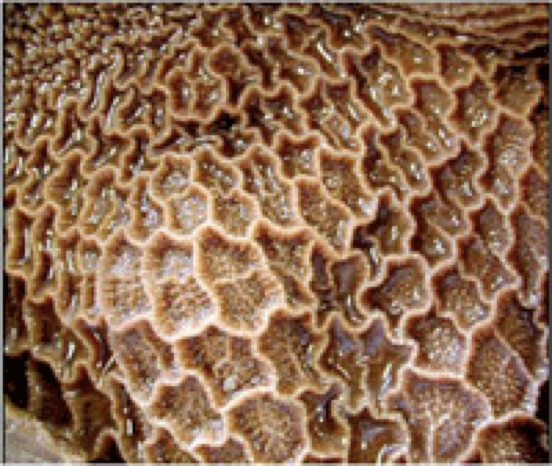
Filtering occurs, keeping particles inside the rumen
Food is then passed back up to the esophagus and throat as a bolus, a small mass of food. This is referred to as “cud”
Saliva, a critical component of cud chewing, buffers the rumen. This is similar to taking an antacid
Cows produce up to 50 quarts of saliva daily
Food repasses into the reticulum and backflows between the reticulum and the rumen for further digestion. Then it passes into the omasum
The “cud” passes into the omasum
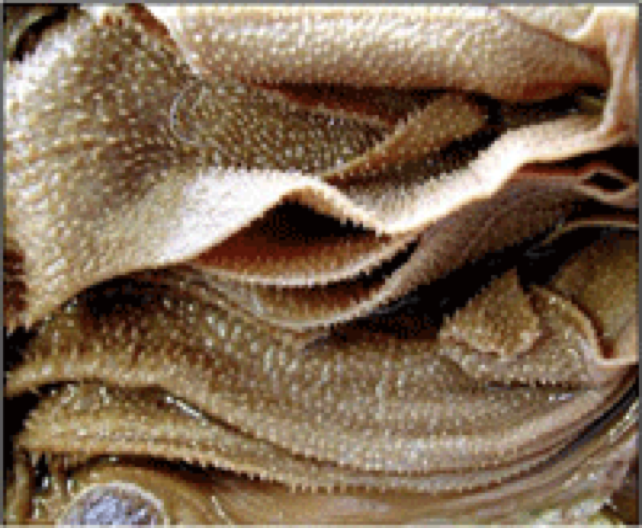
Primary purpose is water absorption and absorption of substances from digestion
This organ is lacking in modified ruminants/pseudoruminants
The abomasum functions similarly to the mongastric stomach
Acids, buffers, and enzymes break down food
Food continues on into the small intestine where nutrient absorption and water absorption occur
Enzymes are secreted in the from the pancreas and liver
Three portions in the small intestine: duodenum, jejunum, ileum
Food continues on into the cecum, the first part of the large intestine. Food continues through the large intestine to the colon at the far end
From the colon it is excreted through the rectum. Undigested food and body wastes are eliminated through the anus, the opening of the rectum
Modified Ruminants
- Modified ruminants are animals that have one stomach with three compartments
- The compartments are as follows:
- C1 -- similar to the rumen
- C2 -- similar to the reticulum
- C3 -- similar to the abomasum
- Include the camel, alpaca, and hippopotamus
Ruminant Feeds
- Eat roughages or forages
- Forages include hay, pasture, and corn silage
- Concentrates are often in the form of grains