t-Tests
Three types of analyses in this note
Correlation
Two variables
Linear Regression
Two variables
Multiple Regression
Three or more variables
Single Sample t Test
Two variables
One factor
Two levels
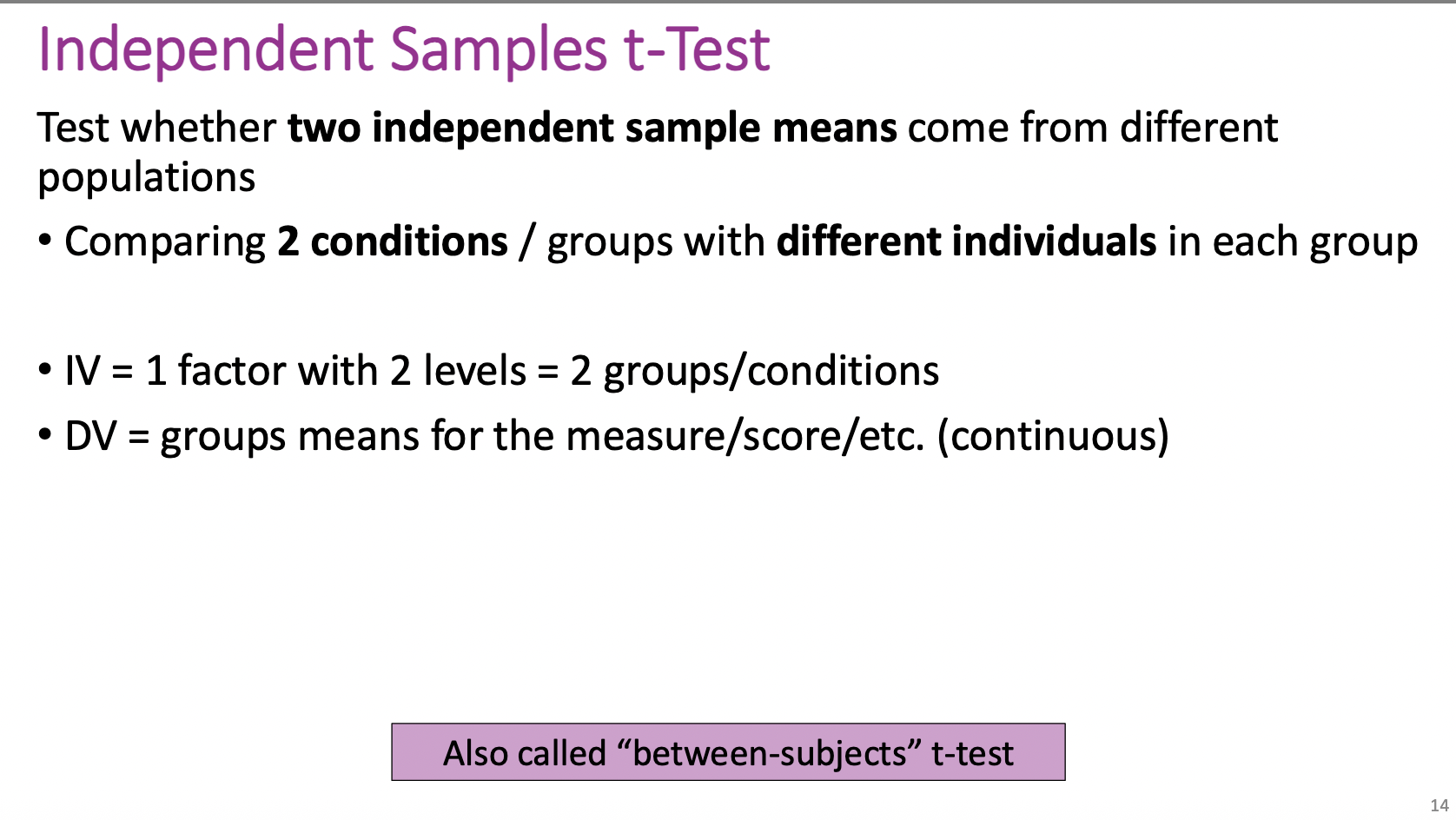
Independent t Test
Two variables
One factor
Two levels
Paired Dependent t Test
Two variables
One factor
Two levels
Causality
Something causing something
Quasi
Kind of, but not fully
An experiment without random assignment
Example:
Comparing stress levels between students in two different classes
(you didn’t randomly assign students → quasi)Comparing people before vs. after a policy change
(no random assignment → quasi)
Example:
Final Grade in 3830
Fall vs. Winter
What would we name the factor? (factor is another way of saying independent variable)
Factor - Semester:
Level 1: Fall
Level 2: Winter
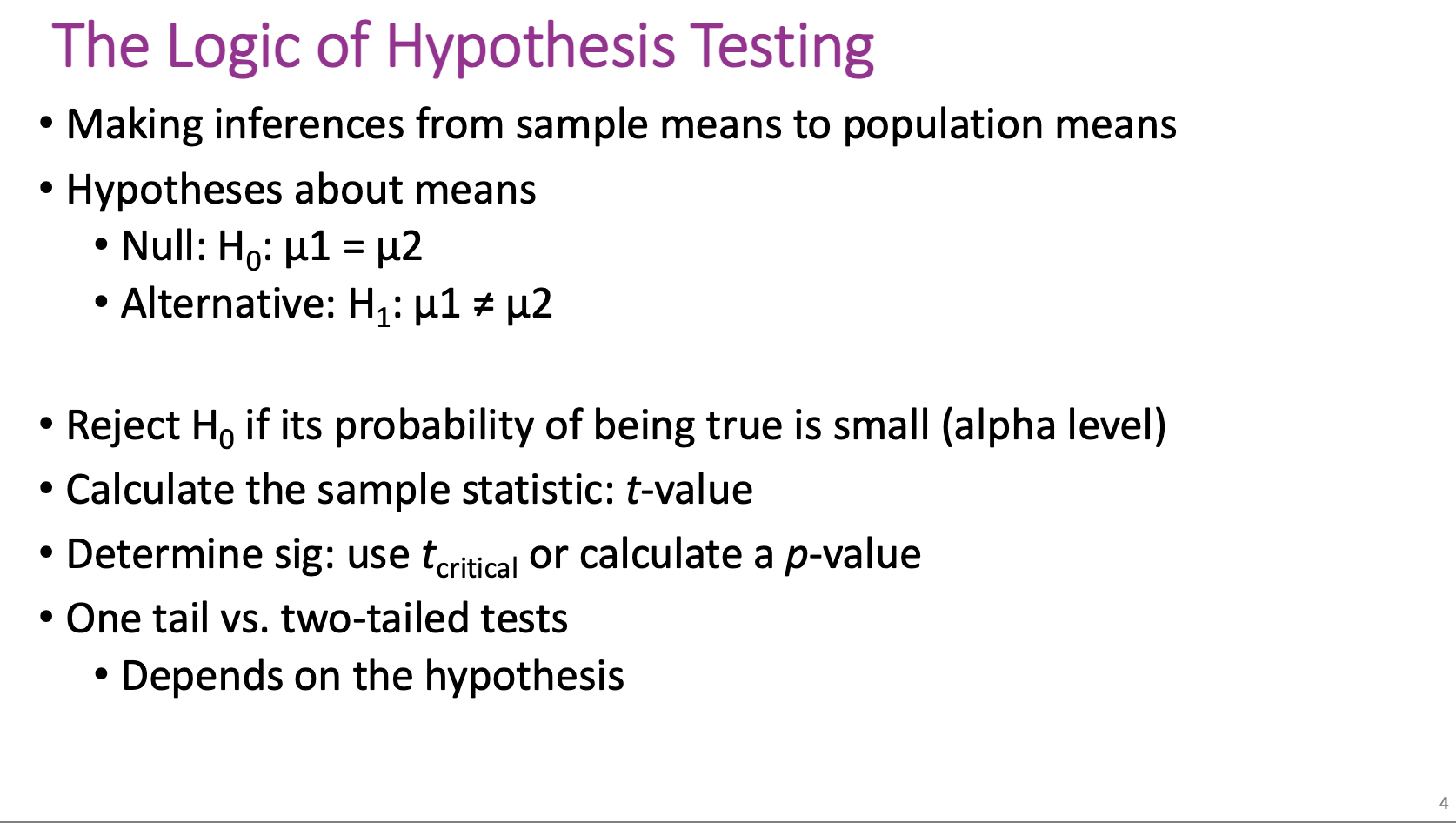
We’re looking to see if we can reject the null
0.5
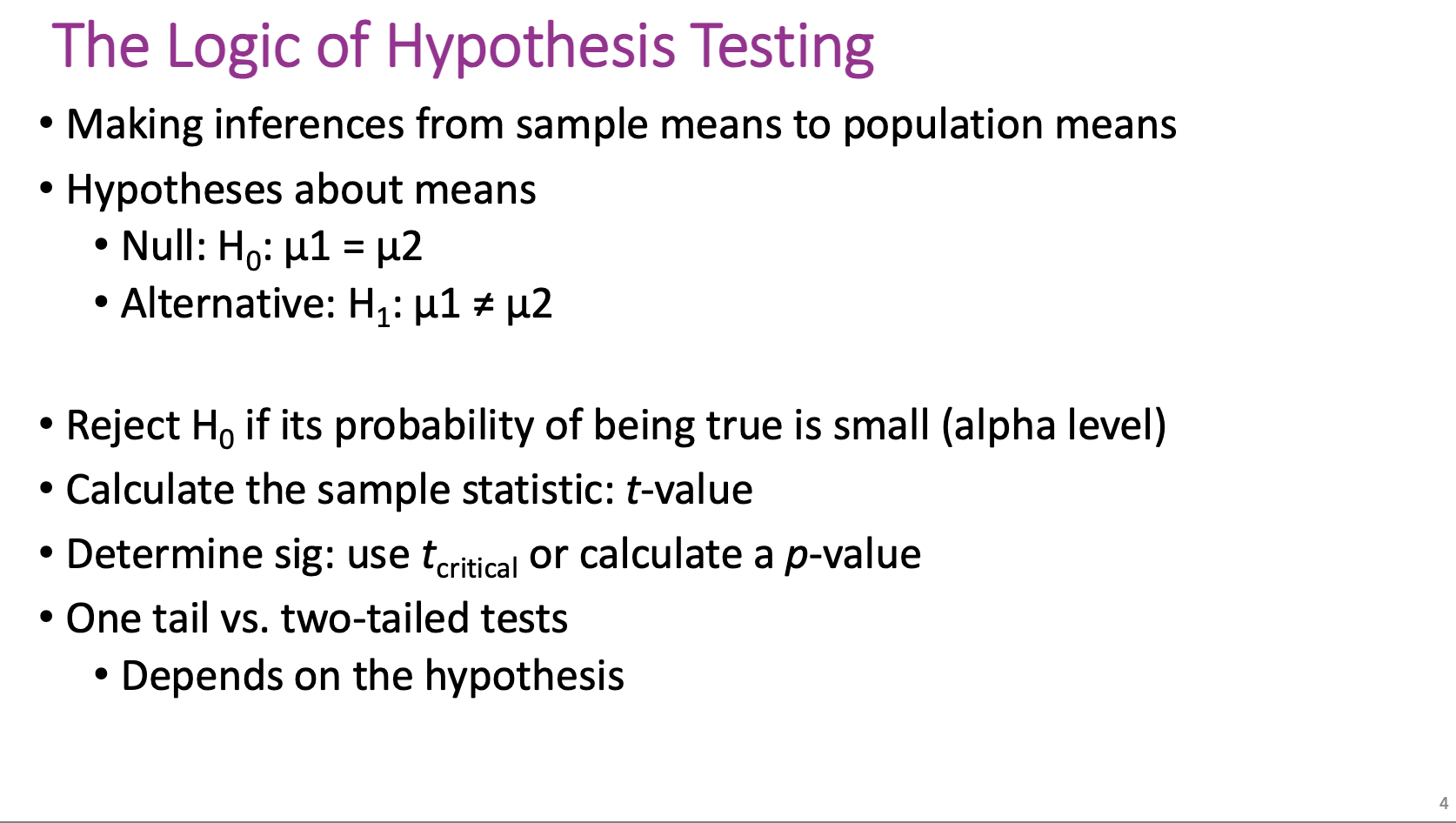
One tailed
The direction we think is going to happen (Winter is going to do better than Fall)
Increasing your power
Direction is predicted
Two tailed
A two-tailed test assesses whether there is a significant difference in either direction, meaning Winter could perform significantly better or worse than Fall.
Direction is not predicted
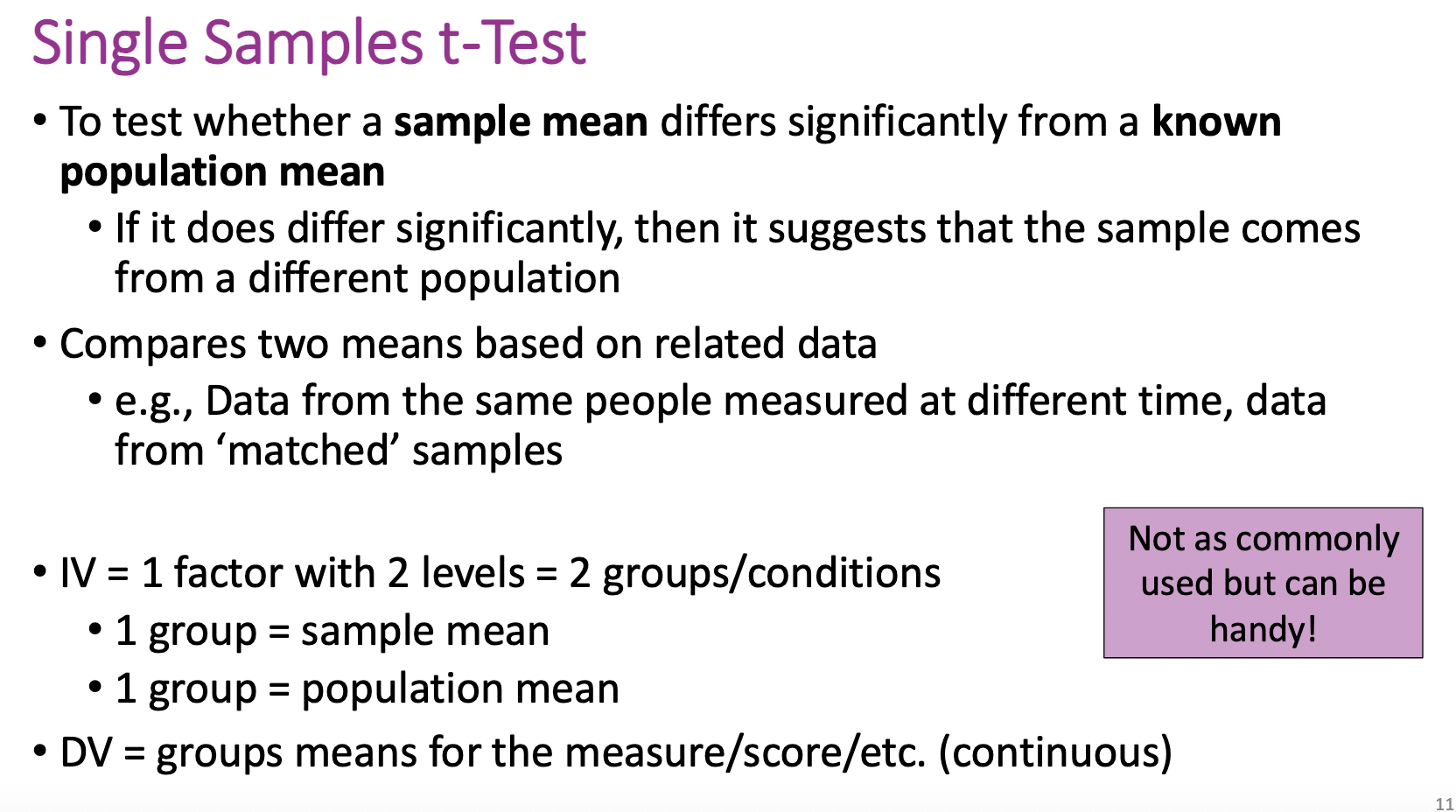
3rd year Stats class
Winter only
78-81 (known mean)
*What would you be a type of study you would run
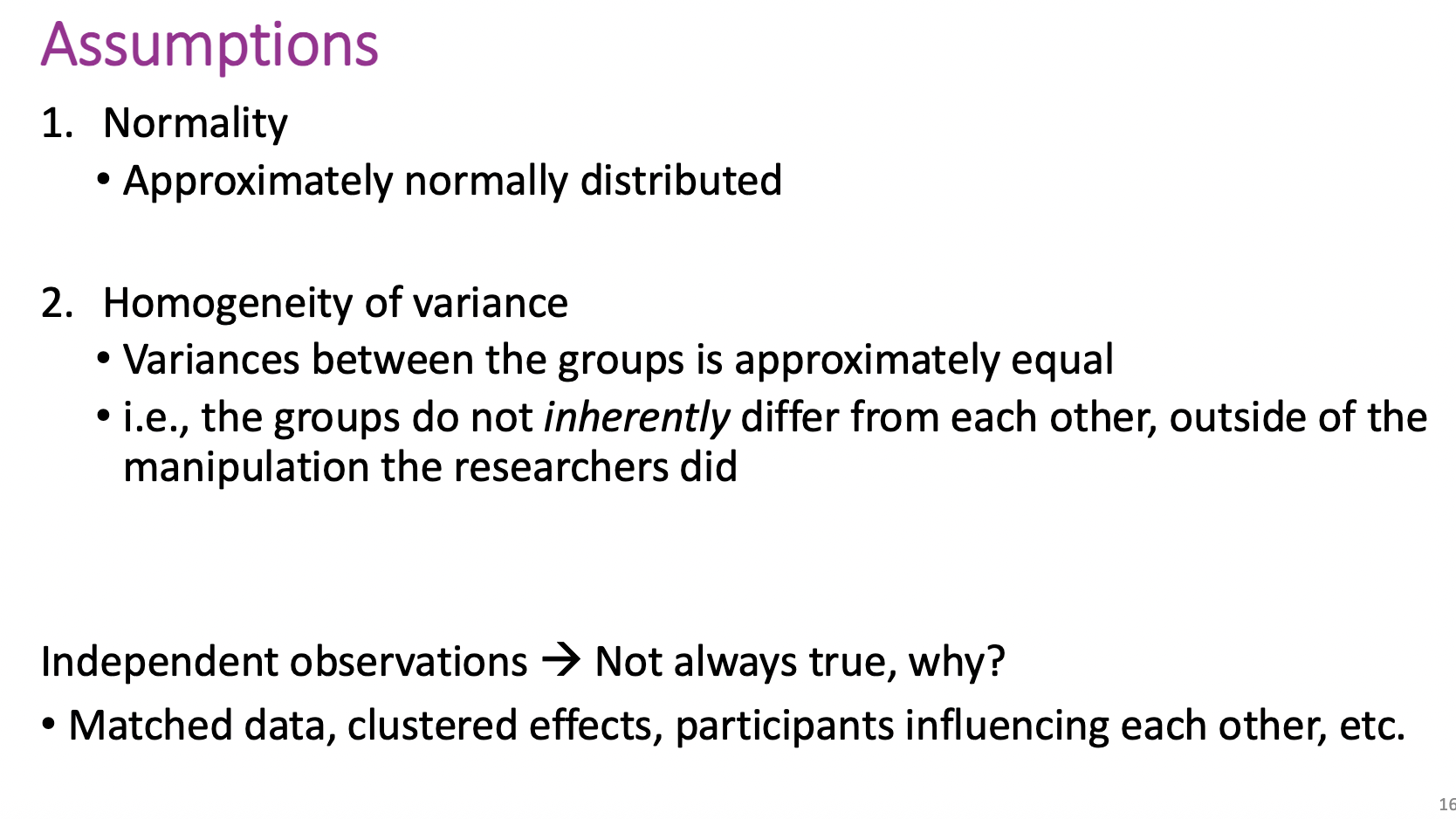
Normality
A normally distrubuted set of data (think of a bell curve (mean. median, mode is the same)
Know what it is and how to define it
We literally assume YES
In theory if NO = ‘non parametric’
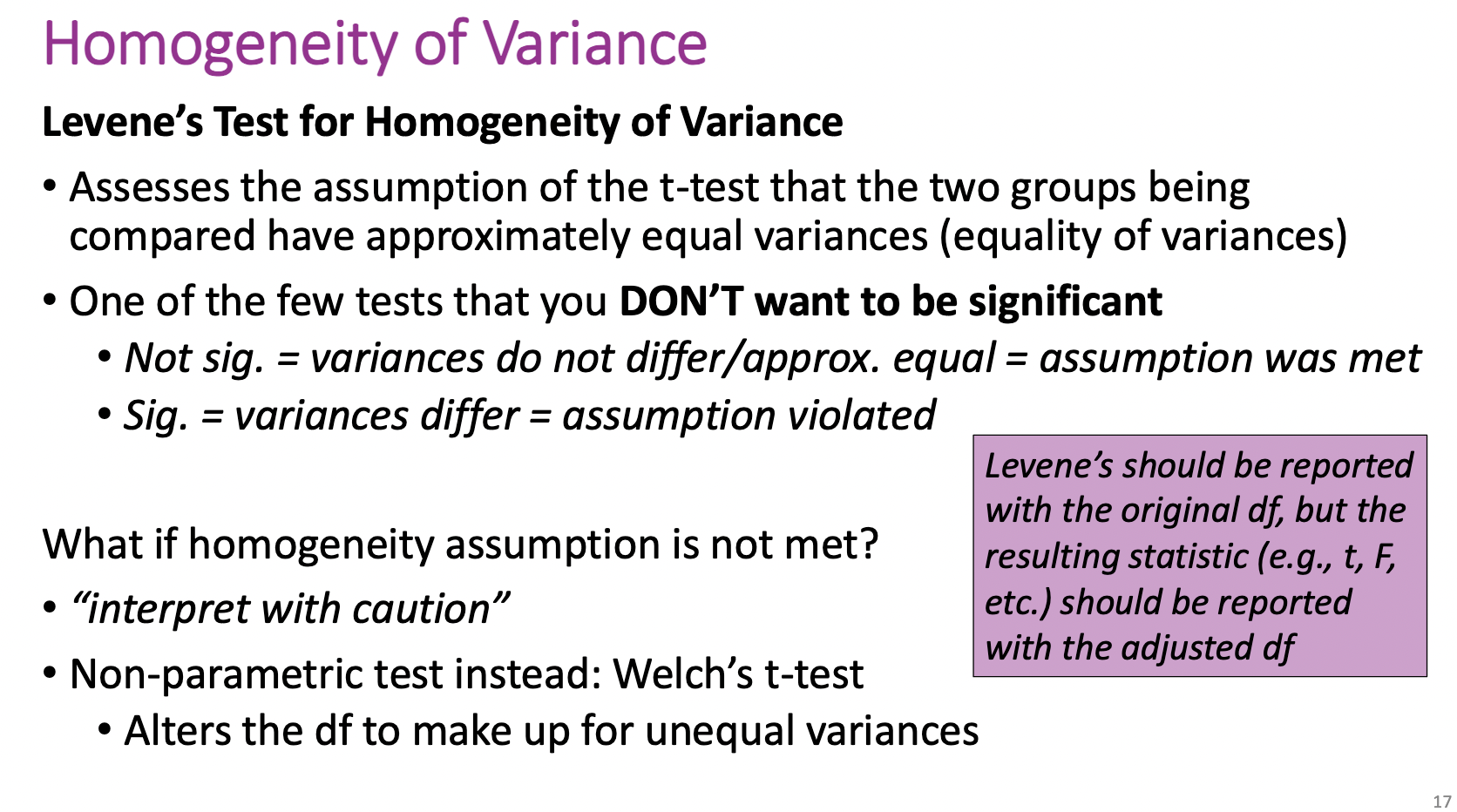
You do not want an inherent difference (if it is significant_
👉 You do NOT want Levene’s to be significant
Lab
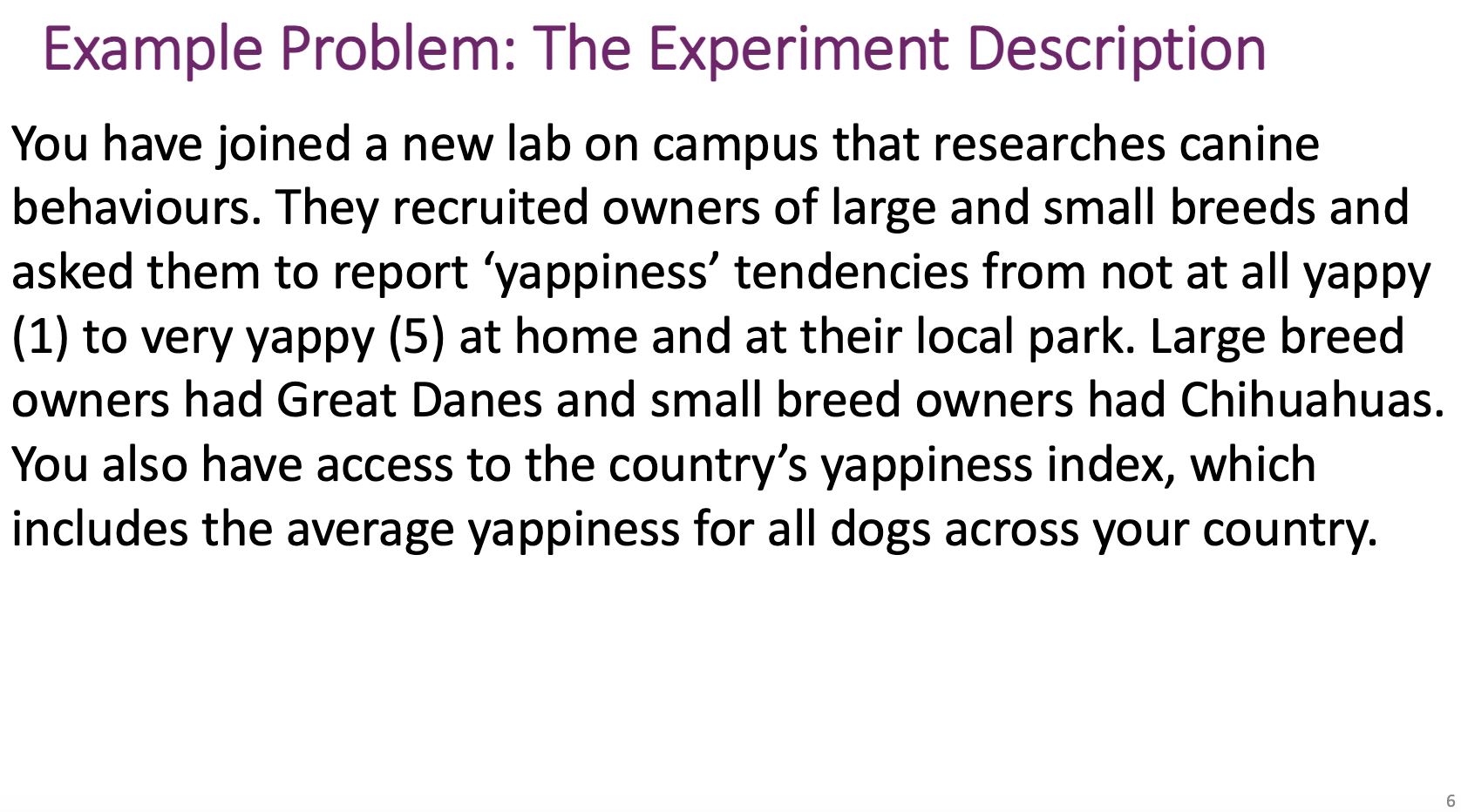
Factor
Breed Type
Level 1: Large
Level 2: Small
Independent Variable
Breed
Dependent Variable
Yappiness
1-5
Factor
Location
Level 1: Home
Level 2: Park
Independent Variable
Location
Dependent Variable