Connective Tissue
There are four primary tissue types in the body;
Epithelial tissue - sheets of tightly bound cells, found covering exposed areas and lining internal cavities
Ex: founds in skin, digestive tract and kidneys, provided protection and selective absorption
If the tissue is not tightly packed in the digestive tract it results in gaps where nutritions are able seep through causing abdominal inflammation
Connective tissue - provides support and structure
Muscular tissue - can contract and produce movements
Neural tissue - conducts electrical impulses
Connective tissue
All connective tissue have 3 main components:
Specialized cells that are specific to the type of connective tissue that they are
Have extracellular protein fibers
Have a matrix
Classification of connective tissue, there are 3 categories:
Connective tissue proper - has a fibrous matrix
Fluid connective tissue - has a liquid matrix
Supporting connective tissue
Functions of connective tissue
Establishing the structural framework of the body (bone/skeleton)
Transporting fluid and dissolved materials
Protecting organs (provides coating and bony housing/skull ribs)
Supporting, surrounding, and connecting other tissues
Storing energy (adipose tissue/fat)
Defending the body from microorganisms
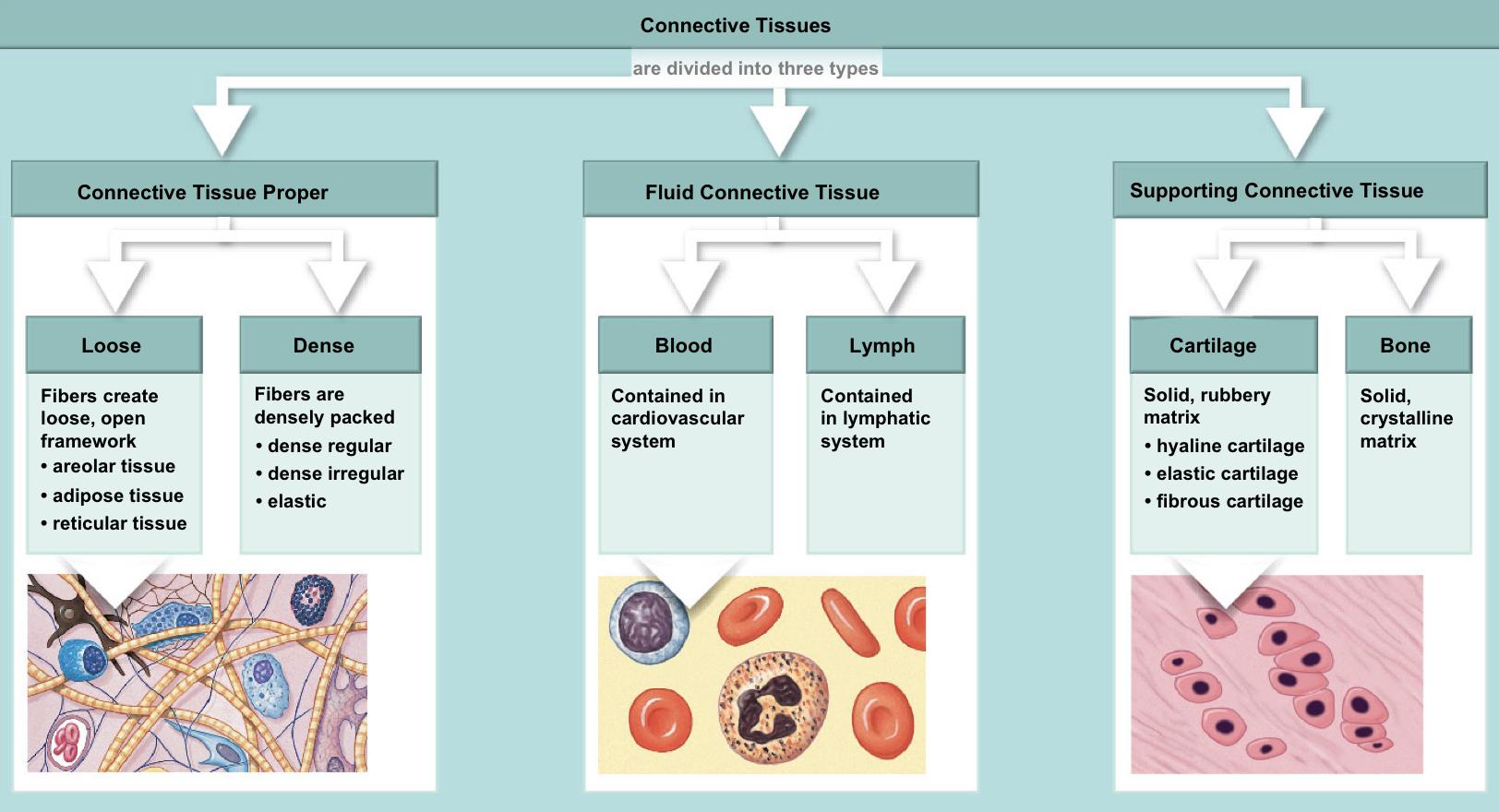
Connective tissue Proper
Loose connective Tissues - loose fibers
Areolar tissue
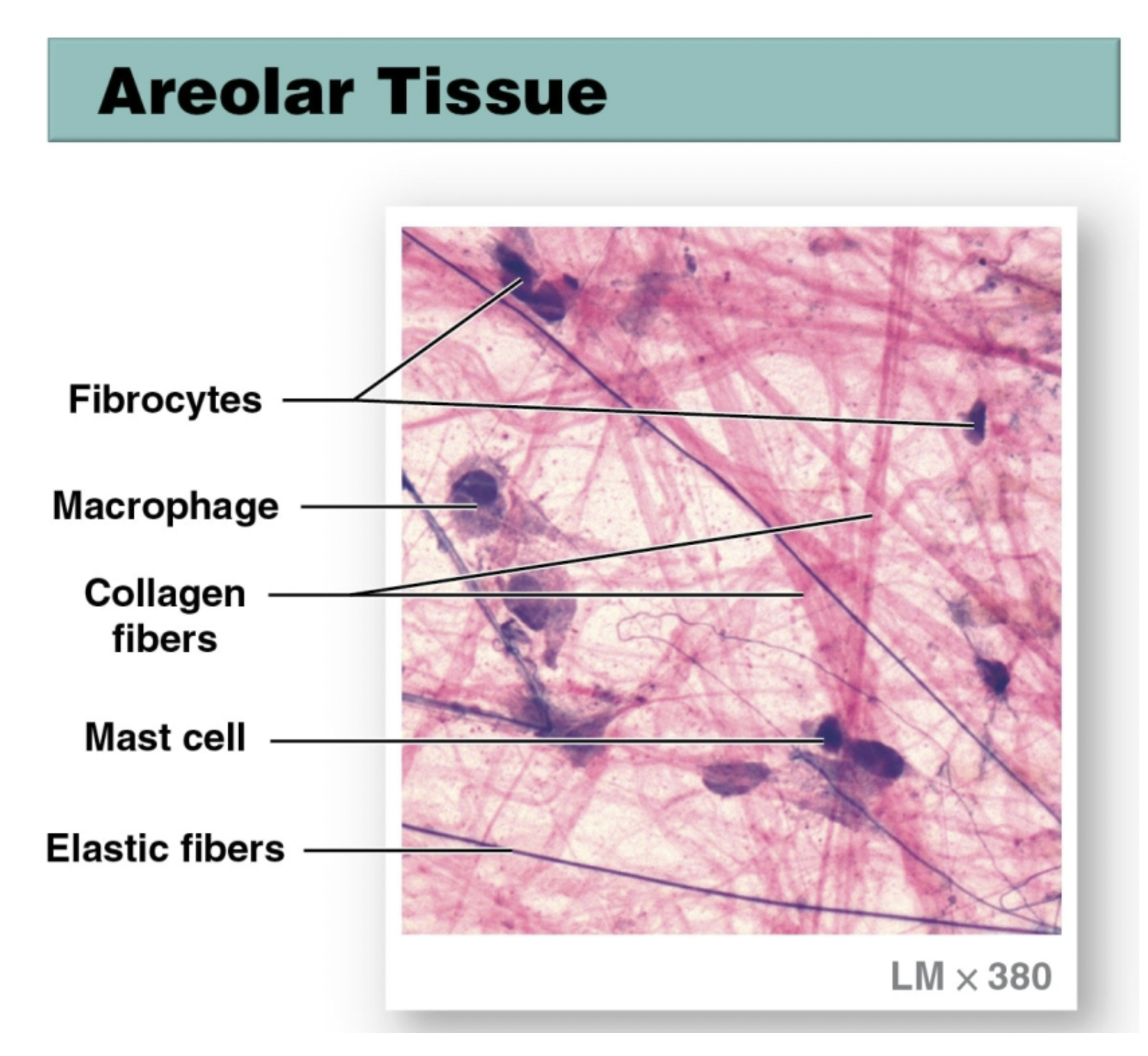
Loose fiber matrix
Found deep in the dermis
Binds the skin to muscles
Provides minimal supports
Allows for a lot of movement (elastic fibers)
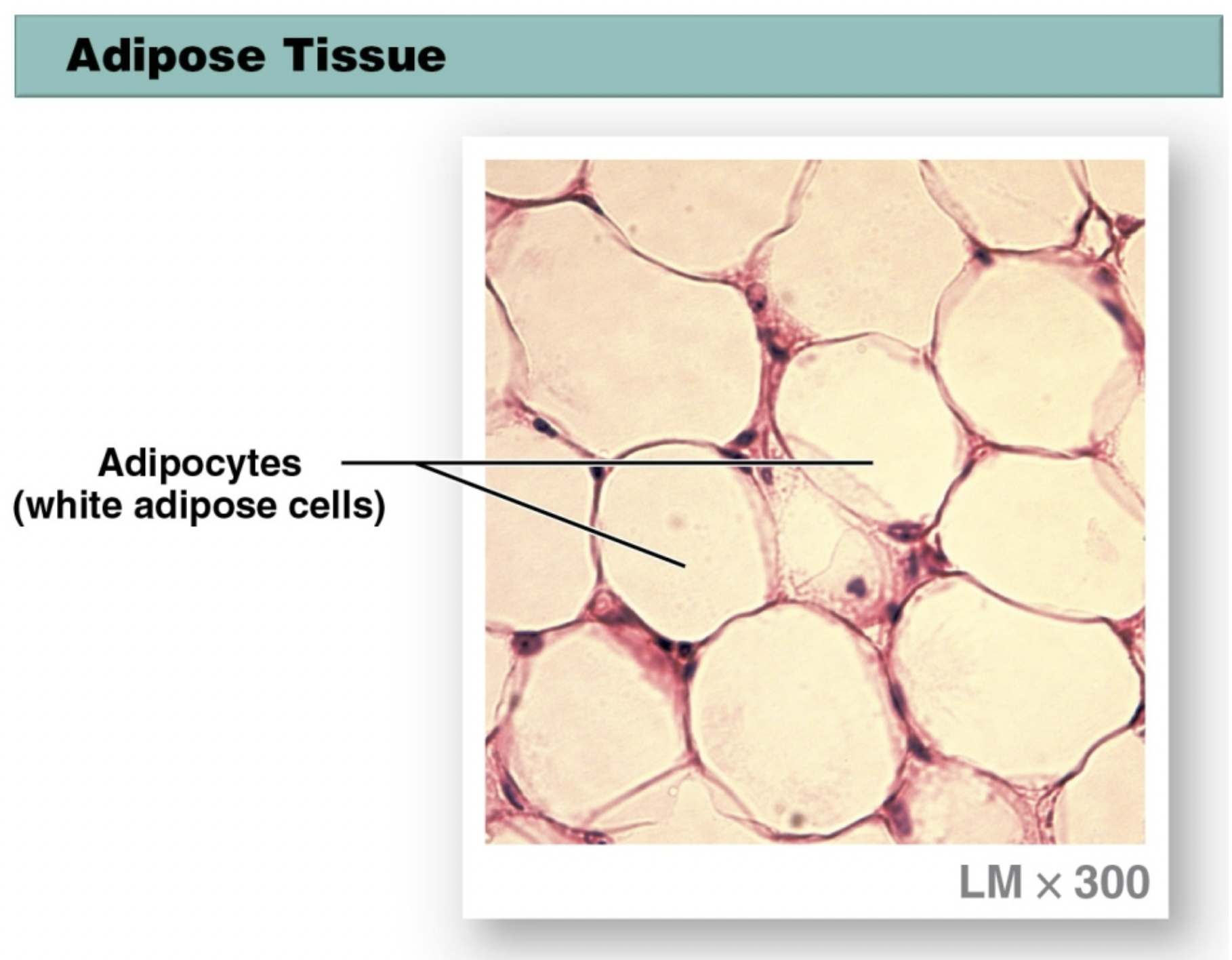
Adipose tissue
Has adipocytes (white and brown)
White adipose cells (loose fibrous matrix)
Found in the hypodermis (the fat layer between fat and muscle) mainly in the buttock region and around organs
A type of energy storing tissue
Provides a “cushioning” function and an insulator
Brown adipose tissue (loose fibrous matrix)
Seen mainly in infants and young children
Brown because they have their own blood supply
Provided a heat source
Is seen in some adults, studies conducted to see is this can be used to combat obesity
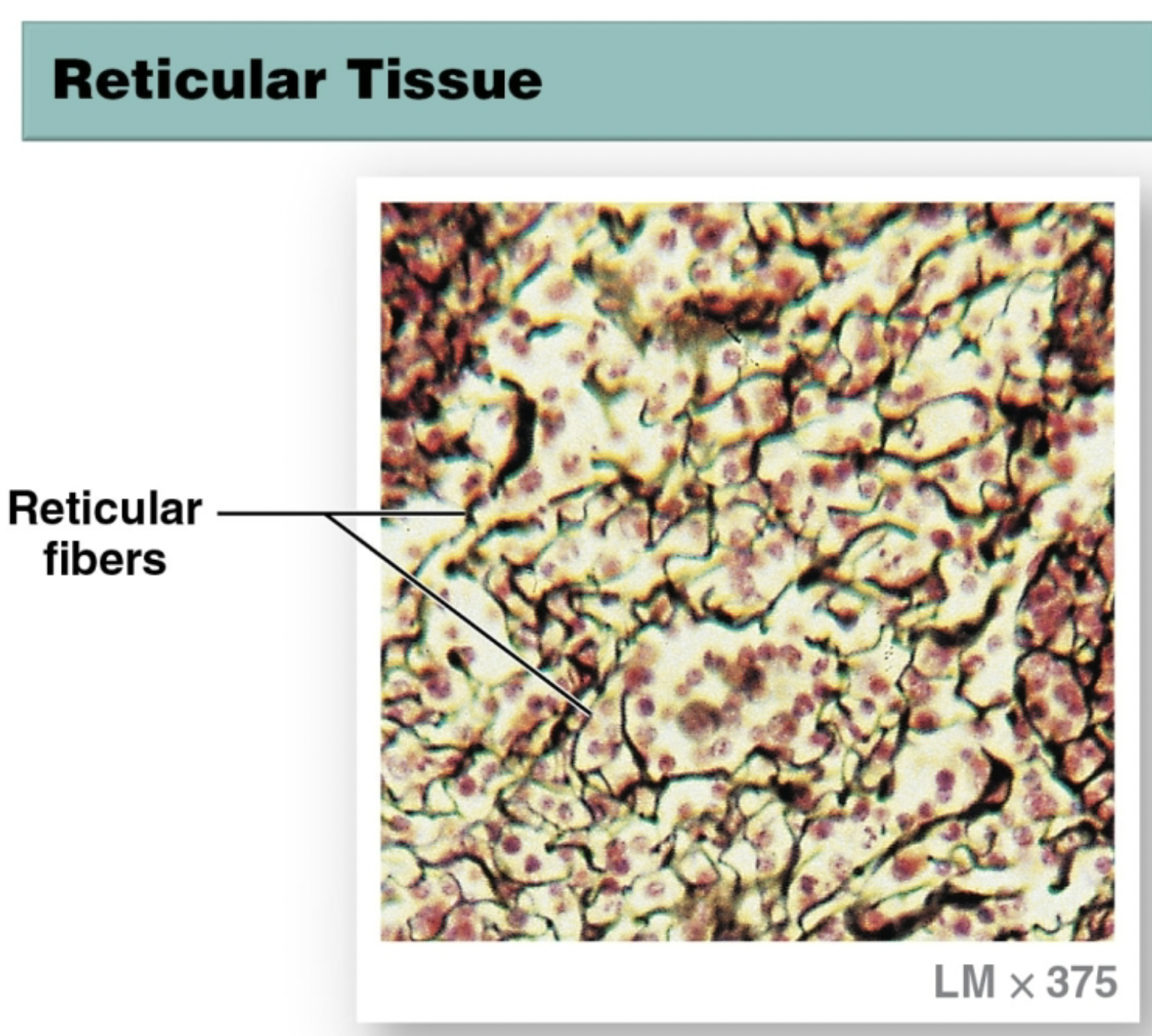
Reticular tissue
Found in tissues and organs
Liver, spleen, kidney, lymph nodes, appendix, bone marrow, tonsils and more
Its orientations of reticular fibers allow the tissue to provide a supporting/scaffolding framework to all the organs its found in
Dense connective tissue
Dense regular connective tissue (Still dense fibrous matrix)
The density of the tissue provides its strength
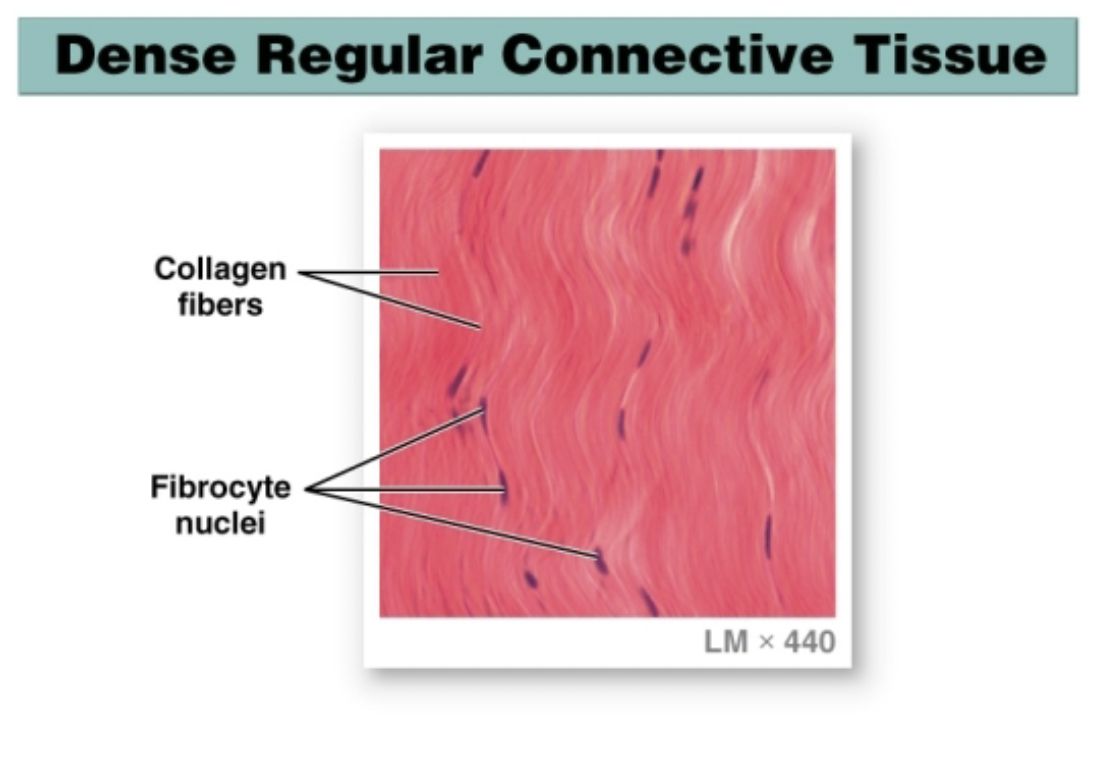
Found in tendons (bind muscle to bone)
Aponeurosis (broad sheet like tendon found at the top of the head and palm)
Ligaments (connects bone to bone and soft structures/organs internally)
Note the fibers in the image are organized neatly and densely packed
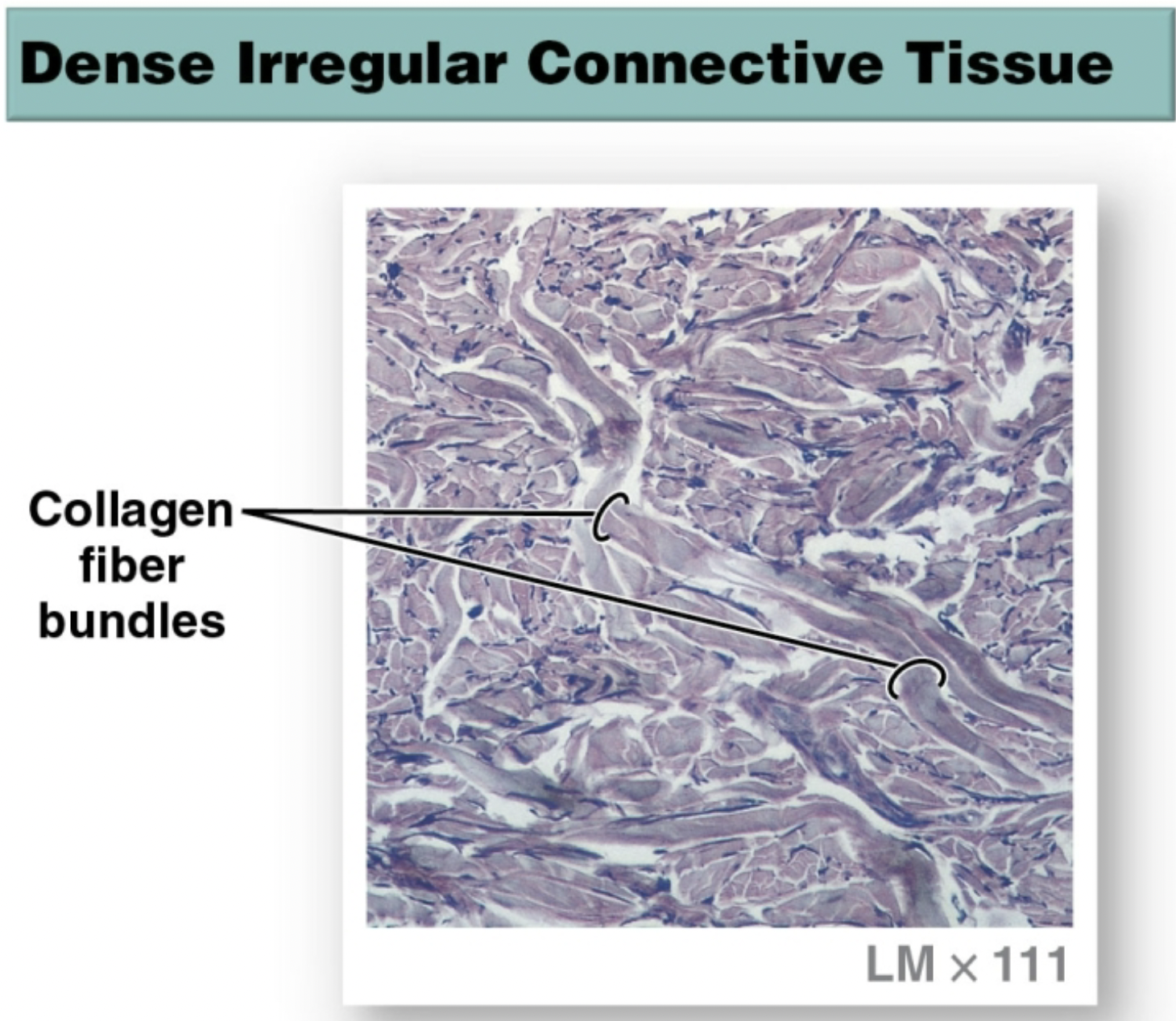
Dense irregular connective tissue (dense fibrous matrix)
Tissue is a dense “mess” with bundles
Provides strength and support, though not as strong as regular connective tissue
Found in fibrous capsules around organs, dermis of skin, glands, some visceral organs (internal), outer layer of bones (creates a capsule around the bone - periosteum), outermost layer of cartilage (pericardium)
Note the fibers in the image are not as neatly packed
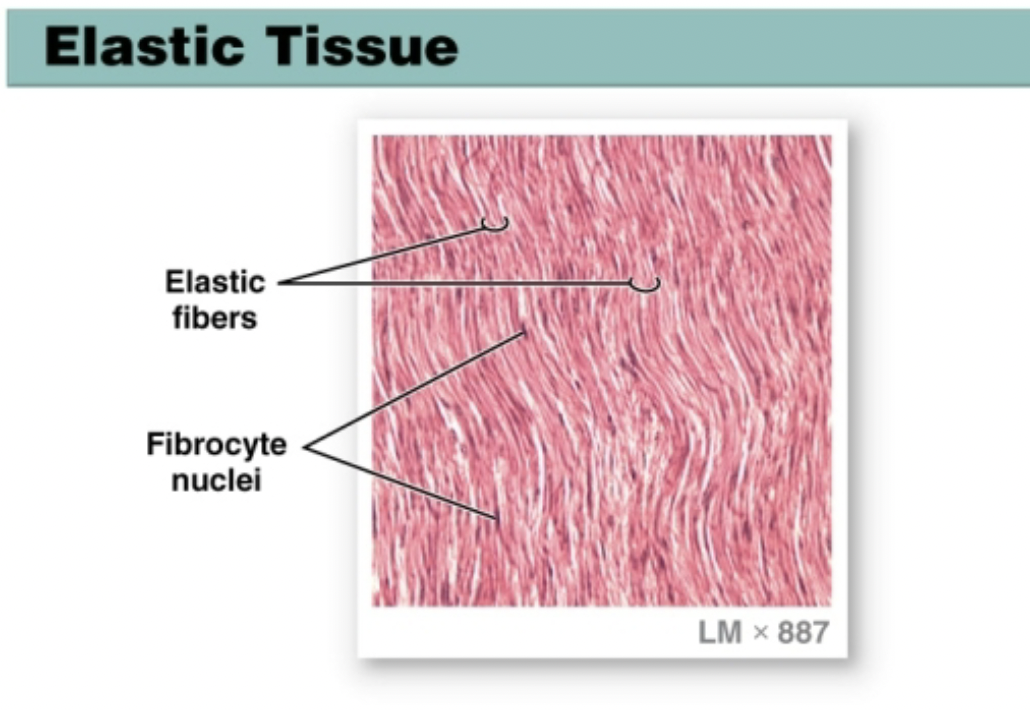
Elastic tissue (dense fibrous matrix
A type of dense connective tissue but with more elastic fibers in the tissue
Found in fascia (covers the skeletal muscle) and the vertebrae (stabilized the spinal cord)
Fluid connective tissue (liquid Matrix)
Blood - located in the cardiovascular system.
Specialized cells include: erythrocytes (red blood cells), leukocytes (white blood cells), and platelets
Lymph - located in the lymphatic system
Specialized cells include: lymphocytes (plays a vital role in the immune system)
Supporting connective tissue
Provides a strong framework that supports the rest of the body
Cartilage - made of chondrocytes (specialized cells)
Has a gelatinous matrix
Chondroitin Sulfate - a protein found in the matrix
Is avascular, has no blood supply, not easily healed
Bone - made of osteocytes (specialized cells)
Solid matrix
Has calcium phosphates
Very strong
Three types of cartilage
Hyaline
found between ribs and sternum (center breast bone), several structures along the throat region (larynx, trachea, windpipe, bronchi), some joints in elbows and knees, and immature skeleton (newborn) before it calcifies)
Provided flexible support and helps reduce friction
Elastic
Found in external part of ear (auricle), auditory canal, epiglottis
Provides flexible support
Fibrous
Found in tissue to bone attachment (where ligaments and tendons connect), menisci in knees, pubic symphysis ( where pubic bone need the front of lower region of the groin), and intervertebral disks (in the spinal cord)
Provides resistance to compression (important in vertebrates), absorbs shock, and is very strong
Two types of bone
Compact - surrounds the spongy bone and holds blood vessels
Blood vessels are trapped in central/haversians canals in the osteons (considered the functional unit of compact bones, has everything needed to allow the bone to function)
Canaliculi - channels between lacunae and blood vessels that leaf out to the surface of the osteon, allows for transportation
Periosteum - made up of fibrous layer and a cellular level. The outermost layer of all bone (dense irregular connective tissue)
Spongy - (trabecular/cancellous bone) located on the inside of the bone
The connective tissue framework of the body
connective tissue creates the internal framework of the body
layers of connective tissue, called fascia (surrounds organs and covers muscles), connect organs with the rest of the body
Superficial fascia (subcutaneous layer) - loose connective tissue, areola and adipose tissue
Deep fascia - dense irregular connective tissue
Subserous fascia - deeper layer, loose connective tissue, areola
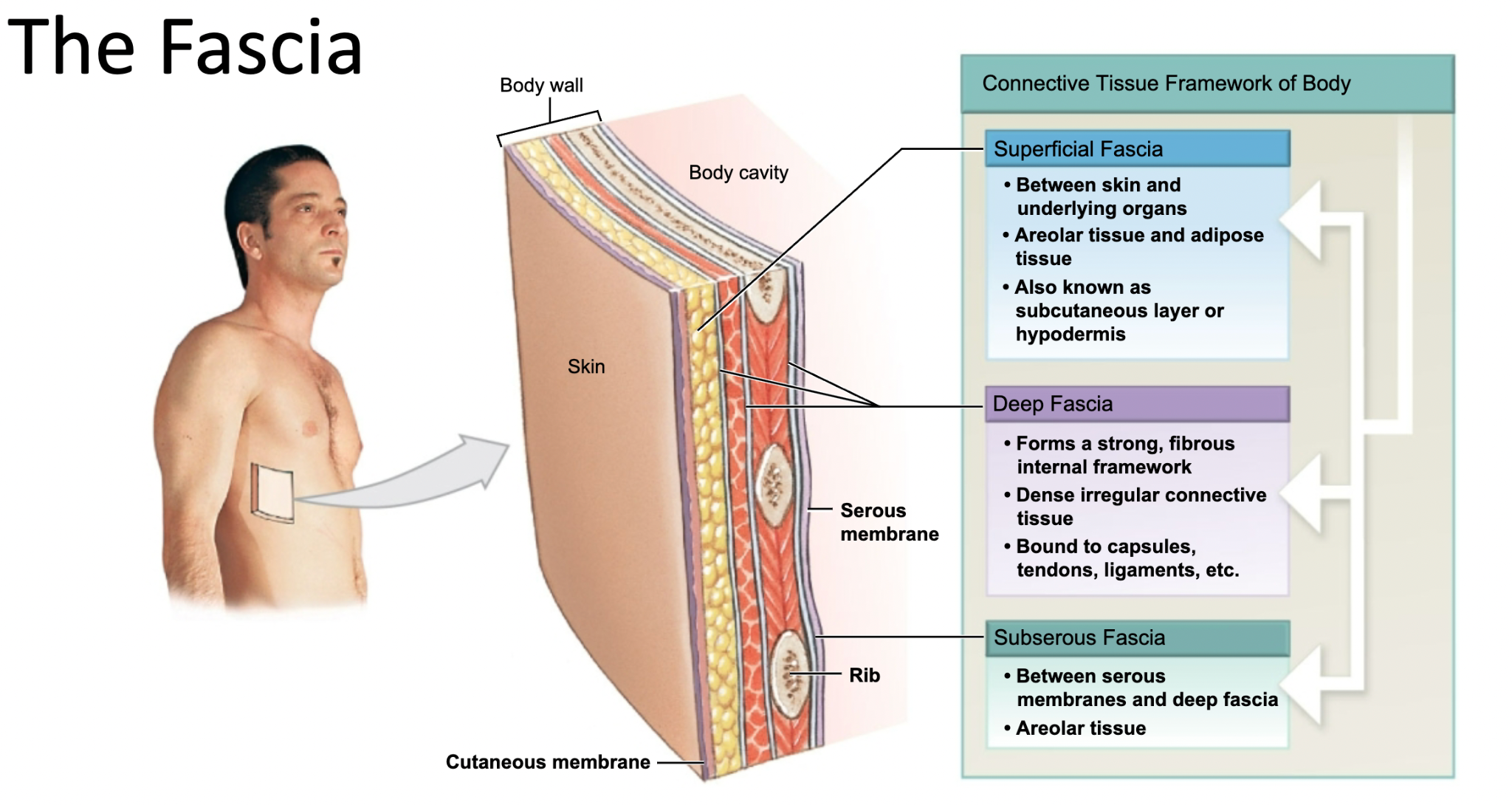
Myofascial - Deep fascia
*myofascial - fascia around the muscle
Fascia covering the skeletal muscle
Myofascial pain syndrome - chronic pain disorder
Pressures on sensitive points in the muscle triggers pain in unrelated parts of the body
Referred pain
Tissue and aging
Repair and maintenance become less efficient as one ages
Hormonal changes and lifestyle changes also affect the functioning of tissues
connective tissue become fragile
A reduction in bone strength; osteoporosis
Myo = muscle
Peri = outside/surrounding layer
Osteo = bone
Chondro = cartilage