Personality Disorders
Personality Disorders are associated with risk
- high rates self-harm
- inc. self-harm by ingestion
- multiple suicide attempts
- 50% abuse drugs and/or alcohol
- unprotected sex
- violence
- increased risk of harm/attack
- poor compliance with medical recommendations
- poor self-care/self-neglect
What is personality disorder?
- Livesley, 2003 → ‘failure to achieve adaptive solutions to life tasks’
- The overall goal in treating personality disorder is to improve adaptations
Life tasks
- integrated representations of self and others
- capacity for intimacy
- capacity for affiliation
- adaptive social functioning
- prosocial behaviour
- cooperative relationships
Dimension or categorical
- APA (1994) → Personality traits are enduring patterns of perceiving, relating to, and thinking about the environment an oneself, that are exhibited in a wide range of social and personal contexts. Only when personality traits are inflexible and maladaptive and cause significant functional impairment or subjective distress do they constitute Personality Disorders
- PD are long lasting patterns, enduring since adolescence, and independent of social context
- PD is ego-syntonic
- The symptoms are often transient (i.e. eating disorders, psychosis, dissociative disorders)
- Personality shaped by innate (hereditary) temperament reacting to:
- parental style,
- cultural influences,
- social environment,
- intelligence,
- events [trauma]
- The P factor of general psychopathology → Refers to a general latent dimension that is derived from a wide range of items measuring adult psychiatric symptoms
- Resilience → Resilience can generally be defined as ‘the capacity of a dynamic system to withstand or recover from significant challenges that threaten its stability, viability, or development’
- it is a dynamic process that leads to successful individual adjustment in the face of adversity (Guillen et al, 2021)
- Epistemic Trust → an individual's willingness to consider new knowledge as trustworthy and relevant, and therefore worth integrating into their lives.
- In contrast, epistemic mistrust is characterised by inflexible thinking patterns and a difficulty to learn from the social environment
Prevalence
- 1 in 20 in the ^^general population^^
- 50 % ^^substance misusing^^
- 15-95% ^^mental health settings^^
- 35% ^^prison population^^ (maybe higher)
- high in ^^eating disorde^^r settings
- high in ^^trauma clinics^^
- different presentations different settings
Biosocial Theory of BPD
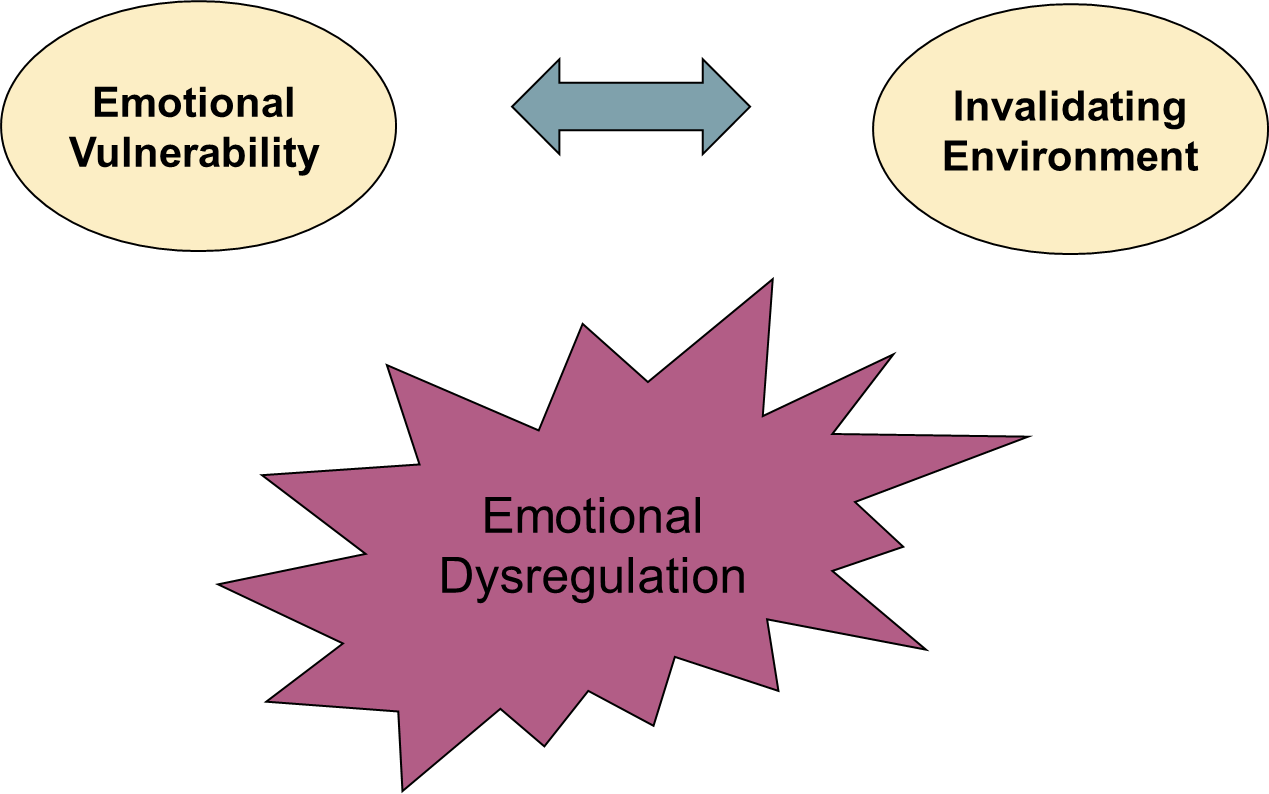
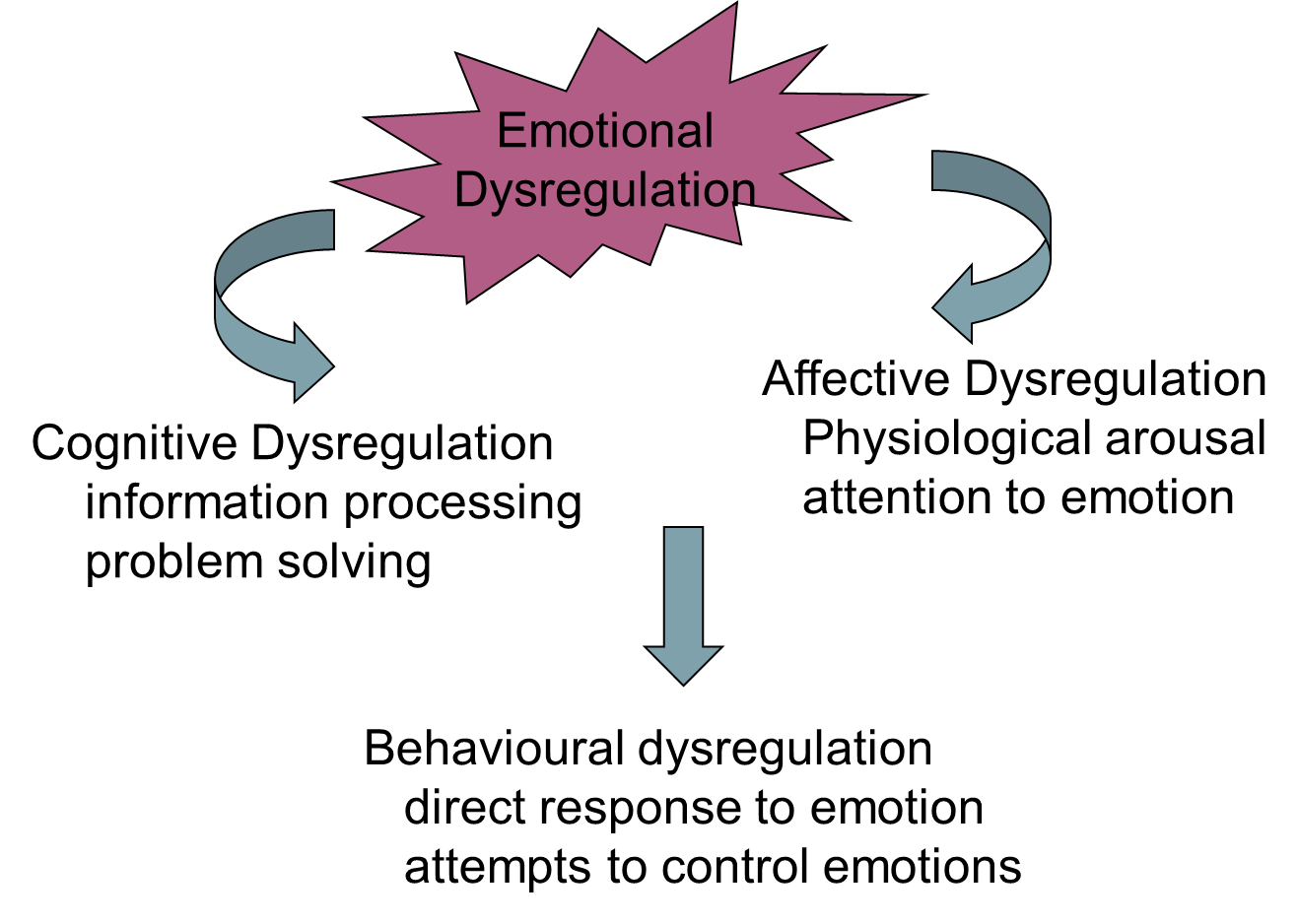
- Cognitive Dysregulation → information processing problem solving
- Affective Dysregulation → Physiological arousal attention to emotion
- Behavioural dysregulation → direct response to emotion attempts to control emotions
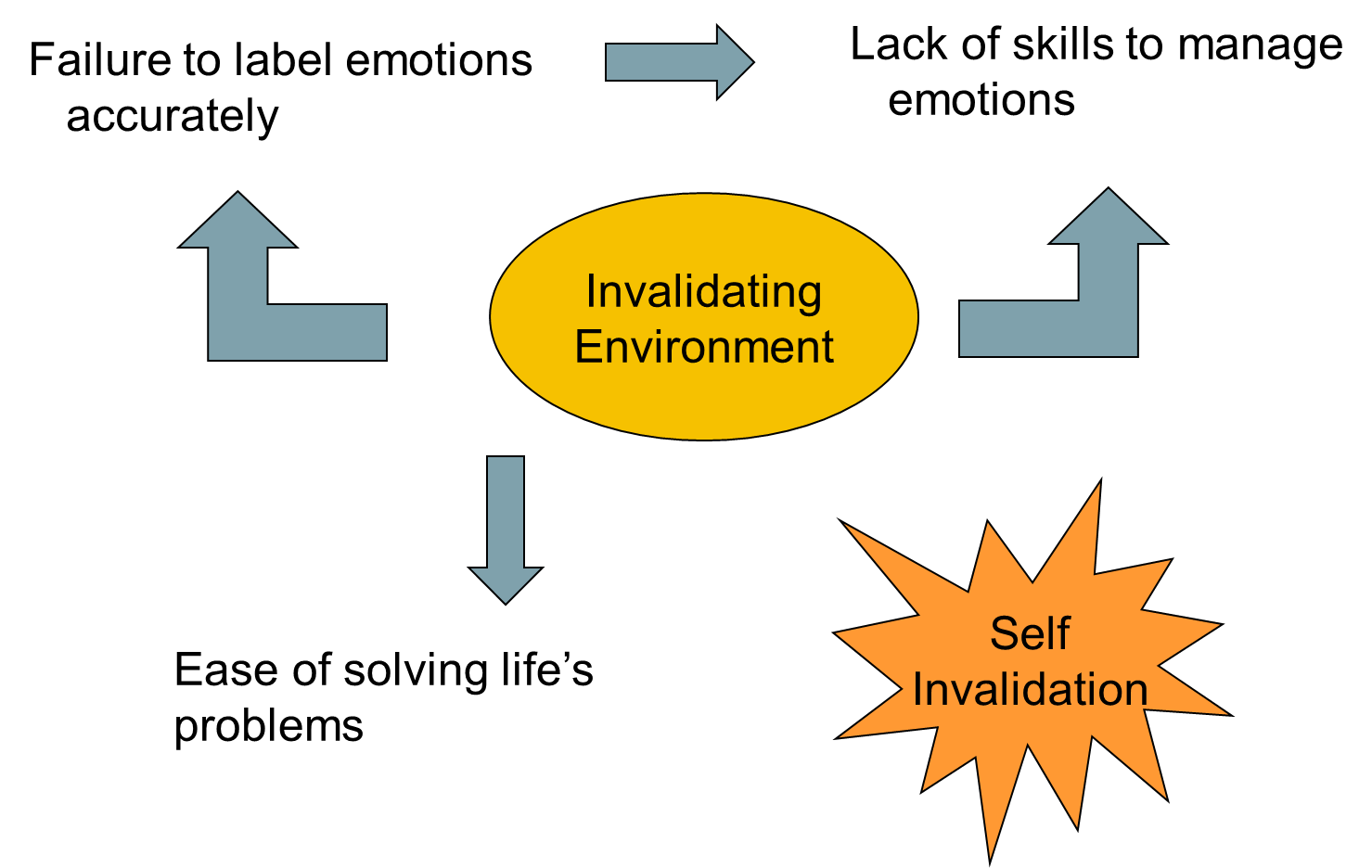
- Failure to label emotions accurately
- Ease of solving life’s problems
- Lack of skills to manage emotions
Histrionic Personality Disorder
- pattern of excessive emotionality and attention seeking
Narcissistic Personality Disorder
- pattern of grandiosity, need for admiration, lack empathy
Antisocial (Dissocial) Personality Disorder
- pervasive disregard for and violation of the rights of others
Avoidant Personality Disorder
- pattern of social inhibition, feelings of inadequacy, hypersensitivity to negative evaluation
Dependent Personality Disorder
- pattern of excessive need to be taken care of that leads to submissive behaviours and fears of separation
Obsessive Compulsive (Anakastic) Personality Disorder
- pattern of preoccupation with orderliness, perfectionism, and mental and interpersonal control at the expense of flexibility, openness and efficiency
Schizoid Personality Disorder
- detachment in relationships, restricted range of emotional expression in interpersonal situations
Schizotypal Personality Disorder
- a pattern of acute discomfort in close relationships and cognitive or perceptual distortions or eccentricities in behaviour
Paranoid Personality Disorder
- pervasive distrust and suspiciousness of others who are regarded as malevolent
Types of Treatments
- Dialectical Behavioural Therapy
- Mentalization Based Therapy
- Cognitive Behaviour Therapy
- Schema Focussed cognitive Therapy
- Cognitive Analytic Therapy
- Transference Focussed Psychotherapy