Maker Educator Leadership: Routines and Tools to Support Professional Development
Maker Educator Leadership and Philosophy
Peter Wardrip - Associate Professor University
of Wisconsin -Madison
Jeff Evancho - Pittsburgh Teaching and Learning Colab
Leadership Representation Activity: Zip Tie Construction
Activity Overview: Participants are tasked with creating a physical representation of leadership using zip ties.
Time Constraints: The initial time allotted for the build is , later reduced to approximately to encourage rapid iteration and abandoning unworkable ideas if necessary.
Sharing and Introduction: Participants are instructed to share their creations with people at different tables to promote networking and cross-pollination of ideas. They are encouraged to introduce themselves using their real names or aliases.
Participant Examples and Metaphors:
Rick Dansby (Oklahoma): Rick oversees a robotics program at the district level involving different teams across schools. Previously a major and an assistant principal, he constructed a "jumbled mess."
Leadership Philosophy: Leadership often appears as a mess, but effective leadership involves implementing systems and structures so that, once unjumbled, patterns and a chain of support emerge.
Connecticut Creative Technology Teacher: Teaches First Robotics and Architecture.
Leadership Philosophy: Chose identical colors for zip ties to represent equality within a team. Placing a "secret color" would imply someone is different or unique in a marketing sense. Leadership means collaborating at the level of the team members and being attuned to collective needs rather than just delegating.
The Heart Model: A participant constructed a heart shape.
Leadership Philosophy: Leadership must start with the human first. It requires having a "heart" for people, understanding their specific needs, and figuring out how to connect individual specialties so they flow together and reach others.
Conceptualizing Maker Educator Leadership
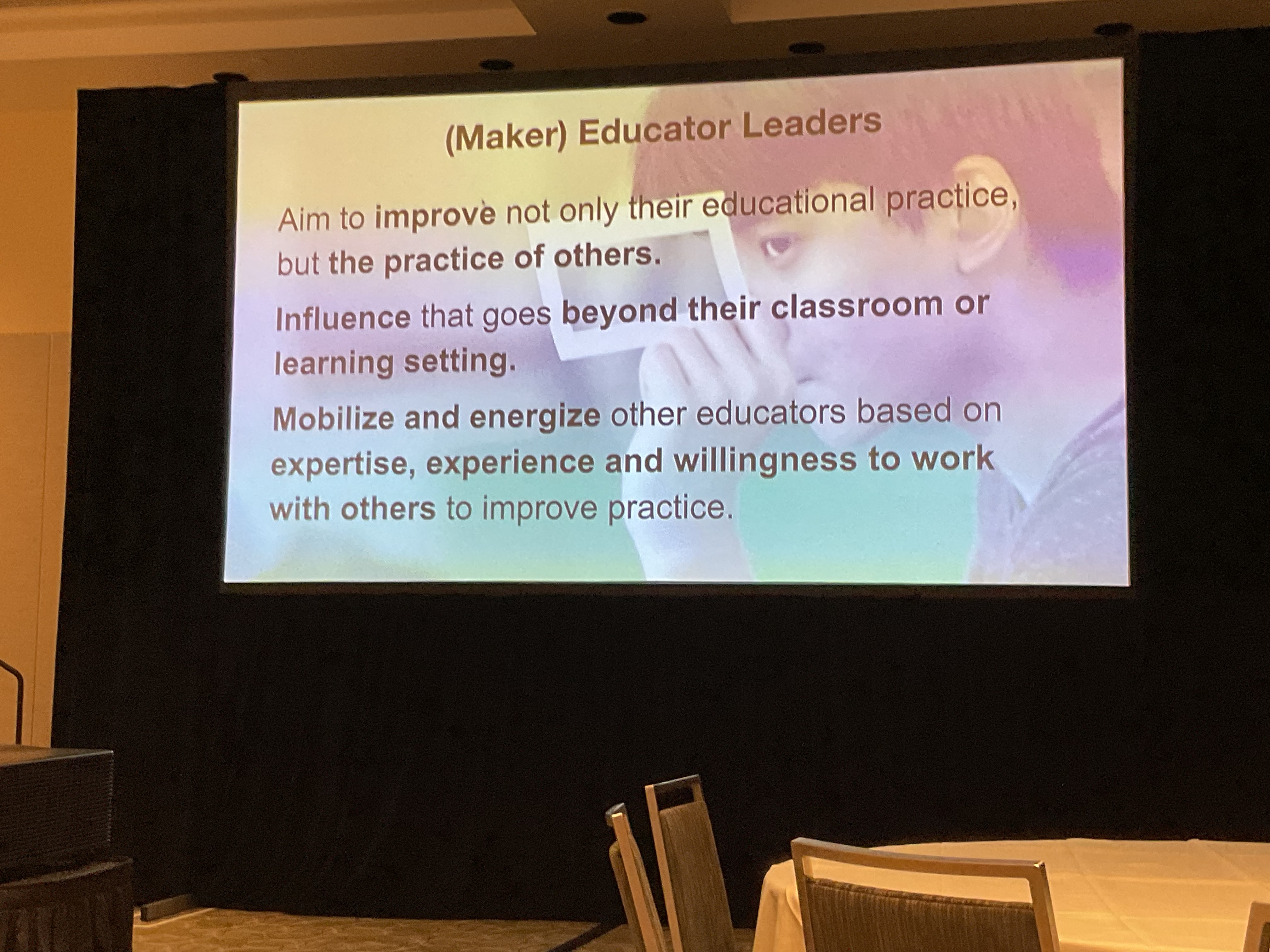
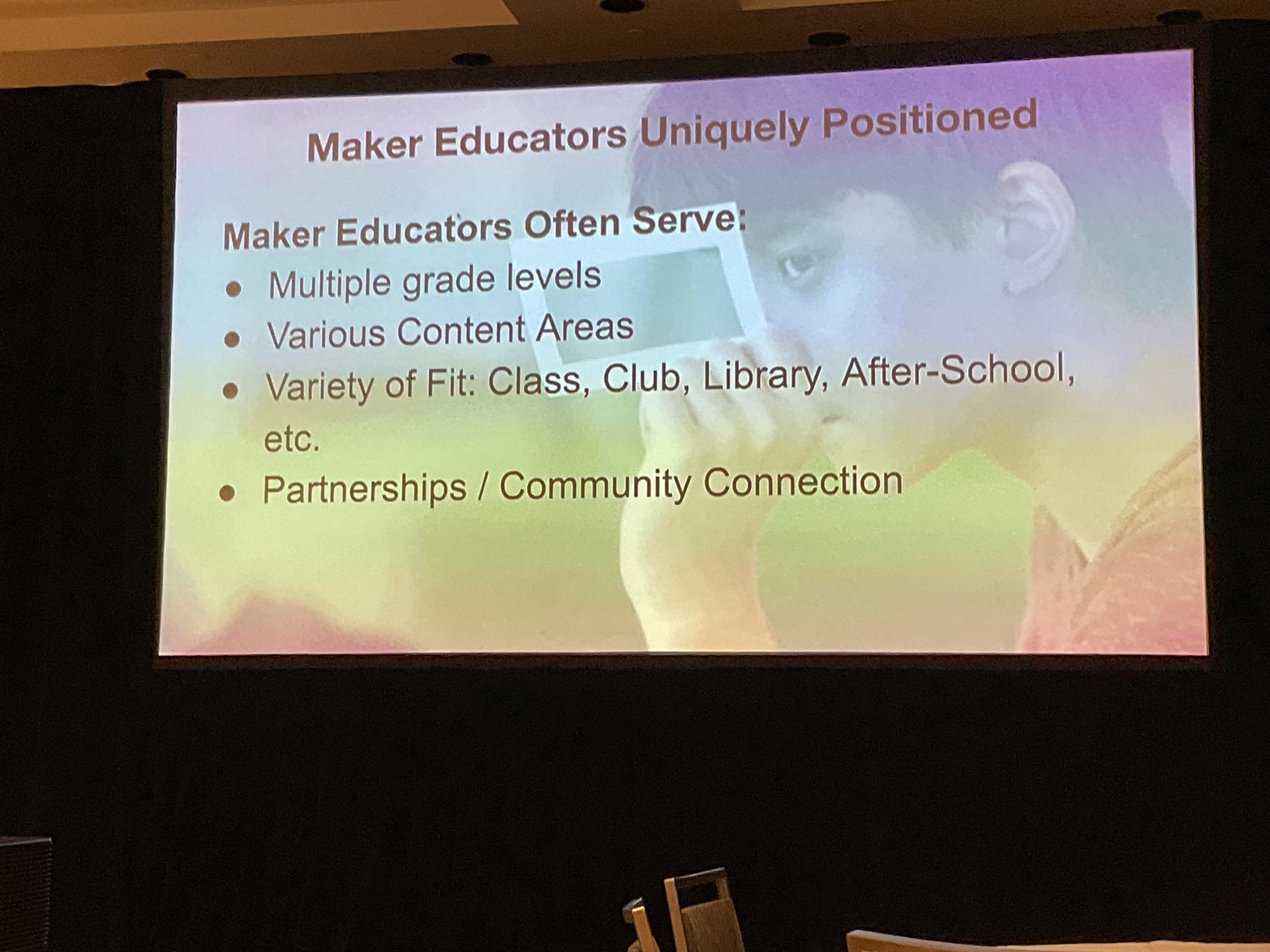
The Maker Educator Intersection: Maker educators often exist at the intersection of various disciplines, grade levels, and departments. They serve as primary sources of innovation within their schools or districts, providing innovative learning experiences for both students and colleagues.
Expansion of Influence: Just as teacher leadership research explores how influence extends beyond the classroom to mobilize and energize other educators, maker educator leadership focuses on non-hierarchical influence.
Addressing Isolation: Maker educators—whether in schools, public libraries, museums, or community centers—often lack a dedicated department or immediate team. Reaching out and building community is vital for their professional sustainability.
Accessibility of Making: The leadership team believes that all educators can be maker educators. Good teaching is grounded in "hands-on sense-making."
Making as a Metaphor and Tool: Making is used for "rapid makes" to communicate internal thoughts. Examples include:
English Language Arts (ELA): Making a representation of an author's purpose in using zip ties, Play-Doh, or foil.
Mathematics: Making a representation of a student's confusion regarding a specific problem.
Key Principle: The focus is never on the physical object itself, but on the conversation and thinking it facilitates.
The "Big Rock" Activity: Identifying High-Value Outcomes
Theoretical Foundation: Rooted in the work of Ron Ritchhart (Harvard Graduate School of Education, Project Zero) regarding school culture and outcomes, and Stephen Covey's metaphor for prioritization.
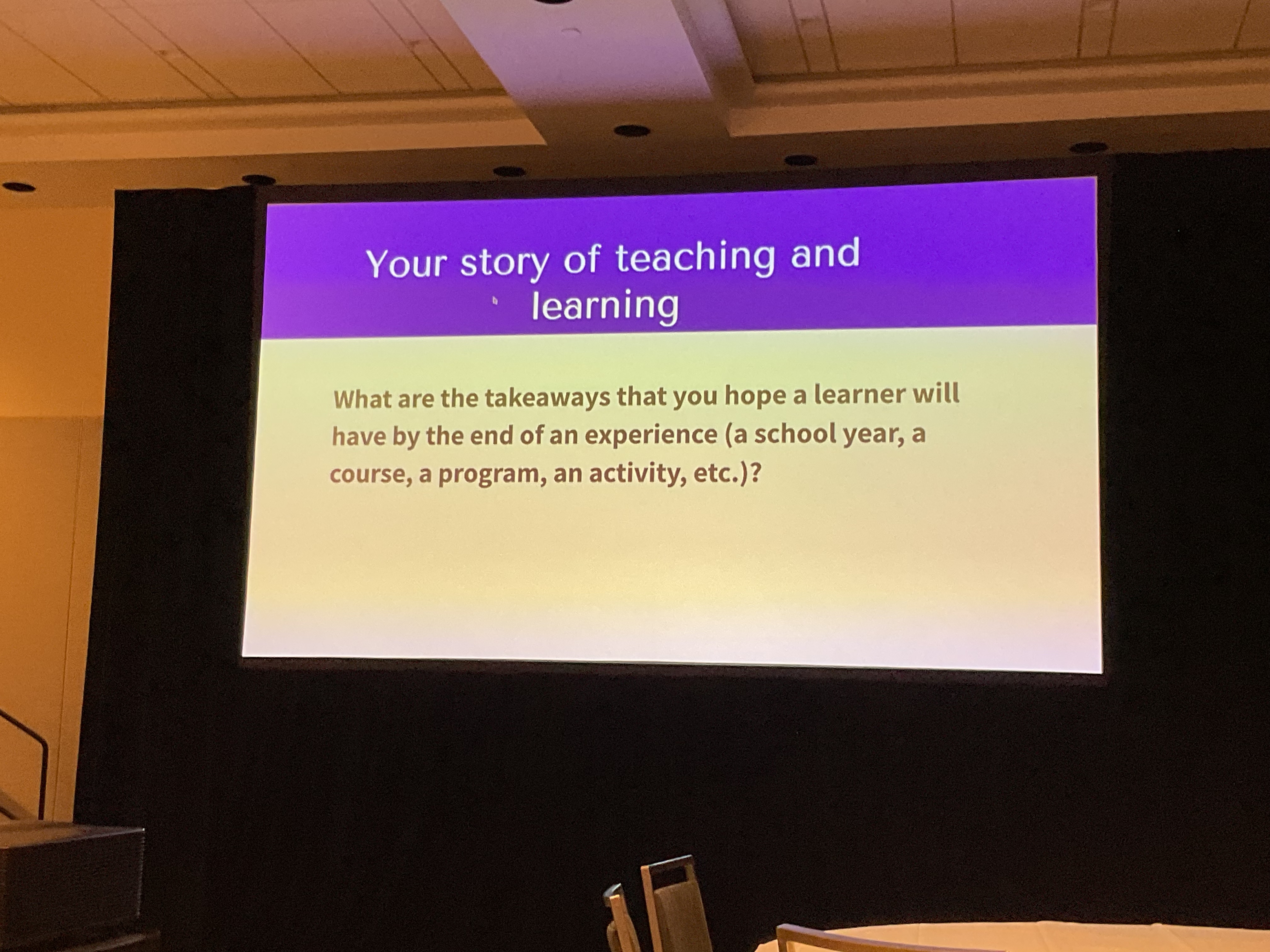
Defining the "Why": Educators are storytellers and experience designers. Their actions should align with the story of what they want learners to achieve.
The Prompt: Imagine assessing a learner one year after they leave your program. What would that assessment look like? This defines the value statement (the "Why").
Generative List of Necessary Elements: To realize the outcome, certain elements must be present. Categories include:
Standard skills or competencies.
Cultures or routines.
Dispositions or mindsets.
Learning goals.
Structures or logistics.
Audience-Generated Elements: Risk-taking, failure, problem-solving, collaboration, resilience, persistence, empathy, process, and tools.
Prioritization Process:
List all necessary elements.
Circle the most high-value ideas.
Reduce the list to items due to "time constraints."
Reduce the list to just items.
Philosophy of Mindsets: The "Big Rocks" are typically mindsets and dispositions (e.g., curiosity, problem-solving). When these are prioritized, content and skills (the smaller rocks/sand) are taught through these mindsets rather than as separate additions. If mindsets are not prioritized, there is often no room left for them in the "jar."
Lightning Share-out Protocol
Protocol Definition: Structured activities designed to facilitate professional conversation in school settings, typically lasting . They allow teachers to discuss practice: what they are doing, why, and how they know it works.
Round Format ( total):
Presenter (Round 1): Shares their value statement and "Big Rock" for .
Group Dialogue: Other members engage in a cross-dialogue or ask questions for .
Time Management: Timekeepers must be "ruthless" and "aggressive" to maintain the protocol's pace.
Questions & Discussion
Discussion on Design Thinking: One participant noted a focus on the design thinking process as the core structure of their curriculum, whether teaching entrepreneurship or robotics. Empathy is treated as a component of this process.
Documentation Strategies: A participant discussed using a daily journal and projecting a slide at the start of every class so students see their goals.
Risk-Taking and Grading: There was a discussion on how middle schoolers are often averse to risk-taking. They frequently worry about grades (e.g., "What grade would you give me?"), making it difficult to foster a mindset of lifelong learning and improvement over end results.
Specific Tools and Methods:
Digital Tools: Google Drive folders for sharing code with coaches, Padlet for collaboration, and engineering notebooks (slides/tables) to organize brainstorming and robot design strategies.
Scrum Model: Jeffrey recommends the "Scrum" project management model for middle schools. It involves a "10,000 foot view" broken down into milestones to help students who struggle with time management.
Collaboration in First Lego League: In robotics, teams are often large ( to members), necessitating intense coordination, commented-out code to track changes, and agreed-upon robot start positions.
Conclusion and Resources
Maker Educator Leadership: These activities help educators negotiate motivations and align the vision of a school or grade level toward hands-on learning.
Future Resources: Tools will be added to the Maker Educator Leadership website and the Research Team Learning Collaborative.
Teacher Studio: A free, low-stress community space (in-person and on Zoom) for educators to share experiences. The goal is long-term professional development rather than immediate classroom application.