Lower GI Video 2
Intestinal Obstructions
Definition: Failure of intestinal contents to move through the bowel, can occur in small or large intestine, but most common in small intestine.
Types of Obstructions:
Functional Obstruction (e.g. Paralytic ileus):
Peristalsis stops, preventing content propulsion.
Common postoperative complication.
Mechanical Obstruction:
Common Causes:
Tumors: Colorectal adenocarcinoma; can cause partial or complete obstruction if untreated.
Inflammatory Bowel Disease: Causes swelling and obstruction.
Fecal Impaction: Blocks intestinal lumen.
Adhesions: Scar tissue from previous surgery causes kinking, most often occurring in the small intestine.
Strangulated Hernia: Affects blood supply; more deadly complication.
Consequences of Obstruction:
Distension of bowel lumen.
Risk of necrosis, perforation, and potentially peritonitis, which is an emergency condition.
Small Bowel Obstruction Manifestations
Symptoms:
Cramping or colicky abdominal pain, can be intermittent.
Vomiting, possibly containing bile or fecal matter (especially in complete obstruction).
Absent flatus and feces.
High pitched bowel sounds initially, then silent bowel sounds.
Abdominal distension and tenderness.
Complications:
Hypovolemia leading to hypovolemic shock (tachycardia, hypotension, elevated temperature, decreased urine output).
Strangulation risk from incarcerated hernias.
Peritonitis from strangulation causing perforation.
Patients may need immediate ICU care and surgery.
Large Bowel Obstruction Manifestations
Symptoms:
Constipation, possible colicky abdominal pain.
Late stage vomiting, if at all., projectile vomiting
Diarrhea around the obstruction.
Distended abdomen, high pitched bowel sounds, and localized tenderness.
Complications:
Massive colon dilation, risking gangrene or perforation.
Peritonitis and impaired venous return due to pressure.
Atelectasis due to diaphragmatic function impairment.
Nursing Care for Intestinal Obstructions
Monitoring:
Bowel sounds and abdominal distension.
Vital signs to check for hypovolemia.
Fluid and Electrolyte Balance:
Post-surgery recovery is crucial to restore balances.
NG Tube Care:
Assess every 2-4 hours, keep patient NPO for bowel rest.
Medication Management:
Antibiotics, sometimes prophylactically administered.
Colonoscopy may be performed for decompression.
Patient Education:
Importance of remaining NPO and understanding surgical processes.
Irritable Bowel Syndrome (IBS)
Definition: A motility disorder of the lower GI tract affecting small intestine and colon, involves hyperactivity.
Manifestations:
Abdominal pain, often relieved by defecation.
Bloating, nausea, diarrhea or constipation, mucus in stool.
Diagnosis: Rule out other causes of abdominal pain.
Management:
Use of bulk-forming laxatives, anticholinergics, antibiotics, and antidepressants (e.g., SSRIs).
Identify and manage both physical and psychological triggers.
Increase dietary fiber and water intake; avoid gas-forming foods.
Bristol Stool Chart: Used for assessing types and characteristics of stools to determine IBS type.
Inflammatory Bowel Disease (IBD)
Types:
Crohn's Disease: Affects all bowel layers, common in ileum, causes fistulas, diarrhea, and malnutrition.
Diagnostic Findings: Narrowing of colon, thickened bowel wall, distinct ulcerations in colonoscopy.
Management: Corticosteroids, immunomodulators, possible surgery.
Ulcerative Colitis: Affects rectum and colon, severe bleeding, less common for fistulas, extensive diarrhea.
Diagnostic Findings: Abnormal inflamed mucosa with ulcers, no narrowing seen.
Management: Similar to Crohn's but may require proctocolectomy.
Systemic Complications: Toxic megacolon, perforations, colon cancer risk.
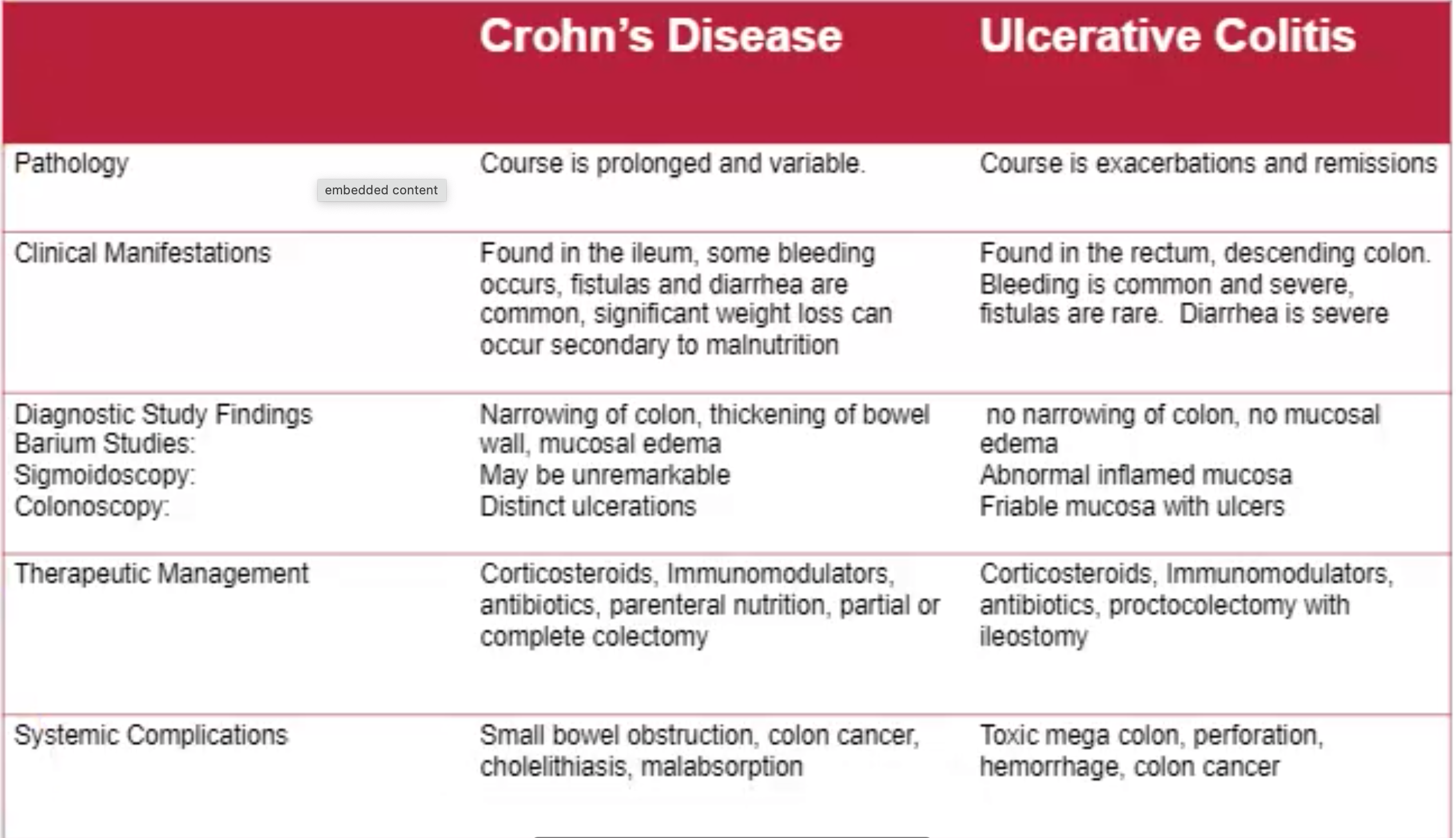
Summary Comparisons of IBD Types
Feature | Crohn's Disease | Ulcerative Colitis |
|---|---|---|
Course | Prolonged and variable | Exacerbations and readmissions |
Localization | Ileum | Rectum, descending colon |
Bleeding | Some bleeding possible | Common and severe |
Diarrhea | Common | Severe |
Fistulas | Possible | Rare |
Treatment | Surgery, steroids, immunomodulators | Similar but may involve different surgical options |