Nitrogen cycle
Nitrogen Cycle
The nitrogen cycle is a natural process that converts nitrogen in the atmosphere into forms that are usable by living organisms. Here is a concise overview of its key steps:
Nitrogen Fixation: Nitrogen gas (N₂) in the atmosphere is converted into ammonia (NH₃) by bacteria in the soil, lightning, or industrial processes.
Nitrification: Ammonia is oxidized to nitrites (NO₂⁻) by nitrifying bacteria, and then further oxidized to nitrates (NO₃⁻).
Assimilation: Plants absorb nitrates from the soil and use them to create proteins and nucleic acids. Animals then obtain nitrogen by consuming plants or other animals.
Ammonification: When plants and animals decompose, organic nitrogen is converted back into ammonia by 1decomposer bacteria.
Denitrification: Denitrifying bacteria convert nitrates back into nitrogen gas, releasing it back into the atmosphere, thus completing the cycle.
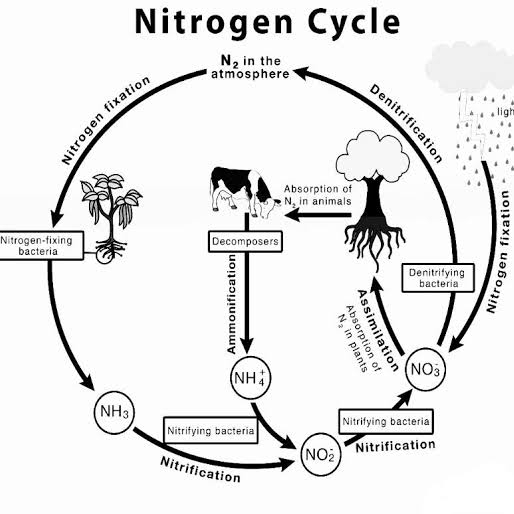
 Note: Replace the URL with an actual image link to a nitrogen cycle diagram.
This cycle is crucial for maintaining ecosystem health as it ensures the availability of nitrogen to living organisms while regulating atmospheric nitrogen levels.
Nitrogen Cycle: The nitrogen cycle is a natural process essential for ecosystem health. It involves the conversion of atmospheric nitrogen (N₂) into usable forms for living organisms:
Nitrogen Fixation: Conversion of N₂ into ammonia (NH₃) by soil bacteria, lightning, or industrial processes.
Nitrification: Ammonia is oxidized to nitrites (NO₂⁻) and then to nitrates (NO₃⁻) by nitrifying bacteria.
Assimilation: Plants absorb nitrates to create proteins and nucleic acids; animals obtain nitrogen by consuming plants or other animals.
Ammonification: Decomposition of organic nitrogen back into ammonia by decomposer bacteria.
Denitrification: Conversion of nitrates back to nitrogen gas by denitrifying bacteria, returning it to the atmosphere.
This cycle maintains the availability of nitrogen while regulating atmospheric nitrogen levels.