The Cardiac Cycle
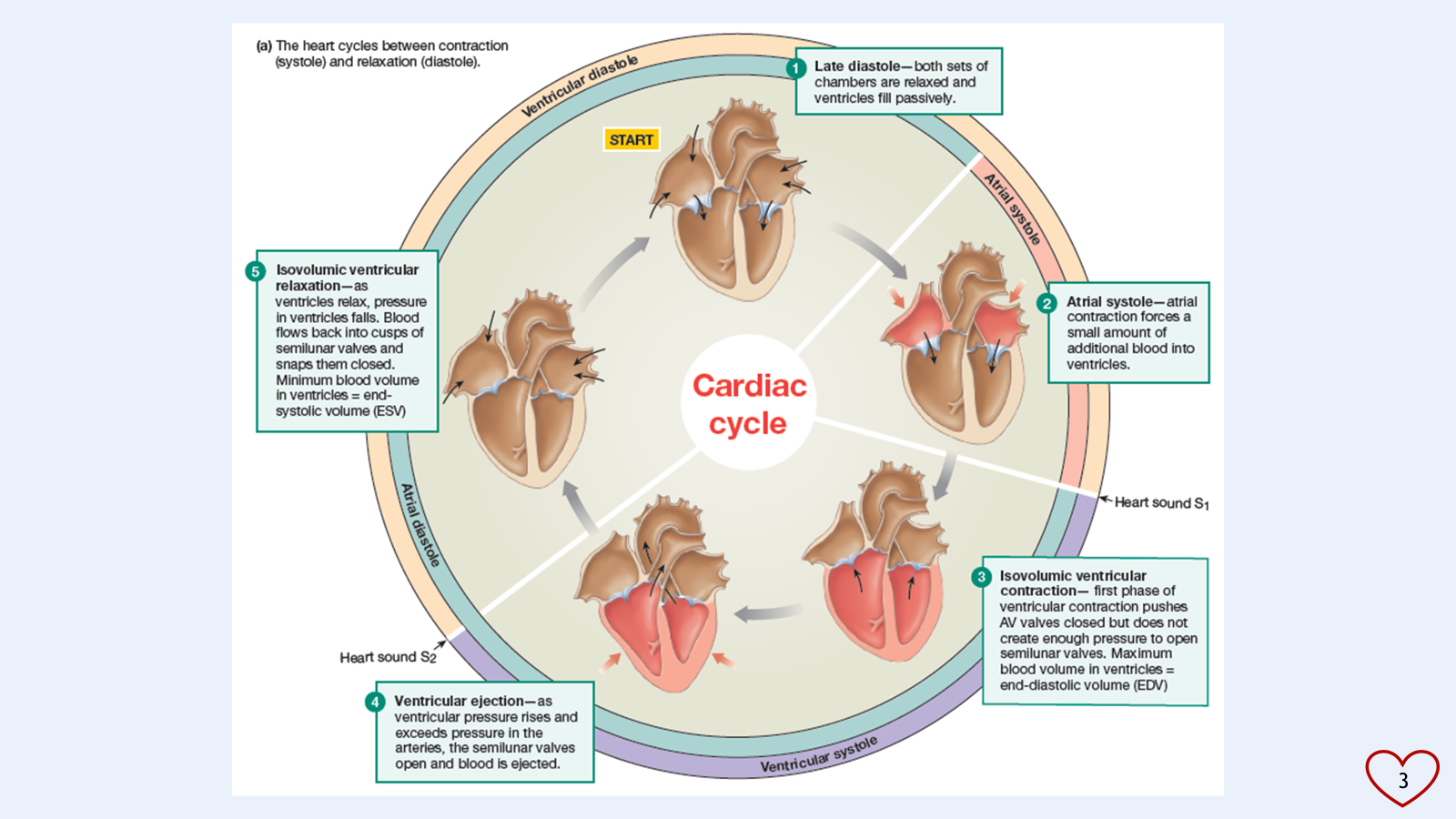
diastole -relaxation phase, heart fills with blood, 2/3rds of cardiac cycle
systole- ejection phase, 1/3 of total cardiac cycle
pressure in left ventricle exceeds left atrium causes mitral valve to close
next … pressure pushes the aortic valve opens
isometric contraction phase- volume of blood not going anywhere gets to it’s maximum
pressure in left ventricle falls below pressure in aorta causes aortic valve closes
these are passive changed due to pressure in aorta and pulmonary trunk
isometric relaxation phase - volume of blood relaxes
when pressure falls below left atrium pushes mitral valve open causing blood to flow from left atrium to left ventricle
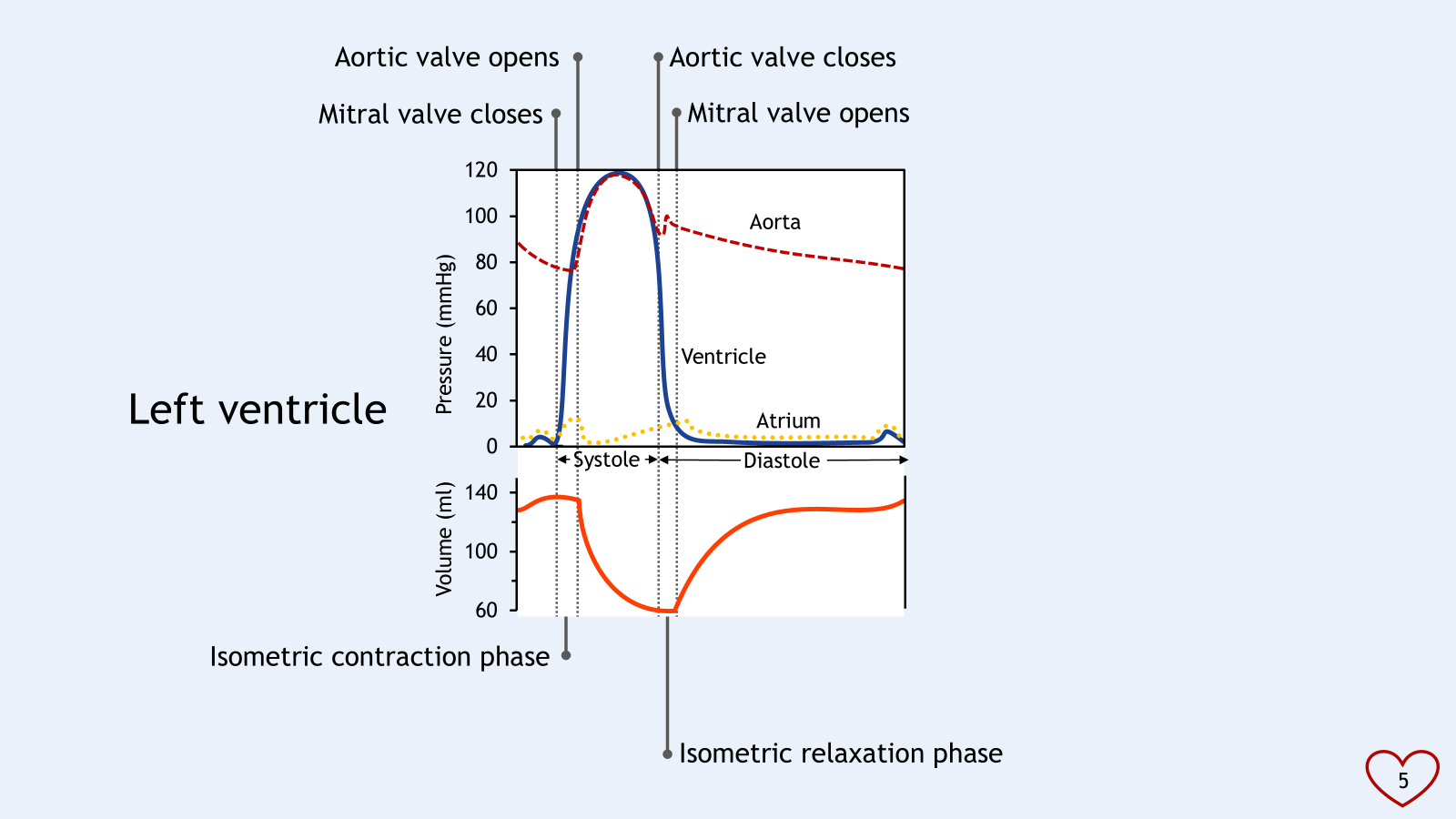
pressure within aorta similar to left ventricle because linked
pressure in left ventricle falls below pressure in aorta causes aortic valve to close
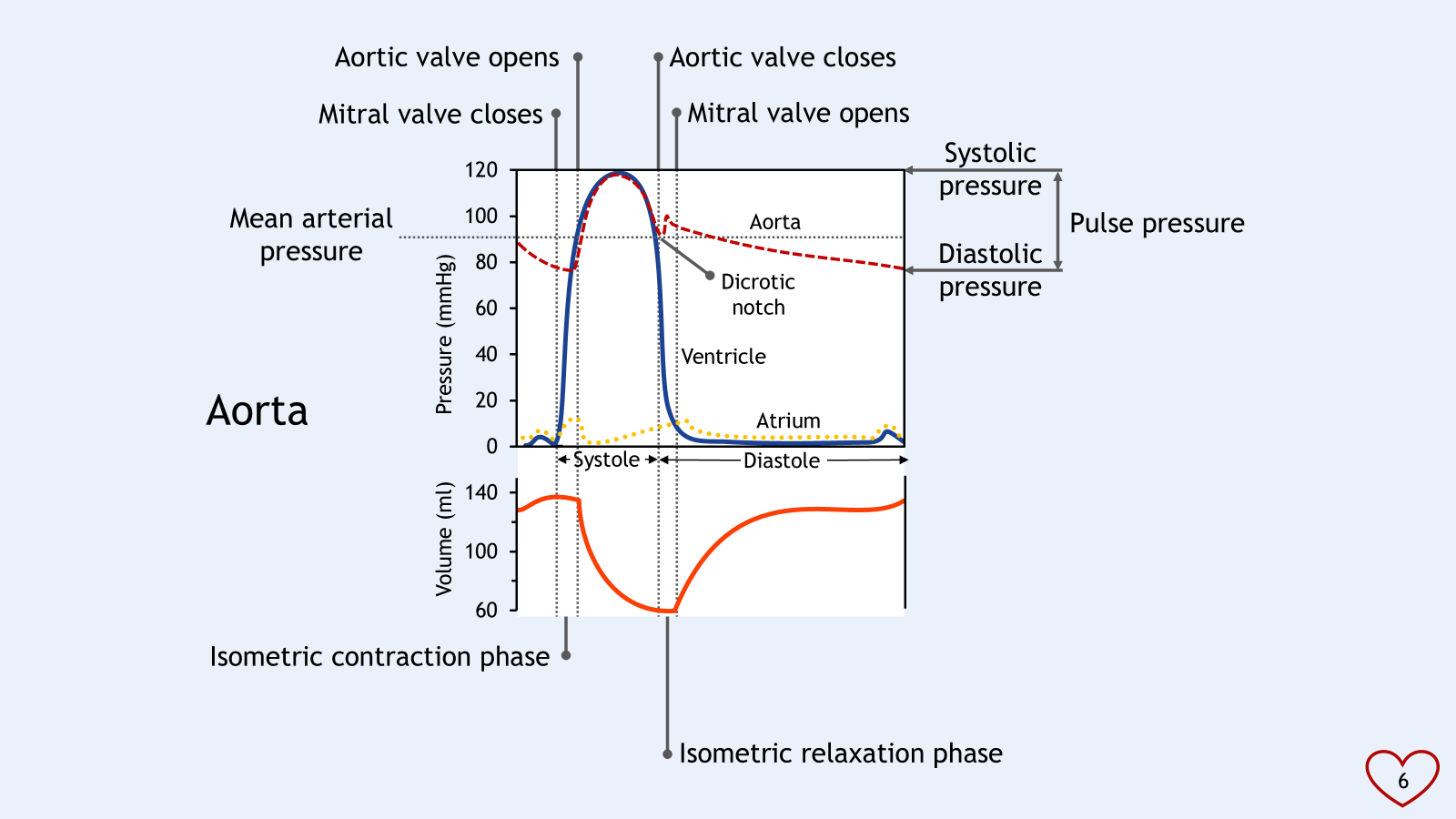
aorta little increase in press is called the dicrotic notch, elastic recoil in aorta causes by aortic valve closing?
diastolic pressure, minimum pressure at end of aorta
pulse pressure - difference between systolic and diastolic pressure
stroke volume = end diastolic volume - end systolic volume
ejection fraction = stroke volume / end diastolic volume
50-70% is a normal ejection fraction
<50% suggested as left ventricular heart failure
blood ejected rapidly when aortic valve opens - rapid ejection phase, first 1/3rd of systole
blood leaves more slowly after = slower ejection phase
blood flows rapidly from left atrium to left ventricle? = rapid filling phase
where blood ends off = slower filling phase
In right side of heart, timing and changes same, differences will be in pressures because we don’t need high pressure to pump in circulation compared to systemic circulation
The generation of heart sounds gives rise to the phonocardiogram
•Heart sounds occur due to turbulence in blood flow caused by…
•1st = closure of the AV (mitral and tricuspid) valves
•2nd = closure of the semi-lunar (aortic and pulmonary) valves
•3rd = rapid passive filling phase
•4th = active filling phase
•These are normal
•Additional heart sounds are called murmurs (physiological or pathological)
*should hear 1st or 2nd, may not hear 3rd or 4th but could be heard in young people and children
innocent murmur/additional murmur - movement of blood?
90% of pregnant women have heart murmur due to physiological changes increase cardiac output generating more sounds
blubb - systole - dubb - diastole
any additional sounds during systole = systolic murmur
caused by stenosis or narrowing of aortic/pulmonary valves or regurgitation through mitral/tricupsid valves
“lubb shhh dubb lubb shh dub” sounding^
diatsolic mumur cuased by stenosis of mitral/tricupsid valves or regurgitation through aortic/pulmonary valves
“lubb dubb shh lubb dubb shh” soudning ^
continuous murmur could be patent ductus arteriosus sounding like “shhh”
turbulent blood flow
aortic stenosis best heard…
crescendo-decresendo described