Factors & Simplest form & equivalent fractions
write a number as a product of prime numbers
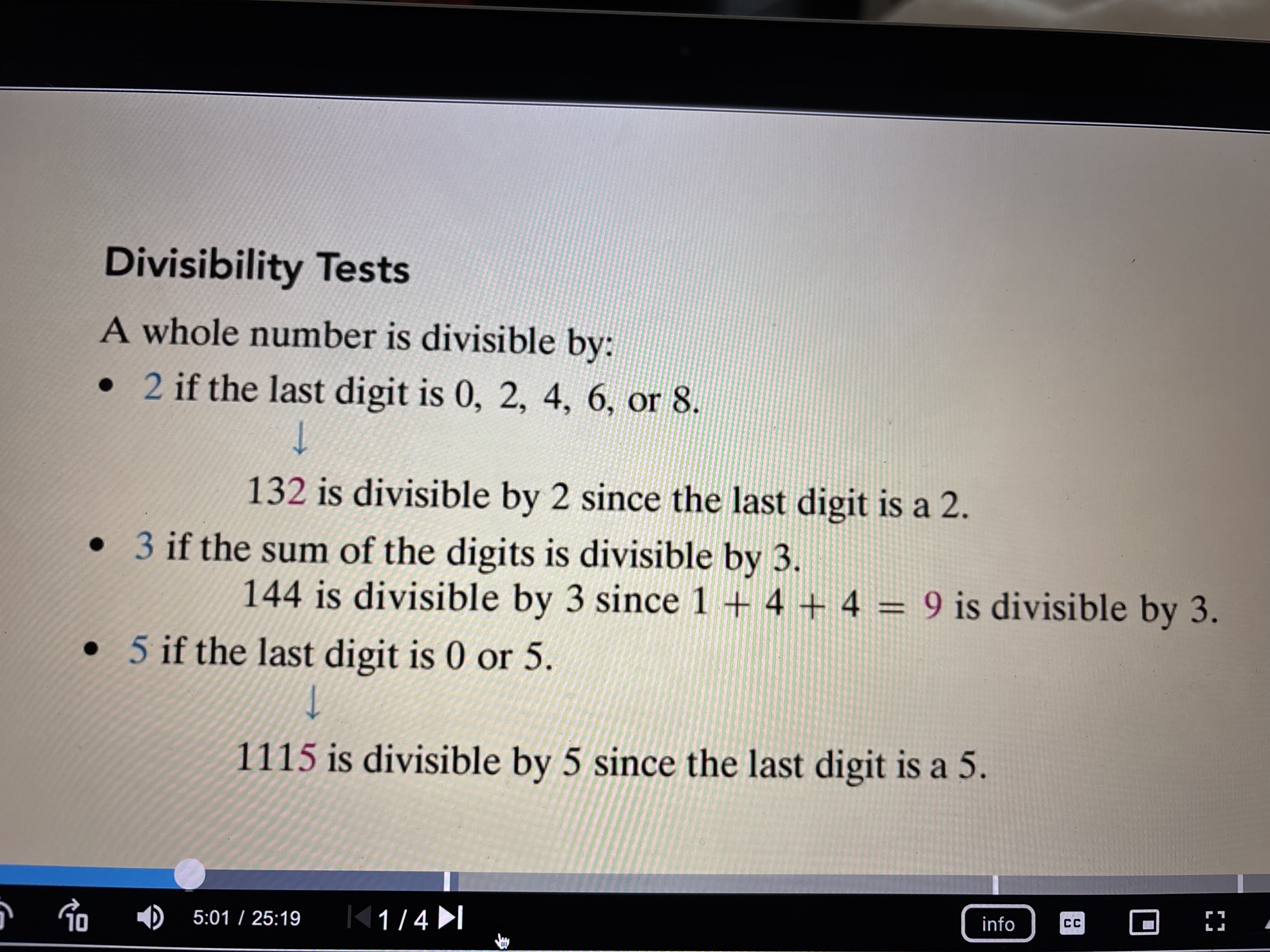
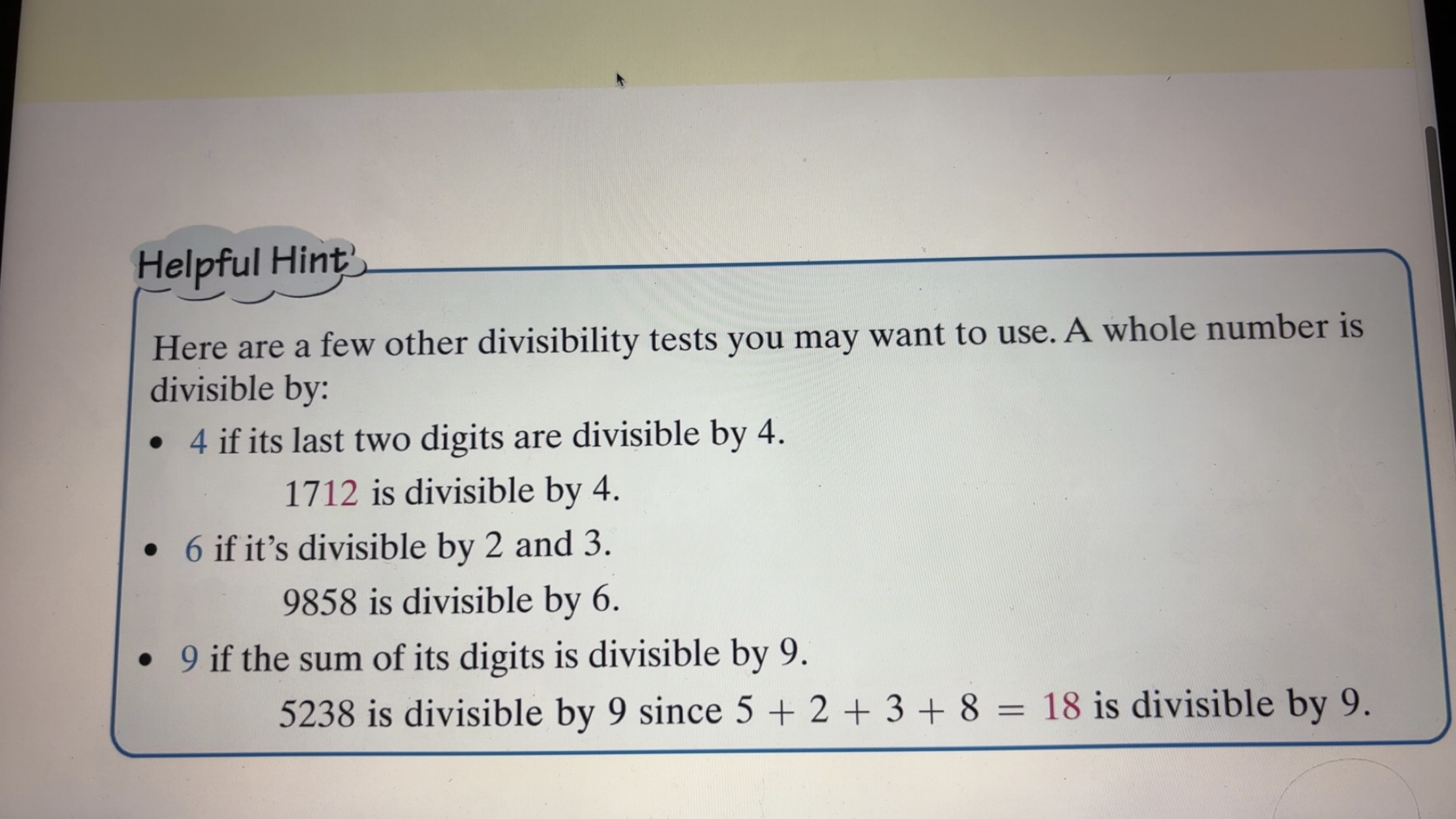
a factor is any number that divides a number evenly (with remainder of 0)
a prime number is a natural number greater than 1 whose only factors are 1 and itself. the first few prime numbers are 2,3,5,7,11,13,17,19,23,29…
a composite number is a natural number greater than 1 that is not prime
(a composite number has only 1 prime factorization)
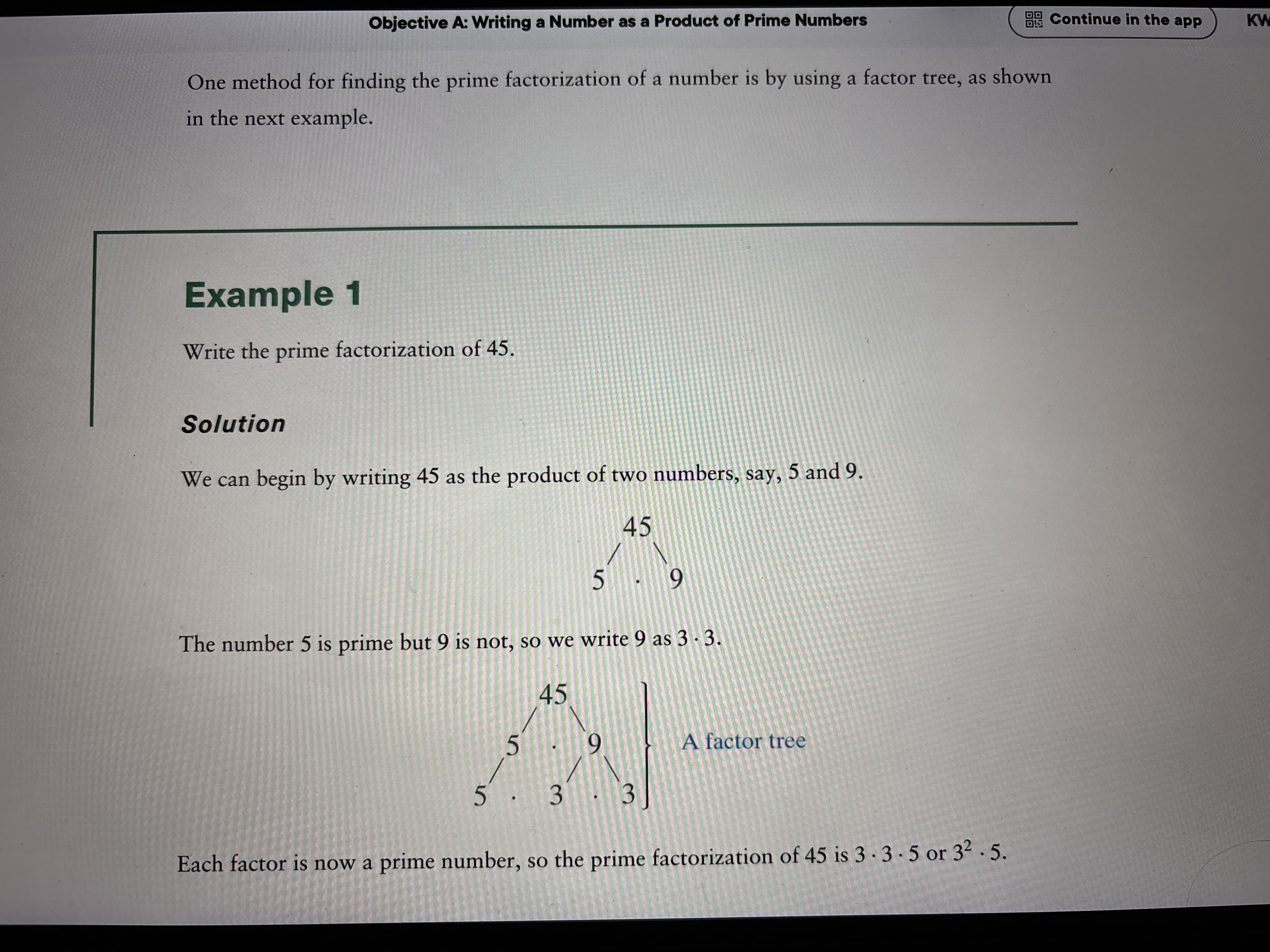
a prime factorization is when a composite number is written as a product of prime numbers
Ex of prime factorization:
12= 2•2•3 because the product is 12 and each number is a prime number
every whole number greater than 1 has exactly one prime factorization
solve
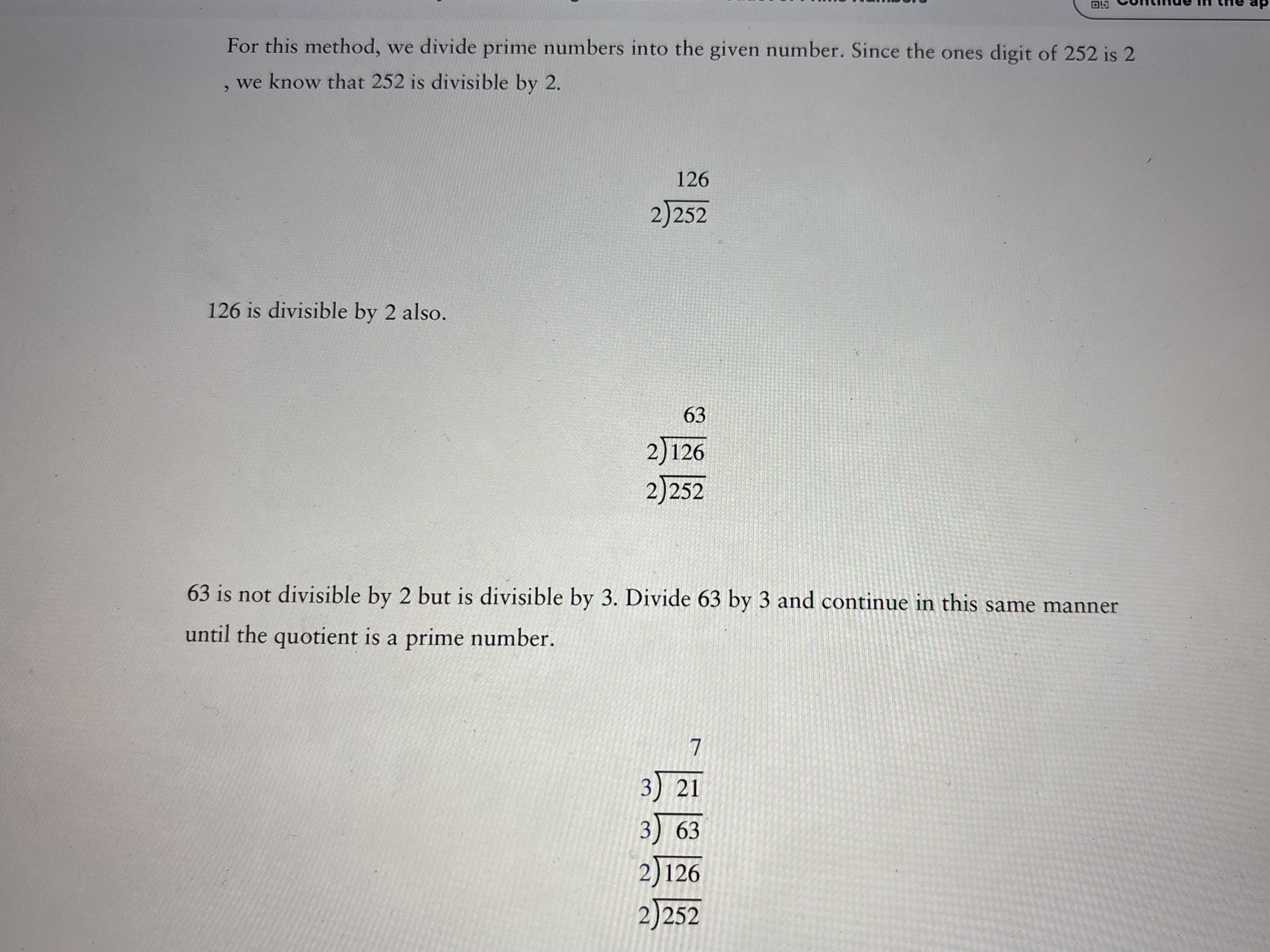
the prime factorization of 252 is 2•2•3•3•7)
Writing fractions in simplest form
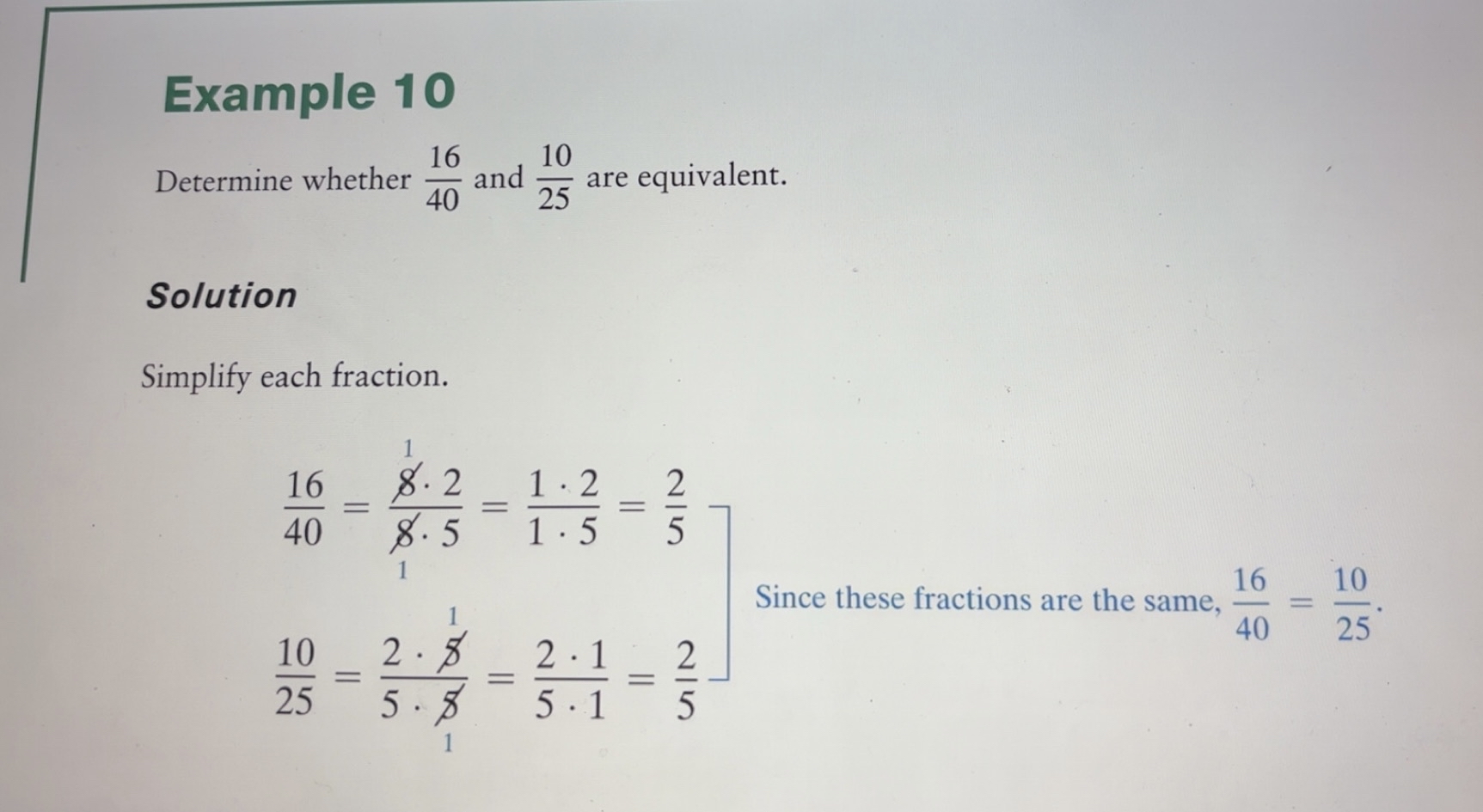
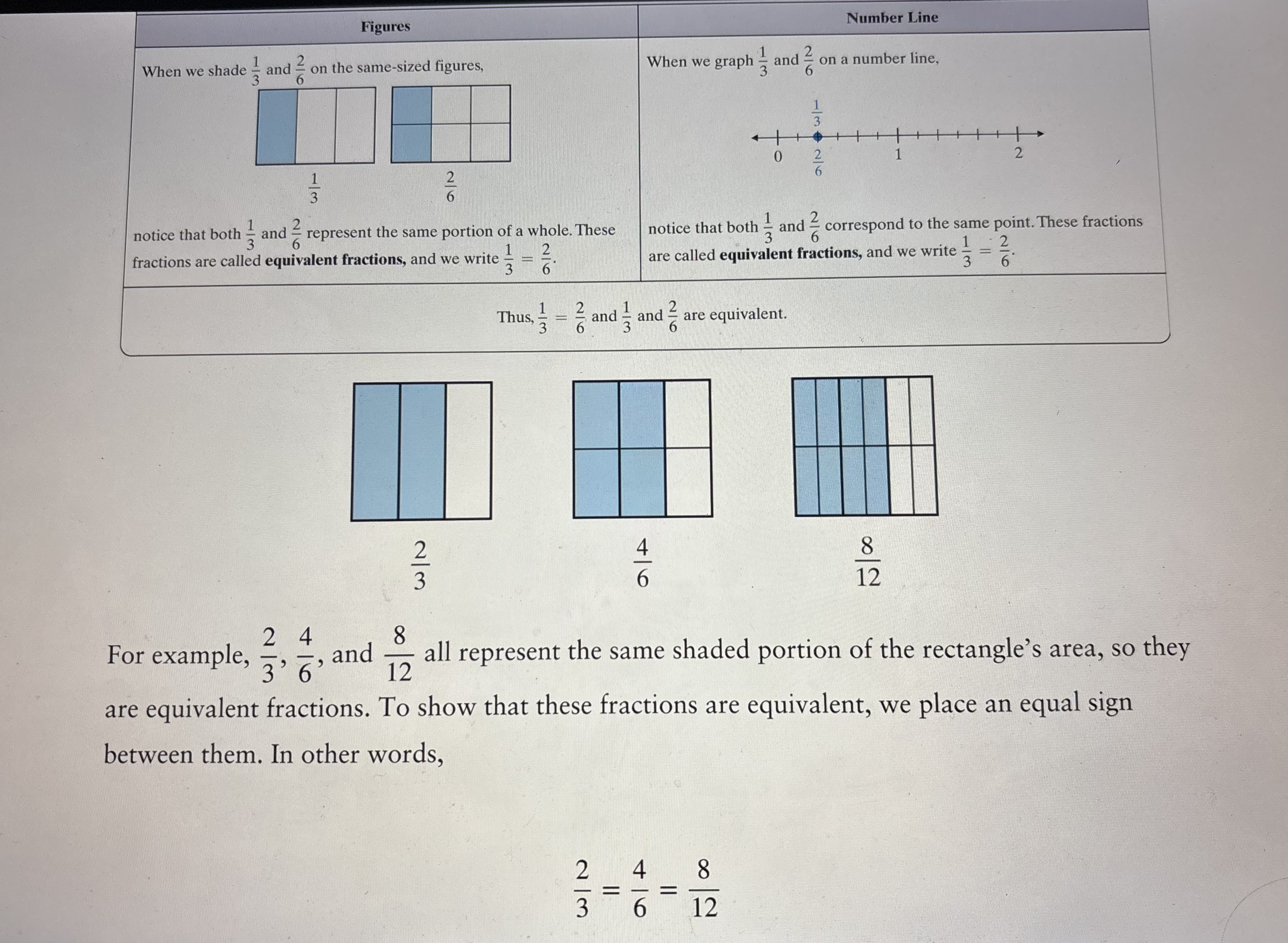
equivalent fractions are fractions that represent the same portion of a whole number or the same point on a number line
a fraction is written in simplest form or lowest terms when the numerator and the denominator have no common factors other than 1
Ex: 2/3 is written in simplest form because 2 and 3 have no common factor other than one. the fraction 4/6 is not in simplest form because 4 and 6 both have a factor of 2
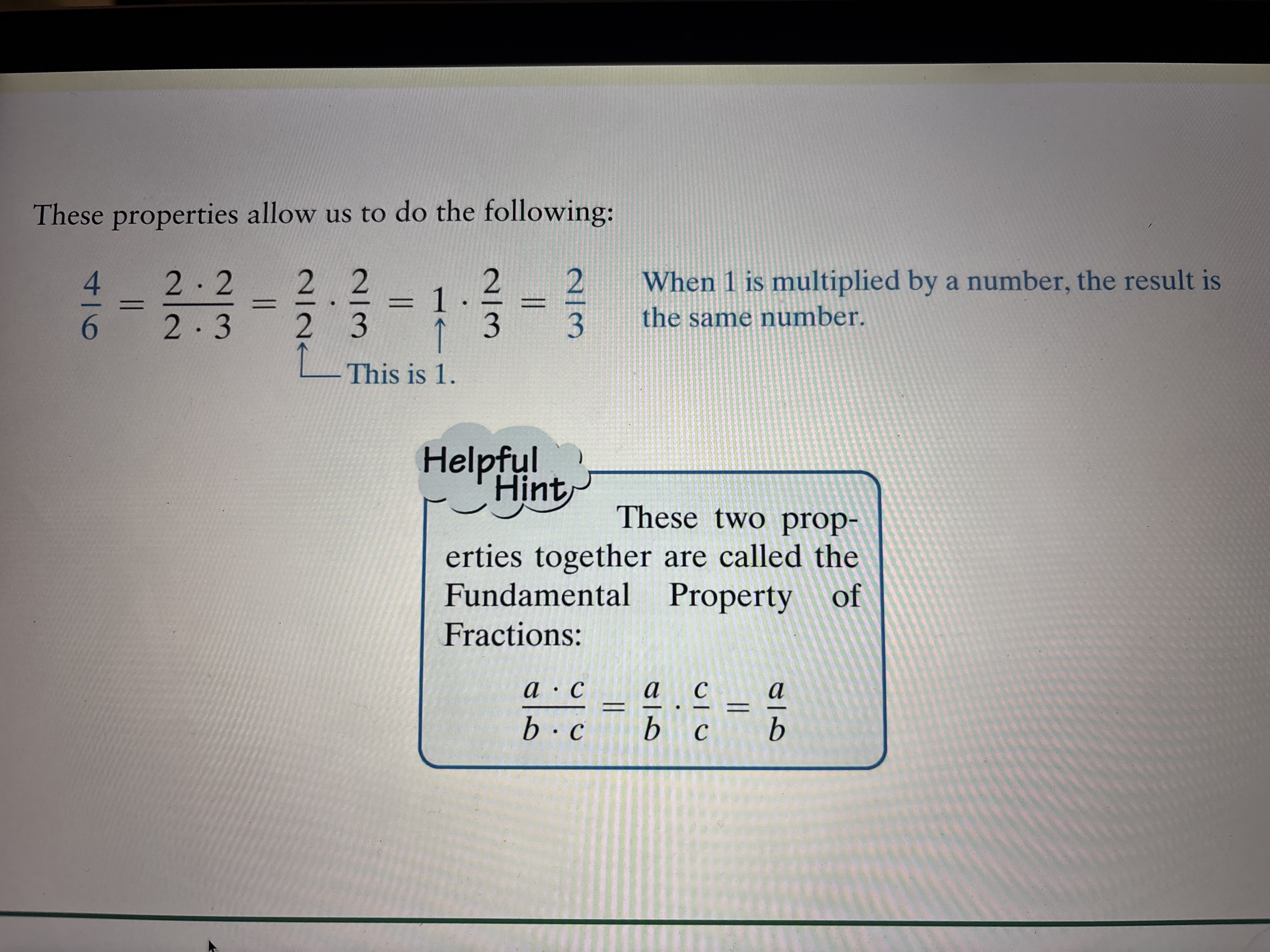
to find simplest form:
step 1. find a common factors or a number that can equally be divided into both the numerator and denominator
step 2. divide the common factor by the numerator and denominator
step 3
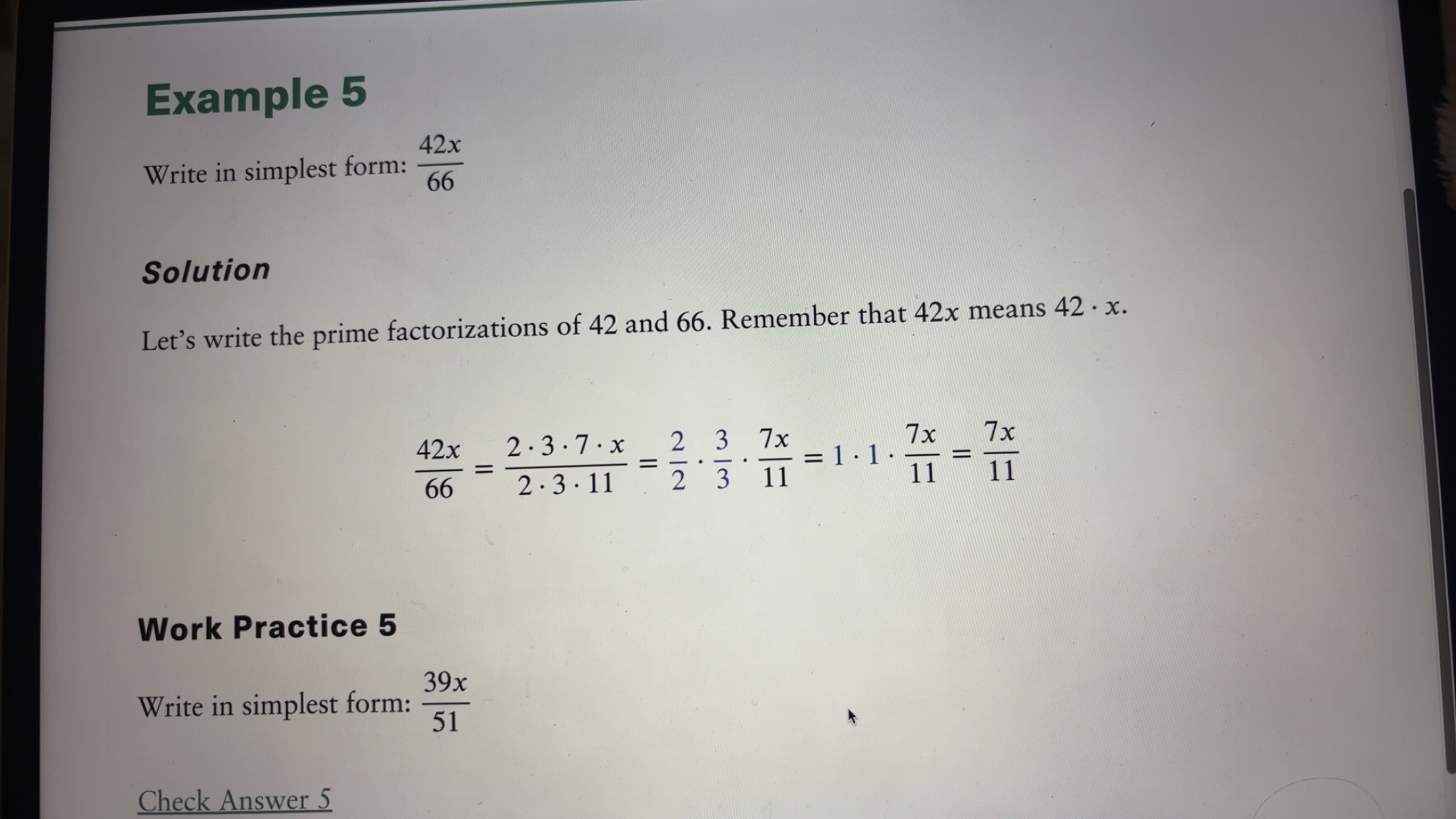
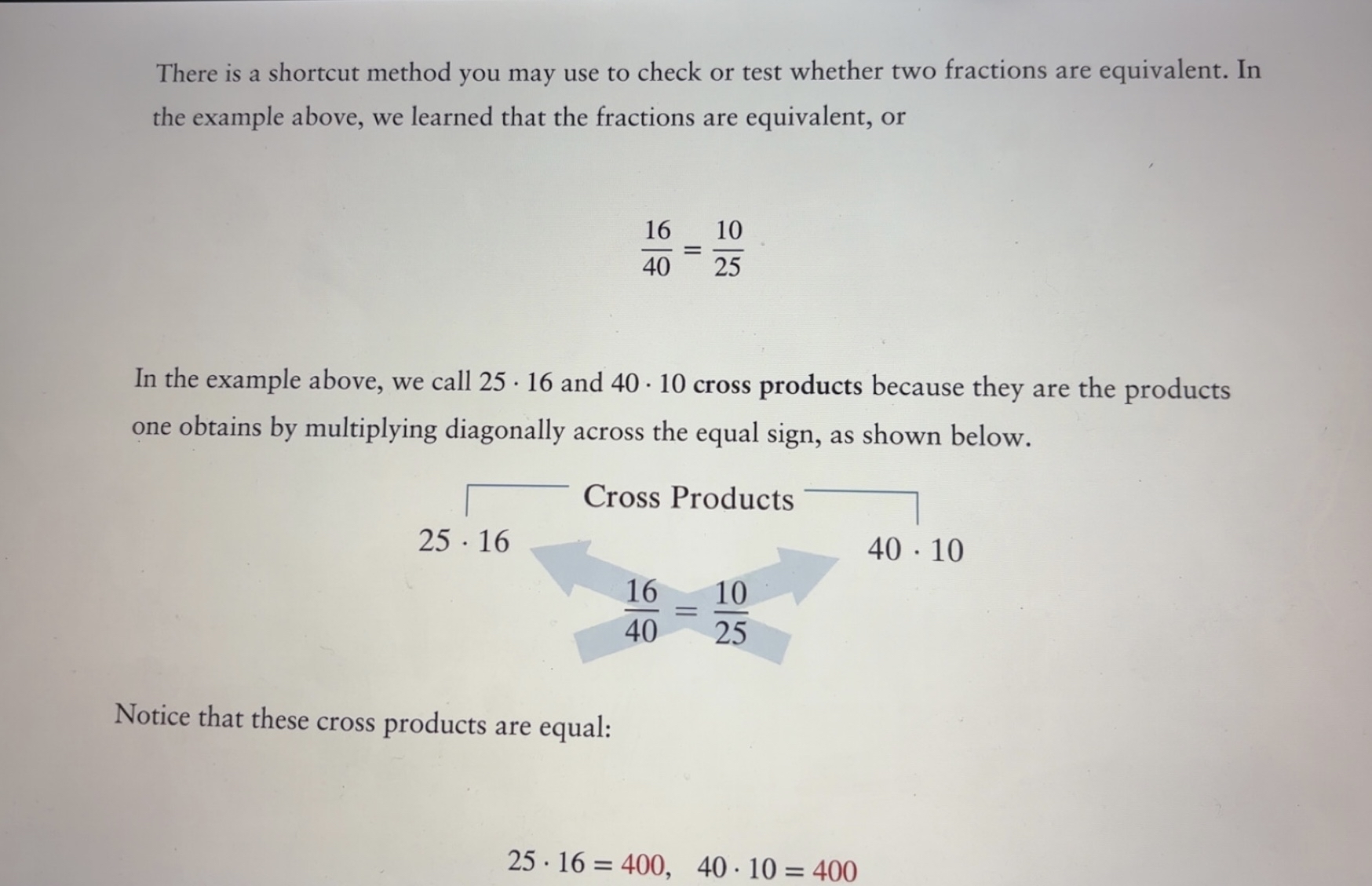
finding equivalent fractions