15.6 selective reabsorption
adaptations of proximal convoluted tubule (PCT):
PCT lined w specialised epithelial cells (adapted to help reabsorb various substances ex. glucose, amino acids, chloride + sodium ions, water from filtrate back → bloodstream)
Key adaptations of epithelial cells in proximal convoluted tubule:
Microvilli: increase SA for reabsorption.
Basal infoldings: further increase SA for substance movement into surrounding capillaries.
Numerous mitochondria: provide ATP for active transport during reabsorption.
Co-transporter proteins in plasma membrane: enable co-transport of substances from filtrate into epithelial cells.
reabsorption in PCT:
Reabsorbs most glucose, amino acids, ions, and 85% of water.
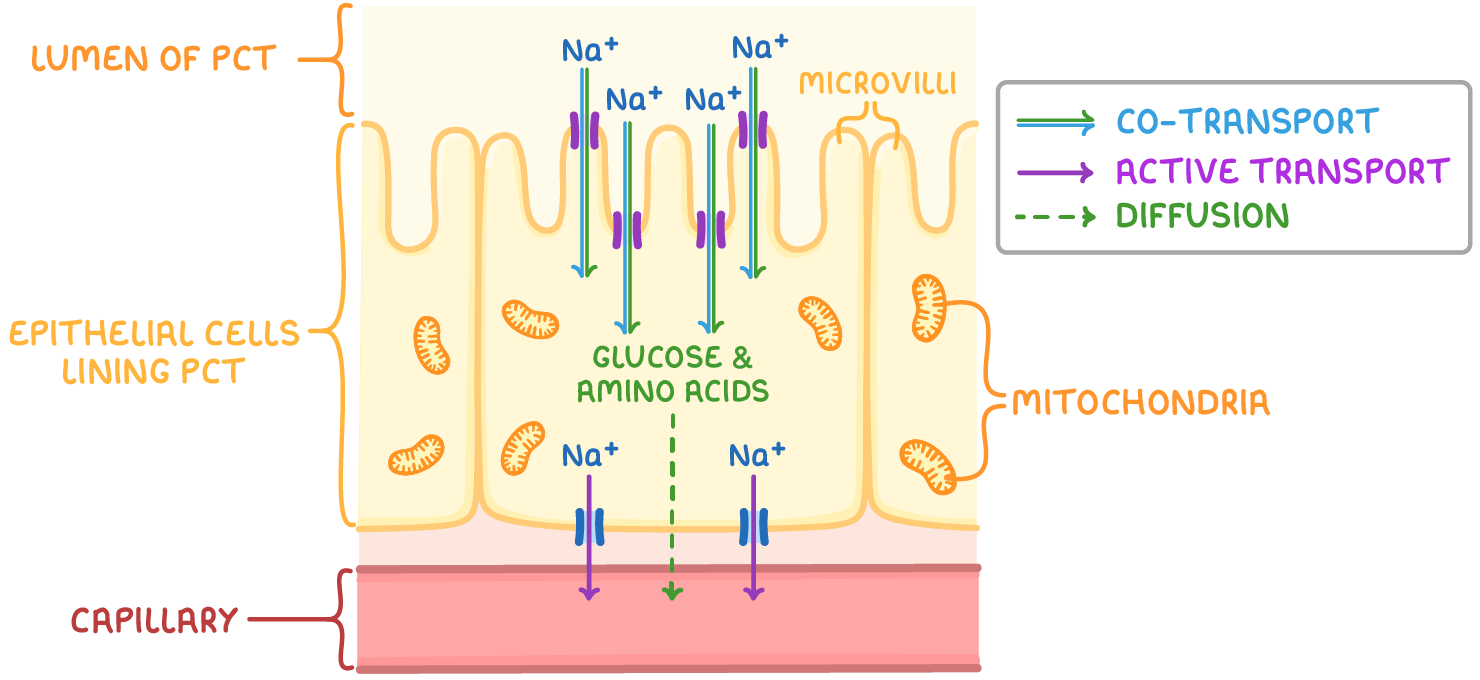
reabsorption process:
sodium ions (Na+) actively transported → blood capillaries, reduces Na+ conc in epithelial cells lining PCT
Na+ moves from PCT lumen → epithelial cells, down conc gradient
Na+ co-transported w substances ex. glucose, amino acids → epithelial cells
reabsorbed molecules can then diffuse → blood capillaries
role of distal convoluted tubule (DCT):
reabsorption process:
makes final adjustments to filtrate’s content: reabsorbs water + salts via active transport
adjusts membrane permeability for further reabsorption
regulates blood pH by reabsorbing specific ions
microvilli + mitochondria assist in reabsorption
hormones influence adjustments, fine-tuning urine composition