Insects and People: Insects and Agriculture
Insects As Pests
- In the U.S. there are about 100,000 insect species
- around 200 serious pest species + 4-500 occasionally serious
- About 3,500 worldwide serious insect pest species
- Most of these are agricultural pests.
- Agricultural Entomologists: Study how we can prevent as much crop damage from insects as possible Other issues like resistance
Agriculture in NC
- Worth $7-8 billion at the farm gate, $45-50 billion on the plate
- Number one state in tobacco, sweet potatoes, & turkeys
- Second in hogs, farm-reared trout, Christmas trees, and cukes
- Not bad in poultry, eggs, greenhouse and nursery, turg, peanuts, etc.
- We’ve come a long way since tobacco
Pests of Crops
- About half of all insect species are phytophagous (herbivores)
- Insects eat about 1/3 of all crops grown, despite attempts to control them
- Where do they come from?
- Monocultures and confined livestock
- About 40% of serious pests are foreigners
- What do they look like?
- Only 9 of the 30+ insect orders have plant feeders
- Most are chewers, some mine, bore, girdle, or suck (disease vectors)
- When is plant feeding a problem?
- Depends on which pieces and parts are eaten
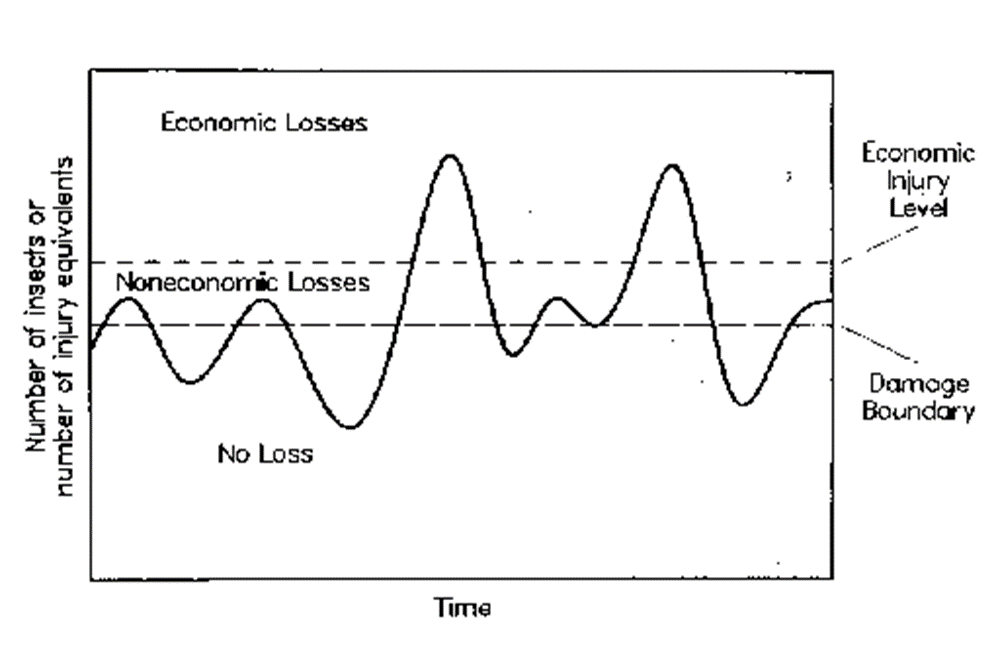
- Economic Threshold—The insect density that it is wise to treat your crops to save money on the damage
- Cost of treatment is less than the damage
- Economic Injury Level—The density of insects that you are actively losing money from insect damage

Pests of Livestock
- Biters, buzzers, and stingers: annoyance
- Flies
- Lice, fleas, ticks, and mites
- Fewer pounds, eggs, quarts, babies, belts, etc
- Myiasis
- screw worms, cattle grubs, bot flies
- Vectors of disease agents
- Veterinary Entomologists—Study how insects negatively impact animal well-being and health
Pests of Pets
- Fleas and Ticks
- Mosquitoes and heartworm
- Agent: roundworm
- Vector: mosquito
- Target: mostly dogs, some cats, ferrets, otters, occasionally humans
- Distribution: worldwide
- Pathology: heart and lungs main targets
- Treatment: various drugs, including arsenic compounds