2h. Macroeconomic equilibrium
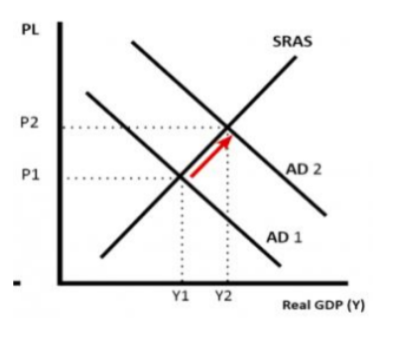
Rise in AD in SRAS
This is caused by a change to a component of aggregate demand. Either C, I, G or X-M has increased.
Price levels increase from P1 to P2 and R.O increases from Y1 to Y2.
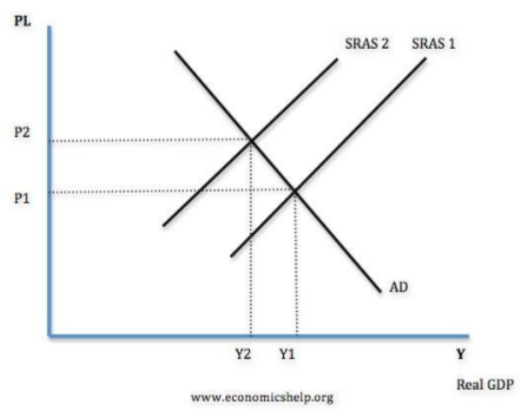
Fall in SRAS
This is caused by an increase to the cost of production.
Price levels increase from P1 to P2 and R.O falls from Y1 to Y2.
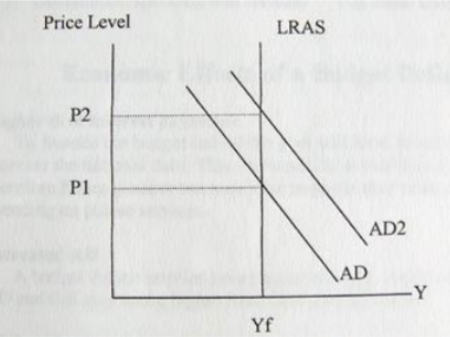
Increase in AD with classical LRAS
This is caused by a change to a component of aggregate demand. Either C, I, G or X-M has increased.
Price levels increase from P1 to P2 however, there is no increase in the real output.
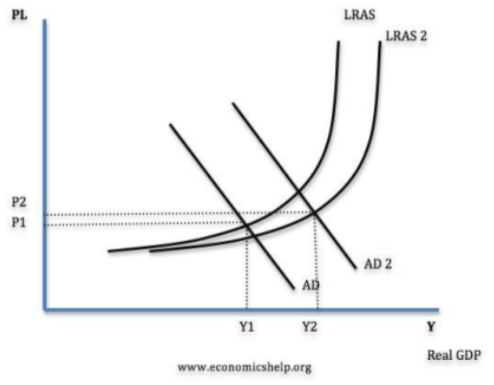
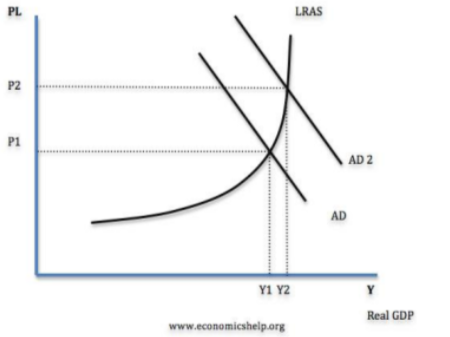
Increase in AD with Keynesian LRAS
This is caused by a change to a component of aggregate demand. Either C, I, G or X-M has increased.
Price levels increase from P1 to P2 and there is a rise in R.O from Y1 to Y2. The rise in R.O proportionately smaller than the rise in price levels due to the position of AD on the LRAS curve
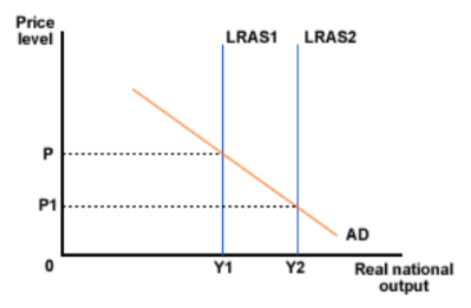
Increase in LRAS using a classical curve
This is caused by an increase in uality or quantity of the factors of production.
Price levels fall from P to P1 and there is a rise in R.O from Y1 to Y2.
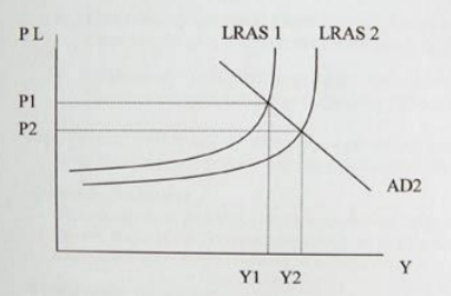
Increase in LRAS Keynesian a classical curve
This is caused by an increase in quality or quantity of the factors of production.
Price levels fall from P1 to P2 and
there is a rise in R.O from Y1 to Y2.
Increase in both AD and LRAS
It is possible for both AD and LRAS to shift on the same diagram.
Examples might be:
- Government Spending on Infrastructure
- Corporation Tax Cut leading to more investment
- Increased Education Spending