L9- Amphibians
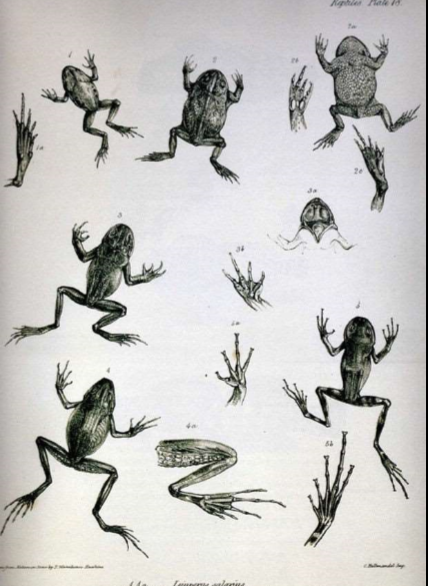
Darwin was the first to describe amphibians to scientists, but they were known to local communities e.g. Darwin Frog
found that those in South America lived in a high diversity of environments but those in Europe all had similar life histories
Shared Derived Features of Amphibians:
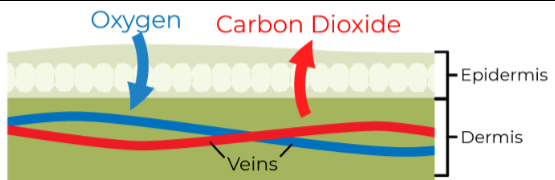
Skin→
have a smooth, moist, permeable skin
breathe through their skin→ facilitates oxygen uptake and carbon dioxide extraction
has a thin epidermis
suffer high rates of water loss
→ have a semi-aquatic life
Ear→
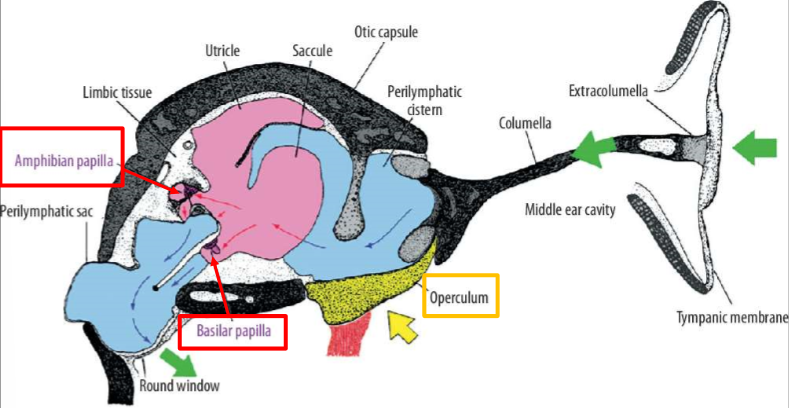
use different parts of the inner ear to detect different frequencies (amphibian papilla, basilar papilla)
have an extra bone→ function is controversial, may be a connector to forelimbs (operculum columella)
Vision→
rod (light) and cone (colour) photoreceptors are specialised neurons that allow vision and complement each other
have 4 types of photoreceptors (1 more than usual vertebrates) that allow perceiving light at intensities that other vertebrates cannot
are the only vertebrates that can do this
has many functions
Teeth→
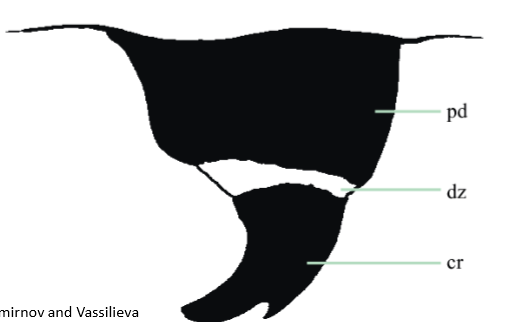
are the only group of recent tetrapods to have pedicellate teeth
are complex teeth→ function is debated
non-calcified connective tissue sandwiched in by two calcified dentine elements
Muscle→
have a levator bulbi muscle
moves the eye as a whole→ retract inside and put back again
is important for feeding→ overcomes the restraint of opening the mouth
There are 3 groups of Amphibians:
Anurans→ Frogs and Toads
Urodeles→ Newts and Salamanders
Gymnophonia→ Caecilians
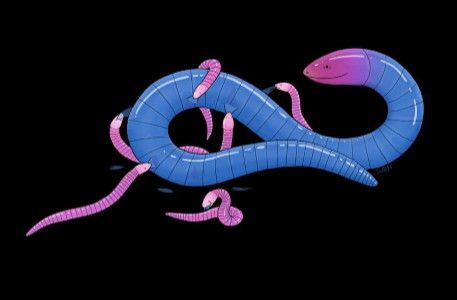
Caecilians:
150 species
live underground→ difficult to study and find
have internal fertilisation
have three reproductive modes:
oviparous→ free-living aquatic larvae eggs
oviparous→ direct development eggs
viviparous→ terrestrial and aquatic live young
energy for offspring growth is first supplied by yolk then by mother→ evidence of parental care
viviparous→ provided through uterine milk, scrape secretions from the oviduct
oviparous→ feed off the skin of the mother, outer epidermal cells have more fat for nutrients
young have specialised foetal teeth to feed
Newts and Salamanders:
760 species, highly threatened
mostly internal fertilisation
males deposit their spermatophore in ground that has a sperm cap at the tip, the female uptakes this to fertilise her eggs
there are many complex courtship behaviours with elaborate secondary sexual characters to make sure the female takes their spermatophore
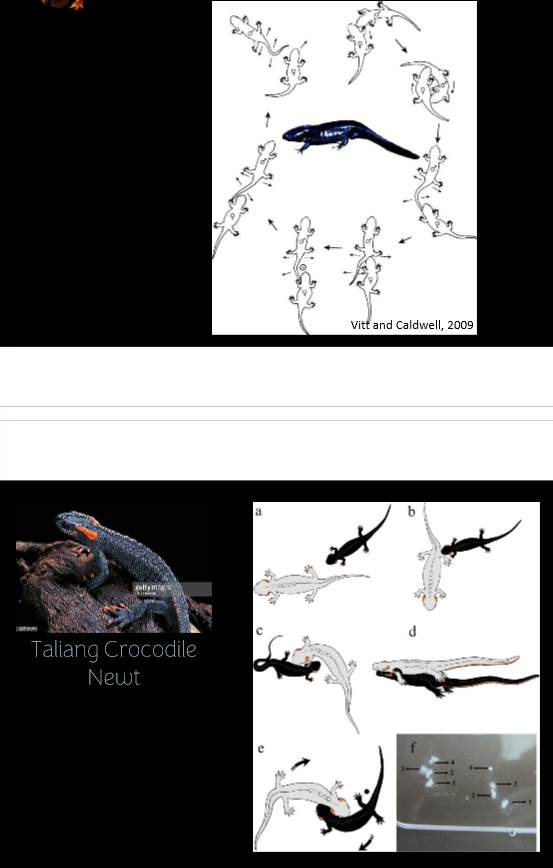
pheromones are transferred in many ways e.g. tail fanning, biting, rubbing…
most species lay eggs under water that develop into aquatic larvae
the purely terrestrial species are ovoviviparous/viviparous (produce eggs that hatch inside the body and the young are born live)
females retain embryos/eggs until the end of gestation, are fully developed juveniles
paedomorphosis→ adults retain larval traits during adult stage
some groups keep traits depending on the environment
Frogs and Toads:
5000 species, huge diversity
all are carnivorous
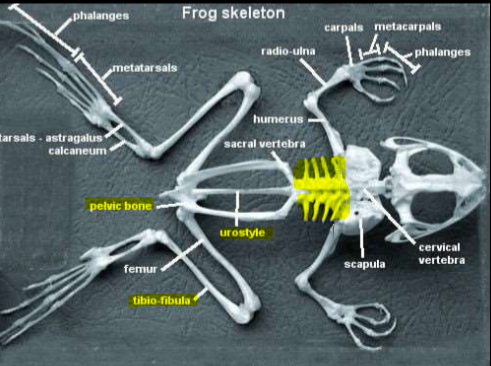
have a reduced skeleton with less ossification that is specialised for jumping:
elongated hind limbs and pelvis
reduction or no tail
urostyle→ shock absorber for the pelvis
shortened or no ribs→ solid path for transmission of thrust
tibio-fibula→ tibia and fibula are fused together
Reproductive Modes of Anurans:
generalised life cycle (eggs, tadpoles, growth)→ only in temperate regions
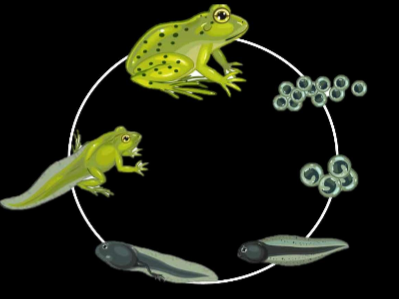
is actually very complex and diverse
traits differ between groups e.g. egg and clutch characteristics, larval development, parental care, site of egg-laying…
there are 2 patterns of the evolution of reproduction:
there is higher diversity of reproductive modes in the tropics
there is a progression from aquatic to terrestrial reproduction
looked at selective pressures driving these two patterns:
terrestrial reproductive modes are more common in warmer, wetter environments in the tropics
locations with low precipitation and seasons support aquatic reproductive modes more or have adaptations to resist desiccation
move from aquatic to terrestrial to reduce predation threat
however, must now protect young from desiccation and terrestrial predation, so there is a trade off:
terrestrials have less but larger eggs with more water inside→ more costly, need longer development, need parental care, but have higher survival rates
Adaptations for terrestrial reproduction:
Foam Nests-
are secretions of the oviduct
protect the eggs from desiccation and predation
has evolved convergently in 6 lineages, only in tropical continents
Development of eggs on leaves over-hanging water-
when eggs hatch, they will fall into the water
evolved convergently in 3 groups
sometimes, male surround leaf to ensure there is no predation
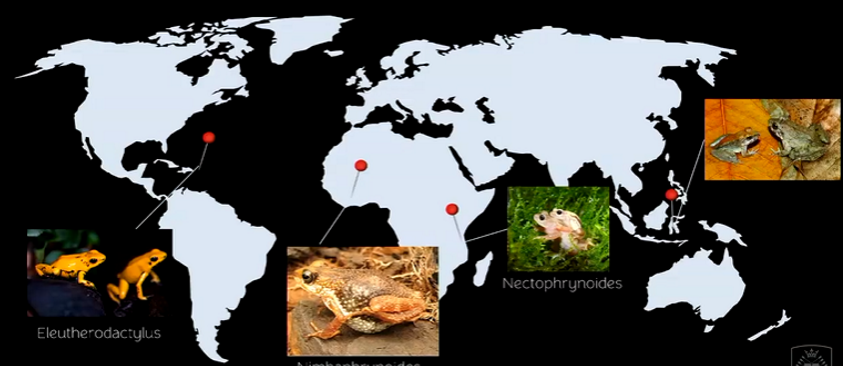
Some species have ovo/viviparity (produce eggs that hatch inside the body and the young are born live)-
is present in 2 genera in Africa, 1 in Indonesia and 1 in Puerto Rico
1 species has eggs and tadpoles developing in the female oviduct
some species show true viviparity→ embryos are nourished by secretions
one species raised tadpoles in their mouth and stomach
e.g. Darwin’s Frog:
females lay eggs, males remain near until they are ready to hatch
larvae contract muscles to stimulate males to swallow eggs where they hatch inside and develop and are later expelled
Recent Taxonomic Discoveries:
Amphibians are highly understudied but highly threatened
a new species found in the south of Ecuador
a new family was found in 2003
a new species was found in New York city wetlands