Biodiversity
The term biodiversity refers to the variety of life on earth at all its levels, from genus to ecosystems.
The importance of biodiversity
essential for maintaining a balanced ecosystem for all organisms
all species are interconnected - dependence
biodiversity cycles
Measuring biodiversity
allows environmental change to be measured
identifies species present
see effect of climate change, human action etc
Habitat biodiversity
refers to the number of different habitats found within an area
each habitat can support a number of different species
generally the greater the habitat biodiversity the greater the species biodiversity will be within that area
Species biodiversity
Species richness - the number of different species living in a particular area
species evenness - a comparison of the numbers of individuals of each species living in a community
Simpson’s index of diversity
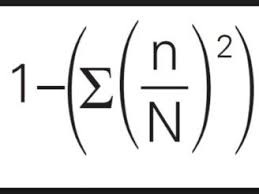
N = total number of organisms of all species
n = total number of organisms of a particular species
D = diversity index: the probability that two randomly selected individuals will belong to the same species/group
Highest possible value is 1
large value = greater diversity
Genetic biodiversity
refers to variety of genes that make up a species
greater genetic biodiversity within a species
allows for better adaptation to a changing environment
more likely to result in individuals who are resistant to disease
Factors affecting biodiversity
Mutation - formation of new alleles leads to variation
increase
gene flow - immigration and emigration result in movement of alleles between population
increase
selective breeding - decreasing frequency of alleles resulting in fewer characteristics
decrease
artificial cloning
decrease
natural selection
decrease
Genetic drift - change in allele frequency due to random nature/chance in a small population
decrease
genetic bottleneck - large numbers of a population die off
decrease
founder effect - few individuals of a species colonise a new area
decrease
Polymorphic and monomorphic genes
More than one allele for a gene is polymorphic
the gene that controls antigens on red blood cells (A, B, O)
Only one version of a gene in a population is monomorphic
the gene that produces amylase


DNA electrophoresis

Calculating genetic biodiversity
more polymorphic loci means a higher genetic biodiversity
