Immune & Endocrine System Notes
Immune System
Learning Objectives
ELISA Technique:
Understand the methodology and application in medical science.
Negative Feedback Loops in Endocrine System:
Examine how they affect physiological activity and organ size in mammals.
Hormonal Analysis:
Analyze data to identify unknown hormones treated to virtual male rat.
Mini Assignments
ELISA Questions:
Due by the beginning of the next lab (found in ICON).
Immunology Overview
What is ELISA?
Enzyme Linked ImmunoSorbent Assay, used for detecting antigens or antibodies in samples.
Antibodies and Antigens:
Antibodies:
Proteins produced by the immune system that neutralize foreign antigens.
Antigens: are foreign particles (often proteins) that elicit an immune response by binding to antibodies or T-cell receptors

Foreign substances (often proteins) that trigger immune responses.
ELISA Functionality: Measure antibodies or measure antigen
Direct, Indirect, and competitive all measure antibodies (I think)
Sandwich measure antigen

Process involves:
Binding of antigen to antibody, producing color results.
Controls:
Importance of positive and negative controls in experiments to ensure validity.
False positives/negatives can occur due to experimental/biological causes.
ELISA Techniquess
Detection Types:
Can detect either antigens (using known antibodies) or antibodies (using known antigens).
Applications:
Used for viral infection detection in blood (Ex: HIV, West Nile Virus, Measles).
Procedure for Antibody-detecting ELISA:
Preparation:
Add known antigen to wells, followed by sample.
Additional Steps:
Wash, add secondary antibody linked to enzyme, wash.
Detection:
Add substrate to observe color change, indicating antibody presence.
Control Definitions
Positive Control:
Contains primary antibody to ensure a successful reaction.
Negative Control:
Lacks primary antibody to ensure no false response.
Common Errors:
Biological/human errors may be detected through controls.
Timing and Execution
Importance of timing during experimentation (one person should keep track).
Watch tube numbers and possible cross-contamination during pipetting.
Color Coding for Tubes**
Endocrine System Feedback Mechanisms
Negative Feedback Importance:
Regulates hormone levels, impacts organ size and physiological responses.
Hormonal Pathways:
Continuous hormone exposure indicates stronger stimulating effects than inhibiting effects.
Examples of Hormones Interactions:
Thyroid hormones increase basal metabolism, reducing body fat.
Cortisol affects fat/protein breakdown, reducing body mass and immune organ size.
Testosterone promotes muscle mass growth and development of secondary sexual characteristics.
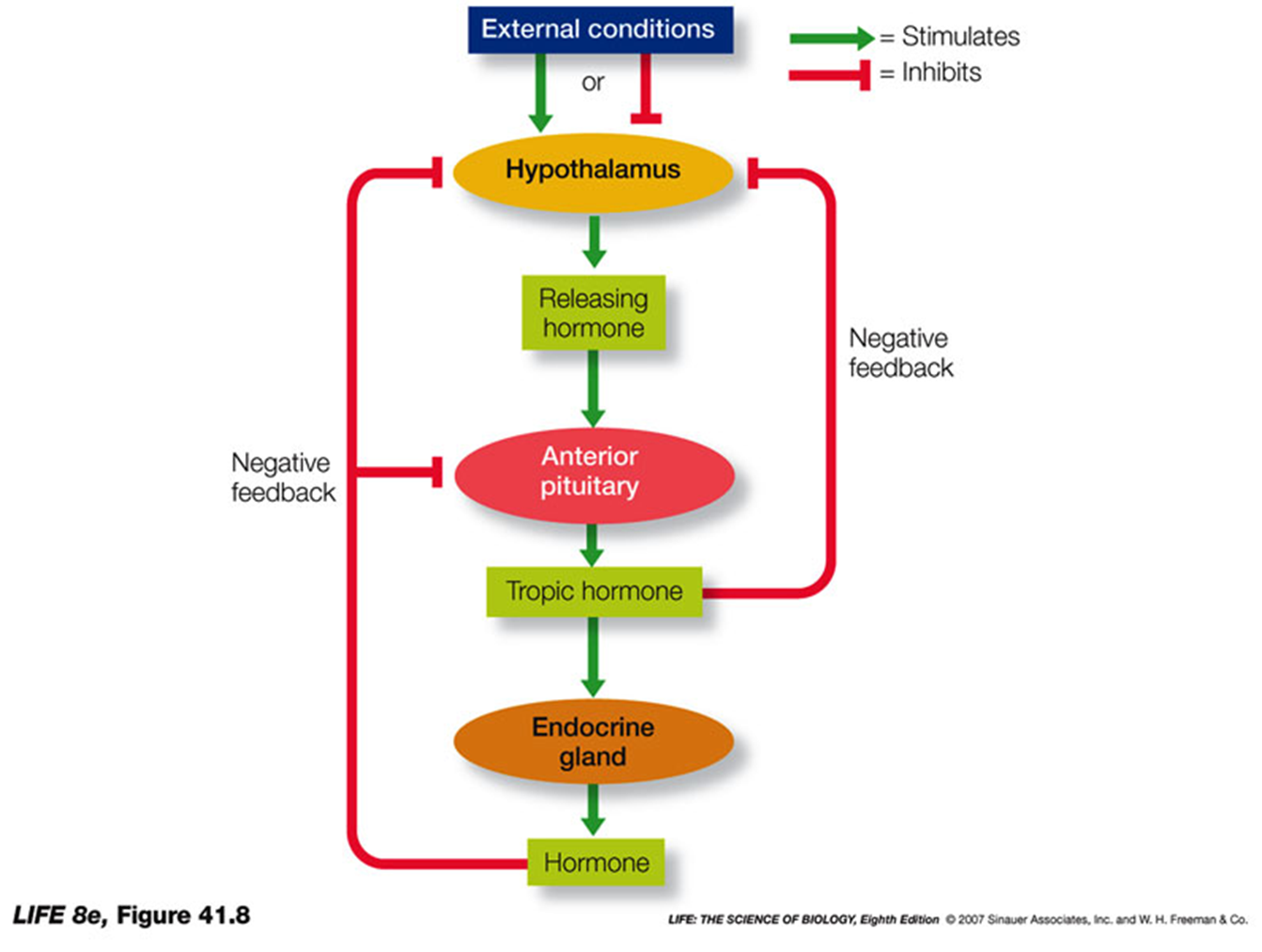
Common in the endocrine system is coordination and stabilization by means of a feedback loop, with the hormone produced by the terminal gland in the sequence serving as the inhibitor of the gland earlier in the loop. Having the hypothalamus, which is part of the brain, initiate the sequence allows for the incorporation of environmental information into the determination of hormone levels.

Stimulation of the anterior pituitary causes it to increase in size
Lots of tropic hormone produced

Stimulation of the endocrine gland by large amounts of tropic hormone causes endocrine gland to increase in size
Lots of the endocrine hormone is produced
