rod cells and cone cells
light receptors are found at the back of the eye in a layer called the retina, there are two types of light receptor cells: rod cells and cone cells
and they both convert light energy into an electrical nerve impulse - act as transducers
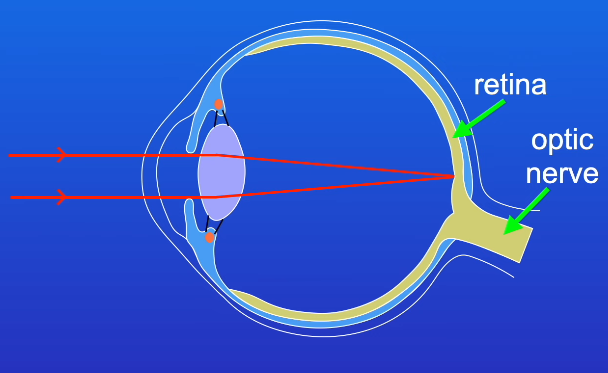
nerve impulses from the retina pass down the optic nerve to the brain
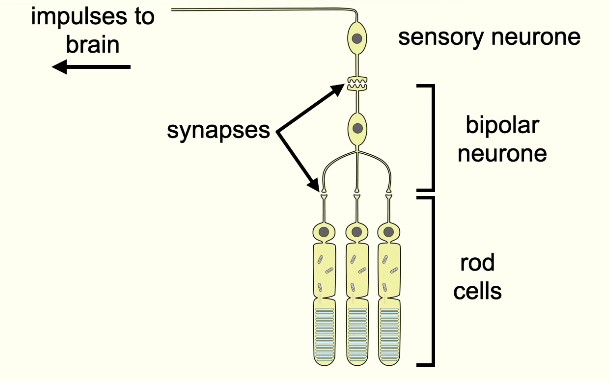
rod cells function with a bipolar neurone
retinal convergence is the idea that several rod cells signal to one bipolar neurone
each rod cell contains a light-sensitive pigment called rhodopsin
when light hits the rod cells, this causes rhodopsin molecules to be broken down
the rod cells then cause the bipolar neurone to depolarise
rod cells are very sensitive to low light intensity
→ rhodopsin does not need a lot of energy to break down
→ because several rod cells are connected to the same bipolar neurone the signals from these rod cells add together = summation (increases chances that the bipolar neurone will exceed the threshold value and produce a generator potential)
however because several rod cells signal to a single bipolar neurone the brain cannot distinguish which individual rod cell absorbed light - so in low light intensity the brain perceives a low resolution image = low visual acuity
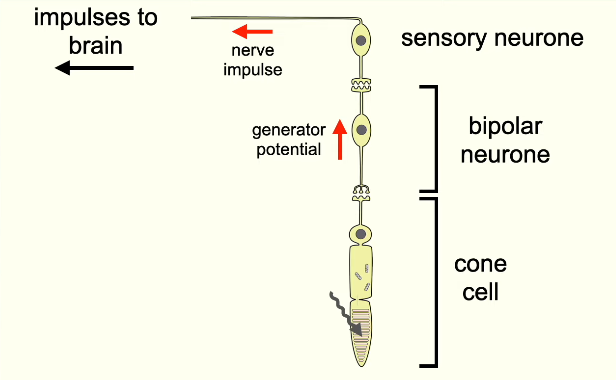
cone cells only respond to high intensity light
each cone cell connects to an individual bipolar neurone - so they must trigger the generator potential in its bipolar neurone
cone cells contain the light sensitive pigment iodopsin - iodopsin requires high light intensity to break down
the human eye contains three different types of cone cells which each contain a different type of iodopsin that responds to different wavelengths of light