Comprehensive Guide to Domestic Farm Animals and Livestock Husbandry
Page 1: Agricultural Overview, Cattle (Cow), and Horses
Farm animals, broadly categorized as domesticated livestock, comprise animals selectively bred and maintained within agricultural ecosystems for labor, companionship, and the production of vital commodities such as food, fiber, and fertilizer. The domestication of wild ungulates and avian species originated during the Neolithic Revolution approximately , transitioning human civilizations from nomadic foraging to settled pastoralism and crop cultivation.
Domestic Cattle (Cow)
Domestic cattle (Bos taurus and Bos indicus) are large, cloven-hoofed artiodactyl mammals belonging to the family Bovidae. Cattle constitute a cornerstone of global agricultural systems, serving dual and specialized functions across dairy and beef production.
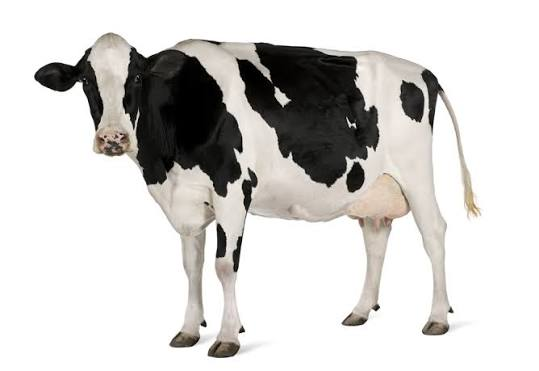
Anatomical and Physiological Characteristics
- Digestive System: Cattle possess a specialized polygastric ruminant digestive tract divided into four sequential compartments:
- Rumen: The primary anaerobic fermentation chamber harboring dense microbial populations of bacteria, protozoa, and fungi that degrade cellulose and hemicellulose into volatile fatty acids (VFAs), such as acetate, propionate, and butyrate.
- Reticulum: Featuring a distinct "honeycomb" epithelial lining, it assists in particle sorting and the regurgitation of coarse fibrous material for rumination (cud chewing).
- Omasum: Composed of numerous laminae ("manyplies") that maximize surface area for water, bicarbonate, and residual mineral absorption.
- Abomasum: The true glandular stomach, analogous to the monogastric stomach, which secretes hydrochloric acid and pepsinogen to digest microbial protein and unfermented feed fractions.
- Dentition and Ingestion: Lacking upper incisors, cattle utilize an abrasive dental pad and a prehensile muscular tongue to harvest fibrous pasture forage.
- Production Metrics: Modern dairy cattle, such as the Holstein Friesian breed shown above, exhibit pronounced udder development with four mammary quarters, producing average commercial yields of of milk over a standard lactation cycle.
Domestic Horse (Equus caballus)
Domestic horses are odd-toed ungulates classified under the order Perissodactyla and family Equidae. Domesticated approximately in the Eurasian Steppe, horses fundamentally altered human transportation, warfare, and agricultural traction.
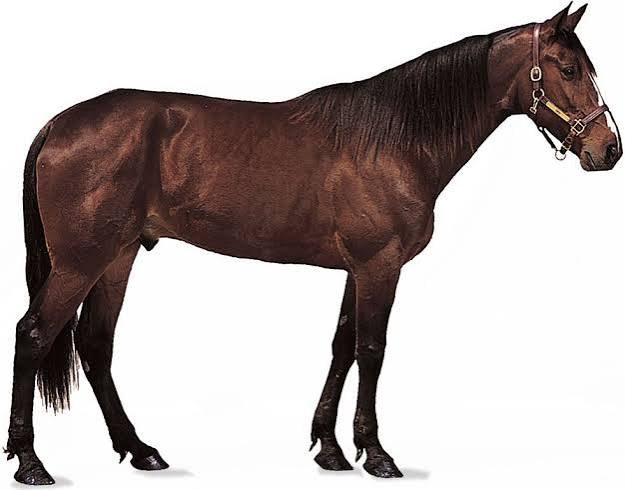
Anatomical and Behavioral Profile
- Locomotor Apparatus: Horses bear their weight on a single functional digit per limb (the third metacarpal/metatarsal terminating in a keratinized hoof capsule). A specialized passive stay apparatus composed of ligaments and tendons enables prolonged standing and rest with minimal muscular exertion.
- Hindgut Fermentation: Unlike ruminants, horses are non-ruminant herbivores (monogastric hindgut fermenters). Soluble carbohydrates and proteins are digested in the simple stomach and small intestine, while fibrous cellulose passes into an enlarged cecum and colon for microbial fermentation.
- Agricultural Utility: Equines provide draft power for tillage, cartage, and livestock management (cow-ponies and working stock), alongside contemporary roles in equestrian athletics and equine-assisted therapy.
Page 2: Poultry and Swine Production – Chickens and Pigs
Small-to-medium livestock species exhibit high feed conversion efficiencies, rapid reproductive intervals, and essential complementary functions within diversified farming operations.
Domestic Chicken (Gallus gallus domesticus)
Domestic chickens are gallinaceous ground birds derived primarily from the red junglefowl (Gallus gallus). They represent the most populous domesticated livestock species globally.
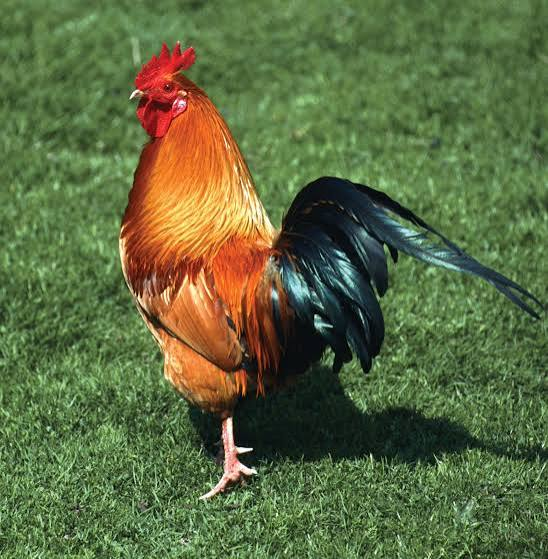
Morphological and Avian Characteristics
- Sexual Dimorphism: Male chickens (roosters/cockerels) display elevated ornamental wattles and combs for thermoregulation and behavioral dominance, prominent tarsometatarsal spurs, elongated hackle feathers, and iridescent, arched sickle tail plumage.
- Avian Alimentary Canal: Ingestion proceeds without teeth into the crop (a diverticulum of the esophagus for temporary storage), passing into the proventriculus (glandular stomach) and subsequently the ventriculus (muscular gizzard), where consumed insoluble grit mechanically grinds seeds and grains.
- Agricultural Output: Classified into specialized commercial lines: layer hens yielding , and rapidly growing broiler breeds optimized for muscle accretion within .
Domestic Pig (Sus domesticus)
Swine are even-toed ungulates of the family Suidae. Exhibiting remarkable omnivorous versatility and intellectual capacity, pigs are essential meat producers worldwide.
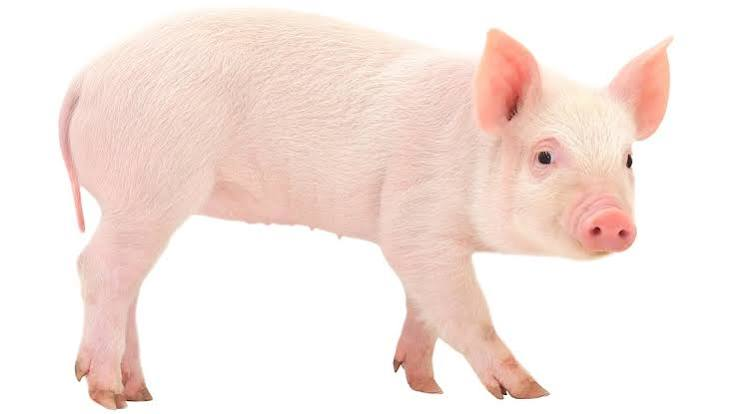
Anatomy and Husbandry Principles
- Somatic Adaptations: The porcine snout terminates in a mobile, cartilaginous disc supported by the prenasal bone (os rostri), evolved specifically for digging and rooting sub-surface roots, tubers, and invertebrate larvae.
- Metabolic Efficiency: Possessing a monogastric omnivorous digestive tract, pigs display an exceptional feed conversion ratio of approximately:
- Reproductive Capacity: Sows exhibit polytocous reproduction with a gestation length of precisely (commonly summarized as ), farrowing litters of .
Page 3: Working and Companion Farm Animals – Dogs
Canines represent the earliest domesticated animal species, diverging from an ancestral wolf lineage (Canis lupus) over . Within agricultural systems, dogs serve as functional partners rather than meat or dairy producers.

Functional Classifications in Agriculture
- Livestock Herding Dogs: Breeds such as Border Collies and Australian Cattle Dogs channel modified predatory instincts (stalking, eye contact, and heeling) to gather, direct, and relocate sheep and cattle across open pastures.
- Livestock Guardian Dogs (LGDs): Large, territorial breeds (such as Great Pyrenees, Anatolian Shepherds, and Maremmas) integrated into ruminant herds from infancy to deter apex predators (wolves, coyotes, big cats) through presence, vocal intimidation, and direct defense.
- Vermin Control and Barn Security: Terriers and small hounds maintain bio-security in grain stores and barns by eradicating rodents, which prevents pathogen transmission and feed loss.
- Sensory Capabilities: A canine's olfactory epithelium contains up to sensory cells (compared to roughly in humans), enabling early detection of herd distress, estrus cycles, and approaching intruders.
Page 4: Domestic Waterfowl – Ducks
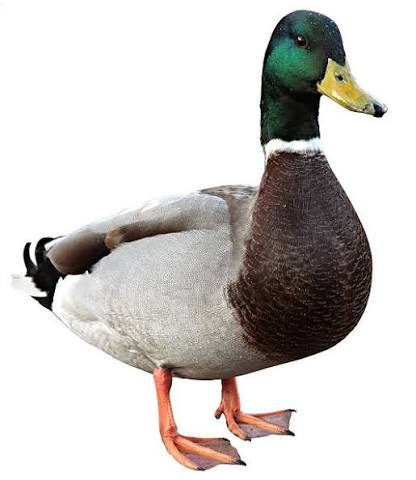
Domestic ducks are anseriform aquatic birds predominantly descended from the wild Mallard (Anas platyrhynchos), with domestic Muscovy ducks tracing to Cairina moschata.
Morphological Adaptations for Semiaquatic Life
- Integumentary Protection: Dense contour plumage and insulating down undercoats are waterproofed through preening secretions containing hydrophobic monoester waxes derived from the bilobed uropygial (preen) gland situated at the base of the tail.
- Feeding Morphology: The spatulate bill contains transverse pecten (keratinized filter lamellae) along the lateral margins, permitting the straining of small aquatic invertebrates, submerged vegetation, and seeds from mud and water.
- Propulsion and Thermoregulation: Palmate webbed feet provide aquatic thrust while counter-current vascular heat exchangers (rete mirabile) within the tibiotarsus minimize core body heat dissipation into frigid waters.
- Agroecological Applications: Ducks feature heavily in integrated farming, such as rice-duck systems, where birds forage actively within flooded paddies, eliminating golden apple snails and weeds while enriching the soil with nitrogenous waste.
Page 5: Small Ruminants – Goats and Sheep Husbandry
Small ruminants comprise goats and sheep, both belonging to the subfamily Caprinae. They are distinguished by complementary dietary strategies, grazing behaviors, and environmental tolerances.
Domestic Goat (Capra hircus)
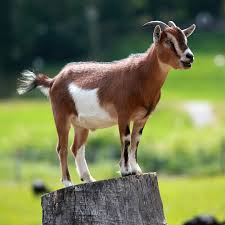
Domesticated in the Fertile Crescent from the bezoar ibex (Capra aegagrus) roughly , goats are hardy, highly adaptable herbivores renowned for their agile locomotion and metabolic resilience.
Behavioral and Biological Attributes
- Feeding Classification: Goats are selective intermediate browsers rather than grazers. They prefer shrubs, woody browse, tree bark, and forbs over grasses, utilizing a highly mobile upper lip and bipedal browsing posture to reach elevated foliage.
- Pupil Morphology: Horizontal, rectangular slit pupils afford a panoramic horizontal field of vision spanning approximately: This configuration maintains horizontal alignment with the ground plane even when the head is lowered, facilitating continuous predator vigilance.
- Agricultural Products:
- Milk: Rich in short- and medium-chain fatty acids (caproic, caprylic, capric acids) with smaller fat globules than cow milk, facilitating rapid enzymatic digestion.
- Meat: Chevon (adult) and cabrito (young), presenting a lean protein profile with minimal intramuscular marbling.
- Fiber: Specialized breeds produce valuable luxury fleeces, including Angora goats (mohair) and Cashmere goats (fine underdown).
Overview of Sheep (Ovis aries)
Domestic sheep, descended from the wild mouflon, share small ruminant classifications with goats but diverge in social dynamics, digestive preferences, and morphological adaptations.
Page 6: Ovine Morphology and Grazing Ecology – Sheep
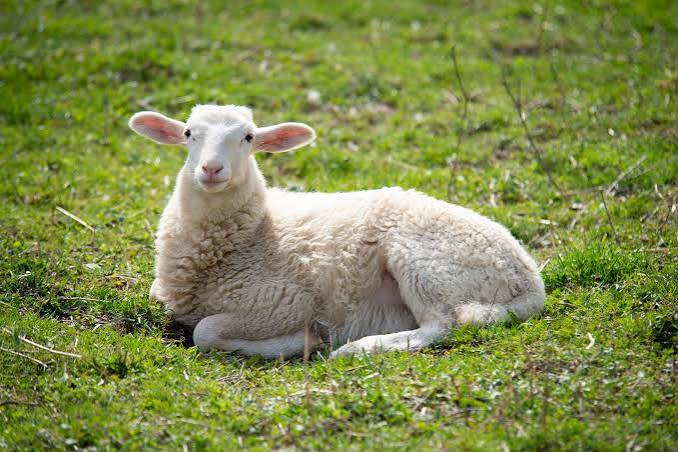
Domestic sheep (Ovis aries) are strictly herbivorous, gregarious grazers bred across centuries for wool, dairy, and meat (lamb and mutton).
Comparative Biology: Sheep vs. Goats
| Physiological Parameter | Sheep (Ovis aries) | Goat (Capra hircus) |
|---|---|---|
| Foraging Strategy | Obligate grazer (pasture grasses, clovers) | Browser (woody perennials, shrubs, forbs) |
| Upper Lip Structure | Distinct philtrum (cleft upper lip) | Intact, non-cleft prehensile upper lip |
| Scent Glands | Preorbital, inguinal, and interdigital glands | Subcaudal glands (beneath tail base in males) |
| Tail Orientation | Naturally pendant (hangs downward) | Erect (points upward) |
| Chromosomal Count | ||
| Horns | Spiral, lateral sweep (often polled) | Backward, upright sweeping divergence |
Flock Dynamics and Wool Production
- Flocking Instinct (Gregariousness): Sheep exhibit strong social cohesion and follow-the-leader behavior, an evolutionary anti-predator defense mechanism exploited by shepherds and herding dogs to manage pasture rotations.
- Wool Fleece Characteristics: The fleece comprises specialized keratinaceous fibers produced by primary and secondary wool follicles. Individual fibers demonstrate microscopic surface scales and natural three-dimensional crimp, imparting high tensile elasticity, flame resistance, and thermal insulation.
- Lanolin Secretion: Sebaceous glands associated with wool follicles secrete lanolin (wool grease), a complex ester-wax mixture that shields sheep skin and wool from environmental moisture and precipitation.