POPB
- What roles does Mass Media serve in democracies? What are participatory democratic theorists’ and elite democratic theorists’ views on this?
- The ideal role of the media in a democracy is to be free from government and economic control. This allows the media to act as an intermediary between citizens and elites, providing citizens with the information they need to make informed decisions and allowing elites to understand the perspectives of citizens. The media should also provide a forum for diverse views and act as a watchdog to hold government accountable. This vision aligns with the beliefs of participatory democratic theorists who value citizen participation and equality in the political process. Elite democrats, on the other hand, would be less concerned with the effects of economic forces on the media and may support government censorship in certain cases.
WHAT GENERAL CHARACTERISTICS OF THE MASS MEDIA SHAPE NEWS COVERAGE?
- How can we characterize the ownership of mass media? How does each of these characteristics influence the ability of mass media to serve its roles in democracy?
- The 3 C’s
1. Corporate:
1. It argues that media companies are primarily focused on making money, 2. Prioritize pleasing advertisers over serving the interests of citizens. 3. Leads to a bias towards stories that put people in the mood to buy products rather than engage with politics. 4. Competitive pressures facing news organizations have led to a decline in the quality and diversity of news, and that this has negative implications for democracy. 2. Concentrated 3. Conglomerate: Erodes media’s willingness to scrutinize political and economic powers.
Elaborate your answer with examples that were addressed during class (see Durante et al. 2019; market competitiveness in cable TV and the rise of partisan media; Sinclair broadcasting group). :
\
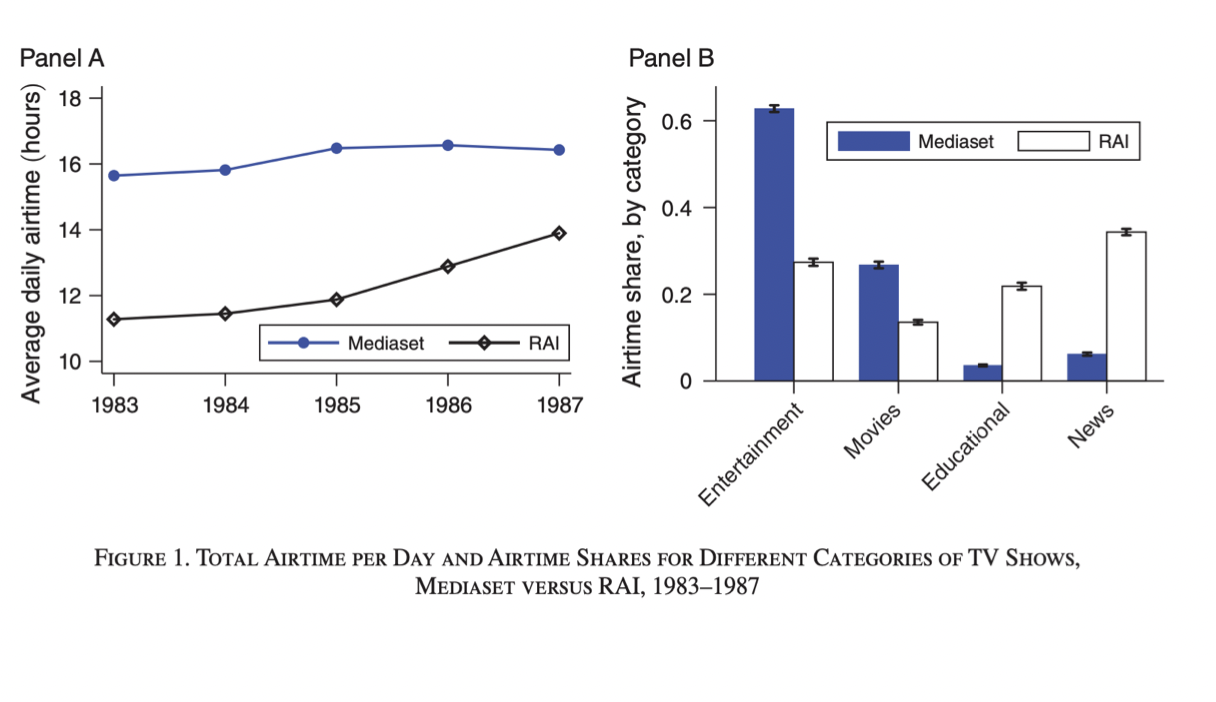
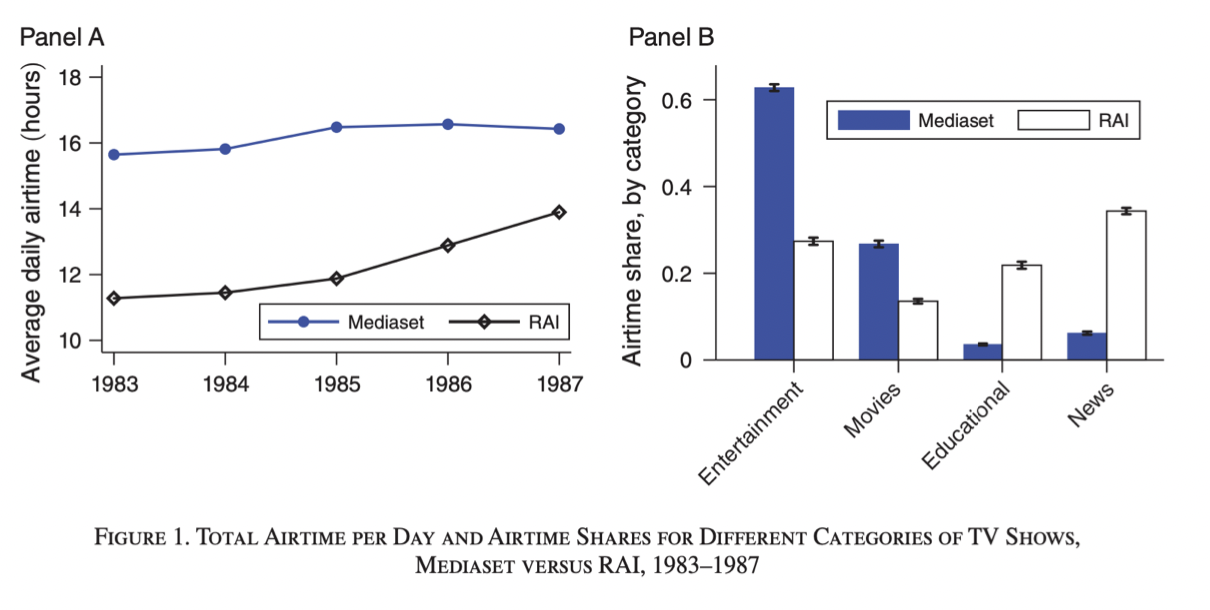
- Voters who were exposed to Mediaset all-entertainment content when they were kids
- were less civic-minded
- were more vulnerable to Berlusconi’s populist rhetoric
- were more likely to vote for Berlusconi’s party as adults.
Market Competitiveness and the Rise of Partisan Media
- The availability of large number of channels gave a rise to fragmentation and polarization of news media.
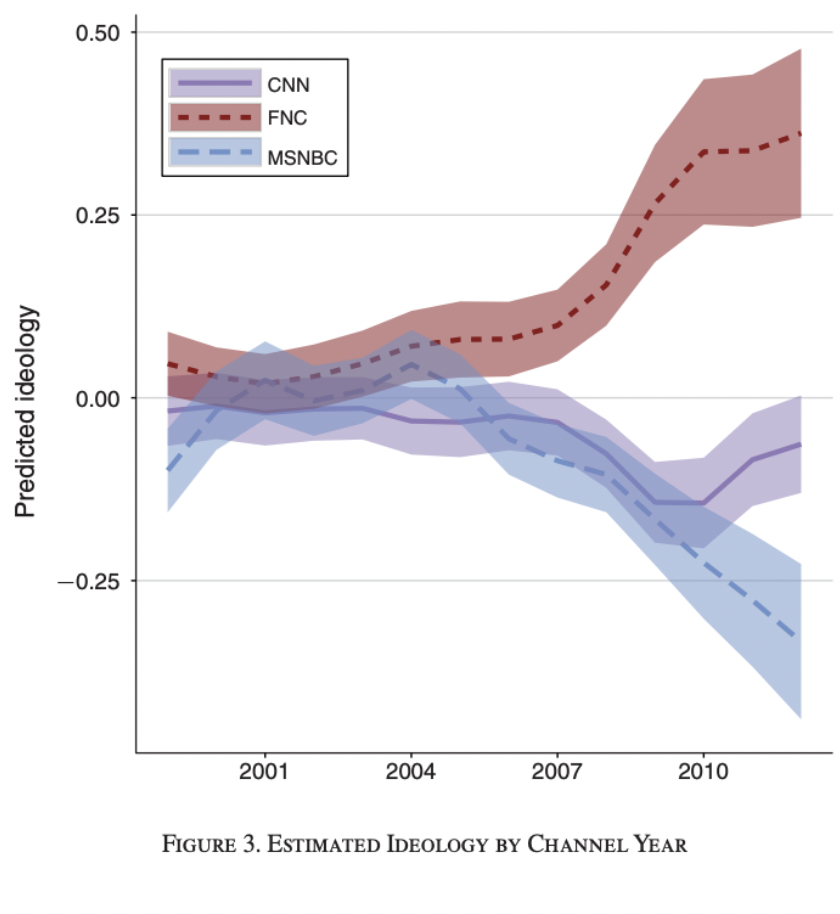
Image:
- A lower score means the ideology veered left while a higher score indicates that it became more conservative. Fox News has trended significantly to the right since the run-up to the 2008 election. Meanwhile, its left leaning counterpart MSNBC has shifted to a much more liberal ideology in recent years while CNN has remained relatively moderate.
- The authors say that Fox News’ impact on swaying voters in the 2008 election was far greater than the other two channels. If the trend continues, the implication is that Democrats will have an increasingly steep hill to climb in attempting to win back the White House. And they may be justified in putting some of the blame on Fox News.
- Martin and McCrain (2019):
- Increase in coverage of national politics at the expense of local politics.
- A significant rightward shift in the ideological slant of coverage
- How does mass media affect public opinion?
- Agenda setting
1. The media emphasize certain issues, and as a result, people perceive those same issues to be most important. 2. The media give a lot of attention to immigration so people believe that issue is important.
- Priming
1. The media emphasize certain issues or traits, and as a result, those issues or traits are most salient as people evaluate political leaders. 2. The media give a lot of attention to immigration so people evaluate Donald Trump based on his handling of that issue.
- Framing:
1. The media construct issues by identifying which aspects of a problem are most relevant and important, and as a result, people weigh those aspects more heavily as they form their opinions on an issue. 2. Example: The media construct immigration as a threat by focusing on immigrants as criminals and thugs so people weigh those considerations heavily in their attitudes toward the issue of immigration.
- Social Media and Public Opinion
- Direct effect
1. social media messages from friends with strong ties were more likely to influence voting behaviour, information seeking and self expression
- Indirect effect
1. \