Lecture 7 - Individuals with Special Needs
Caring for Individuals with Special Needs
Presented by Ms. Hannah-Kim Grima Formosa
International Day of Persons with Disabilities
Date: 3 December
Understanding Special Needs
Definition: Individuals with long-term physical, mental, intellectual, or sensory impairments that hinder societal participation (UN, 2006).
Levels of special needs
Types of Impairments, and people are affected in different ways:
Single impairment vs. multiple impairments.
Some are born with an impairment.
Impairments can acquire during the course of their life.
Statistics on Individuals with Disabilities
15-20% of the world's poorest populations are disabled.
Only 5-15% of people in developing regions have access to assistive devices.
Employment rates for disabled individuals are significantly lower (50%-75%).
58 million children globally experience some form of disability, affecting their school attendance.
177 countries have ratified the UN Convention on the Rights of Persons with Disabilities (CRPD).
Causes of Special Needs
Chronic diseases (diabetes, cardiovascular issues).
Injuries (road traffic accidents, falls, landmines).
Mental health issues.
Birth defects and malnutrition.
Communicable diseases (HIV/AIDS).
Childhood Disabilities
Causes:
Some children will be born with a disabling health condition or impairment.
While others may experience/acquire Special needs (after birth) as a result of chronical illness, injuries, mental health problems, birth defects.
Examples of disabilities:
Physical: Cerebral palsy, spinal cord injury, epilepsy, traumatic brain injury.
Cognitive/Intellectual: Mental retardation.
Emotional/Behavioral: ADHD, anxiety, depression, phobias, conduct disorders.
Sensory: Visual impairments(e.g partially sighted, blindness) hearing impairments (deafness), speech-language disorders.
Other Special Needs in Children
Autism, specific learning disabilities, chronic health conditions.
Rights of Individuals with Disabilities
Rights include survival, development, protection from harm, and participation in cultural and social life.
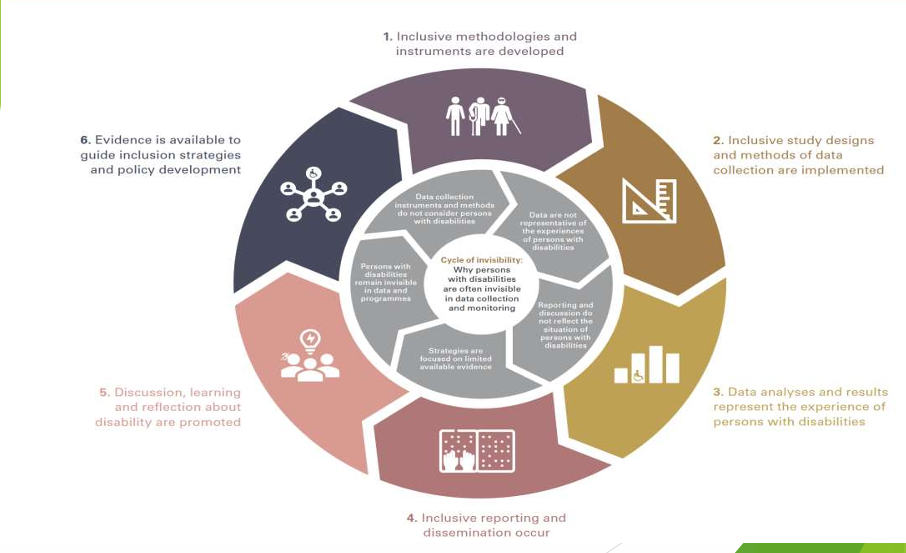
Cycle of Invisibility in Data Collection
Assisting Children with Intellectual Disabilities
Speak slowly, use simple language, employ visuals.
Present one concept at a time, ask for feedback, and repeat information.
Tips for Assisting Children with Sensory Impairments
Hearing Impairment: Use clear speech, body language, and written notes.
Blindness: Describe surroundings and provide guidance during emergencies.
Concerns related to sensory impairments
Hearing limitations: confusion
Essential Tips for Working with Individuals who are Blind
Introduce yourself, describe room layouts, provide verbal indications when leaving.
Avoid stylized fonts for written materials.
Concerns Related to Special Needs
Mobility Issues: Difficulty in maneuvering and emotional impacts.
Sensory Impairments: Communication barriers during emergencies.
Factors Affecting Child Development
Risk factors include poverty, stigma, poor caregiver interactions, limited program access.
Raising Individuals with Disabilities
Challenges for Parents
Emotions: Guilt, sadness, anger, frustration.
Strategies for Parents
Treat children like others in terms of love and discipline.
Balance the needs of all children, explain special needs, and access support groups.
Aid in emotional strength, patience, and coping skills for children with disabilities.
Conclusion
We are all wonderfully made.
Thank you! Any Questions?