Lab 301 Pre Reading Knowledge
A Dominion Explorer is a specific type of dental explorer, a diagnostic instrument used by dental professionals, such as dentists and hygienists, during oral examinations. The explorer's primary function is to examine the surface of teeth, especially to detect signs of tooth decay, cavities, or other irregularities in the enamel or structure of the teeth. The Dominion Explorer has a slender, pointed tip that is used to gently probe the surfaces of the teeth. It allows the practitioner to feel for soft spots, rough patches, or holes that could indicate decay. It can also be used to detect plaque or tartar buildup. The instrument's pointed end can also help in assessing the texture of dental restorations or in identifying areas that need further treatment. This tool is essential for the early detection of dental issues, contributing to preventive care and assisting in planning treatments like fillings or cleanings.
A dental explorer is a diagnostic instrument commonly used by oral health professionals to detect dental caries (cavities) and assess the condition of the tooth surface. Explorers typically have thin, flexible tips that taper to a sharp point and come in various single end and double end patterns, that allows for tactile examination of the tooth enamel. A dental explorer might be used:
Visual Inspection: Before using the explorer, dental professionals visually inspect the teeth for any signs of decay (caries), calculus, discoloration, or abnormalities.
Tactile Examination: The explorer is then used to gently probe the tooth surfaces. Oral health professionals feel for irregularities or "stickiness" that could indicate the presence of cavities. It's essential to use a light touch to avoid causing unnecessary trauma to the tooth.
Interproximal Surfaces: The explorer is especially useful for examining the tight spaces between teeth (interproximal surfaces), where cavities are more likely to develop.
Identification of Defects: Oral health professionals use the explorer to identify defects such as pits, fissures, or soft areas on the tooth surface.
It's crucial to note that the use of explorers requires proper training and skill to avoid causing harm to the teeth or soft tissue.
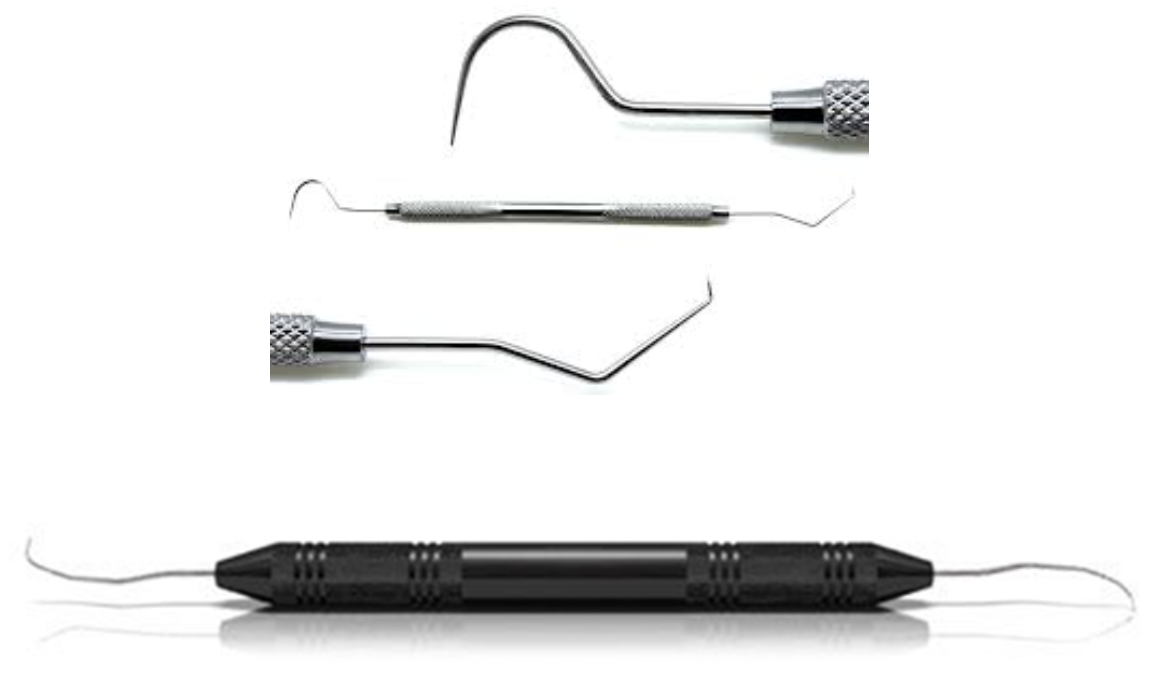
This week, you'll learn how to use the Dominion Explorer for examining anterior teeth, upper and lower front teeth. When examining teeth, it's crucial to pay close attention to specific surfaces to ensure a comprehensive assessment of their condition. The key surfaces to focus on during the examination include:
Occlusal Surface: Evaluate the biting surface of the tooth to identify any signs of wear, pits, or fissures that may indicate decay or damage.
Buccal and Labial Surfaces: Examine the outer surfaces of the teeth facing the cheeks (buccal surfaces) and lips (labial surfaces) for any visible abnormalities, such as discoloration, lesions, or irregularities.
Lingual Surface: Assess the inner surface of the teeth facing the tongue (lingual surface) for potential issues, including plaque buildup, discoloration, or structural irregularities.
Mesial and Distal Surfaces: Inspect the surfaces between adjacent teeth, known as the mesial and distal surfaces, for signs of decay, calculus accumulation, or any abnormalities at the contact points.
Cervical (Gingival) Margin: Pay special attention to the area where the tooth meets the gumline, known as the cervical or gingival margin, for signs of gum recession, inflammation, or potential issues with dental restorations.
By systematically examining these important tooth surfaces, you can ensure a thorough and detailed assessment, facilitating accurate diagnosis and appropriate treatment planning.
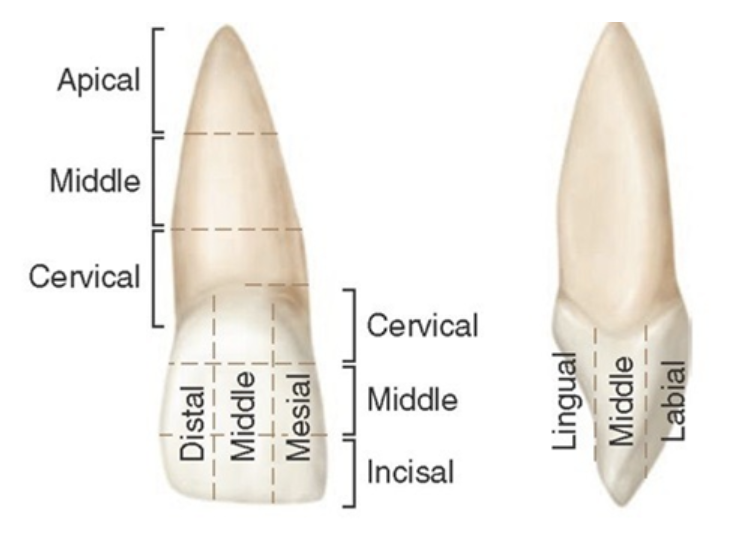
A Dominion Explorer is a dental instrument used primarily in periodontal care and training. It is an exploring instrument designed to assess the surfaces of teeth and detect irregularities such as calculus (tartar), caries (tooth decay), or restorative defects. Its key features include:
Functional Shank: Allows access to different areas of the tooth, especially subgingivally (below the gumline).
Terminal Shank: A slightly angled section to improve access and control during use.
Sharp Working Tip: A pointed end to navigate tight spaces and detect subtle changes on tooth surfaces.
The Dominion Explorer is used with a modified pen grasp to ensure precision and control. Practitioners typically use a light and controlled stroke while exploring the tooth's surface to minimise trauma to surrounding tissues.
Instructions for Using the Dominion Explorer
When using the Dominion Explorer, follow these steps to ensure accurate and effective exploration of the tooth surface:
Select the Correct Working End – Choose the appropriate end of the instrument for the specified area.
Proper Insertion – Insert the explorer with the terminal shank parallel to the long axis of the tooth.
Gentle Technique – Apply minimal pressure to avoid unnecessary displacement of the gingiva at the cervical margin.
Adaptation – Ensure the lateral surface behind the tip (1/3) is in close contact with the tooth surface.
Controlled Strokes – Use small, controlled V-shaped strokes to explore the cervical area of the tooth.
Systematic Coverage – Methodically cover the entire surface of the sextant to ensure thorough exploration.
Posterior Teeth – Ensure strokes cover the distal 1/3 and mesial 2/3 of each tooth.
Anterior Teeth – Explore from the midline to the interproximal areas in both mesial and distal directions.
Maintain Control – Demonstrate precise control over the instrument to prevent slipping and ensure effective detection.
Following these guidelines will help achieve accurate assessments while maintaining patient comfort and tissue integrity.