water
intro to water
we live on the driest continent - australia (except antarctiaca)
water makes up everything
water is temporary
sometimes it is hard to get water
Earth = blue planet (78% of the earths surface is water)
96.5% of that is saltwater and the other 3.5% is freshwater
68% of the freshwater is ice and glaciers, 30% is groundwater, and around 2% is surface water
out of all of the water we have on earth, very little of it can be used.
classifying resources:
renewable: restored by natural processes
non renewable: exists in finite amounts
continuous: water used to produce goods we consume.
water resources
freshwater - used for agriculture (70%), industry (20%), and domestic (10%)
four main types of water:
surface water: water on the earths surface e.g river, lakes, dams/reseviours
80% of the water used on earth
gets replenished when in rains (+)
cheaper than desalination (+)
building dams protects people from floods (+)
it needs to be treated which could also mean contamination (-)
we can create floods and droughts (-)
ground water: water under the earths surface
water sinks through tiny gaps between grains of soil, sand, or gravel.
we are able to dig holes (bores) into water soaked areas (aquifer)
cheap and easy access (+)
it is generally cleaner than surface water (+)
sometimes it might be contaminated - pollution on the surface (-)
takes a long time to replenish (-)
desalinated seawater: take all the salt out
we won’t run out (+)
it might be our only option (+)
very expensive (-)
can harm the environment (-)
recycled water: waste water that has to be cleaned to we can reuse it
renewable (+)
can make people sick if not cleaned properly (-)
the water cycle (hydrological cycle)
water cycle processes: the physical changes to water that change its state and geographical location.
drainage basin: an area of land where water from rain or snow melt drains downhill into a body of water.
water cycle steps -
input. precipitation enters the river drainage basin.
transfer and storage. surface water - some of the precipitation flows across the ground (surface water). some of it then gets stored in lakes, dams, and reservoirs. ground water - some of the water soaks into the ground, entering gaps between soil particles (infiltration). gravity causes the remaining water to sink deep underground through soil and rock through the process of percolation.
outputs. the water can flow out to sea, evaporation, transpiration, sublimation
spatial distribution of water
spatial distribution = location and arrangements of particular phenomenon or activities across the surface of the earth
unlimited water is not available for everyone:
some countries are landlocked meaning they don’t have access to a coastline.
some parts of the world don’t have permeable surfaces that are right for groundwater to fill up. (permeable = liquid can sink into the ground)
some parts of the world don’t have rivers that make it easier to access surface water.
some parts of the world are deserts
it rains much more in some parts of the world than others (lack of precipitation)
some parts of the world do not get a lot of rainwater flowing down into the earth (drainage basin)
Australia’s water isn’t spread evenly; most of our water is in the north and east while the vast interior and west are incredibly dry.
beneath 22% of Australia lies the Great Australian Basin (one of the largest underground basements in the world)
water catchment
catchment area: the area drained by a river or water body, also known as a river basin
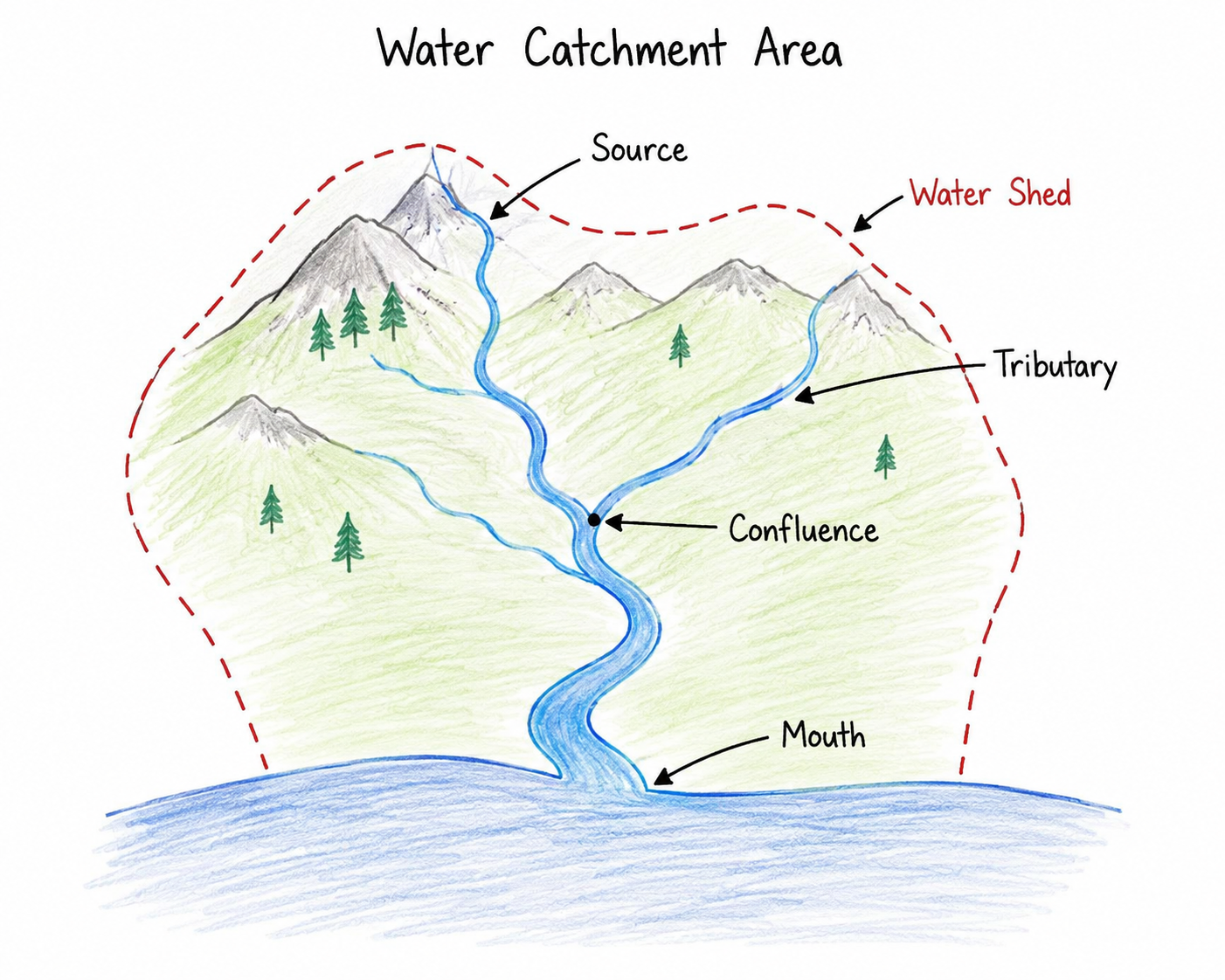
mouth: where the river flows into the sea
tributary: a river which joins a larger river at some point
watershed: the boundary hat separates one basin from another (a ridge of high land)
confluence: the point at which two rivers join
steep catchment: water moves quickly over the surface - very little ground water
flat catchment: water moves slowly over the surface - lots more groundwater
closed catchment: only way that water leaves is evaporation. groundwater collects at the lowest point. (surface water collects in lakes)
Factors that influence water
latitude - (tropics)
the earth is a sphere. the equator receives more sunlight (heat). the angle of the sun hits means stronger radiation which convection rainfall (low pressure, heat rises, cools and condenses, falls as precipitation)
altitude -
for every 100m we gain in height, we lose 0.65 degrees celsius.
mountains force air to rise - increased precipitation
topography -
prevailing wind (going windward) creates clouds so there is a rain shadow (rain only on one side) going leeward.
location -
affects how much water you have if you country is land locked
Climate change: the long term shift in earths overall weather patterns and average tempuratures.
droughts
floods
less freshwater
Australia’s water resources
different parts of Australia get more rain than others
not all the land in Australia is easy for rain to sink into the ground which causes limited groundwater
not all the areas of Australia have river systems (surface water)
not all areas of Australia are near the coast
even if there is rain, not all catchments have run off systems
even if there is groundwater, the well (bore) might be far away
some parts of Australia have recycled + desalinated water
water scarcity and management
water scarcity: the lack of sufficient available water resources to meet demand.
causes of water scarcity:
physical water scarcity -
not enough water for what we would like to use it for
more than 75% of the fresh water is being used
just because an area is dry does not mean there is water scarcity. if there are not many people in the area there might be plenty of water for the people there.
this can happen because of government decisions, massive population growth or if there has not been enough rain (drought)
Economic water scarcity
The country does not have the money to use for water infrastructure (for example dams, pipes, or treatment plants to clean the water.
water management strategies
goverments:
Water restrictions - legal limits that are introduced to ensure that people don't take too much water. Find a provide if people break these limits.
e.g Singapore
Densely populated
No freshwater lakes
No ground water
Needs much more water (demand exceeds supply)
water scarcity management plan:
Has made an agreement to get other water from countries (40% from Malysia)
30% from recycling
Capture 20% from advance rainwater capture
10% from desalination
non government organisations:
Help areas with severe water scarcity
Work directly with communities (governments can't help.)
Help to build sustainable (long-term) water supplies
Get businesses to give money
e.g water aid
what can individuals do to help?
turn off running taps
use a water saving shower
have shorter showers
use recycled water