L11- Mutualisms
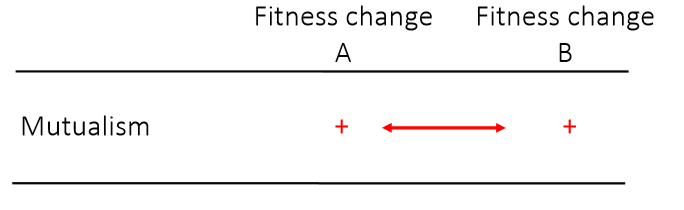
Mutualism:
action is beneficial for recipient and itself:
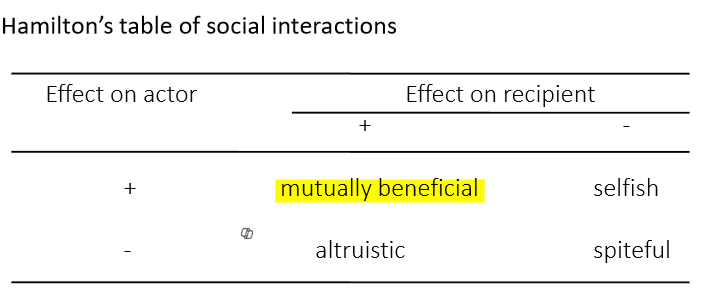
there needs to be an immediate mutual benefit, not much opportunity to defect
however, each individual wants to maximise own fitness→ others fitness is not in their best interest
Semantics:
Mutualism- interspecific
Mutual benefit- intraspecific
but both can be used interchangeably, have the same kind of interactions and stabilising mechanisms
Examples of Mutualisms:
Improved foraging efficiency:
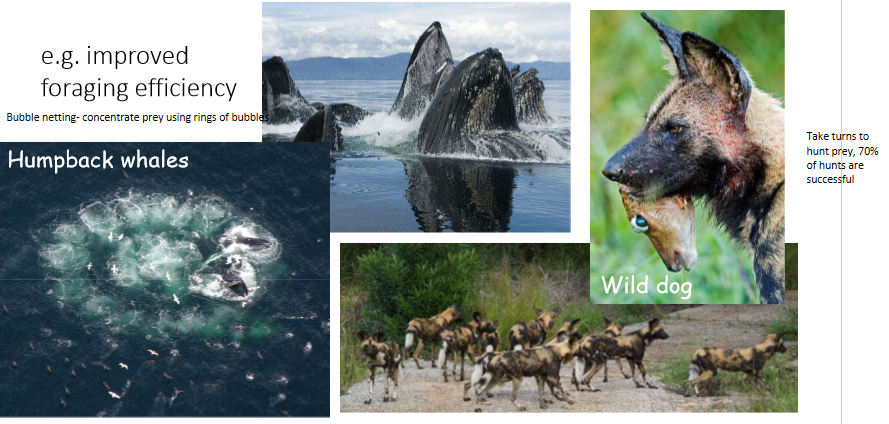
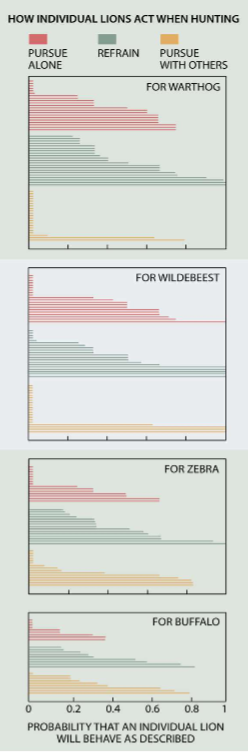
can perform tasks that would have been impossible individually e.g. affects which prey lions can tackle:
mostly single individual chase warthogs
as prey get larger, more likely to hunt together
Territoriality e.g. lions:
infanticide occurs when males take over a pride
hypothesis→ females live in prides to reduce rate of turnover of male owners of pride
advantage of living in large groups for lionesses-
defend a larger area, fewer neighbours, higher reproductive success
important for them to reduce male neighbours→ more male neighbours increases takeovers and therefore female mortality rate and wounding rate

→ living in large female prides allows them to defend a larger area and reduce density of lions in orbit
Sentinels:
sentinels are posted to take turns to watch for predators
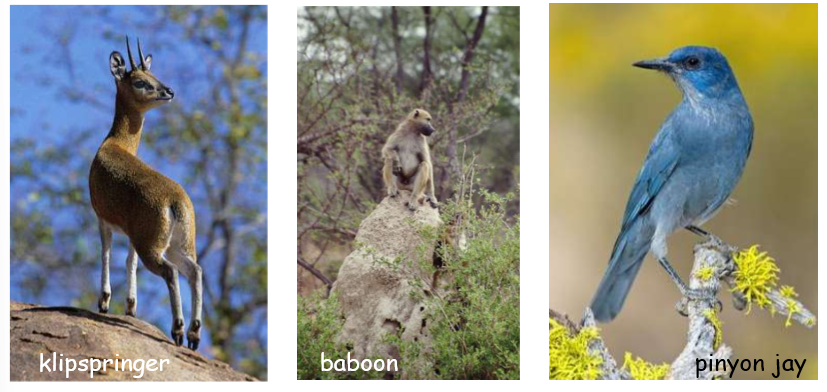
traditional interpretation was altruistic kin selection→ dangerous for sentinels but protecting kin BUT see sentinels when there are no/many non-kin→ doesn’t work
new view→ sentinels are actually in the safest place- can see predator, know where to go→ is mutualism
e.g. Meerkats:
hypothesis: take it in turns to be sentinels when fully fed
evidence for this:
search for invertebrates, dig into soil to find scorpions- very vulnerable to predation
post sentinels, usually on raised porches
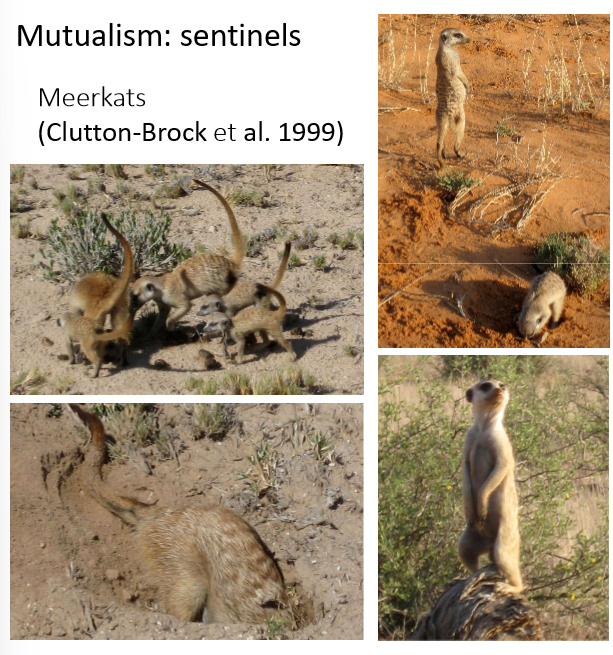
experiment→ tested if sentinels are well fed
method→ fed some, left others unfed
results→ highly significant difference between time spent as a sentinel if you are fed vs unfed
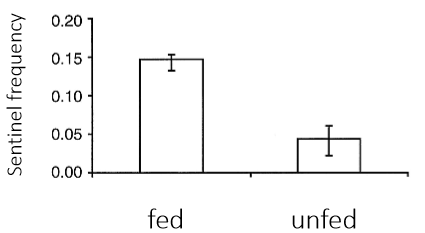
→ sentinel behaviour is the optimal activity once their stomach is full and no other animal is on guard→ is mutualistic
e.g. Pied Babblers and Drongos:
PB forage on invertebrates deep underground→ highly vulnerable to predators
Post own sentinels or post Drongo sentinels
Drongos benefit→ are highly specialised for catching any insects flushed whilst babblers are digging
PB benefit→ Drongos alarm call
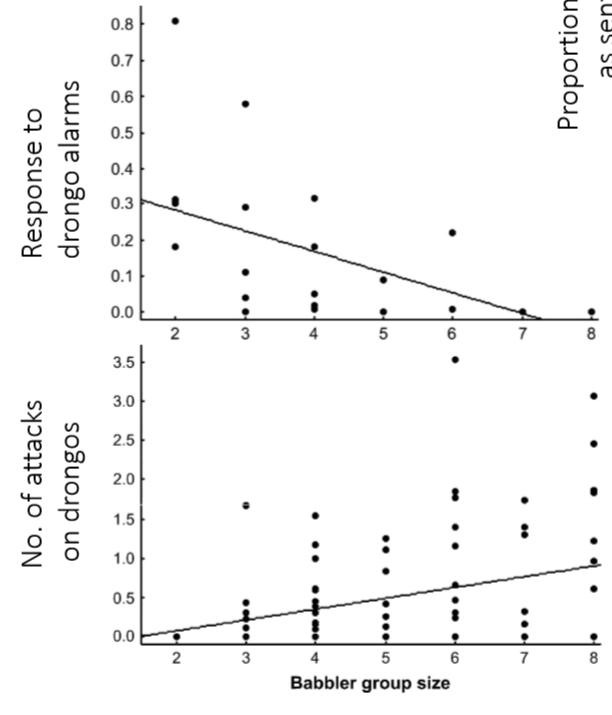
presence of drongo reduces need for babbler sentinels so each individual spends more time foraging:
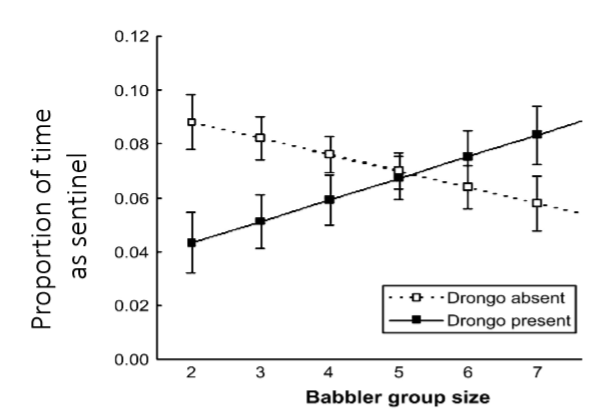
BUT as group size increases, babblers became less responsive to alarm calls of drongos and there are more attacks on the drongos by the babblers:
kleptoparasitism→ Drongos give false alarm calls to young, inexperienced babblers who flee and then Drongos take their food, are more successful at this when babblers are in smaller groups:
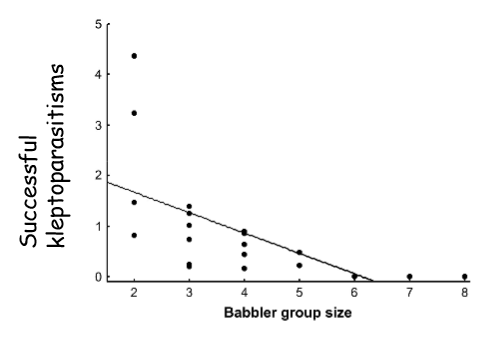
→ mutualism where both get benefits but Drongo tries to maximise own fitness through kleptoparasitism→ in response babblers resist mutualism
general problem of mutualism→ are always liable to be exploited by one group or the other→ parasitism
Solutions to exploitation of mutualisms:
Facultative mutualism
Punishment/enforcement
Image-scoring/reputation
Cultural coevolution
Facultative mutualism-
engage in mutualism when it is mutually beneficial but default back when it is not e.g. Pied Babblers and Drongos
Punishment/enforcement-
e.g. interspecific mutualism in cleaners and clients:
seen in lots of taxonomic groups
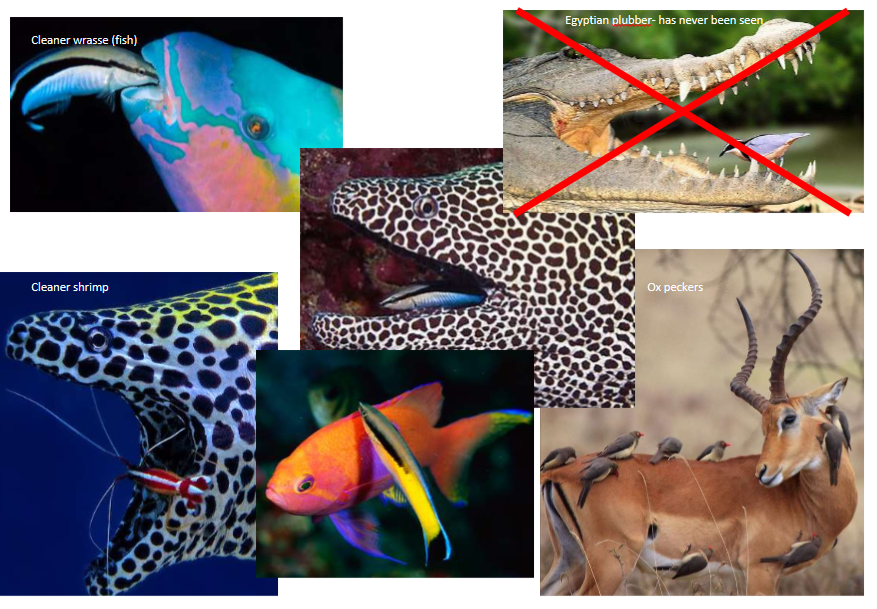
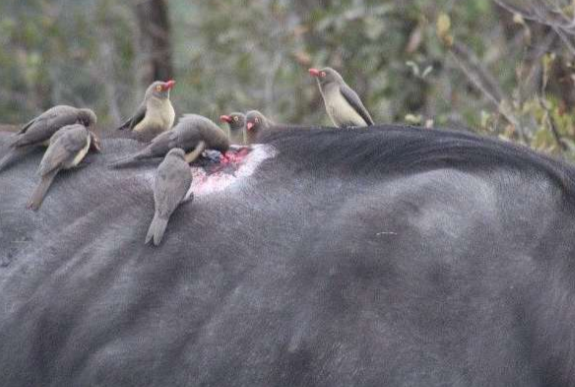
often lapses into exploitation e.g. ox peckers on the back of a wildebeest eating from the open wound, cleaner fish also feed on fish mucus/scales rather than ectoparasites
e.g. blue-streaked cleaner wrasse fish-
eat 1200 parasites every day, inspect 2300 fish a day, some clients visit every 5 minutes
are tempted to cheat but why can they not?
hypothesis→ punishment:
get eaten→ not likely, most clients aren’t fish eaters
client will leave or chase cleaner:
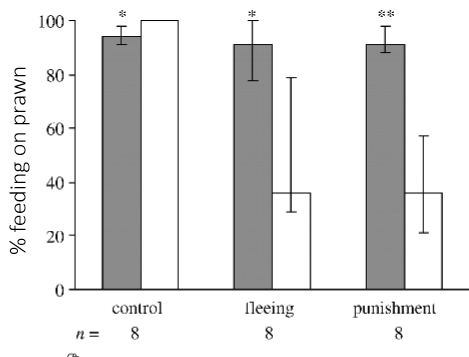
experiment→ offered cleaner fish plates with fish flakes and prawns
initial preference for each cleaner fish was prawns
control- allowed fish to do what they wanted
fleeing- as soon as cleaner fish fed on prawns, they removed plate
punishment- every time cleaner fish fed on prawns, it was poked with a glass rod
results→ when there was fleeing or punishment, there was more feeding on flakes (equivalent of feeding on ectoparasites), 6 learning trials- very fast learning
e.g. coffee room in university room-
contributions in an honesty box for coffee
put an image above the box each week for 10 weeks- flowers or eyes
results→ payment was 3x greater when images of eyes were added
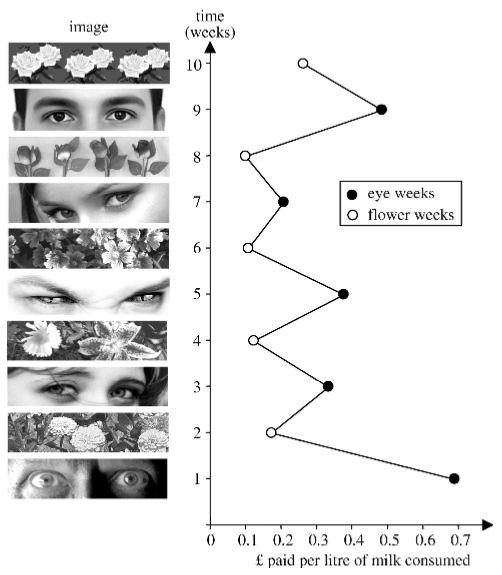
→ punishment or even the threat of punishment is enough to enforce cooperation
Image-scoring/reputation-
e.g. blue-streaked cleaner wrasse fish-
field study in the red sea→ observed whether they had cheated (taken a scale/mucus) or when clients were ignored
Q→ were clients more likely to return if their last interaction was positive or negative (cheated or were ignored)?
return rate→ 60% if last interaction was positive, 5% if negative
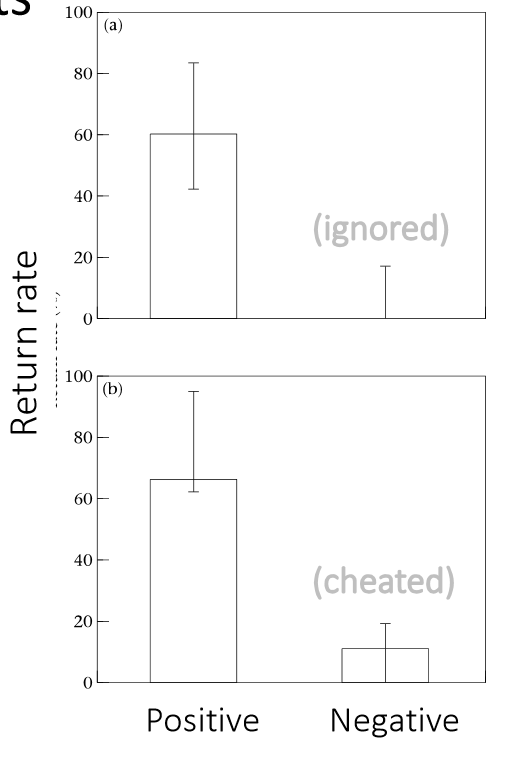
→ being more inclined to cheat would build a negative reputation
lab experiment→ fish had a choice of interacting with a cooperative or non-cooperative cleaner fish
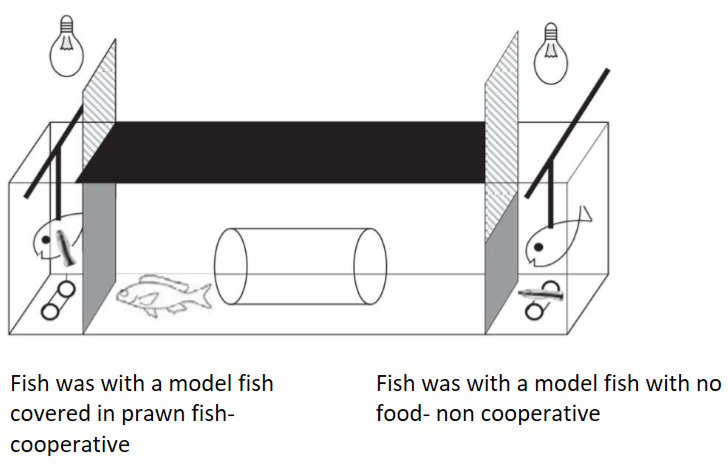
results→ over two years, both had a significant preference for cooperative cleaners
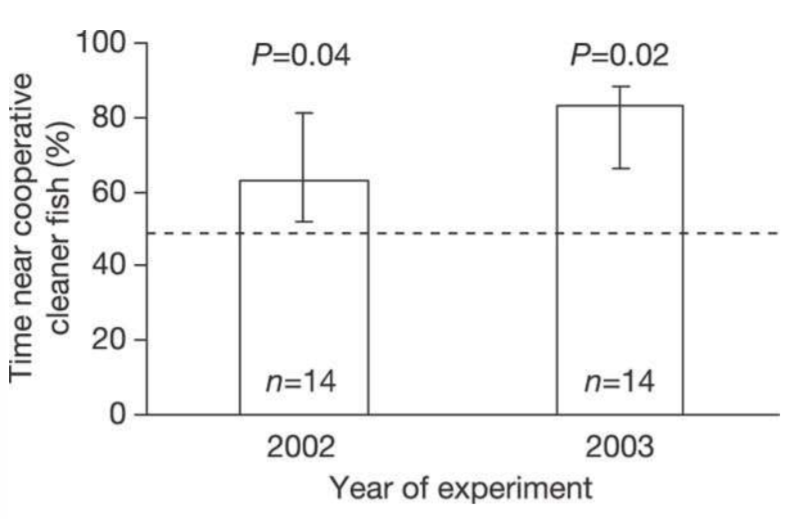
another experiment in handout→ cleaner fish were more likely to feed on fish flakes than prawns when being observed
→ conscious of being image-scored
Cultural coevolution-
e.g. honeyguides (birds) and honey hunters-
2 groups of honey hunters→ Hadza (Tanzania) and Yao (Mozambique)
benefit from interacting with honeyguides→ know where bee colonies are, offer calls to each other, honeyguides lead them to a bee’s nest, extract honey, always leave food for honeyguide
each honey hunter has different signals in different tribes- Hadza whistle whilst Yao trill-gruny
measured probability of being guided by honeyguide:
honeyguides in Tanzania were more responsive to whistle than to trill-grunt, vice-versa found in Mozambique
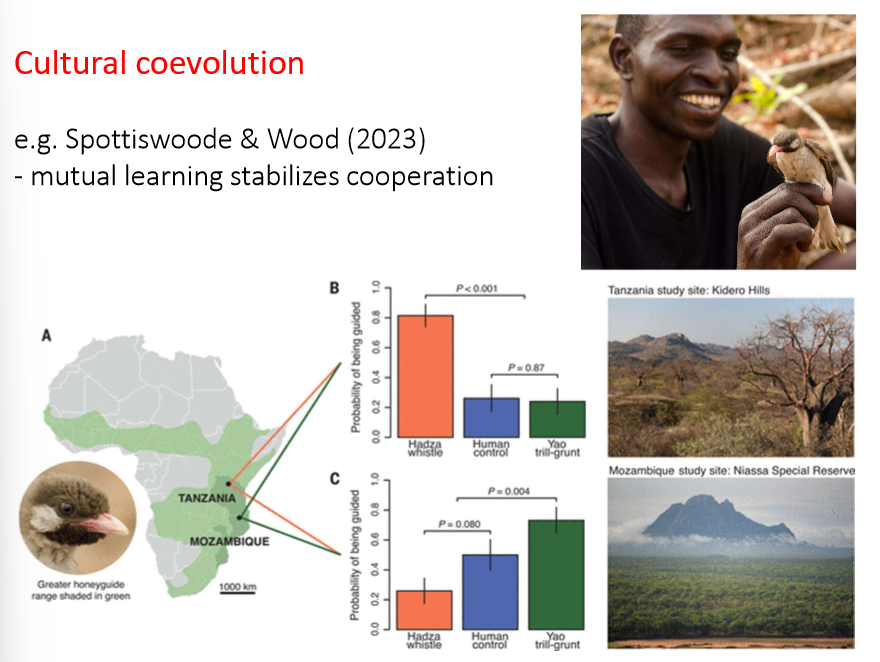
honeyguides are parasitic- lay nest in beeeaters, cannot learn calls from parents, each honeyguide has to learn call across life
→ learned cultural mechanism that maintains the mutualism cooperations
Summary-
Mutualistic interactions require no special explanation because of immediate benefit to both partners (usually)
Mutualisms widespread within and between species
Mutualists may be tempted to cheat, but costs may be reduced by facultative association, and cooperation can be maintained by punishment and need for a good reputation
