political science class 9
legislatures and executives
what does legislatures of power mean
Montesquieu: separation of powers to avoid concentration and abuse of power
3 powers: executive, legislature, judicial
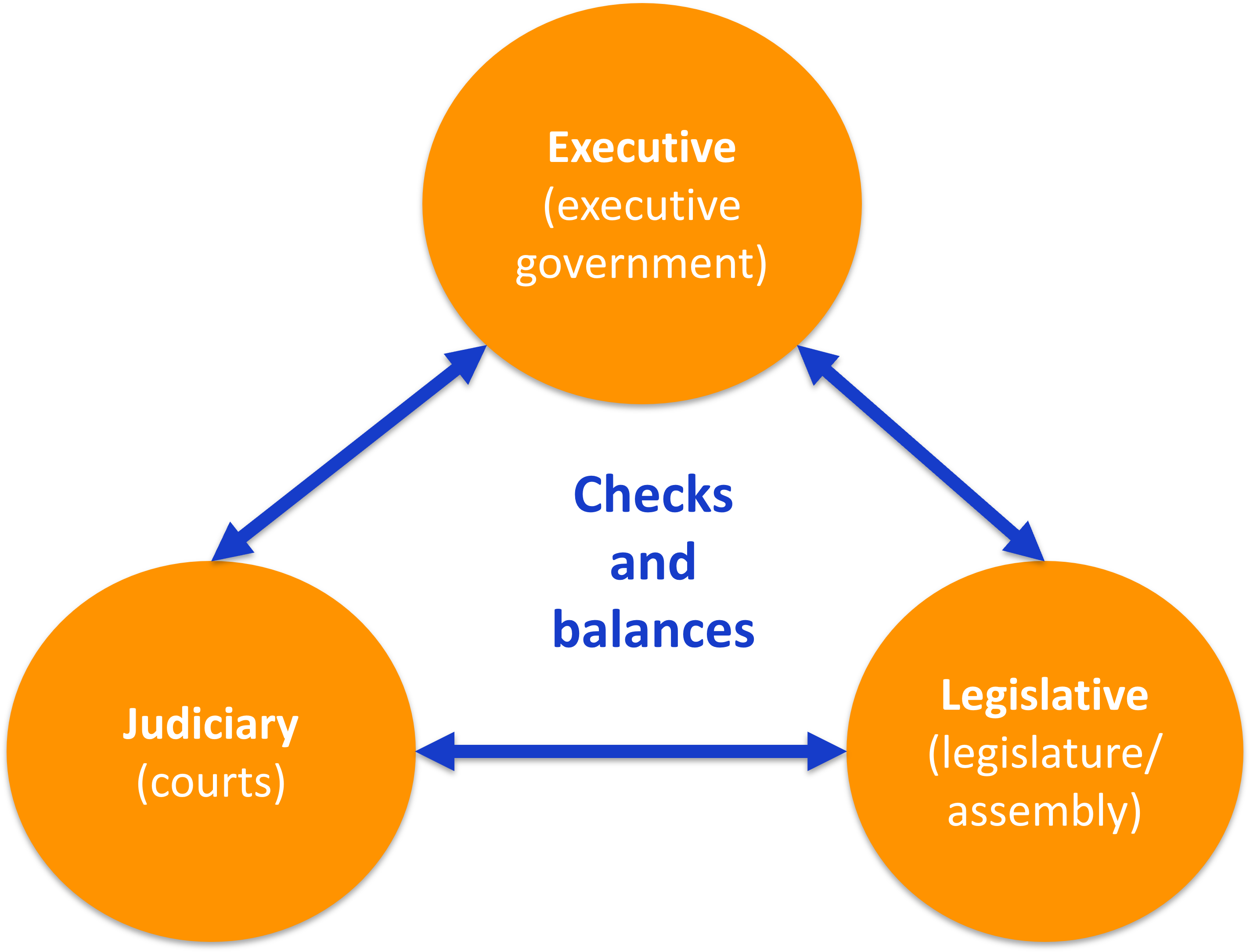 separation of power goal: system checks and balances, where power of one branch keeps power other branches in balance
what are legislatures and how do they organize
legislature: branch government responsible for discussing and passing legislation, keeping watch on executive
generic term, yet sometimes misleading because primary function often not law-making
how do they organize
unicameral vs bicameral
unicameralism: 1 chamber/house
bicameralism: 2 chambers
sometimes different functions (lower house/1st chambers; representing population AND upper house/2nd chamber; representing socially/territorially defined groups)
OR different members (lower house; elected members AND upper house; elected and/or appointed members
different kinds of bicameralism: strong (broadly equal powers) and weak (second chamber constitutionally and politically subordinate to first chamber)
ARGUMENTS IN FAVOUR OF BICAMERALISM
ARGUMENTS
AGAINST
BICAMERALISM
•Stronger checks and balances
•Institutional conflict between 2 chambers
•Wider representation
•Slower procedures
•Better legislation
•Reduced accountability
what are the functions of legislatures
representation
legislatures and lagislators repesent the interests of the electorate and their constituencies
interest aggregation and articulation
legislatures often not representative of society in socio-economic terms: over-representation 4 M’s: middle-class, middle-aged, majority, men
legitimation
legislatures promote legitimacy or rightfulness of the entire political system
legitimacy = the process of making something morally or ethically acceptable or right in the eyes of the general public
law-making
= the act of initiating, debating and passing laws
positive legislative power: ability to intitiate or propose laws
negative legislative power: ability to consider, amend, delay (filibuster) or reject proposed laws
legislatures rarely monopolize law-making
scrutiny
legislatures control or check executive power
veto powers, approving executive appointments, question time, remove the executive from office (vote of no confidence (parliamentary systems), impeachment (presidential systems)
impeachment = to charge a public official (president) with improper or illegal conduct in office. Can lead to president’s removal from office
legislative commitees:
key tasks: prepare and examine legislation
review government bills before they become law
supervise executive action
investigate matters of public concern
members often policy experts with experience or specialist knowledge → can keep close watch on executive actions and policies
how do executives operate
many forms and often centralized around leadership of a single or small group of individuals
head of state
formal authority, largely ceremonial; limited power
con be constitutional monarch or non-executive elected/appointed president
head of government
chief executive
can be executive president, prime minister, chancellor
head of government and head of state are same person in presidential systems but not in parliamentary systems
executives 3 main functions:
intiating government action and formulating public policy (= decision-making)
executing and implementing public policy
coordinating the activities of the state
what is the relationship between legislatures and executives
3 systems:
presidential systems
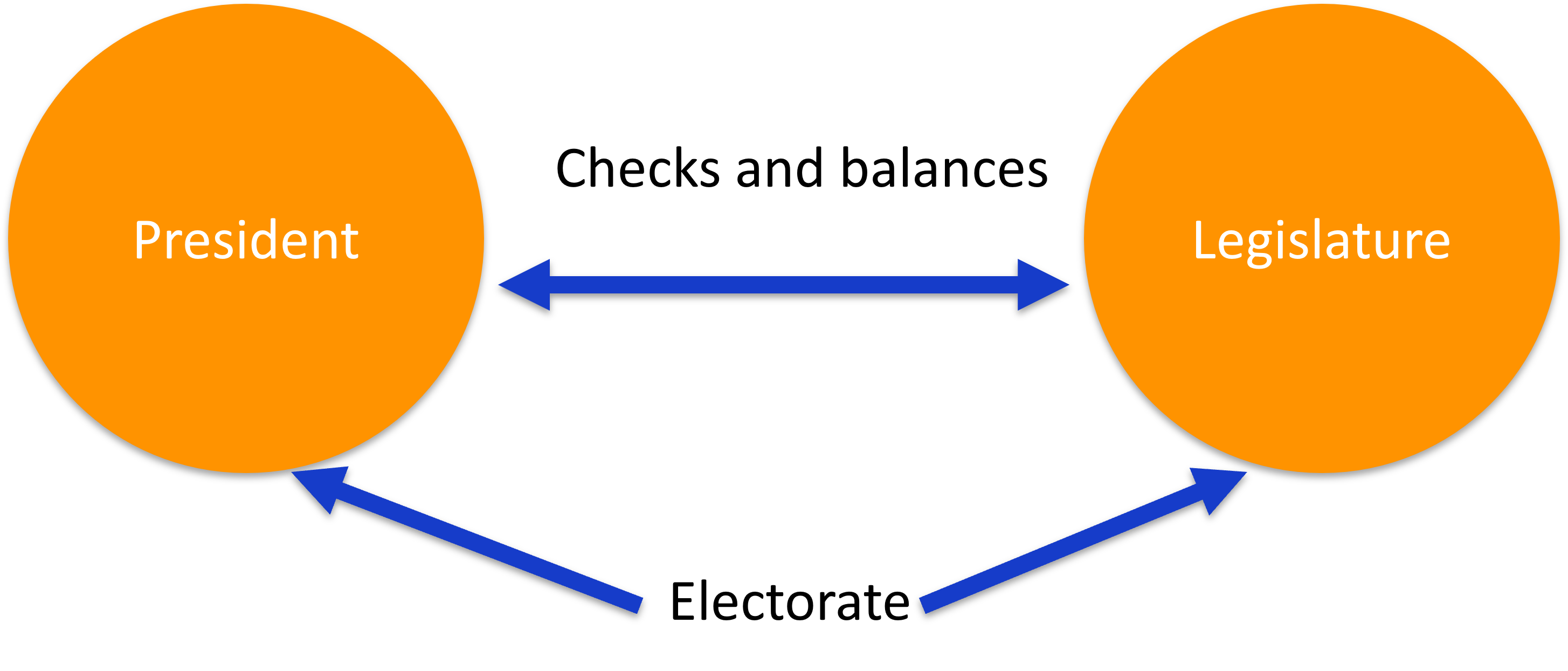
focus on independence between executive and legislature
both president and legislature directly elected
legislature cannot remove the president (= fixed tenure), except in cases of serious legal wrong-doing (impeachment)
president appoints cabinet but both aren’t accountable to legislature
head of state = head of government
in practice, president and legislature need to cooperate to get things done
parliamentary systems

focus on mutual dependence between executive and legislature (fusion of power)
executive not directly elected but drawn from legilature
executive depends on support of legislature and is accountable/repsonsible to it
executive can dissolve the legislature and call an election
head of state ≠ head of government
executive collective body and members share government responsibilities but PM increasingly more powerful
semi-presidential systems
mix 2 former systems
executive power shared between president and prime minister
president: appoints PM, dissolve parliament, dealing with emergency
PM:dealing with day-to-day affairs of state & domesti affairs
president directly elected, PM often appointed by president form elected legislature
PM appoints cabinet from legislature which is then accountable to legislature
president can dissolve legislature and call referendum
cohabitation: president and PM are of different parties
presidential vs parliamentary
presidential:
strong separation of power and direct accountability of executive
conflict between executive and legiltive may lead to deadlock. Weak presidents may try to make their office stronger
parliamentary:
fusion of executive and legislative can create stable and effective democracies
can also produce leaders with considerable power