Kettering Notes

25% from T5 - P3 or F4 - F8
10% from inion to Oz
Central sleep apnea (CSA) caused by loss of neurological output from respiratory center, lack of drive and lack of effort. Causes include:
Stroke
Muscular dystrophy
Amyotrophic lateral sclerosis ALS
Guillain-Barre
Congestive heart failure
Chronic opiate use
Congenital abnormalities such as Chiari malformation or congenital central hypoventilation syndrome
Hypercapnia or hypercarbia refers to the increase in partial pressure of carbon dioxide (PaCO2) above 45 mm Hg. Hypocapnia or hypocarbia refers to the decrease in CO2 in the blood level, below 35mmHg.
Brain - Electroencephalography (EEG)
Eyes - Electrooculography (EOG)
Muscles - Electromyograph (EMG)
Heart - Electrocardiogram (ECG)
PSG includes the above & respiratory effort, respiratory airflow, oxygen saturation (SpO2) & body position.
Patient Care & Education (Section A)
Epworth Scores (sleepiness during different conditions)
0-5 - Lower normal daytime sleepiness
6-10 - Higher normal daytime daytime sleepiness
11-12 Mild excessive daytime sleepiness
13-15 Moderate excessive daytime sleepiness
16-24 severe excessive daytime sleepiness
STOP-BANG is similar but acronym. Used for determining OSA in surgical patients. Yes to 0-2 is low risk for sleep apnea, yes to 3-4 is intermediate risk, yes to 5-8 high risk or yes to neck or bmi questions
Snoring (Do you snore?)
Tired (Do you feel tired?)
Observed (Has anyone observed you stop breathing/choking/gasping while asleep?)
P (Do you have high blood pressure?)
B (BMI over 35 kg/m²?)
A (Age over 50?)
N (Neck size 17 in (43 cm) for males or 16 in (41 cm) for females)
G (Gender male?)
Normal vital signs during PSG:
Respiratory rate: 10-20 breaths per minute
Temperature:
Normal: 37 C or 98.6 F
Hypothermia is decreased body temp, hyperthermia is increased body temp
Pulse/Heart rate: 60-90 bpm while asleep
Blood pressure acceptable values:
Systolic 100-150 mm Hg
Diastolic 60-90 mm Hg
Hypertension is increased blood pressure, puts strain on the heart. Hypotension is decreased blood pressure, can cause shock.
Limit COPD pt to 2 L/min of oxygen to not eliminate hypoxic drive
Bronchodilation is the relaxation of the airways, bioconstriction is the tightening of the airways.
Suprachiasmatic nucleus (SCN) is the pacemaker for circadian rhythm. It’s located in the hypothalamus & is affected by light.
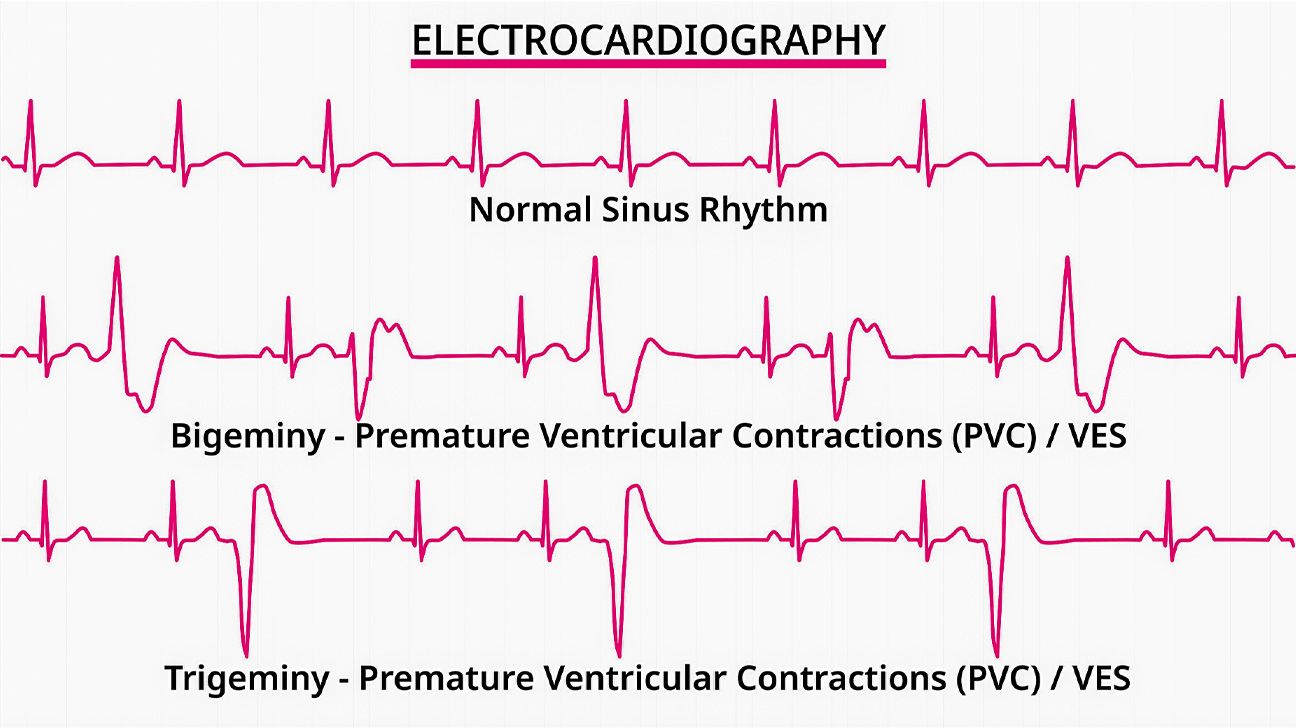
Electrocardiogram (ECG) “down & to the left'“
Sinoatrial node (SAN) in upper right corner of heart, fires electrical impulse down & to the left. Left ventricle has the most mass. The process of electricity flowing through the heart is called access. SA node fires in right atrium, shown by the P wave. P wave represents the contraction of the atriums, if normal, no atrial problem. The signal travels down & to the left into the atrioventricular (AV) node, shown by the QRS wave, represents contraction of the ventricles. This process is called a wave of muscular depolarization, the heart then needs to repolarize shown by the T wave. Junctional rhythm occurs when the SA node doesn’t fire, no P wave. Ventricular rhythm shown by wide QRS. Tachycardia (> 90/min) is fast, bradycardia (< 60/min) is slow. Normal heart rate is 60-90 bpm while asleep. Flutter is > 200/min. Fibrillation is too fast to count, treat both with shock.
Lead II placement preferred for sleep study. Negative lead under right collarbone & the positive on the left lower ribcage. When the impulse moves towards the positive electrode, an upward deflection is made.
Normal ECG:
PR interval 0.12-0.20 seconds
QRS complex 0.04-0.12 seconds
QT interval 0.36-0.44 seconds

If two R waves are 3-5 large blocks apart, heart rate is normal
If the two R waves are closer than 3 large blocks (15 small squares), rate is greater than 90 bpm (tachycardia)
If the two R waves are wider than 5 large blocks (25 small squares) apart, rate is less than 60 bpm (bradycardia)
Heart rate = 300 / # of large blocks between R waves OR 1500 / # of small blocks between R waves
Equipment Operation & Patient Preparation
Higher sampling rate results in better representation of data but creates a larger file size. Lower sampling rate produces smaller files but will distort data if too low. This is called aliasing. Minimum sample rate of 200 hertz, ideal 500 Hz to avoid distortion such as epileptiform spikes.
Sleep system includes: headbox, oximeter probe, amplifier, PAP device.
Thermocouple/thermistor:
Sensors used to measure temperature
Tracings look identical
Detects airflow at the nostrils & mouth
Seebeck effect is the the electromotive force (emf) that develops across two points of an electrically conducting material when there is a temperature difference between them.
Thermocouple
Responds to temperature change
Measures the difference between two dissimilar metals
Uses three wires, 1 in front of the mouth & 1 in each nare
Thermistor
Requires the use of a battery
Pneumotachometers/Pneumotachygraphs
Incorporated into some CPAP units
A device that measures the flow of respiratory gases
Not very accurate
Full face mask
Used when a quantitation (an exact measurement) of airflow & volume are needed
Nose & mouth must be fully covered (leak free)
Large, difficult for pt to maintain
Calibrated at different airflows
Respiratory Inductive Plethysmograph (RIP) belts
Gold standard
Uses piezo-electric sensors
Calibration required
Contains a device with zigzagging coiled wires sewn into the belt that react to inhalation & exhalation
One around abdomen, one around thorax
Normal spO2 is 95-97%. Thermocouple/thermistor is best for detecting airflow. Nasal pressure transducer is best for detecting hypopneas & RERAs.
Capnograph/End-Tidal CO2 (ECO2, EtCO2, PetCO2) Monitoring
A graphic display of CO2 levels as they change
Measures exhaled carbon dioxide content using infrared absorption
May be correlated with an arterial blood gas (ABG)
Nasal-oral cannula is used to detect exhaled CO2
Normally the PetCO2 will read lower than the arterial PCO2
PaCO2 = 40 torr
PetCO2 = 30 torr
EtCO2 can also be displayed as a percent
Normal value is 3-5%
Conditions affecting the ventilation/perfusion (V/Q) ratio of the lungs can alter the EtCO2
COPD
When CPAP/BiLevel is applied
Sleep may alter the differences between PaCO2 & PetCO2
Obesity hypoventilation
Cannot classify apneas or hypopneas
Useful in detecting hypoventilation and hyperventilation
Transcutaneous PO2 & PCO2 Monitoring (PtCO2/PtcCO2)
Adaptation of the Clark & Severinghaus electrodes that allows continuous, non-invasive PO2 & PCO2 measurements by electrodes placed on the skin instead of a single measurement with a blood sample
Commonly used in neonatal & pediatric sleep studies
Heating the skin around the electrode to 43-45 C improves the capillary blood flow (perfusion) and enhances gas movement through the skin
Accuracy decreases with increased skin thickness, anemia & conditions of decreased perfusion such as shock, burns, vascular disease or cardiac defects.
Placement is best in flat areas of good perfusion such as the chest or forehead
Electrode should be changed every 4 hours
Erythema (redness or blistering of the skin) can occur. Move the sensor more often
Air leaks will increase the TcPO2 to read higher than the arterial PO2 & decrease CO2
Snore microphone (Laryngeal microphone)
Records vibrations to send to the amplifier. Avoid placing over the carotid artery.
CPAP Continuous Positive Airway Pressure
May be referred to as PAP therapy
Goals:
Maintain a patent airway
Decrease the work of breathing
Improve ventilation/perfusion (V/Q) ratio
Improve oxygenation
Most common therapy for OSA
Hazards include: Poor fitting mask, irritation/ulcer from mask, leaks from mask, gastric distention from high pressures, contraindicated for patients with dysphagia, inadequate humidification
Filters room air & delivers it to the patient via tubing & a nasal mask or full face mask. Commonly known as the circuit
Goal is to keep the upper airway open by creating a pneumatic splint
Pressure is measured in centimeters of water pressure (cm H2O)
Oxygen can be added to the mask or tubing if needed
Must be prescribed by a physician
Requires humidification of inspired air
Optimal CPAP achieved when respiratory events have been resolved, arousals & saturations are in the normal range. Eliminates snoring
BPAP/BiLevel
Indications:
Central apnea
Patients unable to tolerate CPAP, especially with high pressure (> 15 cm H2O)
Hypoventilation (obesity)
Hazards include: poor fitting mask, irritation/ulcer from mask, leaks from mask, gastric distention from high pressures, contraindicated for patients with dysphagia
Delivers two pressures (IPAP & EPAP). Pressure is increased during inhalation (IPAP) & decreased during exhalation (EPAP)
When IPAP & EPAP are set the same = CPAP
Spontaneous or timed modes are available. Timed mode requires the same setting of a minimum respiratory rate. The two can be combined
IPAP
Always higher than EPAP; usually 4 cm H2O
Increased to eliminate apneas, hypopneas, some arousals, snoring, cardiac arrythmias, desaturations
EPAP
Increased to diminish obstructive apneas & hypopneas
Minimum pressure gradient between IPAP & EPAP is 4 cm H2O
Optimal IPAP setting is achieved when arousals & desaturations have been eliminated
Optimal EPAP setting has been achieved when apneas are eliminated
Electrical Functions
Terminology
Currents - movement of electricity
Two types: AC & DC
Amp (amperage) - the amount of electrical current measured in amps
Alternating current (AC) - an electric current that reverses direction in a circuit at regular intervals. An AC amplifier has a HFF filter while DC does not. Headbox usually plugged into AC amplifier.
A sine wave that starts at zero & increases to a maximum value, then decreases to a minimum value and repeats
Frequency (rate) - measured in Hertz (Hz). Hertz is a unit of frequency (rate) equal to one cycle per second (cps)
Standard outlet in America operates at 60 Hz AC, this is why it’s typical to have a 60 Hz artifact. Other parts of the world use 50 Hz.
Direct current (DC) - An electric current flowing in one direction only. Simple form of electricity, low voltage. (Examples are flashlight, car). Spo2 is a DC channel. DC has a square calibration wave. Only receives and transmits 1-2 volt signals.
Charge - to energize
Electrical potential - A measure of the work required by an electrical field to move electric charges. Measured in volts. Also called voltage
Voltage (volts) (difference or electrical potential) - a measure of the pressure under which electricity flows or moves
A 75 mV delta wave (seen in N3) has more pressure behind it than a smaller wave
Amplitude - the height of a waveform. Measured in mV (millivolts or microvolts)
The higher the voltage, the higher the amplitude (waveform) & vice versa
EEG, EOG, & EMG are measured in microvolts (uV)
Higher amplitude signals such as ECG signals are measured in millivolts (mV)
Gain - increases or decreases the signal size of the amplifier signal
increase gain = large deflections
Sensitivity - amount of output to a given voltage
Determines the amplitude (height) of the pen deflection
A low sensitivity setting produces a large deflection (signal change)
The higher the sensitivity setting, the smaller the deflection
Watts - a measure of the work done by a certain amount of current at a certain voltage (pressure)
Formula V = Voltage; Sensitivity; PD = Pen deflection
V = PD * S
S = V / PD
PD = V / S
Impedance (resistance) - total opposition to current (flow). Measured in ohms
Low impedance - metals (conductors). Gold commonly used for PSG
High impedance - pottery, dry wood (insulator)
Impedance is AC, resistance is DC
Capacitance - a stored charge
Q (charge) / Volts = C (capacitance)
Electrical circuit
Electrical current flows in the path of least resistance
Power cord must be 3 prong, try not to use extension cords. Must be approved for medical equipment.
Equipment ground:
3 types of grounding:
Earth ground
Reference point in an electrical circuit
A return path for the electrical circuit
Establishes a ground/earth relationship
Creates a low resistance pathway to earth
Shocks may still occur with proper grounding
Patient grounding is necessary for the elimination of artifact & proper amplifier function
A common point or reference for the other electrodes (EEG, EOG)
Provides a path from the patient to earth (ground)
Records 60 Hz signal if not correctly attached to the patient
Site should be cleaned & ground attached firmly to skin
Can be a problem from stray currents
Should have a circuit breaker & be isolated
Requirements for correct grounding:
EEG equipment must be connected to a 3-prong wall outlet
Equipment will need a working fuse to break the circuit in case of high current through the circuit
Ground plug must be firmly in place of the socket
Appropriate number of correct outlets for the equipment
If not correctly ground, pt may receive current (shock)
Ground loop
An unwanted current in a circuit that connects two points
Each circuit should have the same potential (voltage) but in this case are at different potentials (voltages)
Excess current will flow from a higher resistance ground to a lower resistance ground
All equipment should be connected to common ground point to avoid ground loop
Leakage current - a general term utilizing four leakage currents
Earth leakage current
Enclosure leakage current
Patient leakage current
Patient auxiliary current
A gradual loss of current from a charged capacitor
The current that could flow from the point where a person makes contact with a product, through that person’s body. and back to ground (or some other point)
Proper grounding is essential to avoid leakage
One of the biggest dangers to patients & caregivers
Patient leakage current tests should be performed to assure patient safety
Some leakage is normal. 100 uV microamps is the acceptable limit
Extension cords increase leakage current
Macro Shock
Part of the body is in contact with a conductive surface
An intense electrical shock that uses the body to complete a circuit to the ground
A different part of the same body is in contact with a second surface
A voltage source drives current through the body between those two points of contact
Occurs because of a mechanical defect in a piece of equipment or leakage current
Occurs at 1 mA or greater
Lethal at > 100 - 300 mA (milliamps). Usually causes ventricular fibrillation
The lower the skin resistance, the greater the shock (wet skin)
Patient is used as a high voltage conduit to ground
Micro Shock
A shock with a very low current
Patients with indwelling catheters & cardiac pacemakers are at greater risk
Shock will pass from the exterior body to an interior body
Ohms Law: I = V / R where:
V = voltage or electric potential
I = current
R = resistance
Electrodes are placed on the patient who produces an electrical impulse. Electricity moves from the patient to the attached electrode (most resistance occurs during this phase). Electrodes are connected to a junction box (head box). Headbox is connected to the differential amplifier.
Differential amplifier - a specific type of amplifier that increases the amplitude of a signal
The heart of the EEG process
Amplifies the difference between an exploring electrode (+) & a reference electrode (-) to produce a readable waveform. Called the differential gain
DC amplifiers are mainly used for slow or constant signals
Exploring electrode (Input 1) (G1) - placed nearest the the electrical activity to be recorded
Electrical activity to be recorded may be called bioelectric activity or biologic potential
Reference electrode (Input 2) (G2) - produces a consistent signal. Placed in an area away from the exploring electrode
Output voltage = G1 - G2 (V+ - V- = Output voltage)
C4 attaches to the scalp & explores. M1 attaches behind the ear; stationary producing a consistent signal. These record all activity. The signal goes through the differential amplifier producing a clean signal
Common mode rejection (common mode rejection ratio) - process of rejecting or removing any similar information from between G1 & G2
Gain - amplifies the difference between G1 & G2
Signal from the differential amplifier is sent to the PSG (analog or digital)
DC device send signal to a DC amplifier, then to PSG
Blue Light (phototherapy)
Helps to treat delayed sleep phase syndrome
Artificially resets the circadian pacemaker
May treat seasonal affective disorder & depression
Suppresses the body’s natural release of melatonin
Available as a large box, desktop light, or portable visors
Produces a brighter light than standard indoor lighting
The intensity of the light is measured in lux, instead of lumens.
Lux is measured at a specific distance from the light source; most often from a patient’s eyes
A minimum of 2,500 lux is needed to be effective. Normal for patients is 10,000 lux. Units should be UV free.
Side effects include: headaches, eye strain, nausea, dizziness
Special Testing & Calibration Procedures
Blood Gas Sampling
Arterial puncture - puncture of a peripheral artery to obtain an arterial blood sample for direct measurement of pH, PaCO2, PaO2
Physician orders are required
Procedure is performed by a respiratory therapist or lab personnel
Indications:
Evaluation of the adequacy of a patient’s ventilation (PaCO2), oxygenation (PaO2), and/or acid base status (pH)
Assess the need for therapeutic intervention (oxygen therapy)
Monitor the severity & progression of a documented disease process
Blood is most often drawn from the right or left radial artery. The brachial artery may be used as well.
Once obtained, the arterial blood sample can remain at room temperature for up to 30 minutes before icing (cooling) of the sample is required
Improper cooling (sample not iced)
PaCO2 increases, PaO2 decreases, pH decreases.
Normal Values:
Parameter | Acceptable range | Description |
PaCO2 | 25-45 torr (mm Hg) | The partial pressure of carbon dioxide in the blood |
PaO2 | 80-100 torr (mm HG) | The partial pressure of oxygen in the blood |
pH | 7.35 - 7.45 | The level of acid in the blood |
SaO2 | 95-100% | Estimated value for oxygen saturation based upon measured pH, PaCO2, & PaO2 |
HCO3- | 22-26 mEq/L | Bicarbonate. Identifies any changes in an individuals metabolic system. < 22 = acidosis > 26 = alkalosis |
Acid Base Status
Three steps to acid - base interpretation
Acidosis or alkalosis?
If pH 7.35 - 7.45 acceptable range (normal or compensated)
If < 7.35 = acidosis
If > 7.45 = alkalosis
The pH will determine if the blood is acid, alkaline, or normal
Compensated or uncompensated (chronic vs acute)?
If pH is within the acceptable range, then it is compensated
If pH is outside the acceptable range, then is is uncompensated
Respiratory or metabolic?
When pH is out of range, it is the result of changes to the respiratory and/or metabolic systems
A respiratory acidosis or alkalosis occurs when the pH is abnormal because of a change in the PaCO2
A metabolic acidosis or alkalosis occurs when the pH is abnormal because of a change in the HCO3-
Special Pathologies (exceptions to the three question rule for ABG)
Some pathologies result in ABG results that do not match the patient’s clinical appearance. There are two different types:
Type 1: ABG looks good/Patient look & feels bad
Type 2: ABG looks bad/Patient looks & feels fine
CO Poisoning (Type 1) - saturation of Hb with carbon monoxide. ABG will reveal normal values
Anemia (Type 1) - Low hemoglobin content. ABG will reveal normal values
Pulmonary embolus (type 1) - a blood clot in the pulmonary artery. ABG will reveal normal values
Chronic Obstructive Lung Disease (COPD) (type 2)
ABG shows compensated (chronic) respiratory acidosis with hypoxemia
Oxygen induced hypoventilation can result when patients with COPD are given too much oxygen
Esophageal pH Monitoring
Esophageal pH testing is used to determine the presence & severity of gastroesophageal reflux disease (GERD) or the level of acidity in the esophagus
This is the gold standard for diagnosing GERD
GERD is caused when gastric contents flow upward (reflux) into the esophagus
Symptoms can include: gasping/choking at night, hypertension, excessive daytime sleepiness, overall fatigue, heartburn, & regurgitation of contents into the mouth
Catheter Insertion Procedure
pH catheter is attached to a pH meter
Catheter is inserted through the patient’s nostril into the esophagus
It is then advanced into the stomach & gradually withdrawn until an abrupt rise in pH to > 4.0 (pH step up) is detected
Catheter is then withdrawn an additional 5 cm
Correct catheter position is 5 cm above the upper border of the lower esophageal sphincter
The catheter is taped into place
The pH meter is connected to the computer, which will provide real time data about the pH level
The most sensitive signal to assess the change in respiratory effort when scoring RERA is esophageal manometry.
Montage is electrode derivations and the settings that most effectively provide optimal signal quality. Layout can be displayed in any order. Montage includes: channel name, filter settings, sensitivity or gain settings, sampling rates.
Nyquist theorem (law) states that the sampling rate must be at least twice the signal bandwidth.
Typical sleep study montage:
Channel | LFF | HFF | Sensitivity | Sampling Rate |
F4-M1 | 0.3 Hz | 35 Hz | 7 uV/mm | 500 Hz |
C4-M1 | 0.3 Hz | 35 Hz | 7 uV/mm | 500 Hz |
O2-M1 | 0.3 Hz | 35 Hz | 7 uV/mm | 500 Hz |
E1-M2 | 0.3 Hz | 35 Hz | 7 uV/mm | 500 Hz |
E2-M2 | 0.3 Hz | 35 Hz | 7 uV/mm | 500 Hz |
ECG | 0.3 Hz | 70 Hz | 20 uV/mm | 500 Hz |
Chin | 10 Hz | 100 Hz | 2 uV/mm | 500 Hz |
L Leg | 10 Hz | 100 Hz | 7 uV/mm | 500 Hz |
R Leg | 10 Hz | 100 Hz | 7 uV/mm | 500 Hz |
Snore | 10 Hz | 100 Hz | 7 uV/mm | 500 Hz |
Nasal airflow | 0.1 Hz | 15 Hz | 7 uV/mm | 100 Hz |
Thoracic | 0.1 Hz | 15 Hz | 7 uV/mm | 100 Hz |
Abdomen | 0.1 Hz | 15 Hz | 7 uV/mm | 100 Hz |
SpO2 | 25 Hz |
Most commonly used montages:
Referential montage
Each channel represents the difference between a certain electrode & a reference electrode. Normally, the reference electrodes are mastoid, behind each ear (M1 & M2)
This is the recommended montage for PSG
Bipolar montage
Each channel represents the difference between two adjacent or exploring electrodes
Examples EMG & ECG
Low Frequency Filters (LFF) (high pass filters) (time constant)
Allow higher frequencies to pass unchanged while filtering lower frequencies by decreasing their amplitude
Primarily used to attenuate (weaken) slow activity that may be considered artifact in EEG, EOG, & EMG channels
Low frequency artifact can appear in the EEG & EOG channels, attempt to cool the patient before adjusting filters
Allow low frequencies to pass at the maximum
A low frequency filter setting 0.1 Hz will allow the slow frequencies to be recorded since it has time to come back to baseline
Increasing the speed of the LFF to 5 Hz allows the pen to come back to baseline very quickly because the slowest component of the wave was filtered out
Time constant: the time (in seconds) it takes for a waveform to drop to 37% of its calculated amplitude. The lower the LFF, the longer the time constant.
High Frequency Filters (HFF) (low pass filter)
Will attenuate (weaken) higher frequencies but does not affect the amplitude of slower frequencies
Mainly used to attenuate muscle artifact in EEG channels
Difficult to distinguish at times when changes are made
A low HFF will produce a roll-off at the top of the waveform
A high HFF will produce a peak at the top of the waveform
Breathing Patterns
Eupnea - normal respiratory rate, depth, & rhythm
Dyspnea - patient complains of difficulty breathing
Orthopnea - patient complains of difficulty breathing except in the upright position
Cause: heart problem such as congestive heart failure (CHF)
Tachypnea - increased respiratory rate (over 20 breaths per minute)
Causes: fever, hypoxia, pain, CNS problem
Bradypnea (oligopnea) - decreased respiratory rate (less than 8 per minute), variable depth & irregular rhythm
Causes: sleep (normal), drugs, alcohol, metabolic disorders
Apnea - cessation of breathing
Causes: Tongue, excessive overbite, large neck circumference (men > 16 in, women > 15 in), smoking, alcohol, sedatives, menopause
Hypopnea - shallow or slow breathing. Underbreathing
Causes: Obesity, nasal passage problems, excessive overbite, large neck circumference (men > 16 in, women > 15 in), smoking, alcohol, sedatives, menopause
Hyperpnea - increased respiratory rate, increased depth, regular rhythm
Cause: Metabolic disorder/CNS disorder
Cheyne-Stokes (periodic breathing) - gradually increasing then decreasing rate & depth in a cycle lasting from 30-180 seconds, with periods of apnea lasting up to 60 seconds. Crescendo-decrescendo breaths
Causes: Central sleep apnea, meningitis, drug overdose, increased intracranial pressure, damage to respiratory center, congestive heart failure
Biots (Ataxic) - increased respiratory rate & depth with irregular periods of apnea. Each breath has the same depth
Causes: CNS problem, meningitis
Kussmaul’s - increased respiratory rate (usually over 20 breath/min), increased depth, breathing sounds labored
Causes: metabolic acidosis, renal failure, diabetic ketoacidosis
Paradoxical breathing - when inhalation results in decreasing or asymmetrical chest movement
Cause: The patient is having difficulty breathing against a close airway. An out of phase movement only noticeable by a recording of the abdomen & chest wall (inductive plethysmography)
Apneustic - series of slow, deep breaths. Each one held for 30-90 seconds
Cause: problem with the respiratory center, trauma (head injury) or tumor
Sleep Related Events
Apnea is the complete cessation of airflow (>/= 90%) lasting >/= 10 seconds
Obstructive Sleep Apnea
A complete cessation of airflow at the mouth & nose (>/= 90%) caused by an obstruction lasting >/= 10 seconds
When air cannot flow into or out of a person’s mouth or nose even though efforts to continue to breath are present
Common causes: tongue & adipose tissue at the back of the throat
A minimum oxygen desaturation is not required for breathing to be classified as any kind of apnea (medicare & medicaid require a 4% decrease in SpO2 from the baseline)
More common in men & obese individuals
Diagnosis is confirmed with PSG & sleep history
Symptoms include: daytime sleepiness/fatigue (most common), partner complains of loud snoring or periods of apnea (not everyone who snores has OSA), poor job performance, mood/personality changes, morning/nocturnal headaches, diaphoresis (perfuse sweating) (nocturnal), complaining of dry mouth from mouth breathing, drooling (from mouth breathing), untreated congestive heart failure, hypertension
Treatment
Positive Airway Therapy (PAP) is the most effective
Surgery
Uvulopalatopharyngoplasty (UP3)
Nasal reconstruction
Maxillomandibular advancement
Tracheostomy (ultimate solution, used when everything else has failed)
Upper airway stimulation device (Inspire)
Weight loss (not every OSA pt is overweight)
Oral appliances (not always effective, useful in cases of regressed jaw)
Positional therapy
Central Sleep Apnea
A complete cessation of airflow at the mouth & nose (>/= 90%) & chest movement (thorax, abdomen) lasting >/= 10 seconds
When the brain fails to send the signals to the breathing muscles to initiate respiration
Most often occurs in people with medical conditions such as brain stem disorders (brain stem controls breathing)
Encephalitis, Parkinson’s disease, severe obesity, complications from cervical spine surgery, stroke, neurological conditions, congestive heart failure (CHF), sleeping at high altitudes.
Symptoms may include: Fatigue, daytime sleepiness, morning headaches, difficulty swallowing (dysphagia), weakness or numbness of the body
Treatment: Oxygen, CPAP or BPAP, Drugs: acetazolamide (Diamox) & dimethylxanthine (theophylline), treating the underlying cause of CHF, adaptive servo-ventilation (ASV, VPAP). ASV is an airflow device that learns a patient’s breathing pattern & stores it in a computer. The unit adjusts air pressure with each breath.
Mixed Apnea
A combo of obstructive & central apnea
More common in children & infants
Normally begins with central apnea & ends with obstructive apnea
Diagnosis is confirmed by PSG
Symptoms & treatments are the same for mixed apnea as for OSA/CSA
Hypopnea
Shallow breathing
Can occur while awake or asleep
Classified as a sleep disorder
Causes include: Aging, smoking, obesity, nasal septum defect, using sedatives (sleeping pills), alcohol
Treatment includes: PAP therapy, weight loss, quitting smoking, avoiding alcohol, surgery (last resort)
EEG Arousals/Respiratory Effort Related Arousals (RERA)
An abrupt frequency shift toward a faster rate
An arousal occurs but nothing is prominent in the respiratory channels to score
A 30% decrease in flow associated with an arousal
Must be at least 10 seconds in duration
Periodic Limb Movement Syndrome (PLMS)
Only occurs during sleep
Movement of arms, ankles, toes, legs may be subdued or strenuous
Movement of the legs is most typical
Minimum duration of 0.5 seconds, maximum duration of 10 seconds
Formerly referred to as nocturnal myoclonus
Most often occurs in stage 2 sleep
Incidence increases with age
Restless Leg Syndrome
Can occur during sleep but will also occur during the day
Uncontrollable urge to move the legs while at rest
Pregnancy, uremia (renal difficulty usually occurring in the hospital), & post-op surgery increases the incidence
RLS is an intrinsic sleep disorder
Incidence increases & worsens with age
Symptoms are worse in the evening, making falling asleep difficult (sleep onset insomnia)
REM Behavior Disorder (RBD)
Increased muscle activity during REM sleep
Acting out dreams is common
A type of parasomnia (action or movement during sleep)
More prominent in males
Individuals often remember their dreams
Bruxism
Grinding or gnashing of the teeth
One of the most common sleep disorders
Occurs most often in stage 2
An increase in temporalis & masseter muscle activity
Classified as a habitual behavior & a sleep disorder
The leading cause of gum recession & tooth loss
Symptoms include: morning headaches, jaw and/or shoulder pain, stress, depression, earache, insomnia
There is no acceptable cure for bruxism
Oral dental guards can help
Scoring for Adults
Specifications for Routine PSG Recordings
Maximum Electrode Impedances = 5 k Ohms
Minimum Digital Resolution = 12 bits per sample
Sampling Rates | Desirable | Minimal |
EEG | 500 Hz | 200 Hz |
EOG | 500 Hz | 200 Hz |
EMG | 500 Hz | 200 Hz |
ECG | 500 Hz | 200 Hz |
Snoring Sounds | 500 Hz | 200 Hz |
Airflow | 100 Hz | 25 Hz |
Nasal pressure | 100 Hz | 25 Hz |
Esophageal Pressure | 100 Hz | 25 Hz |
Rib Cage & Abdominal movements | 100 Hz | 25 Hz |
Oximetry | 25 Hz | 10 Hz |
Body position | 1 Hz | 1 Hz |
Routinely Recorded Filter Settings | LFF | HFF |
EEG | 0.3 Hz | 35 Hz |
EOG | 0.3 Hz | 35 Hz |
ECG | 0.3 Hz | 70 Hz |
EMG | 10 Hz | 100 Hz |
Snoring | 10 Hz | 100 Hz |
Respiration | 0.1 Hz | 15 Hz |
Technical Specifications for Electroencephalogram (EEG) (Recommended)
Recommended EEG derivations
F4-M1
C4-M1
O2-M1
Backup electrodes should be placed at F3, C3, O1, & M2 in case other electrodes malfunction
At a minimum, frontal, central, & occipital derivations (3 EEG channels) are required to stage sleep.
Electrooculogram (EOG)
E1-M2 & E2-M1
1 cm below & 1 cm lateral to the left outer canthus & 1 cm above & 1 cm lateral to the right outer canthus
Two primary uses to record eye movements:
The phasic bursts of rapid eye movement seen in REM sleep (REM vs NREM)
To capture the slow rolling eye movements seen at the onset of sleep
Looking away from the electrode produces an upward deflection of the waveform. In sleep, the upward deflection is called negative deflection & a downward deflection is called positive deflection.
Standard calibration voltage for EOG is 50 uV
Electromyogram (EMG)
Three electrodes should be placed to record a chin EMG
Midline 1 cm above the inferior edge of the mandible
2 cm below the inferior edge of the mandible & 2 cm to the right of midline
2 cm below the inferior edge of the mandible & 2 cm to the left of the midline
The standard chin EMG derivation consists of either the electrodes below the mandible referred to the electrode above the mandible
The other inferior electrode is a backup electrode to allow for continued display of EMG activity if one of the primary electrodes malfunction
EMG monitors the electrical activity of the muscles, including but not limited to:
Chin EMG (mental/submental): most required & evaluated in the basic PSG
Leg EMG: helps determine if patient has restless leg syndrome (RLS) or periodic limb movement syndrome (PLMS) (PLMD)
Arm EMG (if needed): used to determine PLMS
Intercostal EMG: measure the respiratory effort of the intercostal muscles
Changes in the amplitude of the waveform are evaluated; not the waveform itself
Electrocardiogram (ECG)
Identifies any reaction from the heart to related respiratory events
A single modified ECG lead II using torso electrode placement
Typically lead II is right arm to left leg
It is acceptable to place the electrode on the torso
Rules
Score sinus tachycardia during sleep for sinus heart rate > 90 bpm
Score bradycardia during sleep for heart rate < 40 bpm for ages 6-adult
Score asystole for pauses > 3 seconds for ages 6-adult
Score wide complex (ventricular) tachycardia for a rhythm lasting a minimum of 3 consecutive beats at a rate > 100 bpm with QRS duration of >/= 120 msec
Score narrow complex tachycardia for a rhythm lasting a minimum of 3 consecutive beats at a rate of > 100 bpm with QRS duration of < 120 msec
Score atrial fibrillation if there is an irregular ventricular rhythm associated with replacement of consistent P waves by rapid oscillations that vary in size, shape, and timing
Respiratory Rules
For identification for an apnea, use an oronasal thermal airflow sensor to monitor airflow. For identification for a hypopnea, use a nasal pressure transducer. During PAP titration, use the PAP device flow signal to identify apneas or hypopneas. For monitoring respiratory effort, use esophageal monitoring or dual thoracoabdominal RIP belts. For monitoring oxygen saturation, use pulse oximetry with a maximum acceptable signal averaging time of < 3 seconds at a heart rate of 80 bpm. For monitoring snoring, use an acoustic sensor (microphone), piezoelectric sensor or nasal pressure transducer. For detection of hypoventilation during a diagnostic study, use arterial PCO2, transcutaneous PCO2, or end-tidal PCO2. For detection of hypoventilation during PAP titration, use arterial PCO2, transcutaneous PCO2, or end-tidal PCO2.
Respiratory Channels: Snore microphone (laryngeal microphone), thermistor/thermocouple, intercostal electrodes, thoracic belts, abdominal belts, nasal pressure transducer.
Slow wave activity: Frequency of 0.5 - 2.0 Hz & minimum amplitude of 75 uV (microvolts) peak to peak in frontal derivations
Delta waves: 0 - 3.99 Hz
Theta waves: 4 - 7.99 Hz
Alpha waves: 8-13 Hz
Beta waves: > 13 Hz
Alpha waves are reduced while eyes are open. They do not appear until age 3.
Terminology for Stage W
Alpha rhythm: 8-13 Hz activity recorded over the occipital region with eye closure, attenuating (reducing) with eye opening
Alpha waves may be called Berger waves
Eye blinks - vertical eye movements at 0.5 - 2 Hz in wakefulness with eyes open or closed
Reading eye movements - conjugate eye movements having a slow phase followed by a rapid phase in the opposite direction as the individual reads.
Rapid eye movements (REM) - irregular sharply peaked eye movements with an initial deflection usually lasting < 500 msec. Normally seen in stage R, may be seen in stage W with eyes open & individuals scanning the area
Terminology for Stage N1
Slow eye movements (SEM) - conjugate, reasonable regular eye movements with an initial deflection usually lasting > 500 msec
Low amplitude, mixed frequency activity - usually 4-7 Hz activity
Vertex sharp waves (V waves) - sharp waves lasting < 0.5 seconds. Increased over the central region
Sleep onset - the start of the first epoch staged as ay stage other than stage W (normally the first epoch of stage 1 in most individuals)
“Drowsy sleep” or “somnolent sleep”
Score N1 when alpha rhythm is attenuated & replaced by low amplitude, mixed frequency activity for more than 50% of the epoch
Slow eye movements may be present but not required to score N1
Hypnic jerks are common in N1. Hypnagogic hallucinations occur here as well
Referred to as a “myoclonic twitch”
Hypnagogia is the transition between wakefulness & sleep
Hypnic jerks increase when the patient is deprived of sleep
Bursts of theta activity are seen
Alpha activity is replaced by low voltage activity & usually theta waves
Sharp vertex waves may appear
Theta waves are the most common sleep frequency
Theta waves are in the 4 - 7.99 Hz range
Theta waves make up the background of N2 & REM sleep
Stage N2
Makes up 45-55% of total sleep in most adults
Sleep spindles (11-16 Hz) & K-complexes occur
Duration of K complex must be 0.5 second
Muscular activity decreases
Excessive spindles may indicate the presence of benzodiazepines
K complex - a negative sharp wave (goes up) immediately followed by a positive component (goes down) standing out from the background EEG
Total duration >/= 0.5 seconds
Sleep spindle - a train of distinct waves with a frequency of 11-16 Hz (commonly 12-14 Hz) lasting >/= 5 seconds
Begin to score stage N2 if one or both of the following occur during the first half of that epoch or the last half of the previous epoch
One of more K complexes unassociated with arousals
One or more trains of sleep spindles
Continue to score epochs with low amplitude, mixed frequency EEG activity without K complexes or sleep spindles as stage N2 if they are preceded by:
K complexes unassociated with arousals
Sleep spindles
End stage N2 when one of the following events occurs:
Transition to stage W
An arousal
A major body movement followed by slow eye movements & low amplitude mixed frequency EEG without non-arousal associated K complexes or sleep spindles
Transition to stage N3
Transition to stage R
Stage N3
Decrease with age (children spend more time in N3)
Contains slow waves (delta waves)
Low frequency, high amplitude
Seen in frontal region
Frequency of 0.5-2 Hz (amplitude of 75 uV (microvolts) peak to peak)
Sleep spindles & K-complexes can be seen here
Slow wave activity - wave of frequency 0.5 - 2 Hz & peak to peak amplitude > 75 uV, measured over the frontal regions
Score stage N3 when 20% or more of an epoch consists of slow wave activity, irrespective of age
Sleep spindles may persist in stage N3
N3 is noted when 20% of slow wave activity is seen on the epoch
Compromises 30-35% of total sleep time in the adult
Parasomnias occur here - sleep talking, bedwetting, sleepwalking, night terrors
Rapid Eye Movement (REM)
Identified by “rapid eye movements” & rapid low-voltage EEG
Makes up 20-25% of total sleep time
Normally occurs 90 minutes after sleep onset
REM is shorter at the beginning & increases at the end of sleep
Can be classified as “tonic” or “phasic or non-tonic” REM. Tonic REM may not have REM, look at chin tone
Chin EMG is at the lowest point
Eye movements are considered “out of phase”
Theta sawtooth waves may be seen in EEG
Majority of stage R occurs in the last third of the night
Most memorable dreams occur here
The body is usually paralyzed but the brain is active
Breathing & heart rate are irregular. Body temperature fluctuates
Airway resistance (Raw) is increased because of loss of muscle tone
Rapid eye movements (REM) - conjugate, irregular, sharply peaked eye movements with an initial deflection usually lasting < 500 msec
Low chin EMG tone - baseline EMG activity in the chin derivation no higher than in any other sleep stage & usually at the lowest level of the entire recording
Sawtooth waves - trains of sharply contoured or triangular, 2-6 Hz waves maximal in amplitude over the central head regions & often, but not always preceding a burst of rapid eye movements
Transient muscle activity - short irregular bursts of EMG activity usually with duration < 0.35 seconds superimposed on low EMG tone. May be seen in the chin or anterior tibial EMG derivations, as well as in EEG or EOG.
When scoring a sleep study, label as stage R
When discussing in terms of physiologic state, refer to this as REM sleep
Score Stage R when:
Low amplitude, mixed frequency EEG
Low chin EMG tone
Rapid eye movements
Continue to score stage R when:
Even in the absence of rapid eye movements for epochs following one or more epochs of stage R if the EEG continues with low amplitude, mixed frequency without K complexes or sleep spindles & the chin EMG remains low
End scoring stage R when:
A transition to stage W or N3
An increase in chin EMG above the level of stage R & criteria for stage N1 are met
An arousal occurs followed by low amplitude, mixed frequency EEG & slow eye movements (score as N1). If no slow eye movements & chin EMG remains low, continue to score as stage R
Major body movement followed by low amplitude, mixed frequency EEG & slow eye movements (score as N1). If no slow eye movements & chin EMG remains low, continue to score as stage R
One or more non-arousal K complexes or sleep spindles are present in the first half of the epoch in the absence of rapid eye movements, even if chin EMG remain low (score as N2)
Score an arousal in N1, N2, N3 or R if:
An abrupt shift of EEG frequency > 16 Hz (not spindles) lasting at least 3 seconds, with 10 seconds of stable sleep preceding the change
During REM a concurrent increase in submental EMG lasts at least 1 second
Movement Rules
Scoring Periodic Limb Movements in Sleep (PLMS)
The following define a significant leg movement (LM) event
The minimum duration of a LM event is 0.5 seconds
The maximum duration of a LM event is 10 seconds
The minimum amplitude of a LM event is an 8 uV increase in EMG voltage above resting EMG
The timing of the onset of a LM event is defined as the point at which there is an 8 uV increase in EMG voltage above resting EMG
The timing of the ending of a LM event is defined as the start of a period lasting at least 0.5 seconds during which the EMG does not exceed 2 uV above resting EMG
The following define a PLM series
Minimum amount of consecutive LM events to define a PLM series is 4 LM
Minimum period length between LM to include them as part of a PLM series is 5 seconds
Maximum period length between LM to include them as a part of a PLM series is 90 seconds
Leg movements on 2 different legs separated by less than 5 seconds between movement onsets are counted as a single leg movement
An arousal & limb movement that occur in a PLM series should be considered associated with each other if they occur simultaneously, overlap, or when there is less than 0.5 seconds between the end of one event & the onset of the other event (regardless of which is first)
A limb movement should not be scored if it occurs during the period from 0.5 seconds preceding an apnea or hypoxia to 2.5 seconds following the respiratory event (rarer)
Sustained muscle activity (tonic activity) in REM sleep - REM sleep with at least 50% of the epoch having a chin EMG amplitude greater than the minimum amplitude in NREM.
Excessive transient muscle activity (phasic activity) - in a 30 second epoch of REM sleep divided into 10 sequential 3 second mini epochs, at least 50% (5) of the mini epochs contain bursts of transient activity. In RBD, excessive transient muscle activity bursts are 0.1-5 seconds in duration & at least 4 times as high in amplitude as the background EMG activity
Scoring Bruxism
Can either be tonic (sustained) or phasic (brief) elevations of chin EMG twice the amplitude of background EMG
Chin EMG activity must be 0.25-2 seconds in duration & if at least 3 such elevations occur in a regular sequence
Score bruxism if the duration is more than 2 seconds
At least 3 seconds of stable background chin EMG just occur before a new episode of bruxism can be scored
Can be scored by audio with PSG with a minimum of 2 tooth-grinding episodes per night (in the absence of epilepsy)
Scoring PSG features of Rhythmic Movement Disorder
Minimum frequency of 0.5 Hz & maximum frequency of 2.0 Hz
Minimum number of individual movements required to make a cluster of rhythmic movements is 4
Minimum amplitude of rhythmic bursts is 2 times the background EMG
Measuring Event Duration (Recommended)
For scoring either a apnea or hypopnea, the event duration is measured from the nadir preceding the first breath that is clearly reduced to the beginning of the first breath that approximates the baseline breathing amplitude. Zenith is the top of the waveform, opposite of nadir.
For apnea duration, the oronasal thermal sensor signal or PAP device flow signal should be used to determine the event duration
For hypopnea event duration, the nasal pressure signal or PAP device flow signal should be utilized
When the diagnostic study sensors fail or are inaccurate, an alternative sensor may be used
Scoring of Apneas (Recommended)
Score a respiratory event as an apnea when both of the following criteria are met:
A drop in the peak signal excursion by >/= 90% of pre-event because using an oronasal thermal sensor, PAP device flow, or an alternative apnea sensor
The duration of the >/= 90% drop in sensor signal is >/= 10 seconds
Score an apnea as OBSTRUCTIVE if it meets apnea criteria & is associated with continued or increased inspiratory effort throughout the entire period of absent airflow
Score an apnea as CENTRAL if it meets apnea criteria & is associated with absent inspiratory effort throughout the entire period of absent airflow
Score an apnea as MIXED if no airflow or effort followed by a period of no airflow with respiratory effort
Scoring of Hypopneas (Recommended)
Score a respiratory event as a hypopnea if all the following criteria are met:
The peak signal excursion drop by >/= 30% of pre-event baseline using nasal pressure, PAP device flow, or an alternative hypopnea sensor
The duration of the >/= 30% drop in signal excursion is >/= 10 seconds
There is a >/= 3% oxygen desaturation from pre-event or the event baseline is associated with an arousal
There is a >/= 4% oxygen desaturation from pre-event baseline
Scoring of Respiratory Effort-Related Arousal
Score a RERA if a sequence of breaths occurs lasting >/= 10 seconds characterized by increasing respiratory effort or by flattening of the inspiratory portion of the nasal pressure or PAP device flow waveform leading to arousal from sleep when the sequence of breaths does not meet criteria for an apnea or hypopnea
Scoring Cheyne-Stokes Breathing
Score a respiratory event as Cheyne-Stokes breathing if both the following are met:
Episodes of > 3 consecutive central apneas and/or central hypopneas separated by a crescendo or decrescendo change in breathing amplitude with a cycle length of > 40 seconds
There are > 5 central apneas and/or central hypopneas per hour of sleep associated with the crescendo/decrescendo breathing pattern recorded over > 2 hours of monitoring
Home Sleep Apnea Testing
Recommended Parameters
Type of device
Type of airflow sensors
Type of respiratory effort sensors (single or dual)
Oxygen saturation
Heart rate (ECG or usually derived from oximeter)
Recording Data to be Reported
Recording start time & recording end time (hr:min)
Total Recording Time (TRT) in min (including wake & artifact)
Monitoring Time (MT) in min (time used to calculate respiratory event index
Heart rate (average, highest, lowest)
Number of respiratory events (RE) (# of apneas & # of hypopneas)
Respiratory Event Index (REI) based on monitoring time (MT) = (# respiratory events * 60) / TST in minutes
Apnea Hypopnea Index (AHI) = (# of apneas + # of hypopneas * 60) / TST in minutes (only if sleep is recorded)
A measure of oxygen saturation (one of the three)
Oxygen desaturation index (ODI) > 3 or > 4% = (# of oxygen desaturations > 3% or > 4% * 60) / MT in min (specify measure of desaturation > 3 or > 4%)
Arterial oxygen saturation, mean value, maximum value (zenith), & minimum (nadir) value
Arterial oxygen saturation % of time at or below 88% or other thresholds
HSAT using Peripheral Arterial Tonometry (PAT)
Similar but uses desaturation to score apneas, no cannula
Sleep Staging Rules: Children
Pediatric sleep staging rules can be used to score sleep & wakefulness in children 2 months post-term or older (Recommended)
Adult electrode derivations for EEG, EOG, & chin EMG are acceptable for recording sleep except:
The distance between the chin EMG electrodes may need to be reduced from 2 cm to 1 cm
The distance in the EOG electrodes may need to be reduced from 1 cm to 0.5 cm in children & infants
General Scoring of Sleep Stages (Recommended)
Use stage W, N1, N2, N3, N, R
Not all sleep waveforms are well developed by 2 months post-term, therefore, the following possible scenarios may apply:
If all epochs of NREM sleep contain no recognizable sleep spindles, K complexes or high amplitude 0.5-2 Hz slow wave activity, score all epochs as stage N1
If some epochs of NREM sleep contain sleep spindles or K complexes, score those as stage 2. If the remaining epochs show no slow wave activity comprising more than 20% of the duration of epochs, score as stage N
If some of the epochs of NREM sleep contain greater than 20% slow wave activity, score as stage 3. If the remaining NREM epochs show no more K complexes or sleep spindles, score as stage N
Scoring stage W: A lot of children may not have alpha rhythm yet
Posterior dominant rhythm (PDR): the dominant reactive EEG rhythm over the occipital regions in relaxed wakefulness with eyes closed which is slower in infants & young children & attenuates with eye opening or attention
Initial age of waveform appearance (varies from person to person)
Waveform | Age of initial appearance |
Sleep spindles | 6 weeks - 3 months post-term |
K complexes | 3 - 6 months post-term |
Slow wave activity | 2-5 months post-term |
Posterior dominant rhythm | |
Frequency of 3.5-4.5 Hz | 3-4 months post-term |
Frequency of 5-6 Hz | 5-6 months post-term |
Frequency of 7.5-9 Hz | 3 years |
Mean frequency of 9 Hz | 9 years |
Mean frequency of 10 Hz | 15 years |
Vertex sharp waves | 4-6 months post-term |
Hypnagogic hypersynchrony (HH) | 3-6 months post-term |
Scoring Stage N1 for pediatrics (recommended)
Slow eye movements (SEM): conjugate, reasonably regular, sinusoidal eye movements with an initial deflection which usually last > 500 msec
Low amplitude, mixed frequency activity: Low-amplitude, predominantly 4-7 Hz activity
Vertex sharp waves (V waves): sharply contoured waves with duration of < 0.5 seconds maximal over the central region & distinguishable from the background activity
Sleep onset: the start of the first epoch scored as any stage other than stage W
Hypnagogic hypersynchrony (HH): paroxysmal bursts or runs of diffuse, high-amplitude, sinusoidal, 75-350 uV, 3-4.5 Hz waves which begin abruptly, are usually widely distributed but often maximal over central, frontal, or frontocentral scalp regions
In individuals who generate a posterior dominant rhythm, score stage N1 if the PDR is attenuated or replaced by low-amplitude, mixed-frequency activity for more than 50% of the epoch
In individuals who do not generate posterior dominant rhythm, score stage N1 commencing with the earlier of any of the following phenomena:
Activity in the range of 4-7 Hz with slowing of background frequencies by > 1-2 Hz from those of stage W
Slow eye movements
Vertex sharp waves
Hypnagogic hypersynchrony
Diffuse or occipital-predominant, high-amplitude, rhythmic 2-5 Hz activity
Score stage N2, N3, & R with the same rules as adults
Respiratory rules apply to children < 18 however an sleep technologist may decide to score children >/= 13 years using adult criteria
Technical Specifications (Recommended)
For identification of an apnea, use an oronasal thermal airflow sensor
For identification of a hypopnea, use a nasal pressure transducer
For identification of a hypopnea when nasal pressure transducer is not working, use one of the following to monitor airflow:
Oronasal thermal airflow
RIPsum
RIPflowDual thoracoabdominal RIP belts
During PAP titration, use either esophageal manometry or dual thoracoabdominal RIP belts.
For monitoring oxygen saturation, use pulse oximetry with a maximum acceptable signal averaging time of < 3 seconds at a heart rate of 80 beats per minute
For monitoring snoring, use an acoustic sensor (microphone), piezoelectric sensor or nasal pressure transducer
For detection of hypoventilation during a diagnostic study, use arterial PCO2 transcutaneous PCO2 or end-tidal PCO2
For detection of hypoventilation during PAP titration, use arterial PCO2 or transcutaneous PCO2
Measuring Event Duration
Identification of an apnea does not require a minimum desaturation criterion
If a portion of a respiratory event that would otherwise meet criteria for a hypopnea meets criteria for apnea (including 2 breath minimum), the entire event should be scored as an apnea
If the apnea or hypopnea event begins or ends during an epoch that is scored as sleep, then the corresponding respiratory event can be scored & included in the computation of the apnea-hypopnea index (AHI)
This situation occurs when an individual has a high AHI with events occurring so frequently that sleep is severely disrupted & epochs may end up being scored as wake even though < 15 seconds of sleep is present during the epoch containing that portion of the respiratory event
If the apnea or hypopnea occurs entirely during an epoch scored as wake, it should not be scored or counted towards the AHI because of the denominator in this situation
If these occurrences are a prominent feature of the PSG and/or interfere with sleep onset, their presence should be mentioned in the narrative summary of the study
Scoring of Apneas
Score a respiratory event as an apnea when all of the following criteria are met:
A drop in the peak signal excursion by >/= 90% of pre-event baseline using an oronasal thermal sensor, PAP device flow or an alternative apnea sensor
The duration of >/= 90% drop in the sensor signal lasts at least the minimum duration as specified by obstructive, central, or mixed apnea
The event meets respiratory criteria for obstructive, central, or mixed apnea
Score an apnea as OBSTRUCTIVE if it meets apnea criteria for at least the duration of 2 breaths during baseline breathing & is associated with the presence of respiratory effort throughout the entire period of absent airflow
Score an apnea as CENTRAL if it meets apnea criteria, is associated with absent inspiratory effort throughout the entire duration of the event & at least one of the following are met:
The event lasts > 20 seconds
The event lasts at least the duration of two breaths during baseline breathing & is associated with an arousal or a > 3% arterial oxygen desaturation
The event lasts at least the duration of two breaths during baseline breathing & is associated with a decrease in heart rate to less than 50 bpm for at least 5 seconds or less than 60 bpm for 15 seconds
Score an apnea as MIXED if it meets apnea criteria for at least the duration of 2 breaths during baseline breathing & is associated with absent respiratory effort during one portion of the event & the presence of inspiratory effort in another portion, regardless of which portion comes first
Scoring rules for hypopneas & Cheyne-Stokes breathing are the same as adults
Infant Sleep Staging Rules
Should be used for infants 0-2 months post-term (37-48 weeks conception age (CA/gestational age GA)
Adult electrode derivations for EEG, EOG, & chin EMG are acceptable for recording sleep except:
The distance between the chin EMG electrodes may need to be reduced from 2 cm to 1 cm
The distance in the EOG electrodes may need to be reduced from 1 cm to 0.5 cm for children & infants
Technical specifications are the same as adults
Stages W, N, R, & T transitional) should be used
EEG Characteristic of Sleep Stages | ||
Patterns | EEG Characteristics | |
Discontinuous | ||
Trace Alternant (TA) | Generally only seen in stage N sleep. Characterized by at least 3 alternating runs of bilaterally symmetrical synchronous high voltage burst of 1-3 Hz delta activity lasting 5-6 seconds | |
Continuous | ||
Low voltage irregular (LVI) | Continuous low voltage mixed-frequency with delta & predominantly theta activity | |
High voltage slow (HVS) | Continuous synchronous symmetrical predominantly high voltage 1-3 Hz delta activity | |
Mixed (M) | Both high voltage slow & low voltage components | |
Waveforms of interest | ||
Sleep spindles | 12-14 Hz, asynchronous, most prominent in midline central & central derivations. Occur only in stage N sleep |
Diagnostics & Therapeutics
To find the percent of sleep for each stage, divide the number of minutes in that stage by total sleep time (TST)
Time in each stage (mins) / TST *100 OR
Minutes of a particular stage / SPT * 100
Total sleep time (TST): the recorded time spent in sleep
TST = N1 + N2 + N3 + R
Total recording time (TRT): the testing time (in minutes) from Lights Out to Lights On. Count the total number of epochs & divide by 2
Lights on epoch - Lights out epoch / 2
OR TST + Total wake time
Sleep efficiency: the percent of time spent asleep compared to the amount of time in bed or the total recording time (TRT)
TST / TIB (time in bed) or TRT
< 80%: insomnia
80-94%: normal
> 95%: high sleep efficiency. Seen in narcolepsy & idiopathic hypersomnia
Sleep period time (SPT): the time the individual had time sleep
Last sleep epoch - sleep onset epoch / 2
Sleep latency/onset: the time in minutes from Lights Out until the first recorded stage of sleep
Very important for Multiple Sleep Latency Test (MSLT)
Sleep onset epoch - lights out epoch / 2
Mean sleep latency
The average sleep latency for all naps in an MSLT
Add all of the naps (SUM); divide by the total number of naps performed (N1+N2+N3+N4+N5 / # of naps)
Median sleep latency
The middle number of naps (in numerical order) in a MSLT
Mode sleep latency
In MSLT, the number that occurs most often (highest frequency)
Sleep REM latency
Sleep onset to the first epoch of stage R (in minutes)
Wake After Sleep Onset (WASO)
Stage W during TRT - SL (in minutes)
Sleep Efficiency Percent
TST / TRT or TIB * 100
Apnea Index (AI)
The number of apneas (obstructive, central, mixed)
Number of apneas / hours of sleep
(Number of apneas / TST (in minutes)) * 60
Hypopnea Index (HI)
The number of hypopneas per hour of sleep
Number of hypopneas / hours of sleep
(Number of hypopneas/TST (in minutes)) * 60
Apnea Hypopnea Index (AHI)
The number of apneas & hypopneas per hour
Number of apneas + hypopneas / hours of sleep
(Number of apneas + hypopneas / TST (in minutes)) * 60
AHI of 5-15 is mild, 16-30 is moderate, > 30 is severe. Children only need an AHI of 1 to be considered positive for sleep apnea
Respiratory Disturbance Index (RDI)
Similar to AHI but includes RERAs
RERA + apneas + hypopneas / hours of sleep
(RERA + apneas + hypopneas / TST (in minutes)) * 60
5-15 is mild, 16-30 is moderate, > 30 is severe
Periodic Limb Movement of Sleep (PLMS) Index
Number of periodic limb movements (PLMS) / hours of sleep
(PLMS / TST (in minutes)) * 60
Normal: < 5 episodes an hour
Periodic Limb Movement of Sleep (PLMS) Arousal Index
PLMS with arousals / hours of sleep
(PLMS / TST (in minutes)) * 60
Saturation nadir: the lowest recorded oxygen saturation during the test
A split-night study is recommended for an AHI of 40 or more during at least 2 hours of baseline recording, with at least 3 hours of time remaining on PAP titration
Calculate Body Mass Index (BMI)
(Body weight in lbs / height in inches * height in inches)) * 703
(Body weight in lbs / height in inches² ) * 703
Underweight | </= 18.5 |
Normal | 18.6-24.9 |
Overweight | 25.0-29.9 |
Obese | 30.0-39.9 |
Extremely obese | >/= 40 |
Artifacts
Muscle Artifact
Can appear in any channel that records a physiologic signal
Caused by localized muscle activity in the vicinity of the exploring or reference electrode, similar in appearance to 50/60 Hz artifact
Unlike 50/60 Hz artifact, muscle artifact tends to disappear when the patient relaxes or falls asleep
Can be used to help identify bruxism, movement arousals, vocalization, snoring, tension
ECG Artifact
ECG seen in at least one other channel
Very often seen in multiple channels & very common artifact
Can be caused by: congestive heart failure, hypertension, obesity, short wide necks
Electrode placement follows the axis of the heart
The ECG axis is often deviated in patients with obesity
ECG artifact in another channel could be used to estimate heart rate (if needed)
Troubleshooting includes: Area of electrode not adequately prepared, incorrect electrode placement, re-reference electrodes, strong ECG artifact in the EMG channels is indicative of poor electrode placement or unequal electrode impedance
60 Hz Artifact (Line filter or notch filter)
Alternating current is the type of electricity provided by a standard wall outlet
Electricity changes direction 60 times per second (60 Hz)
60 Hz artifact is easy to recognize & is distinguishable by a heavy black line
Can be seen in any channel
Causes include: High electrode impedance, poor electrical connections, increased electromagnetic fields in the lab, excessive current leakage from other equipment (TV, radio, extension cords), broken wire, unplugged lead, fluorescent lights, poor contact between the ground electrode & the skin, cell phones, electrical beds, improper electrical shielding or nicked wire
60 Hertz Filter (notch filter or line filter)
Aids in removing unwanted artifact from test
Notches out frequencies around 60 Hz
Modern sleep systems have this filter built into the program
60 Hz artifact can appear from failure to clean the scalp or improper electrode placement
Troubleshooting:
Common mode rejection is the best method to eliminate 60 Hz artifact
Should be eliminated before the study begins because poor signal quality is the most common cause of poor results
Most commonly seen in leg EMG channels caused by long leads, which may absorb 50/60 Hz interference from surrounding items
50/60 Hz notch filter can be applied
All equipment is grounded
Avoid extension cords
Maintain low/equal impedances
Use a single patient ground connection between the patient & the polygraph
Increasing the display speed to a 1 second epoch (60 mm per second) can help the tech recognize the presence of 60 Hz artifact
Most common problem is from a poor electrode connection. Identify & correct
Movement Artifact
Very common & easy to identify. Often cannot correct, just document
High frequency signals that may block other channels
Cardioballistic artifact - caused by recoil movements of the subject’s body from heart contractions
Usually seen on channels that record pressures (airflow/esophageal) & thoracic effort channels
Sweat Artifact
Normally caused by perspiration
Very low frequency in the waveform
Can occur in many channels or be isolated to 1-2 channels
Can usually be eliminated by cooling the patient
Snore Artifact
Mostly seen in patients with OSA
Appears in EMG, EEG, EOG, & pressure channels
Self corrects when patient stops snoring
Pen blocking
Very common artifact
Can be easily identifiable
Occurs when gain setting is too high
Sensitivity may need to be increased if the blocking continues or decreases the gain for an immediate solution
Gain/Sensitivity Setting Incorrect
Not true artifact
To increase the waveform, increase the gain
If sensitivity is increased, the waveform is shorter in height. If gain is increased, the waveform is increased in height
Either approach can be used to adjust the height of a waveform
Electrode Popping
Recognized by sharp positive or negative waves
High voltage deflection
Nonphysical artifact most often caused by 60 Hz activity bursts
Causes include: drying of electrode, dirty electrode, pushing/pulling on the electrode, poor application of the electrode with poor skin contact, commonly caused by electrical interference (TV, radio)
Troubleshooting: Reapply electrode, reference the electrode, eliminate the electrical interference if possible
Recommended starting pressure for CPAP is 4 cm H2O in adults & children
Optimal PAP pressure is achieved when the AHI is < 5 including supine & REM sleep. Document optimal PAP pressure at end of study.
Pressure is increased in 1-2.5 cm H2O increments with a time duration of > 5 minutes. Increase the pressure in increments of 2 cm H2O if necessary. Decrease the pressure in increments of 1 cm H2O if necessary. If CPAP is increased too quickly, it can lead to CPAP induced central apneas.
Increase CPAP in patients < 12 years old if:
One obstructive apnea is observed
Two hypopneas are observed
Three RERA are observed
One minute of loud snoring is heard
Increase CPAP in patients >/= 12 years old if:
Two obstructive apneas are observed
Three hypopneas are observed
Five RERA are observed
Three minutes of loud snoring is observed
Recommended maximum CPAP for patients < 12 years old is 15 cm H2O
Recommended maximum CPAP for patients >/= 12 years old is 20 cm H2O
RDI should be < 5 events an hour. Maintain SpO2 > 90%
BiLevel/BPAP
Always try CPAP first
BPAP should be used if the patient is intolerant of CPAP or if there are continued obstructive events at a CPAP pressure of 15 cm H2O
A BiLevel unit with a backup rate may be referred to as servo-controlled ventilation, BPAP adaptative servo ventilation, or adaptative servo ventilation
Indications for a BPAP with a backup rate are:
Observed Cheyne-Stokes respirations
Central sleep apnea
Mixed sleep apnea
Patients non-compliant with CPAP
Respiratory muscle dysfunction
Acute respiratory failure
Chest wall disorders
Neurological disorders
Lung disease
Inspiratory Positive Airway Pressure (IPAP): the pressure delivered to a patient during inspiration
Expiratory Positive Airway Pressure (EPAP): the pressure delivered to a patient during exhalation. Can prevent the upper airway from being occluded
An IPAP/EPAP of 8 cm / 4 cm H2O is the recommended starting pressure. This can vary from lab to lab or start the EPAP at the current CPAP level used to eliminate obstructive apneas
IPAP will always be higher than EPAP
Recommended maximum IPAP for patients < 12 years old is 20 cm H2O
Recommended maximum IPAP for patients >/= 12 years old is 30 cm H2O
No more than 10 cm H2O should exist between the IPAP & EPAP pressure. Typical gradient is 4-6 cm H2O
Optimal IPAP is achieved when all arousals & desaturations have been eliminated. Try to eliminate snoring
Optimal EPAP pressure is achieved when apneas have been eliminated
Auto-Titrating Positive Airway Pressure (APAP)
Increases & decreases pressure on a breath-to-breath basis as needed. Increases pressure automatically for conditions such as hypopneas, snoring, apneas, & low flows.
Indications include: non-compliant with CPAP therapy, positional apneas, REM-related apneas
Airway Pressure Relief Ventilation (APRV)(CPAP w/C-Flex) (PRCPAP) (EPR)
C-Flex & Expiratory Pressure Relief (EPR) are trademarked
Newer technology that can be used with CPAP or BPAP
Provides pressure relief when exhaling without causing the airways to collapse
Provides pressure relief on a breath-to-breath basis
The unit monitors a patient’s airflow on exhalation & lowers expiratory pressure as needed
Optional features for PAP units
Humidifier, ramp feature, DC power source (can be battery powered)
Supplemental Oxygen
The patient should be placed in the supine position for O2 administration if they are awake
Indicated if:
SpO2 < 88% while breathing room air OR
SpO2 < 88% for > 5 minutes in the absence of obstructive events
O2 is started & titrated at 1 L/min for adult & pediatric patients to achieve an SpO2 between 88 - 94%
Allow 8-12 minutes for O2 to take effect before increasing the flow
Supplemental O2 is connected at the PAP device & hose. If connected directly to the patient’s mask, the FiO2 is variable
Patients with COPD already on oxygen therapy should begin a study with their current O2 flowrate unless the physician writes an order for a different flowrate
In patients with COPD, oxygen therapy may increase central apneas (hypoventilation) because of an increase in PO2
If using a transcutaneous monitor to determine CO2, be attentive to any increase in CO2
Special Procedures
Multiple Sleep Latency Test (MSLT)
Used to the diagnosis & assessment of excessive somnolence especially in the daytime. A definitive test for narcolepsy. Usually performed in the morning after a PSG.
A series of 4-5 naps, 20 minutes in duration, 2 hours apart
Four naps are acceptable if sleep onset occurs in 2 of 4 naps
First nap begins 1.5-3 hours after PSG
4 hour nap is unreliable for the diagnosis of narcolepsy unless the patient has had two REM periods in the 4 hour nap
Not recommended after a split night study
Sleep logs may be required 1 week prior to the MLST to evaluate sleep hygiene
MSLT not used to diagnose narcolepsy if TST on the prior night is less than 6 hours
End a nap period if there is no sleep after 20 minutes or after 15 minutes of continuous monitoring following sleep onset
Indications:
To differentiate between narcolepsy & excessive daytime sleepiness (EDS)
To evaluate sleepiness in an objective manner
To determine sleep onset REM (SOREM)
Normal patients enter REM 90 minutes after falling asleep. Narcoleptic patients can have 2 or more REM periods in a nap period
To determine idiopathic hypersomnia (fall asleep fast but do not have SOREM)
Patient may undergo urine screening to detect any drugs that may cause sleepiness
A sleep questionnaire is filled out before & after naps
Biocals should take place prior to each nap
Montage includes EEG (central & occipital), two reference leads (M1 & M2), 2 EMG leads, ECG
Not needed for MSLT: leg leads, intercostal EMG, thermocouple, oximeter, watch/clock, & respiratory belts
Between naps, patient must be out of bed but should not fight the urge to sleep
Patient cannot smoke or drink caffeinated beverages between naps
MSLT results can be affected by: Caffeine, drugs, medications, age, & how much sleep was obtained prior to study
MSLT scoring:
Sleep latency for each nap
Lights out to the first epoch of sleep
Mean sleep latency for entire test
Add all of the naps (sum); divide by the total number if naps performed (N1+N2+N3+N4+N5 / # of naps)
Number of SOREM periods
The lower the mean or average latency, the sleepier a person is. 0-5 minutes to fall asleep is severe sleepiness, 6-10 is troublesome, 11-15 is manageable, 16-20 is excellent
Maintenance of Wakefulness (MWT)
An objective measure of the ability to stay awake for a defined period of time. Indications include: to determine the response to treatment for excessive sleepiness (medications, CPAP) & to determine the alertness of an individual during the day. Patient set up & equipment are identical to those for MSLT. Patient is asked to stay awake for 40 minutes, preferably sitting in a chair or seated in the bed.
Four trial, 40 minute period (recommended)
Some labs use a 20 minute trial period
First trial should be 1.5-3 hour after the patient awakes
Nocturnal PSG not required prior
Two hour break in between trials
Low level lighting should be used
Patient can use any means to attempt to stay awake
Terminate the nap after 20-40 minutes from the start of the trial OR at sleep onset (3 epochs of N1 or 1 epoch of any other stage)
Calculate mean sleep latency (if any)
Less than 8 minutes is considered abnormal
Actigraphy (Actimetry sensor)
A non-invasive method for monitoring rest/activity cycles by recording movements. Similar to a watch & is worn on wrist then collected data is downloaded on to a computer. Indications include:
Evaluation for Advanced Sleep Phase Syndrome (ASPD)
Evaluation of Delayed Sleep Phase Syndrome (DSPD)
Estimate sleep time in patients with OSA when PSG is not available
For patients with circadian rhythm disorder (jet lag, shift workers)
Evaluate response to treatment for patients with insomnia
Infants & children who may have difficulty performing a normal PSG
Monitor Restless Leg Syndrome or Periodic Limb Movement Disorder
Uses a piezoelectric accelerometer (motion sensor) that contains a low pass filter that allows 2-3 Hz bands to pass
Oral Appliance Therapy/Mandibular Advancement Therapy
The presence or absence of OSA must be established first
Devices are designed to pull the lower jaw forward to create a better air passage
Can be effective with severe OSA & can eliminate OSA
Device must be fitted by qualified dental personnel
Patient must get a follow up PSG after being fitted
Surgery
Uvulopalatopharyngoplasty (UP3)
Removal of the soft tissue at the back of the throat establishing a more patent airway
Most common surgical procedure for treating OSA
Indications:
Those unresponsive to CPAP & who do not wish to have a tracheostomy
CPAP is not correcting OSA
Excessive soft tissue in the mouth, throat, & nose blocking the airway
The following structures may be removed or modified:
Uvula
Soft palate
Tonsils
Adenoids
Pharynx
Surgery may also involve maxillomandibular advancement
Success rate for treating OSA is low
Pharmacology
Autonomic Nervous System Review
The sympathetic branch of the Autonomic Nervous System is the “fight or flight” branch & innervates smooth muscle
Sympathomimetic (Adrenergic) drugs potentially elicit the following responses:
Alpha response - results in vasoconstriction of arteriolar smooth muscle. Stimulation may increase blood pressure
Beta response - results in an increased rate (chronotropic) & strength of contraction (inotropic) of the cardiac muscle
Beta2 response - results in bronchodilation & a weak vasodilating effect. Many drugs used to treat asthma & COPD are Beta2 stimulants
Parasympathetic branch - this branch is a conservation system & also innervates smooth muscle
Routes of administration: Topical, Intravenous (IV), Intramuscular (IM), Inhalation, Intraperitoneal (IP), Oral (PO), Subcutaneous (SC)
Respiratory Medications for Asthma & COPD
Short Acting Beta2 agonist (rescue/quick relief medications). (most common inhalers) Side effects include: Difficulty maintaining sleep, tachycardia, tremors, shakes, quivering (most common effects)
Albuterol (Ventolin or Proventil)
Levalbuterol (Xopenex)
Terbutaline (Brethine or Brethaire)
Albuterol/Ipratropium Bromide (Duoneb)
Ipratropium Bromide (Atrovent)
Long Acting Beta2 Agonists (Maintenance/Long term Control Medications). Side effects include difficulty maintaining sleep, tachycardia, tremors, shakes, quivering (most common effects)
Salmeterol (Serevent)
Methylxanthines (Phosphodiesterase Inhibitors). Side effects include: Difficulty maintaining sleep, tachycardia, tremors, shakes, quivering (most common effects). Theophylline may be used to stimulate the CNS in infants with apnea of prematurity
Theophylline, Aminophylline (Slo-Bid, Theo-Dur)
Corticosteroids. Side effects include: Adrenal suppression, Cushing’s syndrome, hypertension & oral candidiasis (thrush). To prevent oral candidiasis (thrush) when using inhaled corticosteroids, have patient rinse mouth with water after treatment. Reduces stage 3 & REM sleep
Fluticasone (Flovent)
Budesonide (Pulmicort)
Prednisone (given oral or IV)
Cardiac Drugs. Side effects include: Nausea, headache, arrhythmias. Inconclusive evidence on the effect of sleep patterns.
Digitalis (Crystodigin)
Digoxin (Lanoxin)
Vasoactive drugs (Increase BP). Side effects include: Increased heart rate, vomiting, nausea. Produces insomnia
Dopamine
Dobutamine
Diuretics
Loop diuretics - furosemide (Lasix) - side effects: loss of electrolytes, frequent urination. Decreases TST
Osmotic diuretics - mannitol (Osmitrol) for cerebral edema - side effects: Increased cardiac work load
Analgesics (Pain Control) - Opioids are the most common class of analgesics (narcotics). It can decrease N3 & R sleep & cause respiratory depression. It can be reversed with naloxone (Narcan). Examples include morphine, Hydromorphone (Dilaudid), Codeine, Oxycodone (OxyContin, Percocet), Meperidine (Demerol), & Hydrocodone (Lortab, Vicodin)
Pain can decrease sleep efficiency, increase wakefulness, & increase stage 1 sleep
Hypnotics/Sedatives - These decrease anxiety & promote relaxation. Barbiturates are rarely used but still available. They are addictive & a depressant, mixing with alcohol can slow heart rate & breathing & lead to death. Examples of these are Phenobarbital & Pentobarbital. These can be used as an anticonvulsant or for sedation. They increase TST, stage 2, increase or decrease delta waves, or decrease REM.
Benzodiazepines are an alternative class, they are a depression used for daytime sedation/anticonvulsant. People build rapid tolerance to this. Examples of this are Clonazepam (Klonopin), Alprazolam (Xanax), Temazepam (Restoril), Diazepam (Valium), Lorazepam (Ativan), Triazolam (Halcion), Midazolam (Versed). These increase TST, stage 2, spindles, & decreases delta waves. The benzodiazepine antagonist flumazenil (Romazicon) can be administered to reverse the effects of these agents. Absolute contraindication is pregnancy because of the major risk of birth defects. Non-benzo hypnotics can be used to treat insomnia & are less addictive. Examples of this includes: Zolpidem (Ambien), Eszopiclone (Lunesta), Zaleplon (Sonata).
Stimulants promote alertness & may result in insomnia. Examples include Methylphenidate (Ritalin) & Dextroamphetamine (Adderall).
Parkinson’s Disease Drugs (also for RLS). Dopaminergic agents. Examples include: Ropinirole (Requip), Pramipexole (Mirapex), Carbidopa/Levodopa (Senemet), & Clonazepam (Klonopin)
Sleep Disorders
Parasomnias are disorders that occur during sleep involving abnormal dreams, perceptions, movements, & emotions. These can occur in NREM or REM sleep or when waking up.
NREM Disorders
Confusional arousals (sleep drunkenness)
Thrashing or crying among children but can occur at any age
Very confused about their surroundings
Occur in the first third of the night
Sleep terrors (night terrors, pavor nocturnus)
Can involve screams & panic. Individual is very confused
Can vary from mild to very violent
Most often occurring in stage 3 (SWS)
Individual usually has no memory of the occurrence
Decrease in sleep efficiency, increased WASO, increase in stage 3 sleep
Sleepwalking (somnambulism)
More common around ages 11-13 but some adults experience this
Individual is usually very difficult to awaken
Commonly occurs during stage 3 sleep (SWS)
Prominent alpha & beta activity
Bruxism (teeth grinding) also considered to be a sleep related movement disorder
Usually occurs during stage 2 sleep
One of the most common sleep disorders
Symptoms include: morning headache, morning facial pain, insomnia, depression, earache
Somniloquy (sleep talking)
Can occur in any stage of sleep but very common in young children but can persist into adulthood. It can occur by itself or with another sleep disorder (RBD, night terrors)
Restless Leg Syndrome (RLS, Wittmaack-Ekbom’s syndrome)
A sleep related movement disorder defined by the urge to move the body, most commonly the legs.
Can occur while awake and/or while asleep
Creates a burning, itching, and/or tickling sensation
Occurs more frequently in women
Frequently have PLMD (Periodic Limb Movement Disorder)
RLS should not be confused with PLMD (movement is involuntary)
Diagnosis needs medical history, physical examination, doppler ultrasound to rule out venous disorders. PSG not necessary
Symptoms include: Urge to move, mainly legs, worsening in the evening or night, worsening at rest, difficulty staying asleep, difficulty falling asleep.
Possible causes include: iron deficiency, anemia, hypoglycemia (low blood glucose), pregnancy, advanced chronic renal conditions, smoking, obesity.
Treatment includes: Requip (ropinirole), Mirapex (pramipexole), iron (for iron deficiency), Klonopin (clonazepam)
Periodic Limb Movement Disorder (PLMD, PLMS)
A sleep disorder in which the patient’s limbs move involuntarily
A movement disorder occurring only during sleep, therefore making it a sleep disorder
Cramping and/or jerking of the limbs
Most people with PLMD do not have RLS, while most people with RLS will have PLMD
Diagnosed by PSG
Symptoms include: Excessive daytime sleepiness (EDS), difficulty staying asleep at night, involuntary limb movements 20-40 seconds apart
Complaints about movement from spouse or bed-partner
Causes:
Related to Parkinson’s disease, related to narcolepsy, shift worker, coffee, stress, sleep apnea
No known cure but medication (anticonvulsants, narcotics, &/or benzodiazepines) may help
REM Associated Disorders
REM Behavior Disorder (RBD)
Symptoms: loss of atonia in REM, acting out dreams (isomorphism), yelling, screaming, kicking
EEG resembles wakefulness
Occurs most often during morning hours when REM is most frequent
More common in patients 60 years or older, but can occur at any age
More common in males
Associated with narcolepsy (a dyssomnia), Parkinson’s disease, & dementia
Treatment: Klonopin (Clonazepam) & melatonin
Nightmares
Occur during REM & will usually awaken the individual from REM sleep
Yelling, talking, etc rarely occur
Patients with personality disorders are more likely to have nightmares
Common in patients posttraumatic stress disorder (PTSD)
More common with REM deprivation
REM latency will decrease
REM density will increase
Patient has difficulty returning to sleep
Sleep paralysis (isolated)
Can occur in normal individuals with no sleep problems
The inability to move at sleep onset (hypnagogic) or
The inability to move at sleep awakening (hypnopompic)
Closely associated with:
Cataplexy
Narcolepsy
Hypnogogic hallucinations
EEG shows increased alpha activity
Other Parasomnias
Congenital Central Hypoventilation Syndrome (Ondine’s Curse)
Disorder of the central nervous system
The automatic control of breathing is impaired or absent
Affects mainly infants
Caused at birth from brain stem trauma
Associated with human gene PHOX2B
Tracheostomy may be required
Non-invasive ventilation can be used in some cases
Enuresis (bedwetting)
Occurs in children > 5 years old
Must occur 2 or more times per week for greater than 3 months
Patients usually have small bladders
Have increased likelihood of learning disabilities
Causes: Epilepsy, diabetes, sleep apnea, stress, genetics
Sleep related groaning (catathrenia)
Groaning during exhalation in sleep
Most common during REM sleep
Unknown cause
Usually not associated with dreams or emotional sleep
Exploding head syndrome
Exploding or loud noise within a patient’s head
Can occur at sleep-wake or wake-sleep
Occurs most often 1-2 hours after falling asleep
Causes: Unknown or possibly related to stress/extreme fatigue
Dyssomnias are disorders of initiating or maintaining sleep. They are characterized by insomnia, excessive sleepiness, & sleep-wake timing issues. They are classified into 2 categories:
Intrinsic (caused by the patient’s own body)
Narcolepsy
A chronic sleep disorder distinguished by excessive daytime sleepiness (EDS)
Person falls asleep at inappropriate times such as while at work or school
Sleep period can last from seconds to several minutes. Rare cases for hours
Once asleep, narcoleptics will experience REM usually within 10 minutes
REM sleep appears at abnormal time
Four major symptoms distinguish narcolepsy
Excessive Daytime Sleepiness
The main characteristic of narcolepsy
Cataplexy
The sudden loss of muscle tone caused by strong emotions (fear, laughter, anger)
Speech may be slurred
Weakness in the legs or total collapse
Vision can be impaired (double vision)
Awareness & hearing remain normal
Vivid hallucinations
Called hypnagogic hallucinations when associated with sleep onset
Called hypnopompic hallucinations when occurring during awakening
Sleep paralysis (rare situations): the temporary inability to speak or move when falling asleep or waking up
Diagnosis: PSG or MSLT
Treatment: No known cure for narcolepsy but cataplexy & EDS can be controlled
Medication:
Sodium oxybate or gamma hydroxybutyrate, also known GHB (Xyrem): only drug specifically indicated & approved for narcolepsy & cataplexy
Modafinil (Provigil)
Armodafinil (Nuvigil)
Sleep apnea
Obstructive Sleep Apnea (OSA)
Apnea lasting > 10 seconds caused by an obstruction or blockage of the upper airway
When nasal & mouth flow cease but respiratory effort continues
Tongue is the most common cause of obstruction
Central Sleep Apnea
Apnea > lasting 10 seconds caused by a loss of ventilation effort
The brain tells an individual to stop breathing
When nasal & mouth flow cease & respiratory effort decreases or stops
Mixed apnea
A combination of central & obstructive
Insomnia
Difficulty initiating and/or maintaining sleep
The most common sleep problem in the US
Idiopathic Insomnia
A lifelong sleep disorder. Starts as an infant/child & continues as an adult
Symptoms: Difficulty falling asleep, short sleep time, unexplained awakenings
Treatment:
Good sleep hygiene:
Getting up & going to bed at the same time everyday
Relaxation techniques
Sleep medications
Avoiding alcohol
Drug or substance abuse insomnia
Can be related to caffeine, alcohol, or medication
Alcohol decreases awake time & decreases REM sleep
Increases slow waves in the first few hours of sleep
Paradoxical insomnia (sleep state misperception)
Patient complains of difficulty falling and/or staying asleep when normal sleep patterns may have occurred (patient complains of insomnia but there is no evidence to support insomnia)
Idiopathic hypersomnia (primary hypersomnia)
Excessive daytime sleepiness (EDS)
Unlike narcolepsy, idiopathic hypersomnia does not have sleep onset REM & cataplexy
Unknown cause
MSLT is required to differentiate between idiopathic hypersomnia & narcolepsy
Symptoms: Difficulty waking after a long sleep period, anxiety, mood swings, increased sleep time (14-18 hr per day)
Treatment: Stimulant medications such as Amphetamine, Methylphenidate, Modafinil (Provigil)
Recurrent hypersomnia
Occur periodically, 1-10 times per year
Sleep lasts 16-18 hours per day
Comes in two forms
Klein-Levin Syndrome
More common in men
The patient will have odd behaviors such as binge eating, hypersexuality, hallucinations, confusion
PSG shows low voltage slow waveforms
Menstrual-Related Hypersomnia
Attacks occur at the same time as the menstrual cycle
Taking birth control pills may decrease the attacks
Extrinsic (caused by an external source)
Altitude Insomnia (Acosta’s Syndrome, Altitude Sickness, Hypobaropathy)
Sickness and/or sleeplessness from an increased altitude or decreased barometric pressure
Most adjust to conditions in a few days
Airplanes do not cause altitude insomnia since most are pressurized
Acetazolamide (Diamox) - used for glaucoma, seizures, and as a diuretic
This medication relaxes the smooth muscles of the lungs thus reducing the pressure within the lungs. This will reduce fluid in the lungs thus improving oxygenation
Nocturnal Eating Syndrome (NES)
An uncontrollable desire to eat while asleep consuming the majority of calories after dinner
Can be classified as a parasomnia
To be classified as a disorder, pattern must continue for two months or more
Causes: Depression and stress (most common)
Treatment: Sertraline (Zoloft) (helps but not a cure)
Circadian Rhythm Disorders (Biological Clock, Intrinsic, & Extrinsic)
Zeitgebers: an environmental event or agent that provides setting or resetting of the patient’s biological clock
The most important Zeitgeber in nature is light, so light usually controls the biological clock
Advanced sleep phase syndrome (or disorder) (Advance sleep phase type) (ASPT) (ASPS) (ASPD)
Individuals go to bed early in the evening & wake up early in the morning
Symptoms: Occurs mostly in the elderly & post-menopausal women, Not able to stay awake in the evening, Very early riser
Diagnosis: PSG
Treatment: Bright light therapy in the evening (phototherapy) or chronotherapy: treatment of a sleep disorder by changing sleeping & waking times in an attempt to reset the patient’s biological clock
Delayed sleep phase syndrome (or disorder) (DSPS) (DSPD) (Sleep onset insomnia)
Individual falls asleep late & wakes up late
A disorder of the body’s biological clock
Often misdiagnosed as insomnia
Onset often during adolescence
Individuals usually fall asleep at the same time every night & do not have a problem sleeping
A chronic condition: Symptoms must be present for at least a month before a diagnosis can be made
Symptoms: Staying awake until the early hours of the morning. Adolescent or teenager
Diagnosis: Actigraphy, sleep log, PSG
Treatment: Light therapy (phototherapy), Chronotherapy (move bedtime & rising time earlier each day)
Jet lag syndrome (Desynchronosis, Time zone change)
Occurs from traveling across time zones (east-west, west-east)
The body is out of synch with the destination zone
Flying east to west is better as if it extends the day & reflects the natural biological clock. This is the natural direction of the internal clock.
A temporary condition
Symptoms & etiology: Disorientation, mild depression, headaches, mood swings, diarrhea, frequent traveling
Treatment: varies among individuals, management is the best treatment to avoid jet lag. Healthy diet, eating foods containing tryptophan, low dose hypnotics for sleep (Restoril, Halcion), avoid alcohol & caffeine, light exposure if arriving in an earlier time zone than when you left.
Shift work sleep disorder (SWD)
The body’s internal sleep-wake clock is out of synch with the work schedule (body wants to sleep when it needs to stay awake)
Treatment: Management: Avoid alcohol, get 8 hours of sleep per day, bright lights to decrease drowsiness
Other Sleep Disorders & Conditions
Sleep Starts (Hypnic or hypnagogic jerks)
Occurs while falling asleep (usually stage 1)
Arms & legs most likely affected
EEG may show high voltage bursts of paroxysmal theta activity
Presents with a falling feeling and/or a visual dream or hallucination
Also may present as a loud snapping noise coming from inside the head
Exacerbated by: increased caffeine, intense workout/exercise, stress
Fragmentary Myoclonus
Brief, twitching-like muscle movements
Most often occurs in the fingers, toes, & the corner of the mouth
Does not cause movement of the limbs
Can occur if awake or asleep
During asleep, occurs in NREM
Clonzepam (Klonopin) is used for treatment
Altitude Associated Central Apnea (High-Altitude Periodic Breathing)
Poor sleep is common at high altitudes because low oxygen levels disrupt sleep
Characterized by central apneas, periodic breathing, insomnia, & sleep fragmentation
Medication may help: Sedative hypnotics, Acetazolamide, Steroids, Nonsteroidal anti-inflammatory drugs (NSAIDs)
Upper Airway Resistance Syndrome (UARS)
A sleep disorder caused by resistance to breathing while sleeping
Down Syndrome
OSA is very common individuals with Down Syndrome
Patient may sweat profusely while sleeping
Average sleep time is 5 hours per night
Studies show untreated OSA in patients with Down Syndrome increases the risk of early mortality
Causes: Enlarged tongue (macroglossia) (most common), narrow nasopharyngeal area, enlarged adenoids and/or tonsils, short neck with poor muscle tone.
Treatment: CPAP therapy, surgery
Sleep Disorders Associated with Medical Conditions
Produce hypersomnia (excessive sleepiness)
Prader-Willi Syndrome
Uncommon genetic disorder. The paternal gene is deleted or silenced
Failure to thrive as an infant
Increased hypersomnia most noted during infancy
Obesity during adolescence
Children will have mixed apnea
Can include many sleep disorders in adulthood
Ages 3-21 years have increased risk of SOREM (sleep-onset REM)
CPAP therapy is the best treatment
Parkinson’s disease
A central nervous system disorder impairing speech, motor skills, & other functions
Sleep problems:
Sleep maintenance (sleep fragmentation) Most common complaint
Sleep onset insomnia
Excessive daytime sleepiness (EDS)
REM behavior disorder (RBD)
Restless legs (RLS) or Periodic Limb Movement (PLMD)
Vivid dreams
Treatment: Treat the underlying cause (RLS, EDS) or medication for Parkinson’s (most common: Sinemet)
Nocturnal Epilepsy
A seizure disorder that occurs only while the individual is sleeping
Causes: Head injuries, infections, low blood sugar, alcohol withdrawal, drug use
Sleep activates the electrical activity in the brain resulting in seizures
Epilepsy disturbs sleep & sleep deprivation aggravates epilepsy
Studies have shown individuals with epilepsy may have a high incidence of OSA
The Sleep Lab
Disinfection & Sterilization Techniques
Terminology:
Disinfection: treatment to destroy harmful microorganisms except those resistant to disinfectants
Sterilization: complete destruction of all microorganisms
Vegetative organisms: growing microorganisms
Contaminated: the introduction of disease-causing microorganisms
Cidal: microorganisms are killed
Spore: a resistant form of certain species of bacteria
Pathogenic organism: disease-producing microorganisms
Static: growth is inhibited
Common methods
Alkaline glutaraldehyde (Cidex) - disinfection or sterilization process
Bactericidal in 10 minutes
Sporicidal in 10 hours (sterilize)
Equipment must be rinsed, dried, & packaged after each soaking
Solution remains fully potent for 14 days once activated
Appropriate method for reusable plastics (masks, tubing, nasal pillows, humidifiers)
Acid glutaraldehyde (Sonacide) - disinfection or sterilization process
Bactericidal in 10 minutes
Sporicidal in 1 hour
Equipment must be rinsed, dried, & packaged after exposure to Sonacide
Solution remains fully potent for 28 days
Alcohol
Ethyl & isopropyl alcohol are most effective in 70-90% solutions
Alcohol is not sporicidal, although is is still bactericidal & fungicidal
Soaps & detergents
Soaps are surfactants that will reduce surface tension
Bleach (sodium hypochlorite)
Used to clean blood spills from surfaces
Procedure:
Use proper personal protective equipment (PPE)
Spray area with a 1:10 solution of bleach & water
Absorb & remove all traces of spill with paper towels
Re-spray cleaned area with bleach solution & allow to air-dry
Place all waste materials in biohazard bag & dispose of properly
Microbiology & Infection Control
Gram negative organisms: cause pneumonia & respiratory tract infections. Most are rod-shaped, not spore producing, grow in water & are found in the GI tract. All are normal flora of GI tract spread by poor hand washing. Can easily grow in CPAP
Pseudomonas aeruginosa - produces green sputum (most common)
Haemophilus influenza
Serratia marcescens
Escherichia coli
Proteus
Klebsiella
Gram positive cocci - cause pneumonia, respiratory tract infections. Often caused by poor handwashing
Staphylococcus
Streptococcus
Diplococcus
Pneumococcus
Acid fast bacilli
Mycobacterium tuberculosis - causes TB
Pathogenic fungi:
Candida - Candidiasis
Histoplasma capsulatum - Histoplasmosis
Coccidioides immitis - Coccidiomycosis
Viruses - commonly cause respiratory infections, flu-like symptoms & viral pneumonia
Adenovirus
Influenza
Cytomegalovirus (CMV)
Respiratory Syncytial Virus (RSV)
Pulmonary Anatomy and Physiology
Each lung is divided into lobes which are separated by fissures. The right lung has 3 lobes, the left only has two. Each lobe is divided into segments.
The trachea is the beginning of the conduction system that allows air to enter the lungs
The trachea ends at the carina where it divides (bifurcates) into the right and left mainstem bronchi.
The mainstem bronchi each divide into lobar bronchi leading to each lobe.
The lobar bronchi branch off into segmental bronchi and then into subsegmental bronchi. These divisions continue until the smallest conducting airways, the bronchioles, are reached.
Bronchioles have no cartilage to hold them open.
The outside of the bronchi are covered with smooth muscle. This muscle relaxes the airway during inspiration and tightens the airway during exhalation.
Relaxation of the airways is called bronchodilation and the tightening of the airways is called bronchoconstriction.
The last level of the conducting system is the terminal bronchioles, which lead to the respiratory bronchioles. This is where alveoli start to appear.
Neurologic Anatomy and Physiology
The sympathetic nervous system is very active during times of stress, “fight or flight” system.
The parasympathetic nervous system controls smooth muscle and regulates heart rate and digestive.
The brain consists of:
Brain stem
Diencephalons
Cerebrum
Cerebellum
The brain stem consists of:
Pons
Medulla oblongata
Midbrain
The diencephalon consists of:
Thalamus - involved in sleep, wakefulness, and alertness. Communicates with the cerebral cortex, if no communication is present, PT may become unconscious. Damage to the thalamus can result in a coma. It plays a major role in awareness and activity.
Hypothalamus
Epithalamus
Pineal gland
Neurotransmitters:
Dopamine - decreased amounts in the brain will decrease the amount of sleep
Acetylcholine - mainly activates the muscles. At high levels during W and R
Noradrenaline - increases heart rate and blood flow to skeletal muscle.
Cardiac Anatomy and Physiology
The heart has 4 chambers: Right Atrium, Right Ventricle, Left Atrium, Left Ventricle
Normal flow:
Blood enters the Right Atrium from the Superior Vena Cava and Inferior Vena Cava.
From the Right Atrium, the blood flows through the Tricuspid Valve to the Right Ventricle.
From the Right Ventricle, the blood flows through the Pulmonic Valve to the Pulmonary Artery and then to the lungs.
From the lungs, the blood flows through the Pulmonary Veins to the Left Atrium.
From the Left Atrium, the blood flows through the Mitral (Bicuspid) Valve to the Left Ventricle.
From the Left Ventricle, the blood flows through the Aortic Valve to the Aorta
From the Aorta, the blood flows through the body and returns to the heart through the Superior and Inferior Vena Cava.
Left heart failure - Congestive Heart Failure (CHF) (Can cause fluid in the lungs)
Right Heart Failure - Cor Pulmonale (can cause thick blood) (Lung problems cause right heart failure) (Can be seen with COPD)
P wave represents contraction of the atriums while the QRS represents the contraction of the ventricles. The T wave represents repolarization. If SA node doesn’t fire, the AV node will fire, leading to a junctional rhythm (no P wave).
ECG (electrocardiogram)
Single modified ECG lead II using torso electrode placement is recommended. One lead places under the right collarbone (usually negative) and the other placed on the left lower rib cage (usually positive). Acceptable is both placed under collarbones. When the impulse of the heart moves toward the positive electrode, an upward deflection is made on ECG paper. Movement of the impulse away from the positive electrode produces a negative deflection. Chest can be referenced to the ear if needed. A 12 lead ECG involves leads placed on the limbs and on the chest around the heart (precordial leads, 10 electrodes)
Normal ECG interval is:
PR interval = 0.12-0.20 seconds
QRS Complex = 0.04 - 0.12 seconds
QT interval = 0.36-0.44 seconds
The electrical impulse is generated by the SA node (Pacemaker). The wave of depolarization moves through the atria causing contraction (P wave). The impulse is received by the AV node where it is delayed for a short time (P-R interval). The stimulus is then sent through the bundle of His and the left and right bundle branches to the Purkinje fibers. This produces ventricular depolarization and contraction, which makes up the QRS complex. After a short delay (S-T segment) the heart repolarizes (T wave).
The rate of an ECG can be easily estimated by measuring the distance between two adjacent R waves. If the two R waves are between 3-5 large blocks apart, then the rate is normal (60-90 bpm). If the two R waves are closer than 3 large blacks (15 small squares), then the rate is greater than 90 bpm (tachycardia). If the two R waves are wider than 5 large blocks (25 small squares) apart, then the rate is less than 60 bpm (bradycardia).
Heart rate = 300 / # of large blocks between R waves OR
1500/ # of small squares between R blocks
There are 300 large boxes in 1 min and 1500 small squares in 1 min
1 large box = 5 small squares
5 large boxes = 1 second
Normal PR interval - 0.12-0.2 seconds OR 3-5 small squares or 120-200 msec.
CPR - 30 chest compressions and 2 breaths