Evidence of Evolution
evolution
gradual change in a population’s genetic composition over successive generations
provides an explanation for the changes observed in organisms throughout geological history when compared with those present today
based in theory
Theory of evolution
fossil records
comparative anatomy
embryology
biochemistry
biogeography
fossils
found in rock layers that are built from sediment
preserved remains and traces of past life
sediment
can consist of rocks, minerals, remains of living organisms
can be small as grain of sand or large as a boulder
moves from one place to another place through process of erosion and builds in layers
the deeper a layer is, the older the sediments are
including the once living organisms that may have fossilized
Palaeontologists look for fossilized specimens within different rock layers
compare similarities and differences between organisms as they transitioned through time
transitional fossils
share traits with present day descendants
exhibit similarities in form with more than one species
used to determine relatedness and common ancestry
problem with fossils
soft tissues lost over time
many soft bodies species decay without leaving a trace
Tiktaalik
four-legged
semi-aquatic fish
indicates the evolutionary history of tetrapods (four-legged, mostly terrestrial organisms)
Archaeopteryx
Reptilian and avian (bird) ancestor
had wings, feathers, scales, and teeth
Classification of fossils
Trace - Evidence of organism activity rather than the organism itself. These include fossilized footprints, trackways, burrows, and coprolites (fossilized feces)
Petrified - organic remains that have literally turned into stone
Moulds - goes inward, leaves behind an empty space in the exact shape of the original organism
Casts - goes outward, filled in mould
Carbon imprints - a two-dimensional silhouette of an ancient organism left behind in rock
Living - any living species (or group of species) that has remained almost unchanged from its ancestors found in the fossil recor
Index - Used to date rock layers, lived for a very short period of time
Preserved (remains) - Actual original material still intact (insects in amber)
Permineralized - Minerals fill tiny pores in organism
Transitional - fossilized remains of organisms that exhibit traits common to both an ancestral group and its derived descendant group
comparative anatomy
comparing the anatomy of present day
transitional and ancestral organisms with each other gives insight into the similarities and differences between various body structures
both internal and external form can be observed and associated with function between organisms to identify the degree of evolutionary relatedness
Homologous structures
Same origin, different function
look different externally
link two species to a common ancestor
structures are essentially the same but differ in shape, size, etc
differences can be attributed to how the structure has adapted to suit unique environmental selection pressures to aid survival
ex. pentadactyl limb, insect mouthparts, vertebrate hearts, mollusc foot
homologous structure- pentadactyl limb
consists of bones making up the appendages of tetrapod vertebrates
varies in size, thickness, etc.
analogous structures
different origin, same structure
similar structures without a common origin
similarities in shape, size, are attributed to those traits being beneficial to those organisms in their specific environments, not a common ancestor
ex.
wings of mammal,birds, insects
dorsal fins of fish and marine mammals
gliding wings of placental and marsupial mammals
vestigal structures
present but have lost most or all of their functions
ex. wisdom teeth, whale pelvis, coccyx (tailbone), appendix
comparative embryology
embryo = earliest stage of growth and development
shared features in young embryos suggest evolution from distant common ancestor
the more closely related two species are
the more physically similar their embryos will appear
vertebrate embryos exhibit homologous structures during certain phases of development
but develop different structures in the adult form
Embryonic vertebrates share:
hollow dorsal nerve cord - develops into a vertebral column
pharyngeal pouch/ gill slitts
notochord - helps to develop the spinal cord
post-anal tall
biochemistry
comparative genetic
compare genetic material for relatedness of organisms
done using sequences of nitrogenous bases, genes, chromosomes, amino acids, proteins, entire genome
the more closely related two species are, the fewer genetic differences they have
less time has passed since they shared a common ancestor
less time for mutations to build up in their DNA
fewer mutations = more similar genetic material
biogeography
study of how organisms are distributed around the world
looks at migration patterns and geographical origin
involves continental drift
the movement of Earth’s plates over millions of years
Pangaea
supercontinent
once connected most of the Earth’s landmasses
tectonic plates slowly shifted
Pangaea broke apart
continents drifted to their current locations
caused species to become separated by oceans and mountains
leading to new evolutionary paths which can be tracked by biogeographers
7.3 Darwin & Adaptation
Evolutionary theories - Lamarckism
Although Lamarck’s theories were eventually overshadowed
his ideas were important in the history of evolutionary thought and helped pave the way for future discoveries
Jean-Baptiste Lamarck
biologist
proposed one of the earliest theories of evolution
“Use it or Lose it”
organisms could develop or lose traits based on their usage
variation came from the individuals experiences or behavior, not from random genetic changes
ex. giraffe developed long neck because they stretch to higher leaves
inheritance of acquired characteristics
traits acquired during an organism’s lifetime could be passed on to its offspring
if an organism developed a trait through use or disuse
its descendants would inherit that trait
complexity and progress
life forms become more complex over time
progress from simple to more advanced organisms
Evolutionary Theories - Darwinism
known as the theory of natural selection
provided a natural explanation for the diversity of life on ancestors through gradual changes over long period
Variation
differences between organisms
occurs both between species and within a species
essential for survival and adaptation
can be acquired from environment influences
NOT the variation that Darwin proposed
Variation between species
each species has unique characteristics
these differences allow them to thrive in various environment
variation within species
individuals of the same species show variation too
affect survival and reproduction
ex. humans have different eye colors, blood types, etc.
inheritance
traits are passed from parents to offsprings
offspring tend to resemble their parents more than unrelated individuals
overproduction
most species produce more offspring than can survive to adulthood
leads to competition for resources
survival of the fittest
fitness
ability to survive and reproduce in this environment
result of adaptations
ideas about fitness:
primarily determined by am organism’s ability to survive by avoiding predation and getting enough resources
about reproductive success (number of offspring an organism produces that can continue to reproduce themselves)
organisms with traits that are well-suited to their environment tend to have higher fitness becasue they are mire likely to survive and reproduce
adaptation
special feature or behavior that help a living thing to survive and do well in its environment
a bodypart
a body function
a behavior
structural adaptation (bodypart)
physical features of an organism’s body that help it survive, find food, etc.
ex. hard shell of an Armadillo
behavioral adaptation
behaviors organisms do to help them survive
learned or instinctive
ex. hibernation in bears
physiological adaptations
internal body processes or functions that help survive
ex. toxin in poison dart frogs
overproduction → individuals compete to survive and produce offspring
variation in the population → some individuals have better suited to their environment - with adaptations that enable fitness
based on the environment, selection → more fit organisms = survive and reproduce most successfully
overtime selection results in more of the population is adapted to the environment
descent with modification
process of natural selection leads to population adapting to their environments
result in development of new species
each living species has descended with changes from other species over time
implies that all living organisms are related to one another
principle known as common descent
7.4 microevolution part 1
gene pool
total sum of all the genes within a population or species
including their different alleles
population
a group of organisms of the same species that live in the same area and interact (interbreed) with one another
share common resources
may compete for food, space, mates
where changes happen within during microevolution
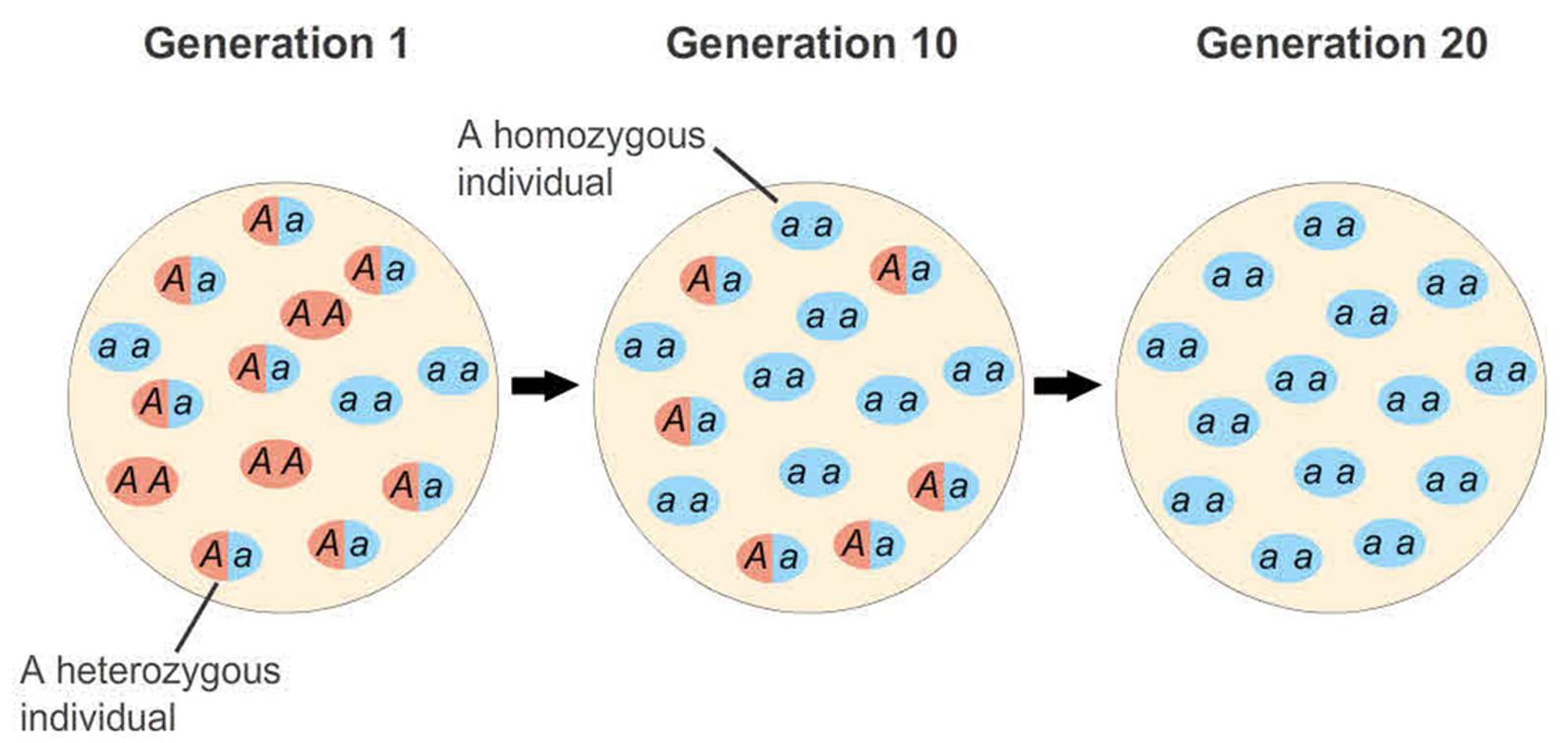
microevolution
change of allele frequencies in the gene pool of population over time
leads to adaptations that help organisms survive in their environment
can lead to the creation of new species over LONG periods of time
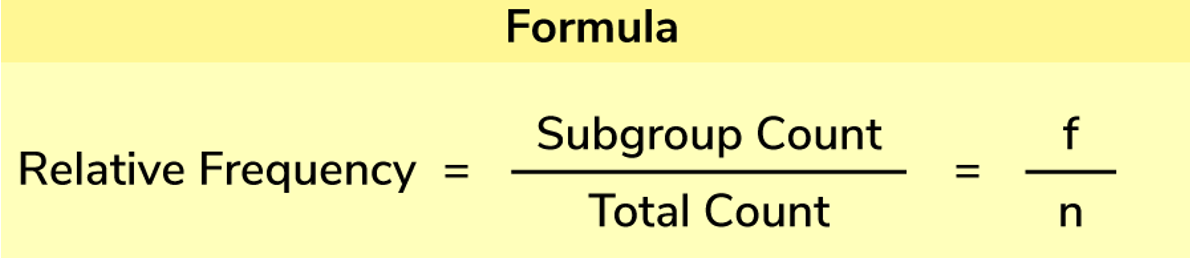
relative frequency
how often a specific biological variant divided by the total number of instantces
can be allele, genotype, phenotype, species
in proportion or percentage
the Hardy-Weinberg Principle
describes an ideal population that is not evolving
if the population meets Hardy -Weinberg → stable
If doesn’t meet the criteria of the principle → population is evolving
Hardy-Weinberg equilibrium
states that frequencies of alleles and genotypes in a population remain constant from generation to generation
Calculating frequency of alleles
p + q = 1
p = dominant allele, q = recessive allele
ex. frequency of recessive allele is 0.3, frequency of dominant allele =?
1 - 0.3 = 0.7
Calculating genotype frequency
p2 + 2pq + q2 = 1
p2 and q2 = frequencies of homozygous genotypes
odds of having A and A are A x A = A2
2pq = frequency of heterozygous genotype
2 ways to get heterozygous: p x q or q x p = 2pq
Calculating using Hardy Weinberg
percentages can also be to predict the number of individuals within the genotypes in a population
ex.
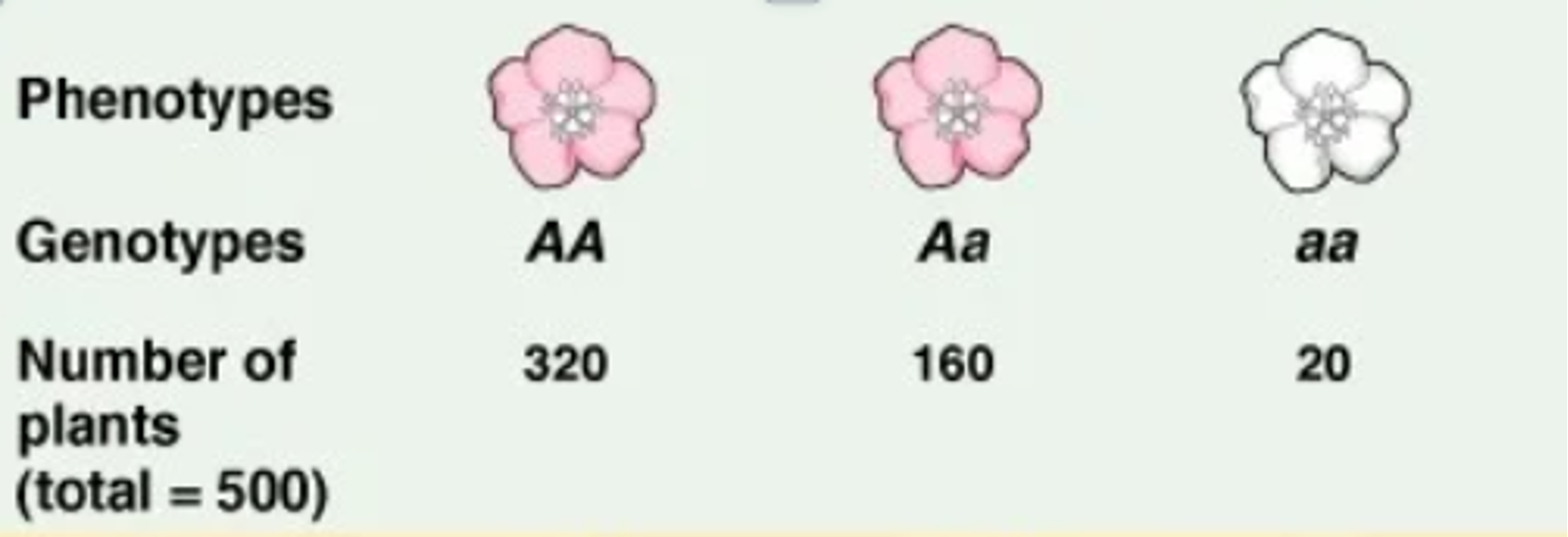
subgroup total / total count for genotype frequencies
split genotype frequency of heterozygous into two, half for dominant, half for recessive
frequencies x total count for numbers of alleles in gene pool
add # of alleles of homozygous + the half you split → divide by total count
the decimal you get = allele frequency
Hardy-Weinberg ideal conditions
no mutations
random mating
no natural selection
extremely large population
no gene flow
7.4 microevolution part 2
genetic drift
random fluctuations (波動) in the frequency of alleles within a small population
due to chance events that cause certain alleles to become more or less common over generations
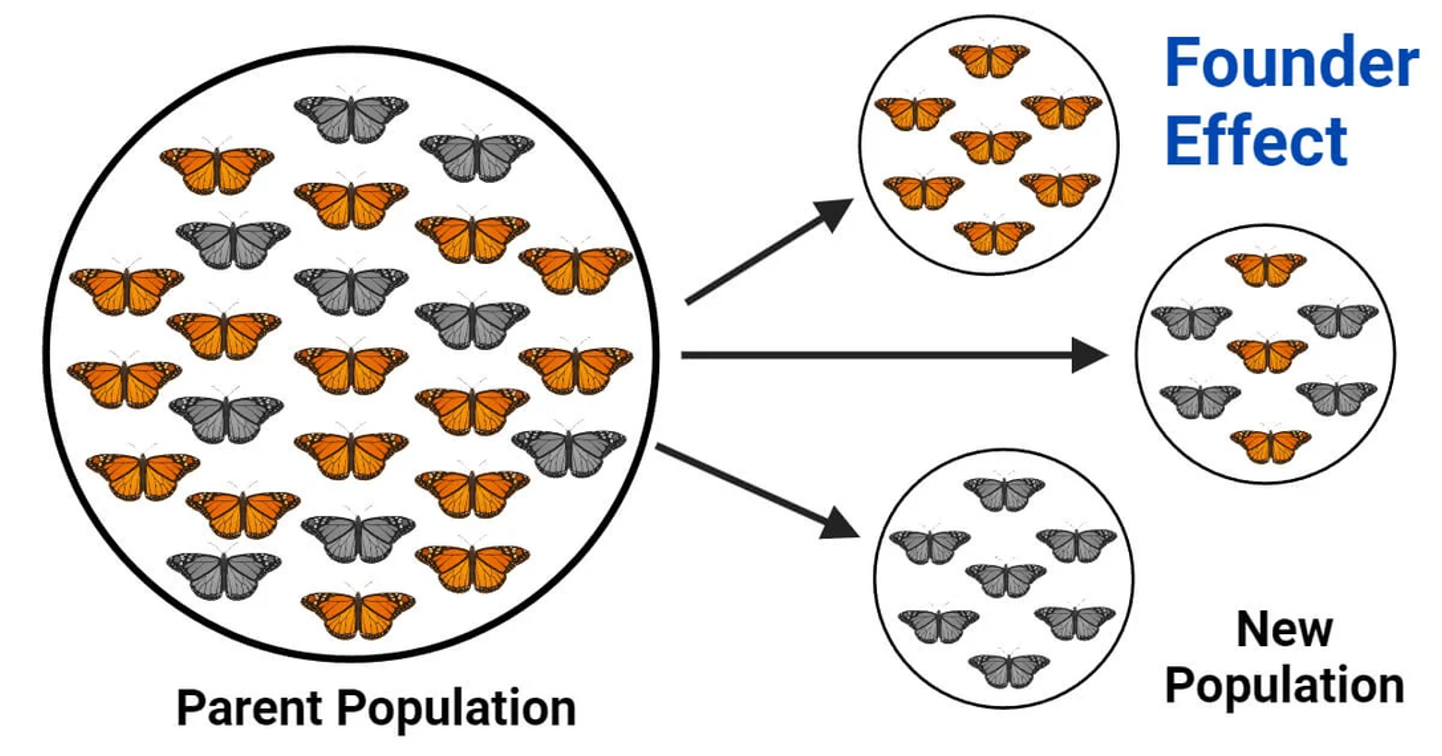
Founder’s Effect
when a small group of individuals leaves a larger population and starts a new one
new population has only a small sample or the original gene pool
leads to reduced genetic diversity
limited genetic variation
carries only a subset of the original population's alleles
rare traits may become more common just by chance
increase the risk of genetic disorders if harmful alleles are more frequent in the new group
Bottleneck effect
when a population’s size drastically decreases due to events like natural disasters, diseases, or human activities
sudden reduction in numbers
leads to a loss of genetic diversity
many alleles (gene versions) are wiped out
only a few individuals survive
new population may have a different allele frequencies than the original one
harmful genetic traits can become more common if the surviving individuals carry them
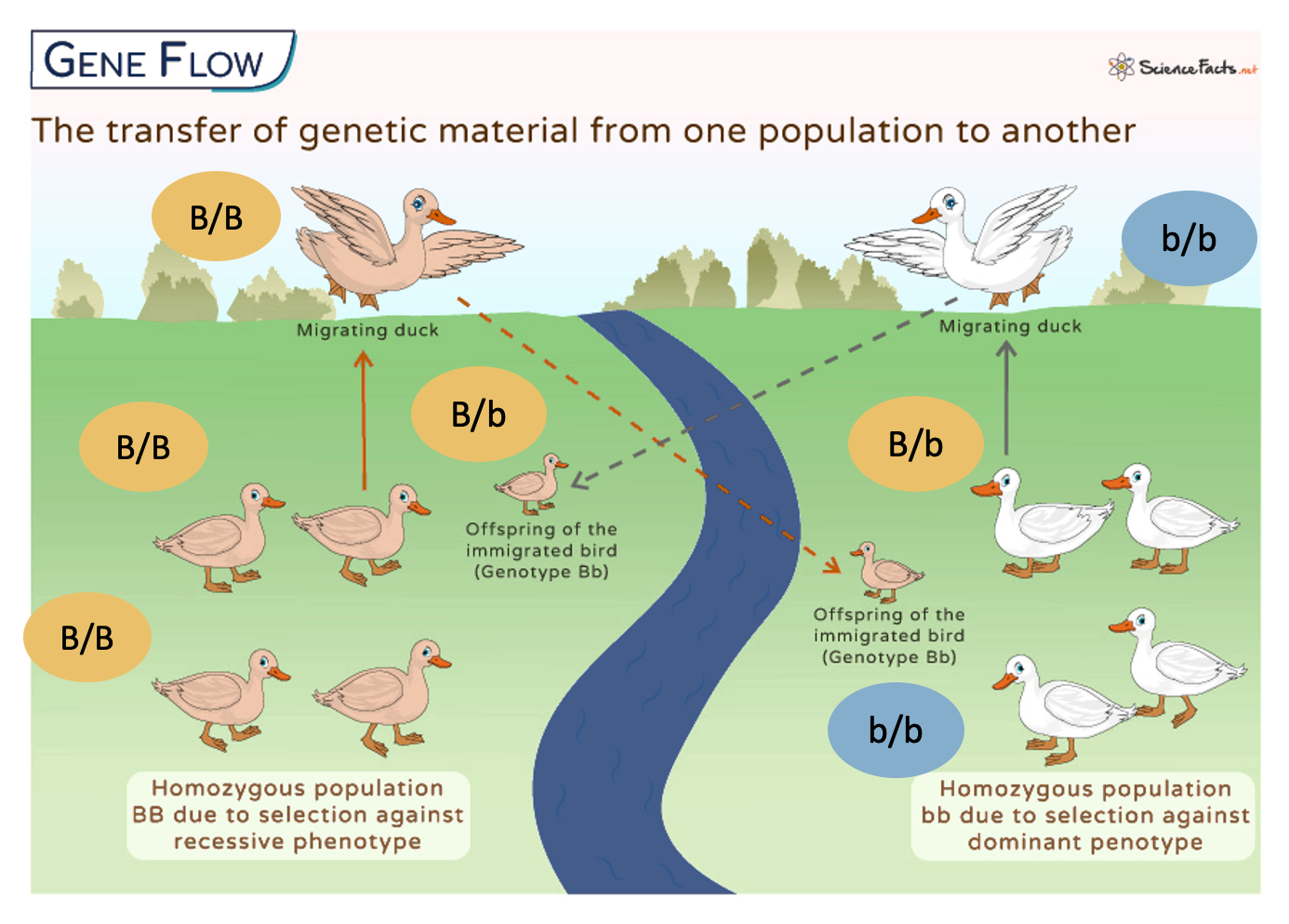
Gene flow
when individuals move between populations and bring new genetic material with them
introduce new alleles
increasing or decreasing genetic diversity in a populaton
can occur through migration, breeding between different populations, or seed dispersal in plants
can help populations adapt to new environment by spreading beneficial traits
mutations
random changes in DNA that can introduce new traits
causes include radiation, chemicals, or mistakes in DNA copying
some have no effect, while others help organisms survive and others can be negative
beneficial mutations become more common in future generations and negative mutations become less common
drive microevolution by creating genetic variation in a population
cause a clear change in the allele frequencies in the gene pool
*Only mutations in cells that produce gametes can be passed to offspring
Effects
Neutral mutations
mutations in noncoding regions
do not affect phenotypes
might not affect protein production because of redundancy in the genetic code
harmful mutations
mutations that result in a change in protein production
positive mutations
mutations that result in a change in protein production can sometimes increase the fitness of the organism in its environment
Natural selection
process where individuals with traits best suited to their environment are more likely to survive and reproduce
every species have genetic variation
these differences can determine which individuals thrive in a given habitat and which do not survive
favorable traits become more common as the alleles responsible for them are passed down through generations
ex. peppered moths
Sexual dimorphism
differences between the sexes in secondary sexual characteristics
males showiness due to mate choice can increase a male’s chances of attracting a female, while decreasing his chances of survival
Sexual selection
type of natural selection
certain traits evolve because they help attract a marte
even if they dont directly contribute to survival
may increase an individual’s chances of reproducing
but might also make them more noticeable or vulnerable to predators
ex. peacocks
types of sexual selection
intrasexual selection
Same-sex competition → winners get more mates → pass on more genes (reproductive success)
selection within same sex
individuals of the same sex compete directly for mates
ex. a male who patrols a group of females to prevent other makes from mating with females
result in combat
but often display discourages others without injury
intersexual selection (or mate choice)
individuals of one sex (usually females) are choosy in selecting their mates from the other sex
ex. the showiness of the male’s appearance of behavior
animals often use physical or behavioral traits attract partners
“love language” comes in a variety of ways
ex. vibrant colors, gifts, vocalizations, etc.
Selection graphs
polygenic trait
characteristic that is influenced by multiple genes
resulting in a continuous range of phenotypes
ex. skin color, height, eye color
distribution of these traits often follow a normal distribution (bell curve)
most individuals fall near the average
fewer individuals at the extreme
Directional selection
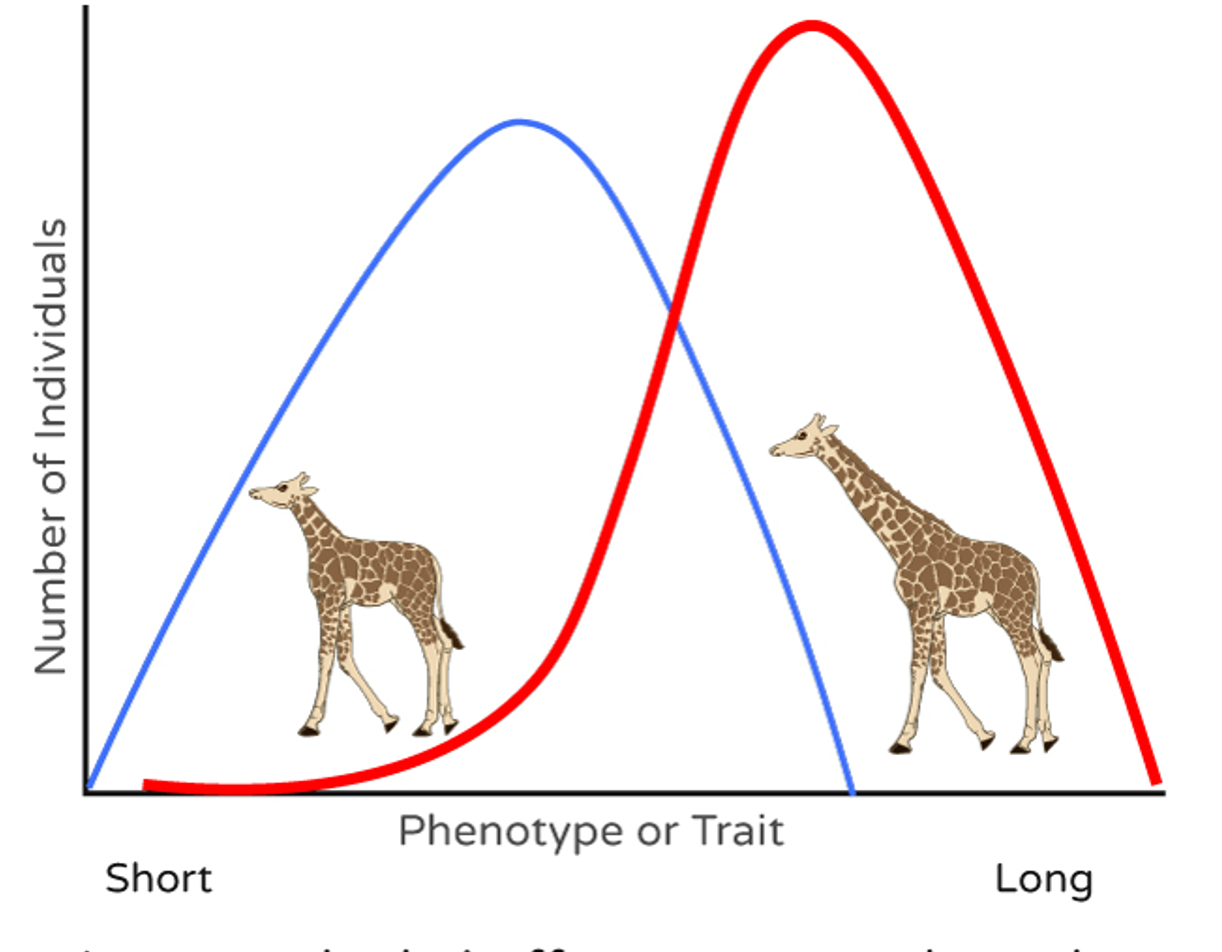
one end = highest
individuals at one extreme or one end of the curve have a higher fitness than individuals in the middle or other side
range of phenotypes shifts as some individuals fail to survive and reproduce, and other succeed
can occur due to environmental constraints (限制條件)
food shortages, habitat destruction
Stabilization selection
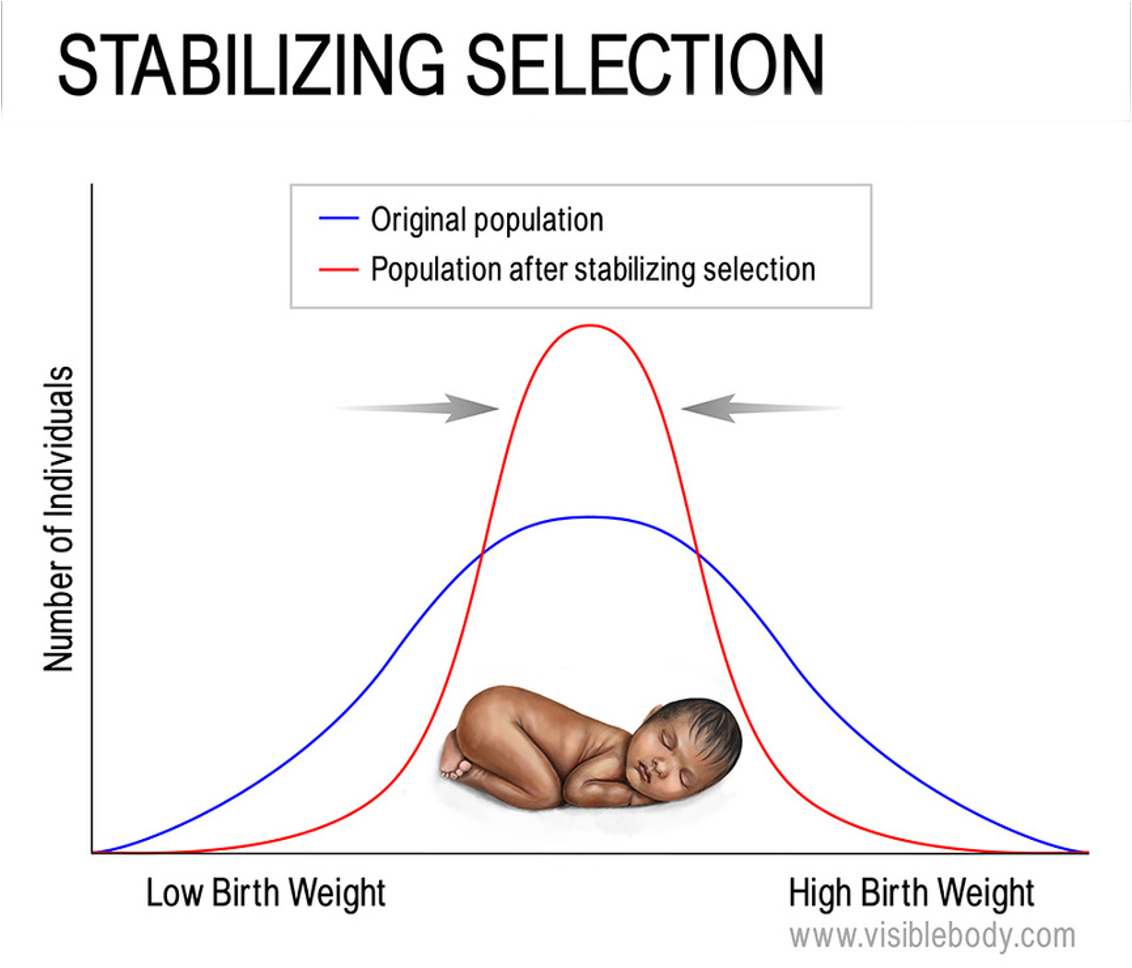
center = highest
when individuls near the center of the curve have figher fitness than the individuals at either end
ends up narrowing the overall graph
acts upon the intermediate phenotype
removes extreme variants from the population
Disruptive selection
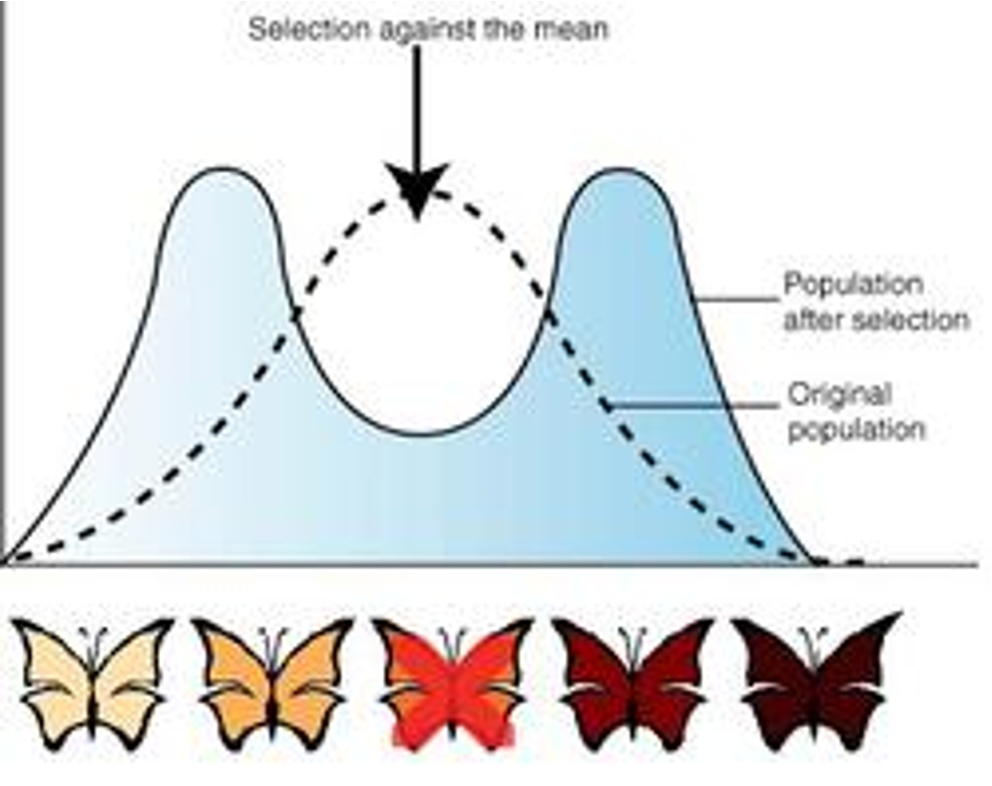
two ends = higher
when individuals at the upper and lower ends of the curve have higher fitness than individuals near the middle
acts against the intermediate type
if acts long enough it can cause the curve to split in two
ie. creating two distinct phenotype
speciation can occur
new species arise from old ones
speciation
the process through which new, distinct species evolve
often due to genetic differences, geographical separation, environmental changes
one species splits into two or more new species over time
if disruptive selection continues to select against the middle and the two ends no longer recognize each other
they will become unique species
what makes a species?
the biological species concept
species = group of organisms that can interbreed and produce fertile offspring
a species is a group of populations whose members have the potential to interbreed in nature and produce viable, fertile offspring
they do not breed successfully with other populations
Limitations
cannot be applied to fossils
not living, cannot be tested for reproductive success
does not account for gene flow
organisms can sometimes mingle in rare cases
ex. grizzly bears and polar bears can mate to produce “grolar bears”
cannot be applied to organisms that reproduce asexually
includes all prokaryotes
ex. bacteria use binary fission and share the same genetics as the “parents” but do not mate with other species
they dont interbreed
the morphological species concept
defines a species based on its physical characteristics (morphology)
individuals that look similar in structure and appearance are considered to be the same species
limitations
does not account for cryptic species
distinct species that look identical
ex. eastern vs western meadowlark
can be misleading in cases of convergent evolution
unrelated species evolve similar traits
difficult to apply to organisms that exhibit significant morphological variation within the same species
ex. dogs
ineffective for identifying species in organisms that do not have morphological feature
ex. bacteria
the ecological species concept
define a species in terms of its ecological niche
niche: role and position a species has in its environment.
if they share the same habitat and role within the environment they are the same species
limitations
environmental changes can lead to shifts in ecological roles
species might adapt to different ecological niches within the same environment
two species occupy overlapping ecological niches
mechanisms of speciation
reproductive isolation
when different populations of a species are unable to interbreed
leading to the development of separate species over time
different types of isolation:
geographic isolation
when physical barriers such as mountains or rivers separate populations
prevent gene flow between them
ex. squirrels in Grand Canyon
adapt to their specific environment over time
result in variations in fur color, size, behavior
each isolated group evolves independently
temporal isolation
involves species breeding at different times or seasons
reducing the likelihood of interbreeding
ex. orchids bloom at different times, preventing cross-pollination between them
behavioral isolation
arises when differences in mating rituals or behaviors prevent successful mating between populations
ex. different types of flycatcher birds occupy the same region use different songs to attract mates
mechanical isolation
anatomical differences prevent successful mating or the transfer or sperm between species
ex. snails with different shell shape or structure prevent successful mating
ecological isolation
when species occupy different habitats or niches
minimizing interactions and potential breeding opportunities
ex. lion and tiger: different habitats (africa and asia)
5.4 macroevolution
Microevolution
small-scale changes within a species that cause allele frequency shifts such as genetic drift or gene flow
Macroevolution
Large-scale evolutionary change that results in new species or higher taxonomic groups
large-scale evolutionary changes that occur over long periods
leading to the emergence of new species and higher taxonomic groups
*the mechanisms of microevolution ultimately lead to macroevolution
*convergent evolution
when unrelated species develop similar traits because they live in similar environments or face similar challenges
over time, different species adapt to similar conditions, resulting in similar traits
even though their evolutionary paths are separate
ex. analogous structures
ex. shark (fish) and killer whale (mammal)
both have streamlined bodies and fins, but their evolutionary history is distinct
both are apex predators in their environment and have evolved similar features for hunting in the ocean
*divergent evolution
related organisms independently evolve difference when adapting to their unique environment
ex. arms in humans, wings in bats, fins in dolphins
all share structural similarities even though they perform different functions because they evolved from a common ancestor
ex. homologous structures
adaptive radiation
one common ancestor species rapidly evolves into many different species
one species quickly evolves into many different forms to adapt to different environments
when a group of organisms enters new environments with different conditions
over time, they develop unique traits to help them survive in these specific habitats
a type of divergent evolution
Ex. Darwin’s finches
groups of birds found on the galapagos islands that evolved different beak shapes to adapt to different food sources
Co-evolution
two or more species influence each other’s evolution over time
when species interact in ways that directly impact each other’s survival
leading to evolutionary changes that benefit or affect both species
ex. clownfish and anemone benefit each other
clownfish live among the tentacles of sea anemones
amemone provide protection due to their stinging cells
clownfish provide food for them by luring prey close, movement helps circulate water them
extinction
more than 99% of all species that have ever lived are now extinct
sometimes extinct occurs because species are unable to adapt and compete for resources
several times in Earth’s history, mass extinctions wiped out entire ecosystems
with each disappearance of so many species
it provides ecological opportunities for other species to adapt and thrive
most mass extinctions are caused by several factors which can include
volcanic eruptions
asteroid impacts
ocean anoxia
climate change
biological change
patterns of microevolution
Gradualism
Punctuated equilibrium
gradualism
evolution occurs slowly and steadily over long periods of time
small genetic changes accumulate gradually
leading to species transformation
transitional fossils support this idea by showing gradual shifts in traits
ex. evolution of horse species
gradual changes in size, teeth and hooves over millions of years
Punctuated equilibrium
evolution happens in rapid bursts, followed by long periods of little to no change (stasis)
species remain stable for extended periods
then sudden environmental changes trigger quick adaptations
fossil records often show species appearing suddenly without many intermediate forms
ex. evolution of trilobites
long periods of stability
then sudden changes due to environmental shifts