W3 L2: Lab Report
2000 words
no introduction
analysis and discussions only
methods - analytical procedure - dont need to describe how we collected data bc we didnt
discussion should be shorter
analysis (findings/ results) still need back up research
read methodological papers
read data set - take some additional notes
TA - thematic analysis
analyse childfree dataset
facebook comments posted in response to a clip from the official faceboook page of new zealand current affairs show seven sharp
form a short film introducing prespectives and experiences of a single woman and a straight couple who have deliberately chosen not to have children
data
march 2014
comments obtained 2 days after the clip was posted
total of 186 posts: 151 comments, 35 replies (response to a comment)
main comment or response to a comment matters
natualistic/ natural occuring data
quote comments
focus on meanings expressed in comments
research question
Q. What is the nature of contemporary meaning-making around voluntary not having children?
question may evolve during analysis
reading data
anotating about:
comments making sense
why might they be making sense?
what different ways do they make sense?
what assumptions do they make in decribing the world?
what kind of world is ‘revealed’ through their account?
NOTES ARE NOT THE FINDINGS - they help familiarising with data
work on research question - need for asjustments? is it secific and alighned with analysis?
code
one comment might have more than one code
use Nvivo or word (comment function)
code - word or short sentence that captures the content and meaning in the specific passage in the dataset
examples of coding:
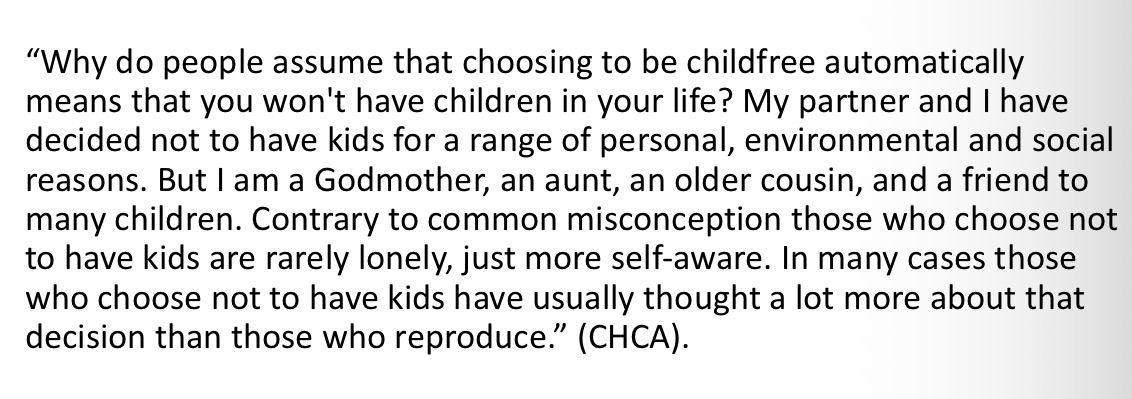
self-awareness - semantic coding
evironmental reasons
reasons - too broad
moral reasons - latent coding
not the same as being childless
themes
presented in analysis
after codes - developped from the codes
agregating codes that have a similar meaning
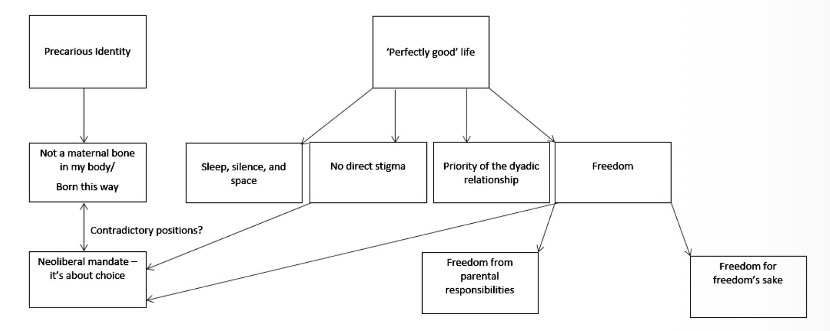
sometimes use thematic maps - helps visualise findings (but not needed)
word count
analytical procedure - 400 (how analysis was done)
analysis - 1200
discussion - 400
references
appendices
analytical procedure - 400w
how analysis was done
how did you familiarise data
notes done
how was coding made - preestablished? new?
research questions - has it evolve?
demonstrate reflexibility around analytical procedure
identify codes and themes developed - and whether they are semantic or latent + example
mention appendices when describing phases
analysis - 1200w
introductory paragraph - mentioned if themes were dropped
use 2-3 themes - subheadings
use emperical evidence + theoretical support for analytical interpretations
each data extract should be preceded by a short paragraph
- info abput extrcat, contextual info about comments’ origin (main reply or not)
each extract should be followed by extensive analytic paragraph
- comment on elements of data extract + explanation of how they constitute evidence for the theme you have identified
- support analytical interpretations with relevant literature
- analytical paragraph should be longer than the data extract it analyses
discussion - 400w
1 p summary of main findings + possible implications
strenghts + limitations of methods used
consider the use of interviews to address your research question and 2-3 ethics issues to consider in an interview-based study
no subheadings
appendices
representing procedural steps
initial notes, list of codes + idea associated with each one, screenshots on Nvivo or others, initial thematic maps