Periodontics Symposium 1
Advanced instrumentation
• Consider the deposits that need to be removed (simple biofilms to hard calculus)
• Aim of subgingival PMPR (removing endotoxins, disrupting ecological niche to allow for healing of the pocket)
• Treatment outcomes (reduce pocket depths, maintain/improve clinical attachment loss and reduce incidence of bleeding on probing)
• Subgingival calculus (impede OH, bacteria colonising, false pocketing)
• Good oral hygiene is essential
Root Morphology
• It is essential to know root morphology as you will not be able to see within the periodontal pocket
• Bone support can be lost, exposing the roots to plaque biofilm and requiring instrumentation of these sites
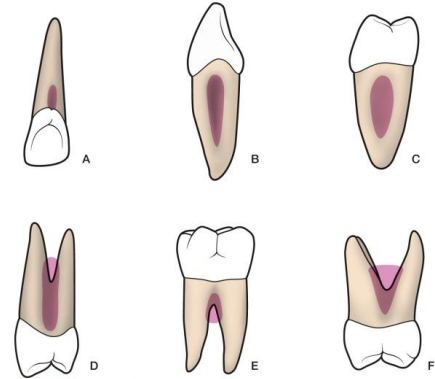
Root morphology
A. Palatal groove
B. Deep linear root concavities
C. Wide shallow root concavity
D. Deep linear proximal root concavities and furcation
E. Deep depression on root trunk and furcation
F. Proximal concavities
Principles of subgingival PMPR
1. Locate and assess deposits
2. Selection of appropriate instrument
3. Correct instrument grasp
4. Finger rest
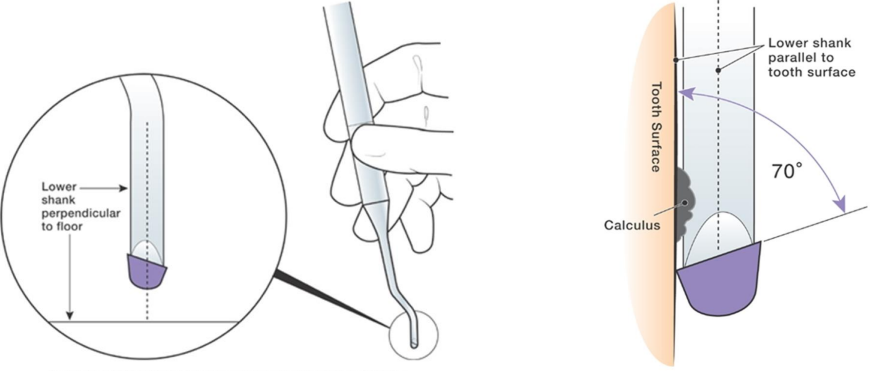
5. Adaptation
6. Angulation
7. Activation
• Lateral pressure
• Stroke
8. Check
Instruments
Gracey Instrument Number Tooth Surfaces
Gracey 1-2 Anterior teeth: all surfaces
Gracey 7-8 Facial and lingual surfaces of molars and premolars
Gracey 11-12 Facial, lingual and mesial surfaces of molars and premolars
Gracey 13-14 Distal surfaces of molars and premolars
Instrumentation
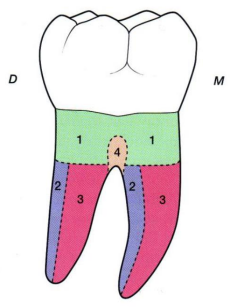
1. Debride the root trunk using the distal curette, then the mesial curette
2. Treat each root as a separate tooth. Use the distal curette on the distal portion of each root
3. Use the mesial curette on the mesial portion of each root
4. Treat the roof of the furcation and the concavity coronal to the furcation with the mesial curette
a. Use the toe of the curette against the roof of the furcation
b. Position the curette in the toe-down position, and use horizontal strokes in the concavity
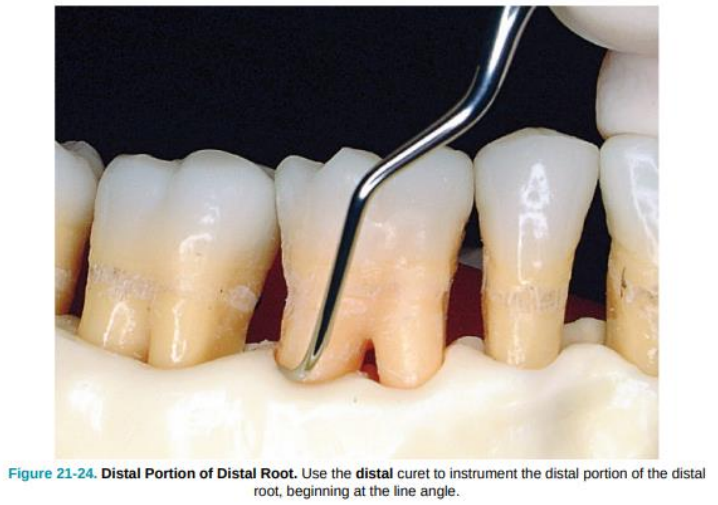
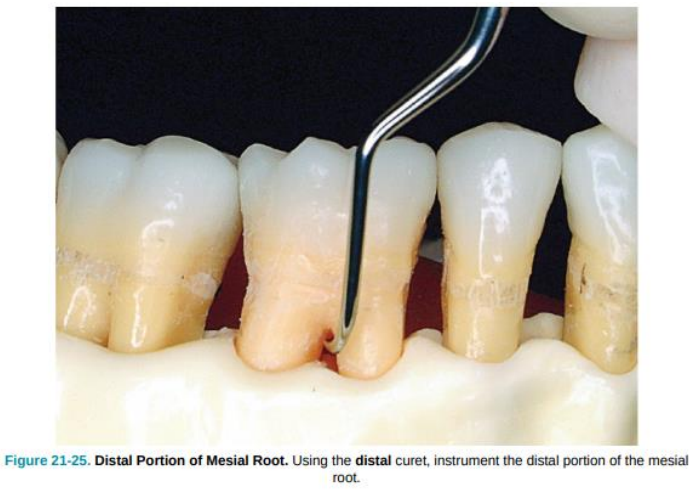
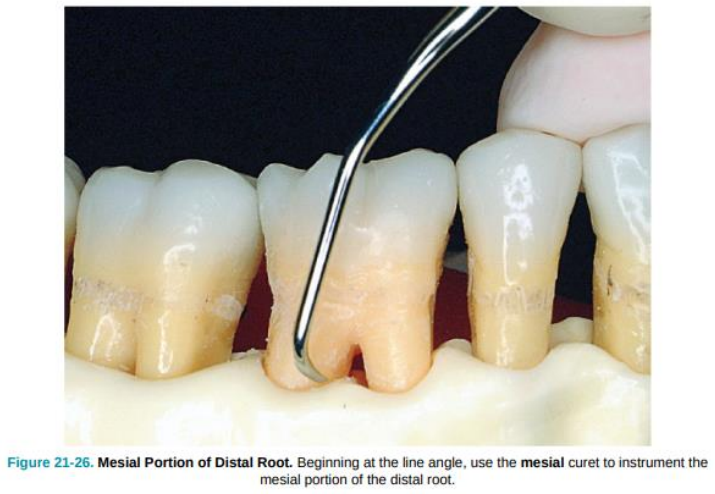
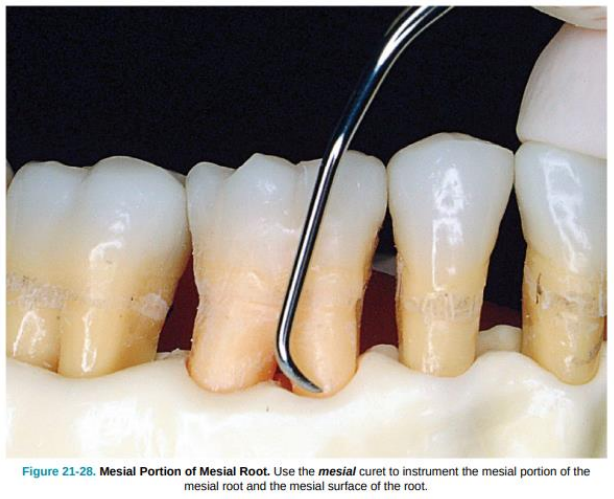
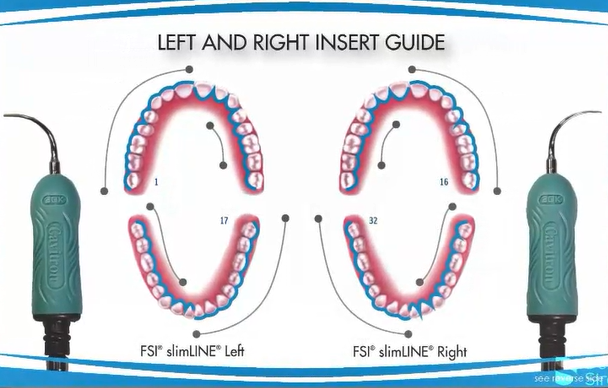
Slimline Inserts for Furcations and Concavities
Patient Homecare
What a patient does every day is more important than what we do at our appointments
OHI and TBI
Single tufted brush into cavities and root surface cleaning
Proximal brush into furcation and interdental areas
Summary
• Manual dexterity and root morphology are key
• Thorough and effective instrumentation takes time
• Patient engagement is essential