Heredity
Deoxyribose has 5 carbon atoms, which are numbered clockwise
The 1’ (one prime) carbon holds the nitrogen base
The 3’ (three prime) carbon has a hydroxide that will bond with the P-group of another nucleotide
The 5’ (five prime) carbon holds onto the phosphate group
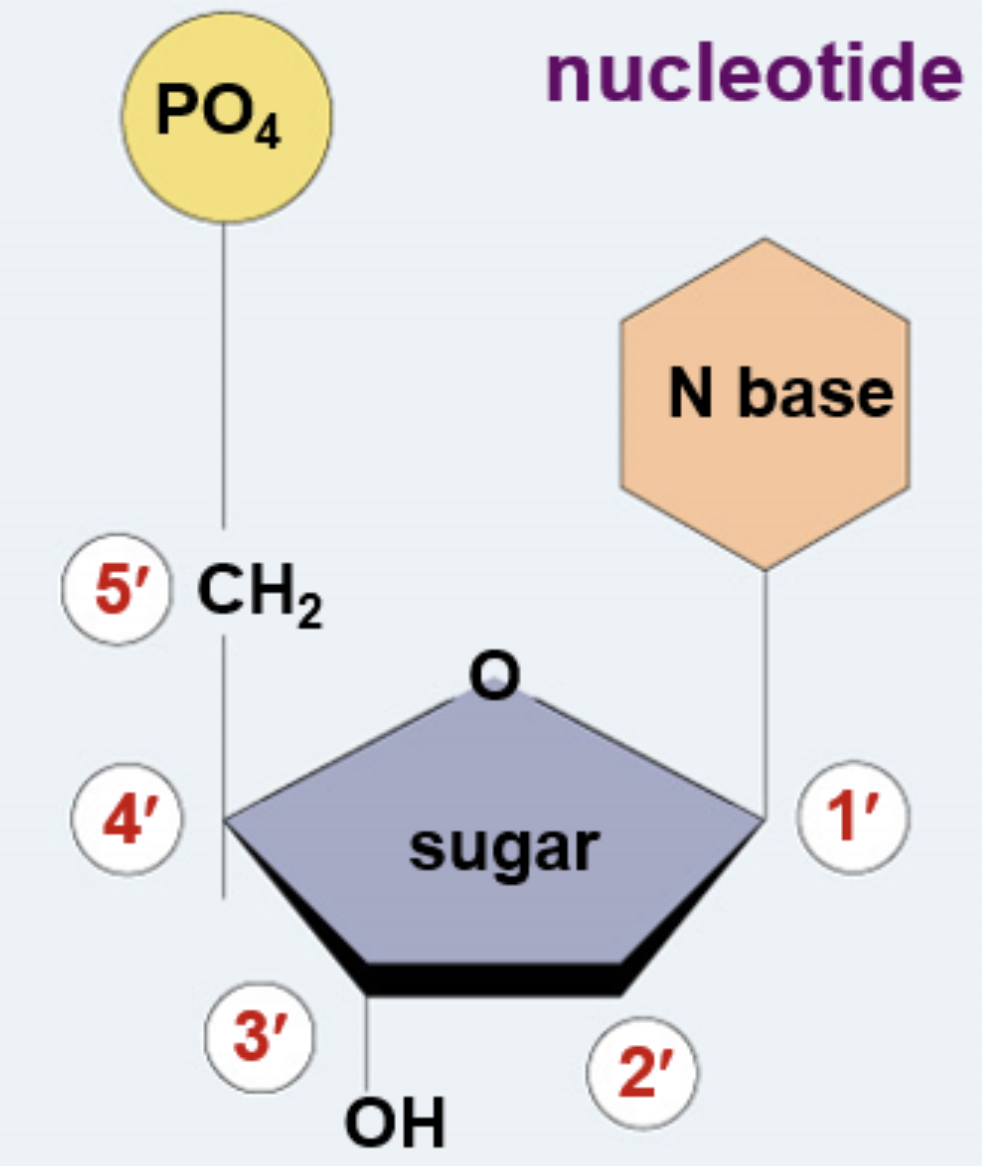
DNA is antiparallel because complementary strands run in opposite directions. Important because the 3’ and 5’ directions is how DNA is “read” by enzymes.
HINT: The O on the deoxyribose sugar “points” to the 5’ end.
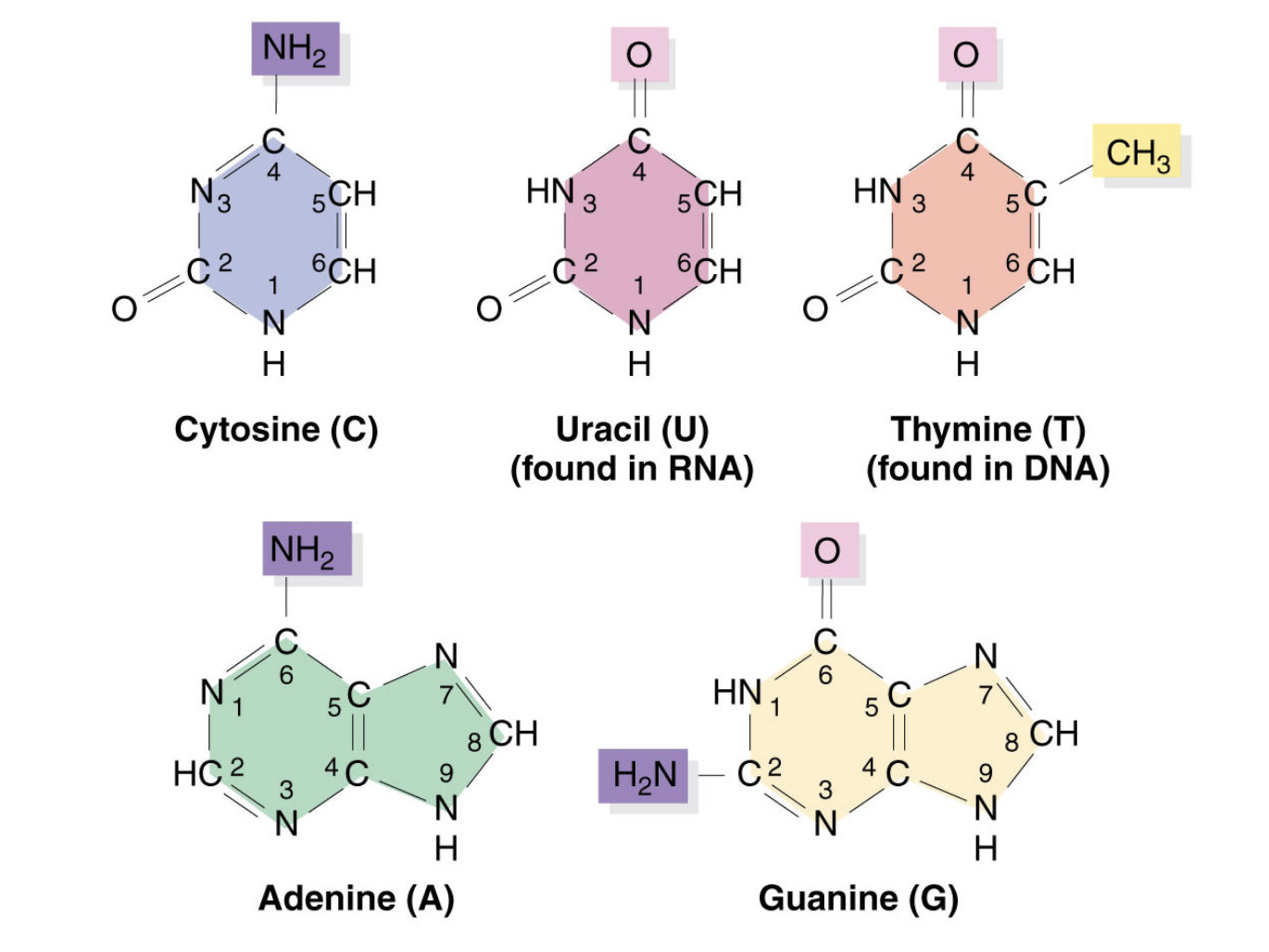
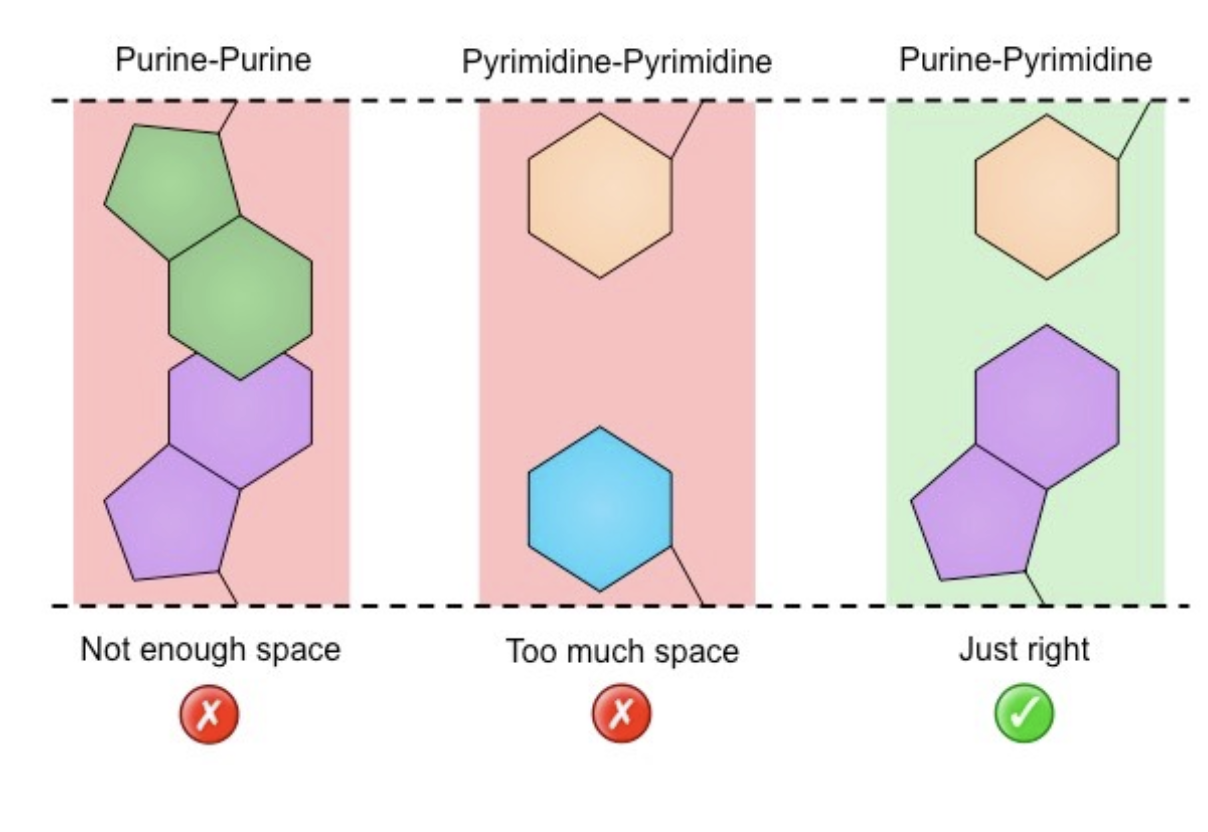
Pyrimidines (T, C, with single rings) always bond with purines (A, G, with double rings) in nucleic acids.
DNA bonds
Hydrogen bonds (weak attractions) hold bases together
T=A (2 bonds)
G=C (3 bonds)
Covalent phosphodiester bonds (strong bonds) hold nucleotides together at the backbone
DNA polymers: acid bases
Ligase: covalent bonds
Semi-conservative replications
Helicase: breaks hydrogen bonds, unwinds part of the DNA double helix,
Topoisomerase: untwist DNA, helps relieve the strain of unwinding by breaking, swiveling, and rejoining DNA strands
Primase: adds RNA primer so polymerase can attach
Protein Synthesis:
RNA
Ribose sugar
Uracil instead of thymine
Single stranded
Copies the information to take from the inside nucleus to the ribosome
mRNA (messenger): carries information from DNA to the ribosome
t:RNA (transfer): carries amino acids to the ribosome
rRNA (ribosomal) : building blocks of ribosomes
microRNA (inhibit synthesis): small RNA molecules that bind to other RNA molecules to degrade them (more on these later)
The nucleotide sequence in the DNA is used to make a complementary sequence in mRNA
Uses many of the same enzymes from DNA replication - helicase, topoisomerase, RNA polymerase, etc.
RNA polymerase uses a single strand of DNA to make mRNA; works in the 5’ to 3’ direction
The DNA strand that is used is called the template strand, noncoding strand, minus strand, or antisense strand
Post-transactional Modification:
Before the mRNA leaves the nucleus -
A poly-A tail is added (Protect the ends from degradation; like aglets on shoelaces)
A GTP cap is added
Splicing by spliceosomes
Introns stay in the nucleus; do not code for proteins
Exons exit the nucleus to go to the ribosome; do code for proteins
Translation:
Occurs at ribosomes
Free ribosomes in prokaryotes
Free ribosomes or bound ribosomes (to rough ER) in eukaryotes
In prokaryotes, translation occurs as the mRNA is being transcribed
In eukaryotes it occurs after transcription
Three steps - initiation, elongation, and termination
Initiation
Small ribosomal subunit binds to mRNA and an initiator tRNA
Then the large ribosomal subunit attaches
Elongation
The ribosome moves down the mRNA in the 5’ to 3’ direction
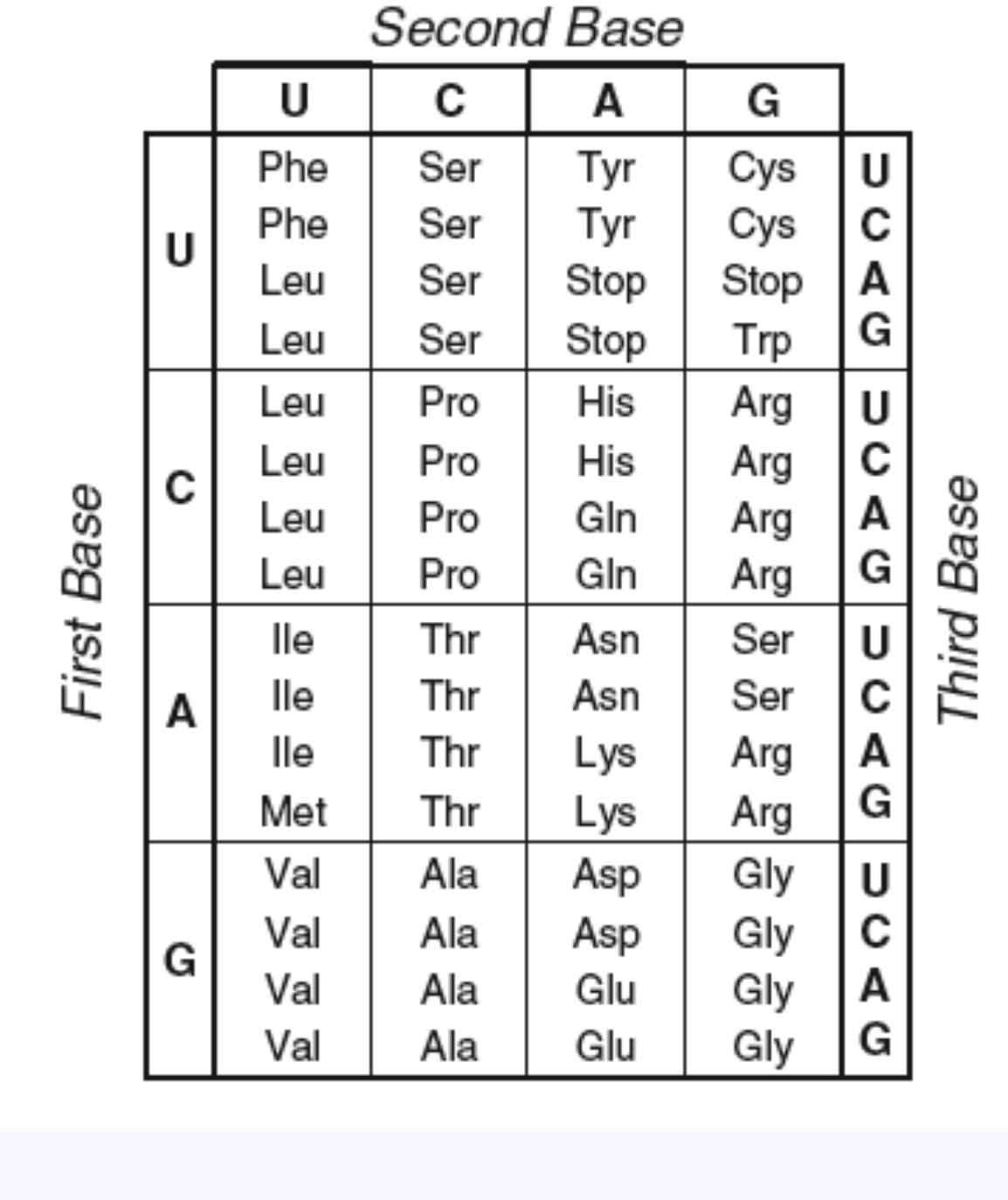
For each codon (3 bases on the mRNA), a tRNA with a corresponding anticodon brings an amino acid to the ribosome
The amino acid is added to the preceding one by a peptide bond
Termination:
Elongation continues until the ribosome reaches a stop codon in the mRNA
UAG, UAA, or UGA
A protein called a release factor that causes the polypeptide chain to separate from the ribosome
Which amino acid gets added to the polypeptide?
Each codon in the mRNA corresponds to one amino acid
If the anticodon on the tRNA is complementary to the codon on the mRNA → the correct amino acid is at the ribosome and gets added
If the anticodon on the tRNA is not complementary to the codon on the mRNA → the correct amino acid is not at the ribosome; must wait for another tRNA with a complementary anticodon to arrive
The polypeptide folds up based on the arrangement of its amino acids (secondary and tertiary protein structure)
Some polypeptides combine with others to make larger proteins (quaternary structure)
May be packaged at ER or modified and p
ackaged at the Golgi
r