BIOC*2580 - 8
Beta-Oxidation Pathway Overview
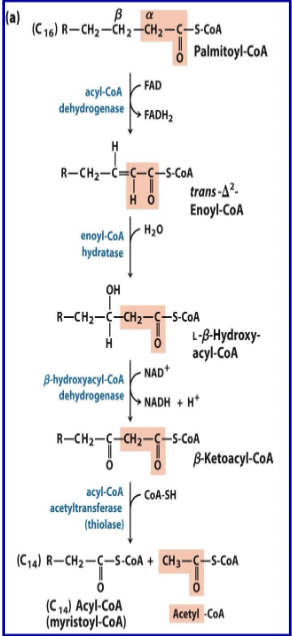
Previous Discussion Recap
The beta-oxidation pathway was examined, consisting of four distinct steps.
Each step involves the oxidation of the beta carbon, which is labeled as follows:
Carbon 1: Alpha carbon
Carbon 2: Beta carbon
Pathway Process
Initialization from alkane (CH2, reduced form) to ketone involves the following oxidation steps:
Alkane → Alkene (dehydrogenation)
Alkene → Alcohol
Alcohol → Ketone
Preparation for hydrolysis of the bond between alpha and beta carbons occurs after these transformations.
Detailed Steps of Beta-Oxidation
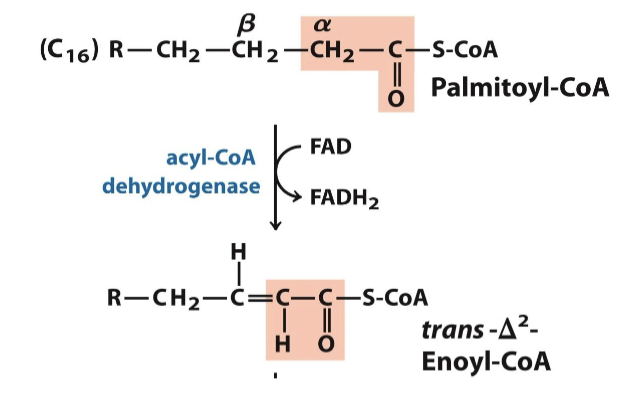
Step 1: Dehydrogenation
Process Details
Carbon removal leads to the formation of a double bond (alkene).
Oxidative dehydrogenation removal of two hydrogen atoms (oxidation) is performed by the cofactor FAD, forming FADH2.
Enzyme: Acyl-CoA dehydrogenase; the product is trans-delta2enoyl-CoA.
Trans-delta2enoyl-CoA:
"delta" denotes double bond position (between carbon 2 & 3).
"trans" specifies the configuration of the double bond.
Step 2: Hydration
Function
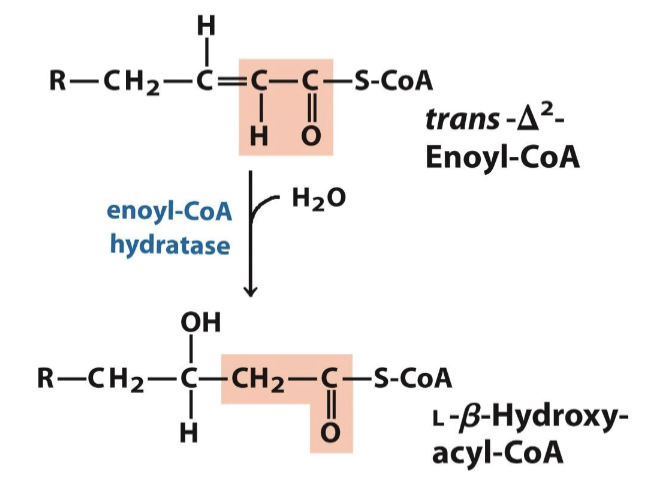
Water is added, leading to the molecule becoming hydrated across the double bond.
Process Details
Hydroxyl group attaches to the beta carbon, while a hydrogen attaches to the alpha carbon.
Product forms: Beta-hydroxy acyl-CoA.
Enzyme: Enoyl-CoA hydratase.
Step 3: Another Oxidation
Process
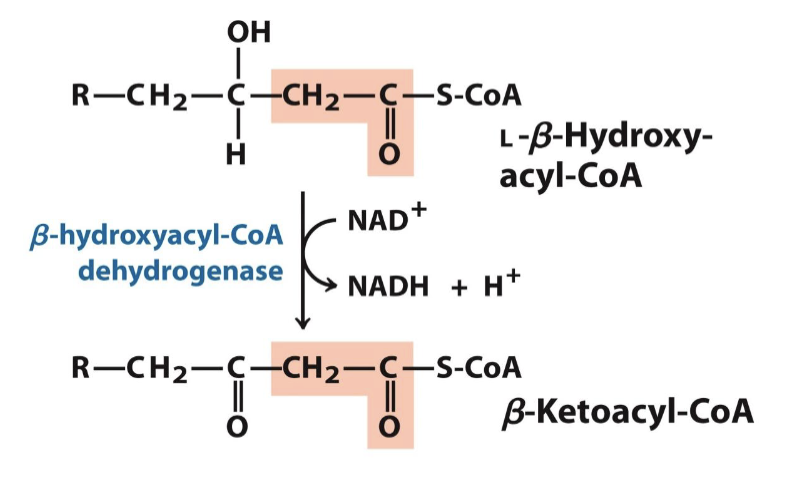
The alcohol at the beta carbon is oxidized to a ketone.
This oxidation is mediated by NAD, producing NADH and a free proton.
Result
Product forms: beta-ketoacyl-CoA.
Enzyme: Beta-hydroxy acyl-CoA dehydrogenase.
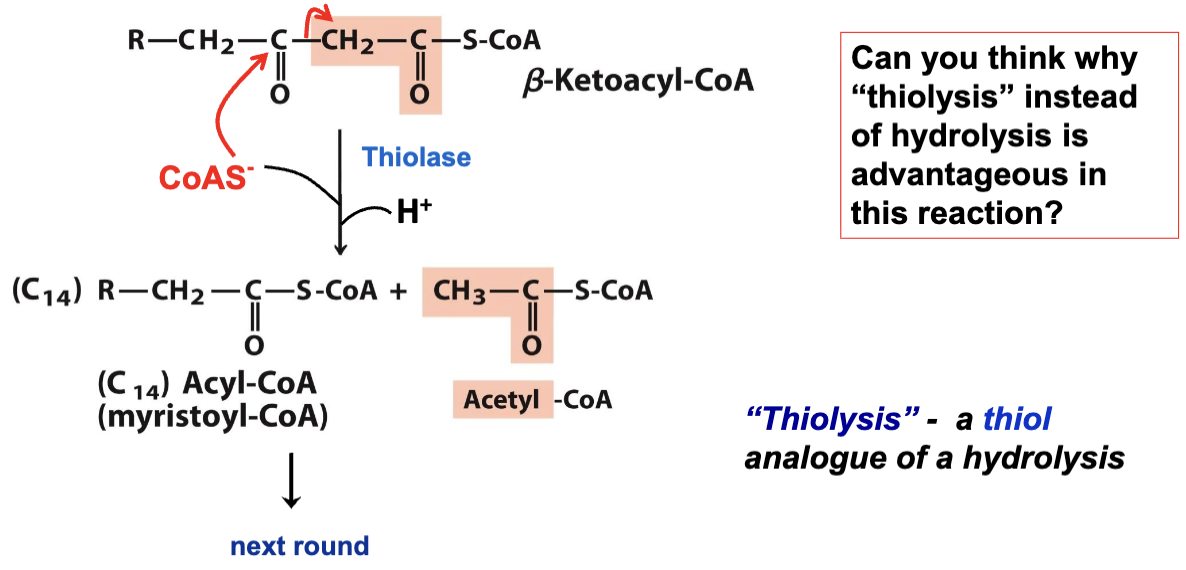
Step 4: Thiolysis
Action
Cleavage of the bond between α and β carbons occurs via thiolysis, using coenzyme A as the nucleophile rather than hydrolysis (which uses water).
Outcomes
Resulting products: Acetyl-CoA (two carbons released) and a new acyl-CoA chain (14-carbons remain).
Repetition of the Beta-Oxidation Cycle
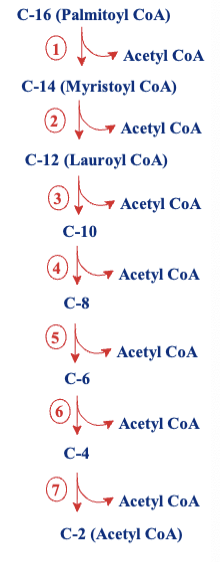
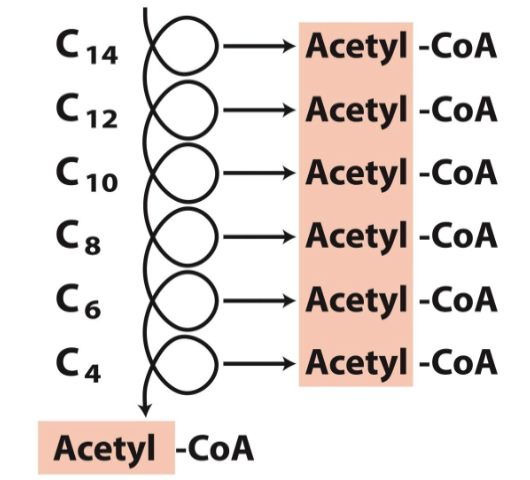
Each cycle of beta-oxidation releases one acetyl-CoA and reduces the fatty acid chain by two carbons.
Example: Starting from a 16-carbon fatty acid, undergo 7 cycles to yield 8 acetyl-CoA.
Acetyl-CoA enters the citric acid cycle and is further oxidized into CO2 making more GTP, NADH and FADH2.
Stoichiometry and Energy Production
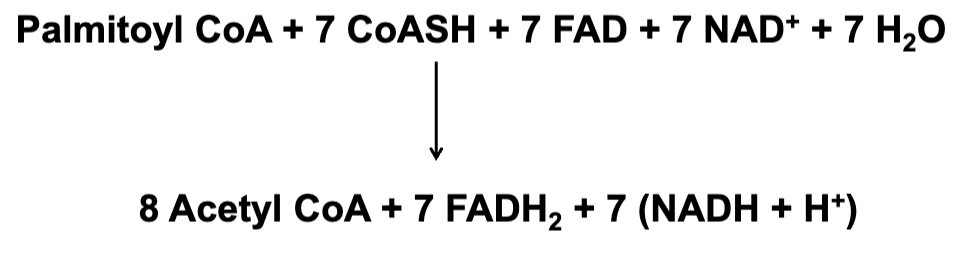
Summary of energy yields and cofactors formed:
For a 16-carbon fatty acid:
8 Acetyl-CoA
7 FADH2
7 NADH
These reduced cofactors will later yield ATP during electron transport.
Oxidation of Glucose
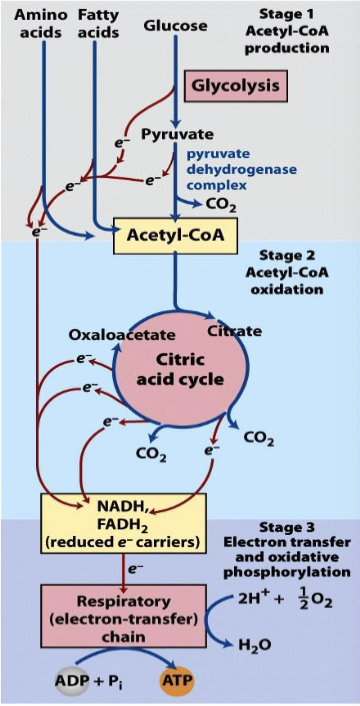
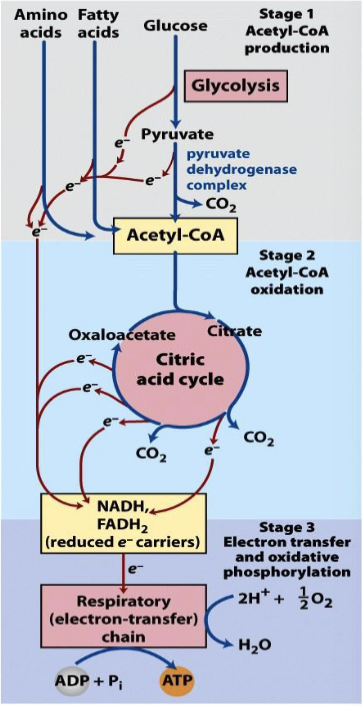
Complete oxidation of glucose to CO2 and H2O is also accomplished in three stages
Stage 1: Glycolysis + Pyruvate dehydrogenase
Stage2: TCA Cycle
Stage 3: ETC
Glycolysis Overview
Preparation for Carbohydrate Catabolism
Glycolysis serves as the initial pathway for breaking down glucose into pyruvate (stopping at pyruvate before forming acetyl-CoA).
This pathway is present in the cytoplasm, unlike beta-oxidation which occurs in the mitochondria.
It is the only pathway that can provide energy under anaerobic conditions
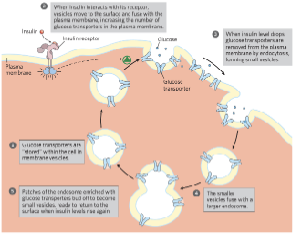
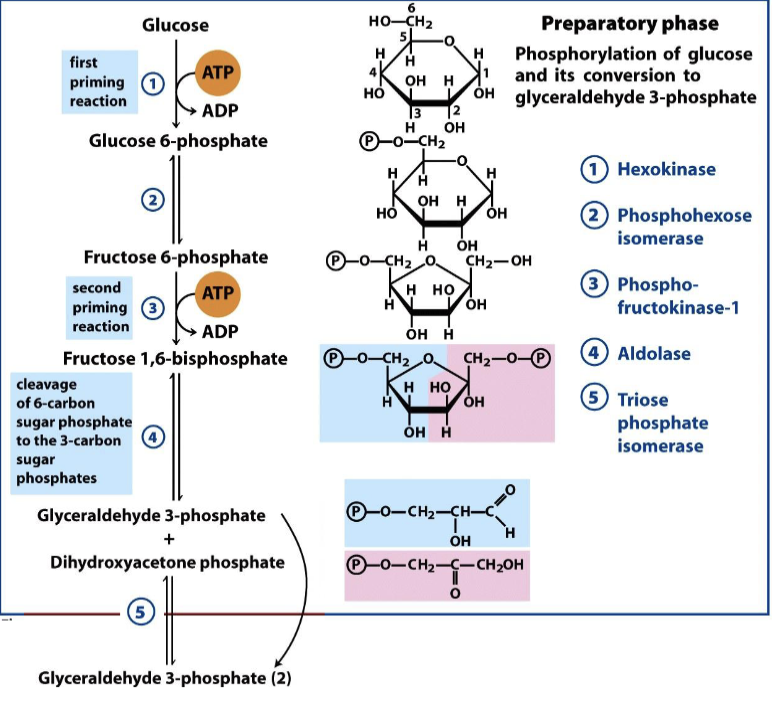
The first five reactions - preparatory phase (ATP is used to phosphorylate and activate glucose)
The next 5 reactions – pay off phase (net generation of ATP)
Overview of carbohydrate metabolism
Glucose transport into cells
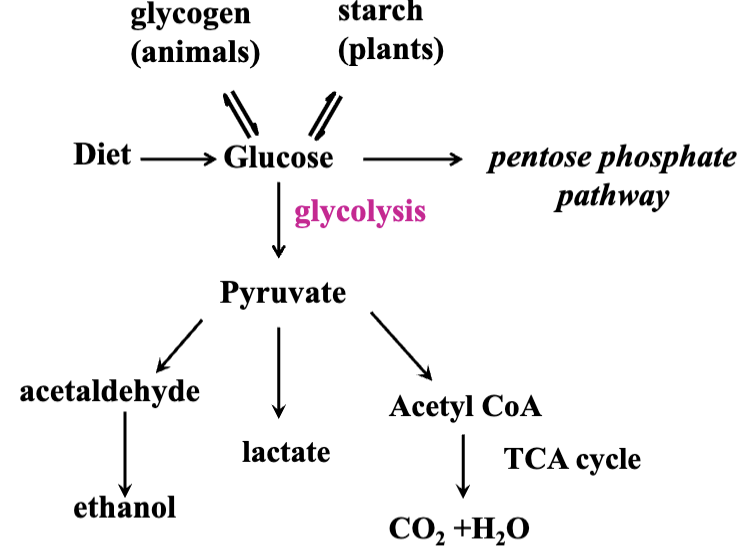
Glucose is a highly polar molecule and cannot enter cells by passive
diffusion across the membrane.Transporter proteins called GLUTs (GLUcose Transporters), residing in the cell membrane, catalyze glucose import.
One of the many actions of the hormone insulin is to stimulate GLUT-mediated glucose uptake in skeletal muscle and adipose tissue
Glycolysis Phases
Preparatory Phase (PIPAI)
Steps Involved
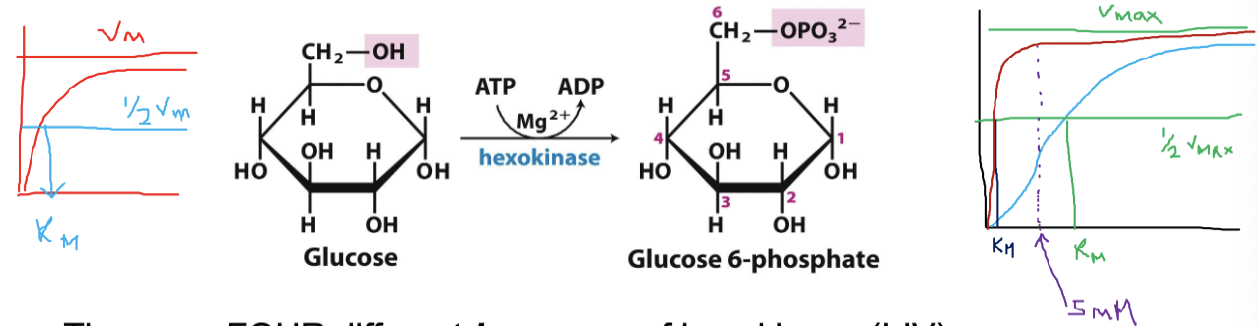
Step 1: Glucose → Glucose-6-phosphate (phosphorylation)
Enzyme: Hexokinase.
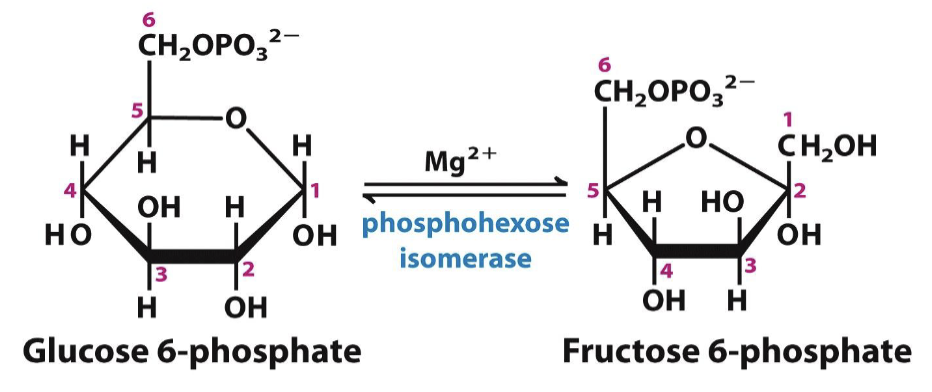
Step 2: Glucose-6-phosphate → Fructose-6-phosphate (isomerization)
Enzyme: Phosphohexose isomerase.
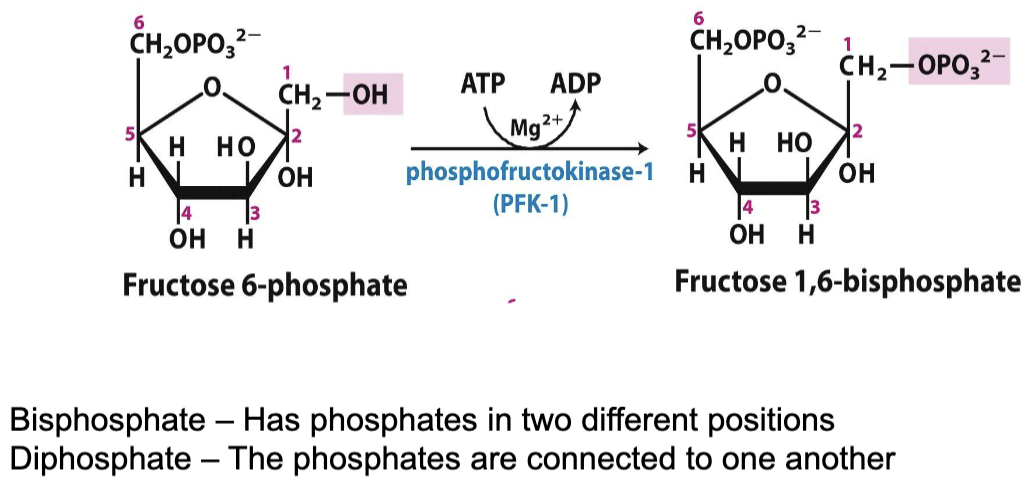
Step 3: Fructose-6-phosphate → Fructose-1,6-bisphosphate (phosphorylation)
Enzyme: Phosphofructokinase.
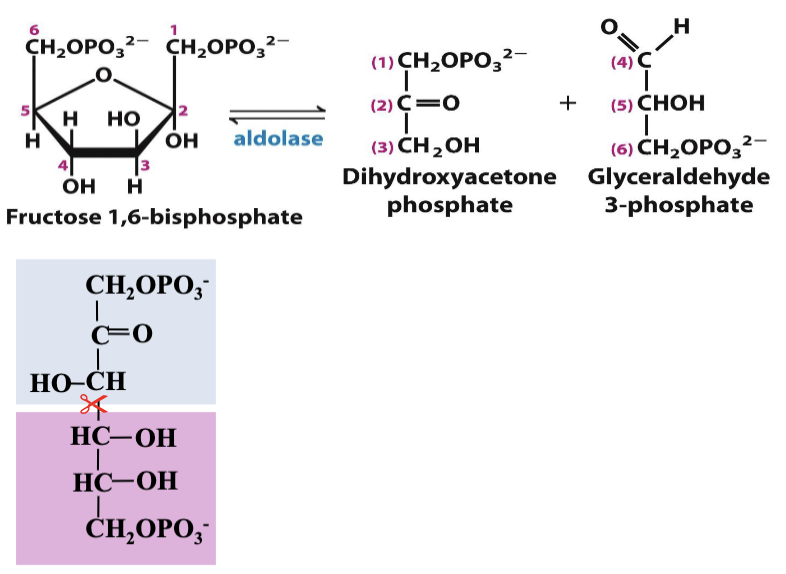
Step 4: Cleavage of fructose-1,6-bisphosphate into two 3-carbon units: glyceraldehyde-3-phosphate (G3P) and dihydroxyacetone phosphate (DHAP).
Both products utilized further in glycolysis, favoring G3P.
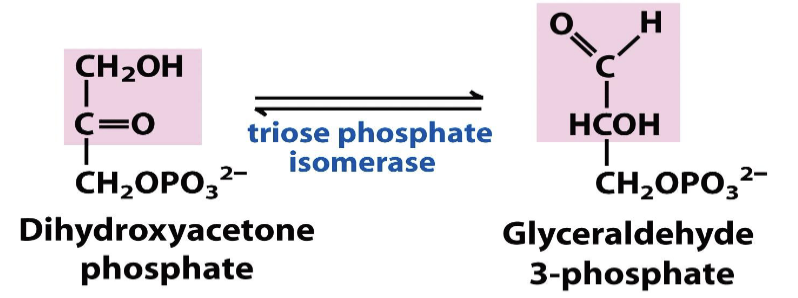
Step 5: Dihydroxyacetone phosphate (DHAP) → Glyceraldehyde-3-phosphate (G3P) (isomerization)
Enzyme: Triose phosphate isomerase.
DHAP is converted into G3P so that both three-carbon fragments produced in Step 4 can continue through glycolysis.
Payoff Phase
Key Steps
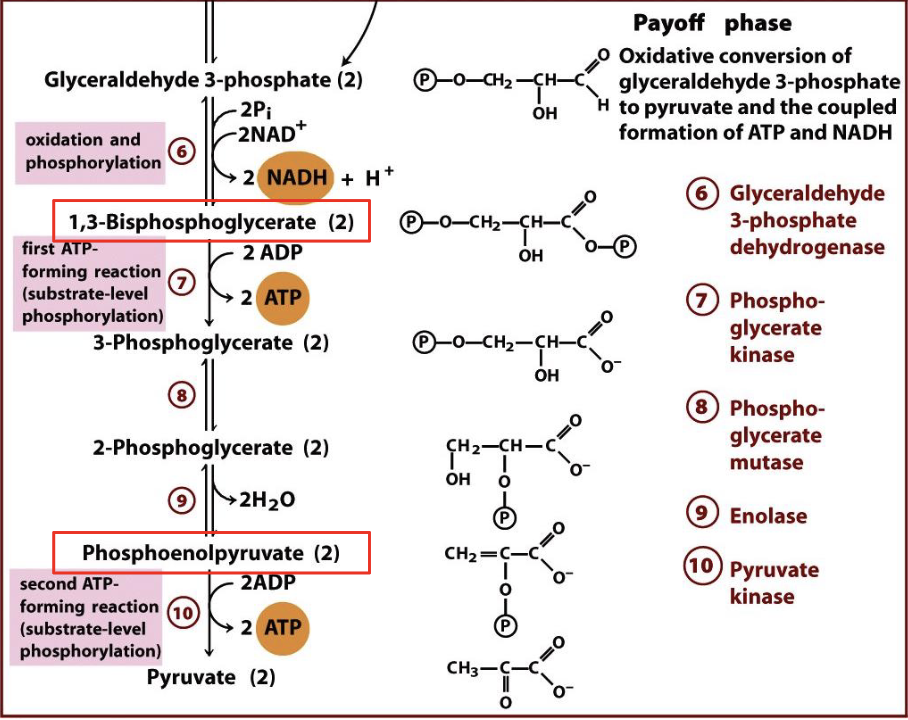
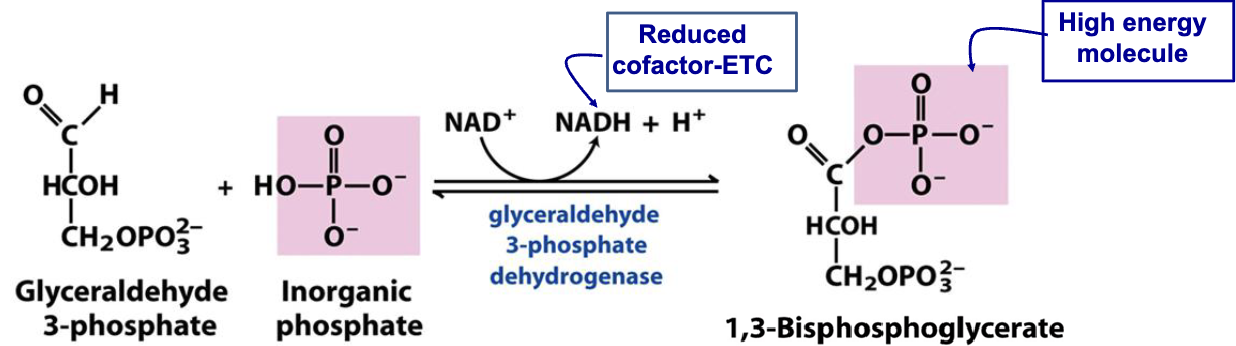
Step 6: Glyceraldehyde-3-phosphate → 1,3-Bisphosphoglycerate (oxidation + phosphorylation) (requires NAD, producing NADH).
Enzyme: Glyceraldehyde-3-phosphate dehydrogenase.
G3P is oxidized (aldehyde → carboxylic acid) and phosphorylated, producing a high-energy mixed anhydride bond and reducing NAD⁺ → NADH. High-energy molecule formation.
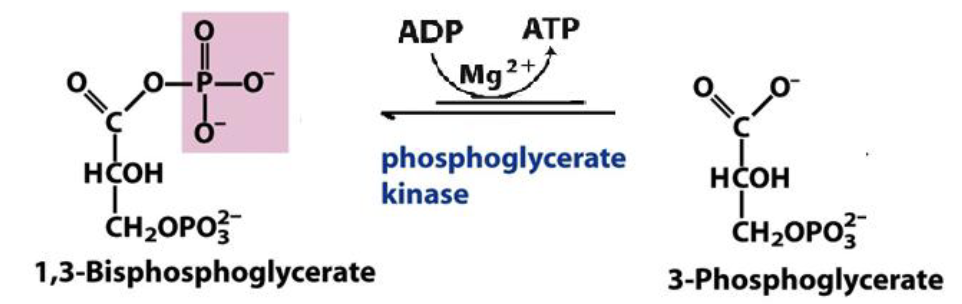
Step 7: 1,3-Bisphosphoglycerate → 3-Phosphoglycerate (substrate-level phosphorylation)
Enzyme: Phosphoglycerate kinase.
The high-energy phosphate of 1,3-BPG is transferred to ADP, producing ATP. Since two G3P molecules are formed per glucose, this step yields 2 ATP per glucose.
Step 8: 3-Phosphoglycerate → 2-Phosphoglycerate (isomerization / mutase reaction)
Enzyme: Phosphoglycerate mutase.
A mutase shifts the phosphate from carbon 3 to carbon 2, becoming 2-phosphoglycerate..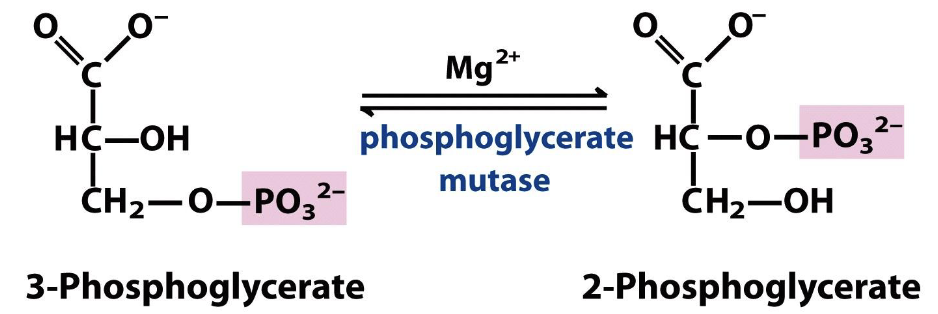
Step 9: 2-Phosphoglycerate → Phosphoenolpyruvate (dehydration)
Enzyme: Enolase.
Water is removed, creating the high-energy enol phosphate, phosphoenolpyruvate (PEP).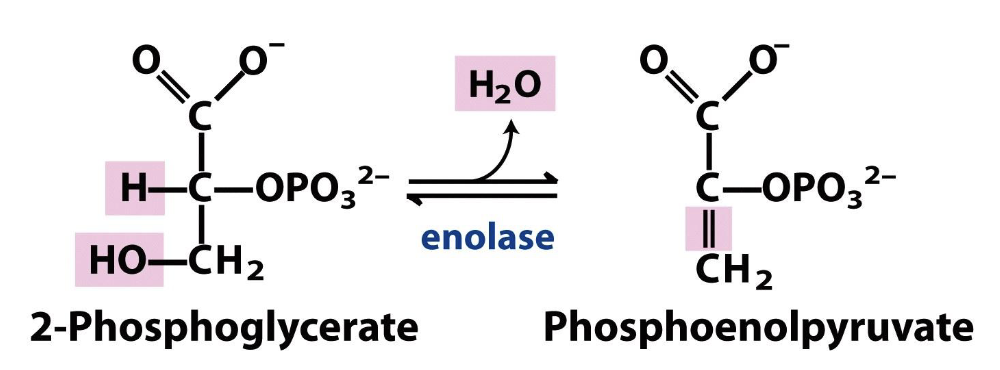
Step 10: Phosphoenolpyruvate → Pyruvate (substrate-level phosphorylation)
Enzyme: Pyruvate kinase.
PEP transfers its high-energy phosphate to ADP, forming ATP and pyruvate. The favorable reaction is driven by the spontaneous enol → keto tautomerization of pyruvate.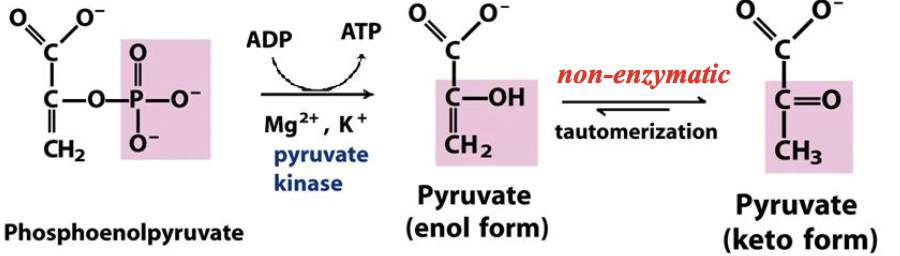
Final Notes
Critical Considerations
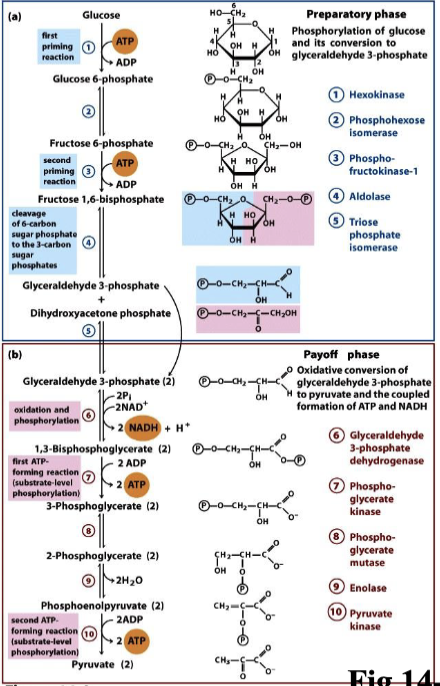
Different metabolic fates exist for pyruvate:
Further enter into TCA cycle as acetyl-CoA.
Convert to lactate or ethanol, depending on oxygen availability.
Significance of Glucose:
Essential structural role; red blood cells and brain primarily rely on it.
Glycolysis Location:
Only oxidative pathway functional even under anaerobic conditions, vital for energy in hypoxic scenarios.