Variation Selection
Concept of Heterozygous Advantage
Can only be applied when gene frequencies remain constant from birth to adulthood.
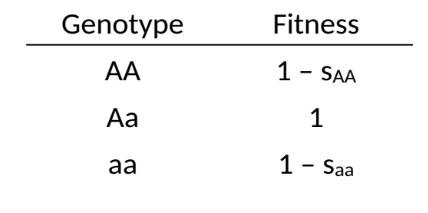
Different genotypes exhibit differing survival rates.
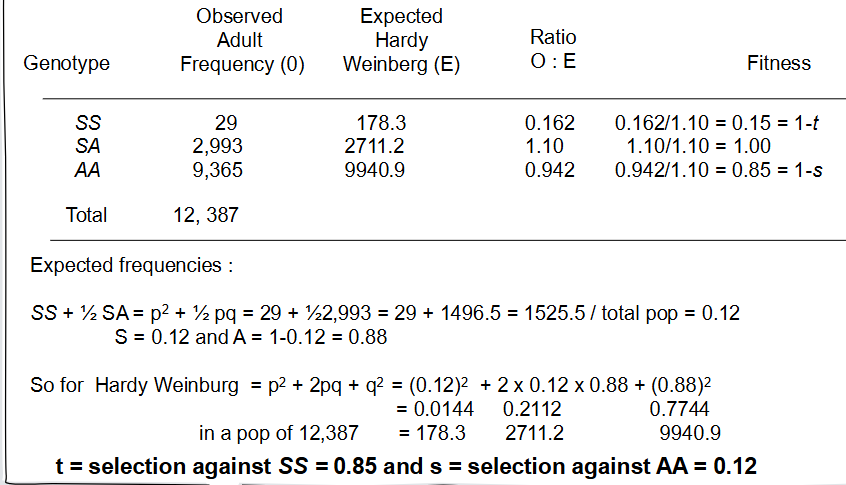
Example of Heterozygous Advantage in Sickle-Cell Anaemia
Sickle cell anaemia is a genetic blood disorder caused by a mutation in the hemoglobin gene (mutant aa compared to the healthy AA gene).
This mutation involves a DNA change from TT to GTG, which leads to altered protein structures and affects red blood cell health.
The condition is notably prevalent in equatorial regions, particularly in Africa.
Statistical Analysis in Sickle Cell Anaemia
Mutation
Concept of Mutation
Defined as the random change of nucleotides (or amino acids) in the genetic material.
Types of Mutations
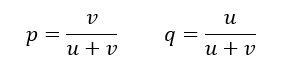
Forward Mutation: Conversion of allele A to allele a at a rate of u.
Backward Mutation: Conversion of allele a back to allele A at a rate of v.
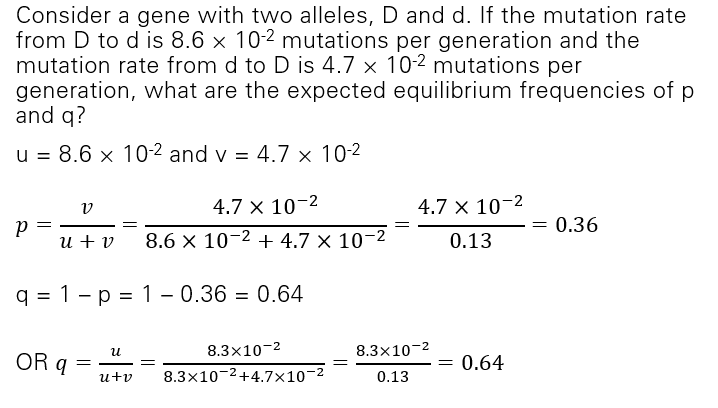
Equilibrium Frequencies
The equilibrium frequencies of p and q due to mutation can be expressed mathematically by mutation rates.
Example Calculation of Mutation Rates
Mutation and Selection Dynamics
Interactions between Mutation and Selection
New mutations prevent deleterious alleles from being completely eliminated within populations.
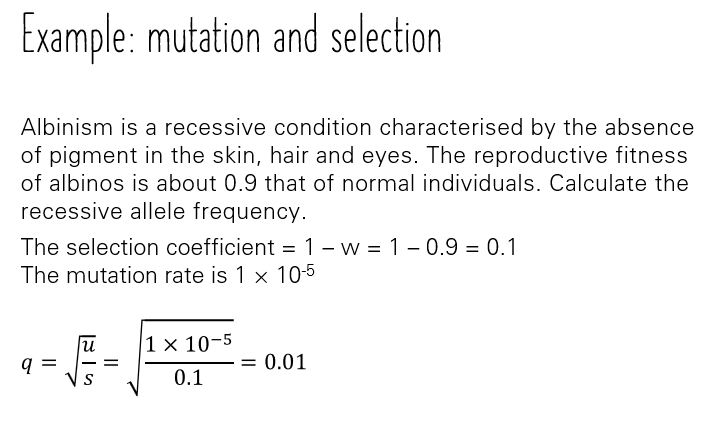
Mutation rates for recessive diseases generally is or 1 in 100,000
This equation is for non lethal, but deleterious alleles, where s is the selection coefficient ( 1 - w )
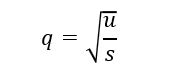
In a case whereby the mutation is lethal, the equation used would be

Example equation for mutation selection
Violation to Hardy-Weinberg: Non-Random Mating
Concept of Inbreeding
Defined as mating between organisms that are more closely related than the average relationship within a population.
Increases frequency of homozygous genotypes and may lead to deleterious recessive alleles surfacing.
Inbreeding Coefficient (F)
Represents the probability that two alleles are identical by descent.
Higher F indicates a stronger degree of inbreeding.
Calculating Inbreeding Coefficients from Pedigrees
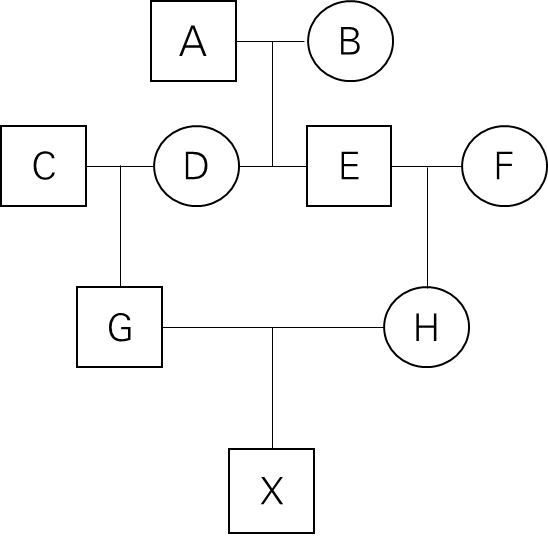
Step 1: Identify Loops in Pedigree
A loop must connect from an individual (X) through one parent to a common ancestor and back without reusing individuals.
Count the steps involved in each identified loop.
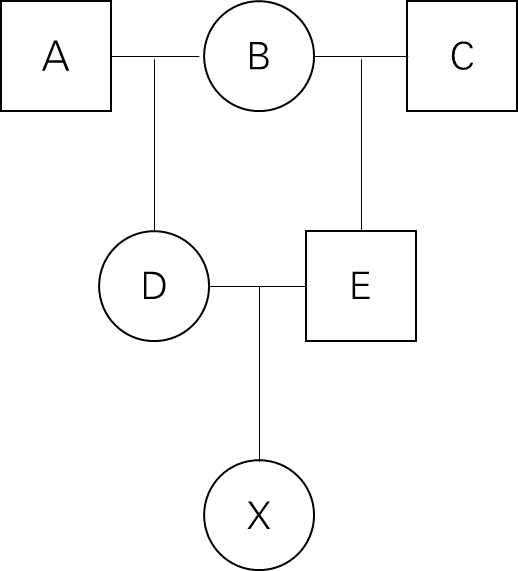
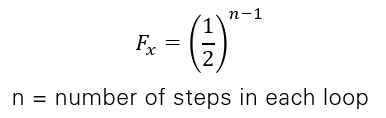
Step 2: Contributing Each Loop to F
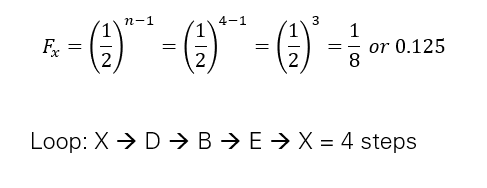
Calculate the contribution of each loop to the inbreeding coefficient
Example of inbreeding calculation
Inbreeding and genotype frequencies
Outbred Hardy-Weinberg Frequencies
Homozygous dominant =
Heterozygous =
Homozygous recessive =
Inbred Hardy-Weinberg Frequencies
Homozygous dominant:
Heterozygous:
Homozygous recessive:
Example in Autosomal Recessive Disease
If a disease occurs in 1 in 40,000 individuals, calculate the expected impact on individual X in the pedigree.
Step 1: Identify Loops Again with noted contributions.

Step 2: calculate loop contributions
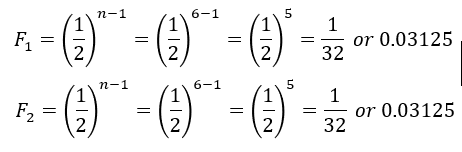
Step 3: sum the loop contributions
