13. Scientific integrity
Code of conduct
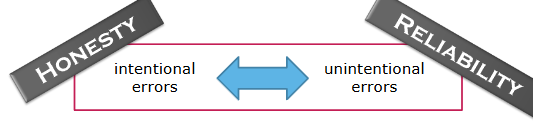
Reliability
Honesty
Respect
Accountability
Major violations
Honesty - deliberate violations
Fabrication - making up data
Plagiarism - copying other people’s work
Data falsification - not reporting certain findings, adjusting or misinterpreting data
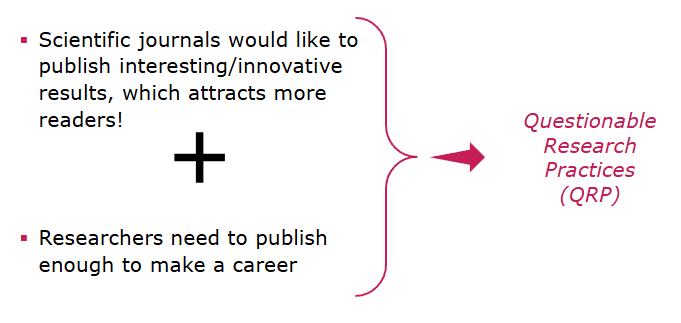
File drawer problem - results that aren’t significant don’t make it into articles because journals want to publish interesting results
Confirmation bias - results that don’t correspond to expectations get ignored
Publication bias - only interesting things get published
Unjust removal of outliers - to get p-value down (removal only allowed if mistake was made)
p-hacking - conscious behav. of researchers
removing outliers to make results significant
add more participants to make results significant
run dif. analysis than planned
searching for sign. rel. in a dataset w. lots of variables (at least smth has to be significant there) - allowed only if presented as exploratory research
HARKing (Hypothesizing After Results are Knows) - in hindsight, formulating hypotheses ans pretending they were the main focus of research all along
Solutions
Retraction - form of self correction afterwards
has drawbacks: reputation damage for researcher and science overall + often long time bet. publication and retraction
Post Publication Peer Review (PPPR) - online discussion platform about publications
Pre-registration - mandatory submission of research protocol before execution of actual research (hypotheses, methods, expectations) → publication independent of outcome
Replication - as part of research cycle