Tracking payroll transactions
Payroll systems
3 main ways to track payroll:
Manual payroll
Least common method
You do all the work to prepare the payroll by hand
Outsourcing payroll
The business pays someone else to do everything—from the timesheets, to bookkeeping, to the taxes
Payroll software
Software varies by the product and plan a business chooses
Assists with tracking all the compliance concerns, local, state, and federal taxes, updates, benefits, and healthcare components
Employee-related costs and benefits
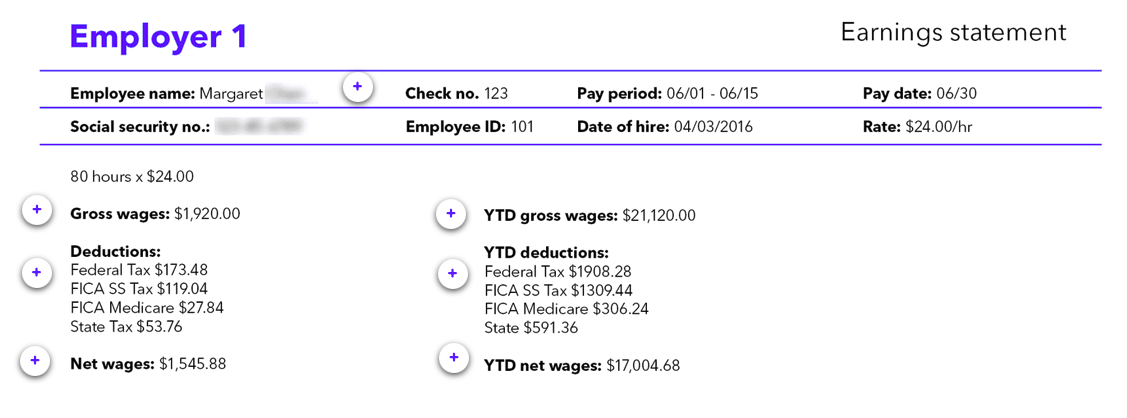
Gross pay
Gross wages
The total amount earned by an employee before any deductions
The full compensation that an employee is entitled to based on their salary or hourly wage, without considering any withholdings or deductions.
Regular wages as well as any additional earnings such as bonuses, commissions, or overtime pay
Net pay
Take-home pay
The amount of income that an employee receives after deductions—such as taxes, insurance premiums, and retirement contributions
The actual amount that the employee receives in their paycheck
Paid time off (PTO)
The designated time that an employee is granted off from work while still receiving their regular pay.
Various forms of leave, such as vacation days, sick leave, personal days, and holidays
This is considered a benefit and isn’t offered in every job
Federal tax withholdings
Taxable wages
Earnings from which an employer must withhold taxes and does not include non-taxable wages such as employee contributions to a health savings account
FICA - Federal Insurance Contribution Act
Taxes going into Medicare and Social Security.
Paid by both employees and employers
An amount on the paystub indicates the portion the employee contributed.
OASDI/Social Security - Another term for Social Security. Stands for old age, survivors, and disability insurance tax. This is part of FICA
HI (Hospital Insurance) or the Medicare Tax - another part of FICA
FUTA - Federal Unemployment Tax Act
A payroll tax that only the employer pays
SUTA - State Unemployment Tax Act
A tax that only the employer pays that funds state-administered unemployment programs.
SDI - State Disabilities Insurance
A less common tax, only used in some states, it is a payroll tax that funds employees financially if they are injured on the job.
Reading a paystub
Wage garnishment
A legal procedure in which a person’s earnings are required by court order to be withheld by an employer for the payment of debt.
Child support
Unpaid taxes
Credit card debt
Defaulted student loans
Medical bills
Court fees