PSYC 101 Week 3
Brain Development and Executive Function
Neuron
basic unit of the brain
Cell body (grey matter)
Dendrites
Axon
Synapse
Our cerebral cortex makes us human
Brain development begins: neurogenesis
proliferation of neurons by cell division complete before birth
growth, migration, and differentiation continue after birth
Myelination (white matter)
for fast communication
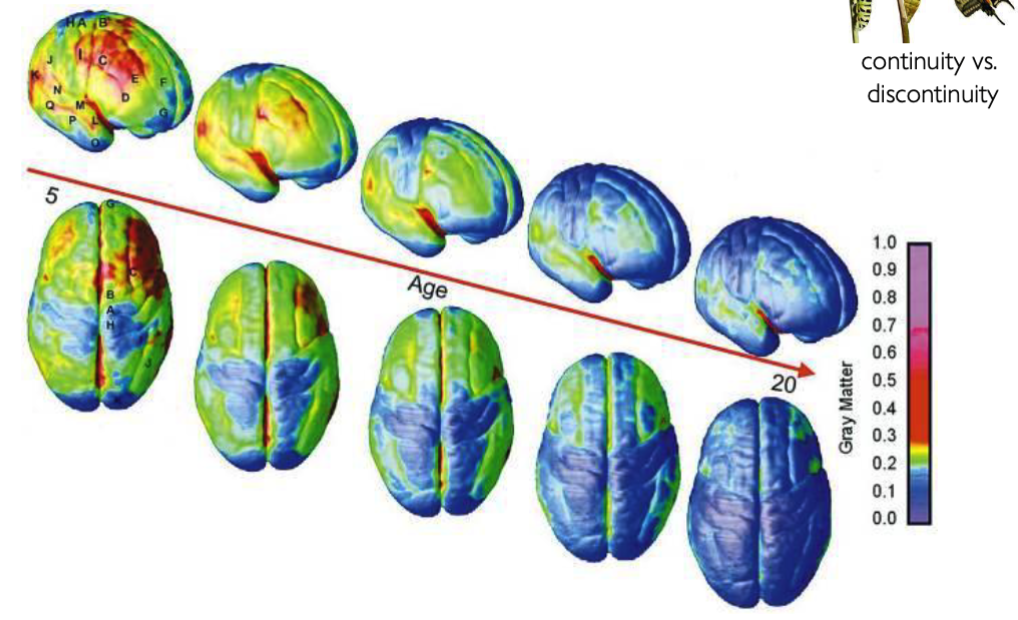
Brain maturation
the bluer the image, the more mature area of the cortex
Synaptogenesis
Results in an overabundance of connections (children have ~50% more than adults)
Synaptic pruning: use it or lose it
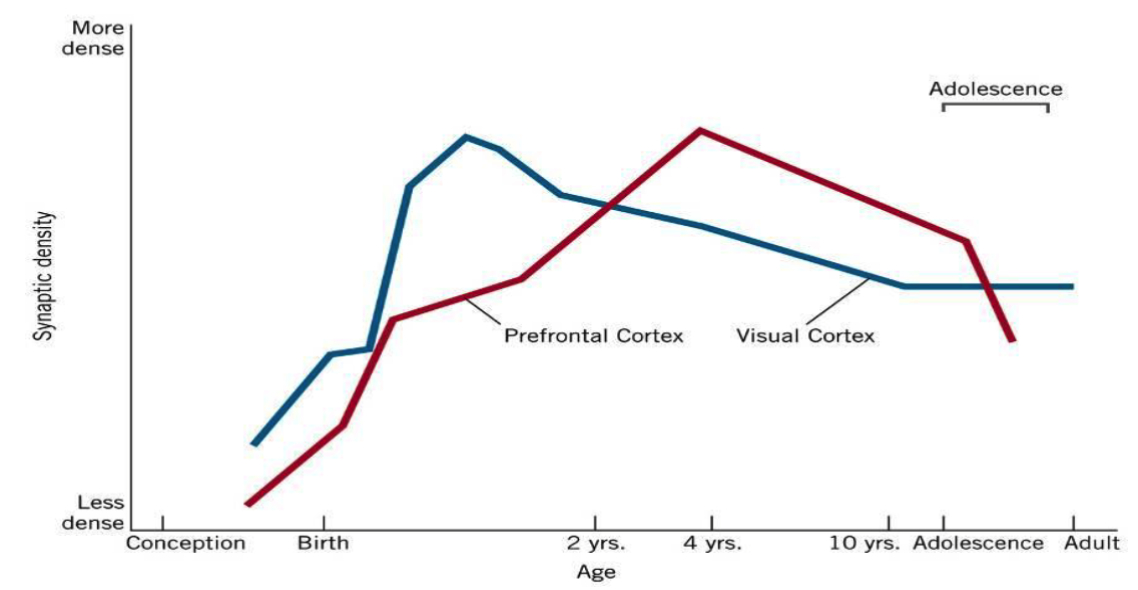
Neural Darwinism
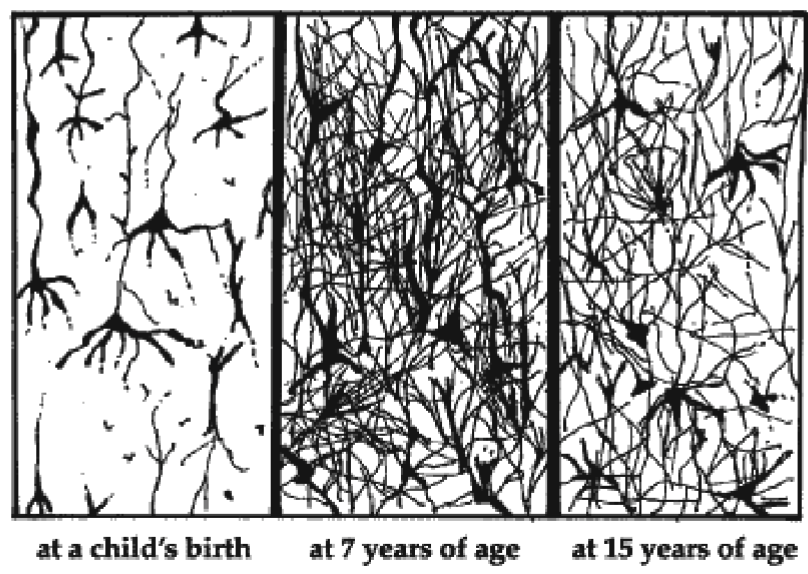
Experience- expectant Processes
Result from experiences that are universal to the species
Sensitive periods
Experience-dependent Processes
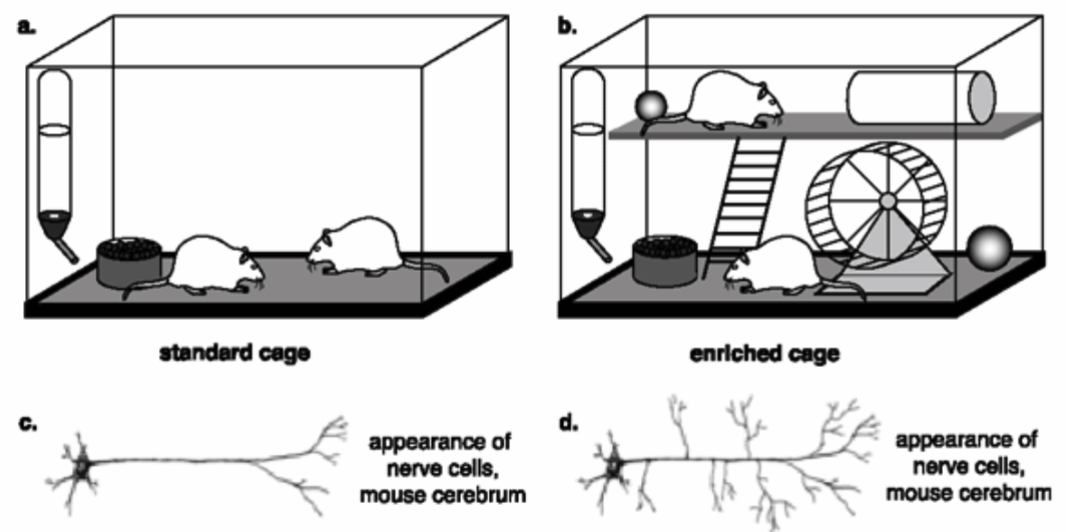
Result from experiences that are specific to the individual
Continues into adulthood (but more flexible during early life)
London Taxi drivers
Review: Developmental Processes
Neurogenesis (high season: prenatal through 1st year)
Synaptogenesis (high season: infancy - early childhood)
Synaptic Pruning (high season: early childhood - adulthood)
Flexibility and Brain Damage
The “worst” time for brain damage?
neurogenesis (prenatal through 1st year)
The “best” time for brain damage?
synaptogenesis (early childhood)
Synanptic proliferation and pruning: why bother?
Adults: spotlight attention
Babies: lantern attention
are babies more conscious than we are?
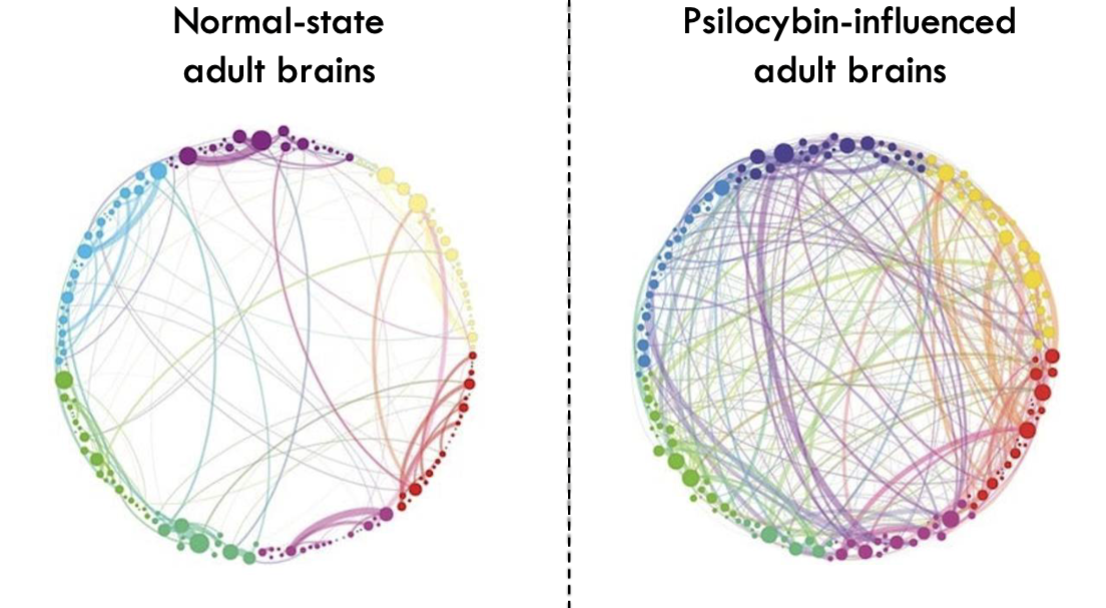
Childhood as a model for the effects of psychedelics
Adolescents seek diversion, new experiences, and strong emotions, sometimes putting their health at serious risk
How does brain structure develop?
baby brains are unique and different from adult brains in important and adaptive ways
a second period of flexibility occurs during adolescence.
the structure of the brain is the product of the complex interaction between nature and nurture (experience-expectant and experience-dependent)
Prefrontal Cortex
Late development, “executive function”
Facilitates working memory / learning strategies
Cognitive flexibility (switching) / planning
Inhibition
Go-No Go: Kitten or Puppy?
clap for kittens, don’t clap for puppies
Multi-dimensional card sort
Delay of gratification
the marshmallow task
self-control predicts SAT score
children who delayed longer at age 4, at 14 were
more academically competent
more socially competent
more verbally fluent, rational and attentive
better able to plan for the future
better able to deal with frustration and stress
Short term vs. long term
Almost always in conflict!
Saving for retirement vs. enjoying life now
Studying for tests vs. having fun in college
Staying on a diet vs. eating the things you like
Staying faithful working through conflict vs. moving on when things we fall apart
Waiting for payday to spend money vs. using a credit card
Promise and perils of “brain training”
Training Executive Function
Executive function in preschool
Learning to be students
Taking tuns
Sharing toys
Monitoring others
Planning activities
Remembering events
Practicing symbols
Following rules
Improving self-control outside the classroom
concentration exercises
sports and martial arts
some computer games
Sensation vs. Perception
Sensation
the low-level processing of basic information from the external world by sensory receptors (e.g. eyes, ear, skin, nose, tongue)
the output of our senses alone is not enough information to create an accurate perception of the world
Perception
the process of organizing and interpreting sensory information about the objects, events, and spatial layout
you don’t see things how they reallly are
the mind makes educated guesses (perceptual constancy)
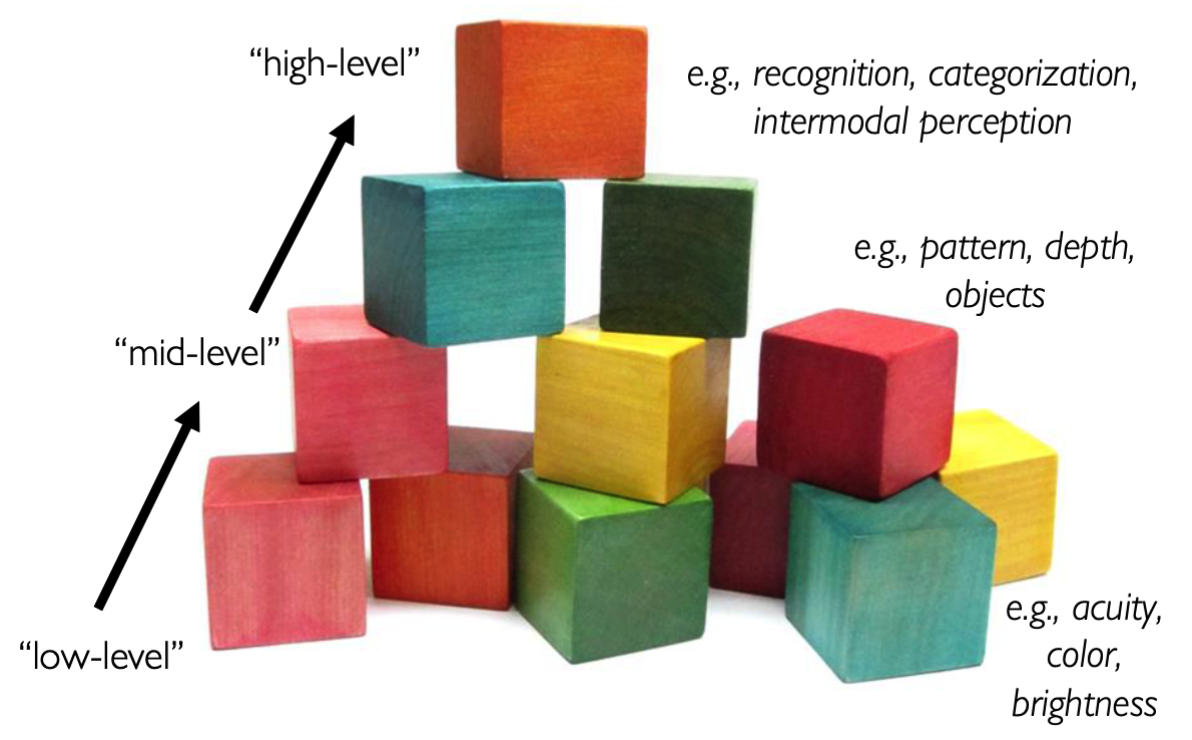
How do Infants Perceive the World?
William James (1890)
the baby, assailed by eyes, ears, nose, skin, and entrails at once, feels it all as one great blooming, buzzing confusion
Jean Piaget (1930)
the [infant’s] world is a world of pictures, lacking in depth or constancy, permanence or identity which disappear or reappear capriciously
How do we know these views are true?
problems? infants can’t do much
eat/sleep/poop/cry
look around
prefer to look at interesting things over boring things
solution → use looking time!
THEORIES NOT SO RIGHT
Two methods
method 1
preferential looking
measure looking time to each side
problem? side preferences
calculate % of time spent looking at bullseye
visual preferences in infants: some displays and findings
infants can see but how well
visual acuity
no preference when stripes are too narrow to see
at each age, find smallest width at which infants show a preference for stripes over gray
acuity results
the sharpness of visual acuity develops rapidly, approaching adults by 8 months; reaches full adult acuity by 3 - 6 years
color vision
preferential looking method? but infants don’t always have color preferences and different infants have different preferences/ won’t work
how can we find out if infants perceive colors?
key: make baby very bored
show them the same thing over and over until they are bored of it
so bored that they prefer anything else
method 2
habituation
visual habituation procedure
dishabituation
getting bored, now change something
continued habituation
same old, same old
color vision
limitations in the early moths (0-3 months)
poorer in 1st month, highly saturated red at birth
3 months and older - similar to adults
Depth Perception
Wimpy kid
newborn goats on a rock won’t step off
The visual cliff
as opposed to a real cliff
results: animals
all baby goats crossed the shallow side
no baby goats crossed the deep side
an inborn capacity to perceive/avoid visual drop-offs
Comparative development
test: human infant
results: human infants
human infants avoid the visual cliff
early depth perception
Innate depth perception?
it’s always nature and nurture together
truly perceive depth at birth
need post-birth visual + motor experience, lined up
and this a 6 moth old
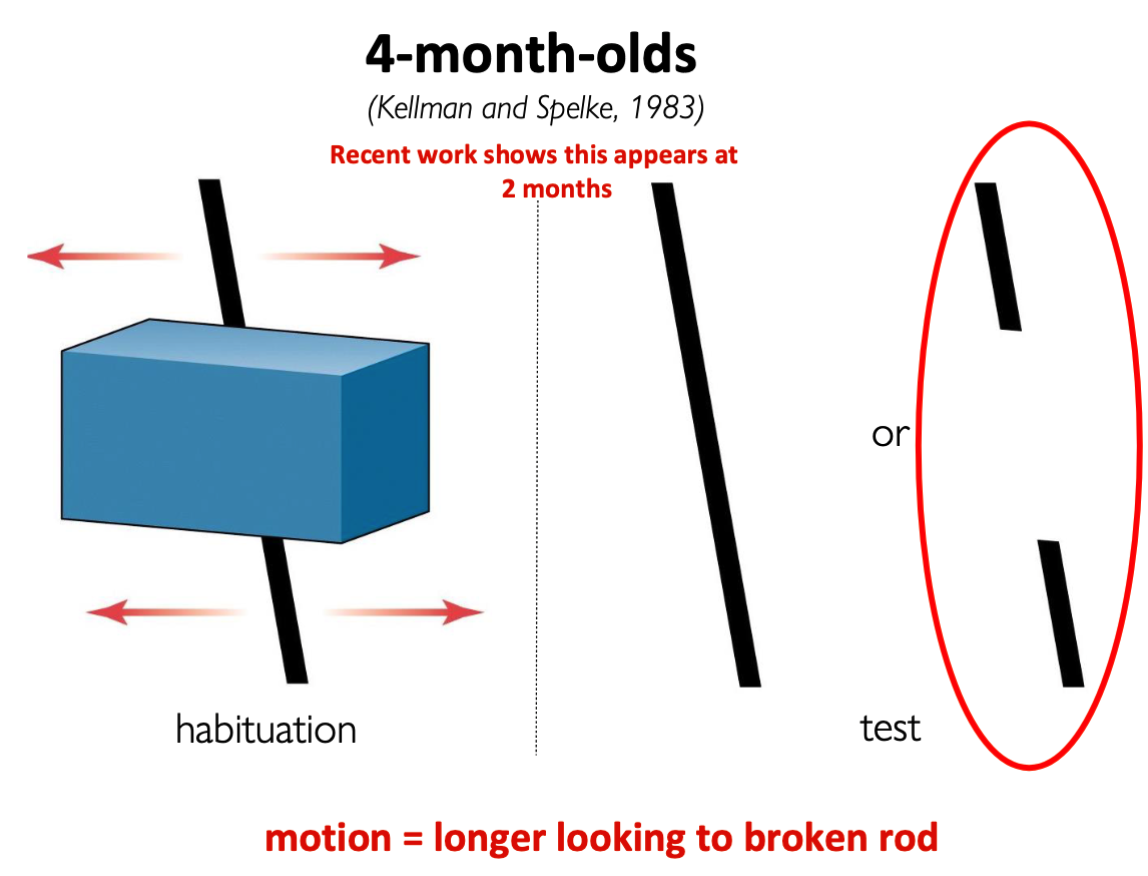
Object perception
Possible cues include:
Color
Shape
Texture
Gaps
MOTION
e.g. common motion: if things move together they are likely part of the same object
Auditory Perception
Begins prenatally
Recall → study
Well-developed at birth
method: auditory localization
Attend to speech
infant directed speech or motherese posody
Many aspects adult-like by 6 mos
frequency range, intensity, localization, etc.
Babies love music
Intermodal Perception
In addition to perceiving things from our individual senses we come to appreciate relationships between percepts
intermodal mapping?
Molyneux’s problems
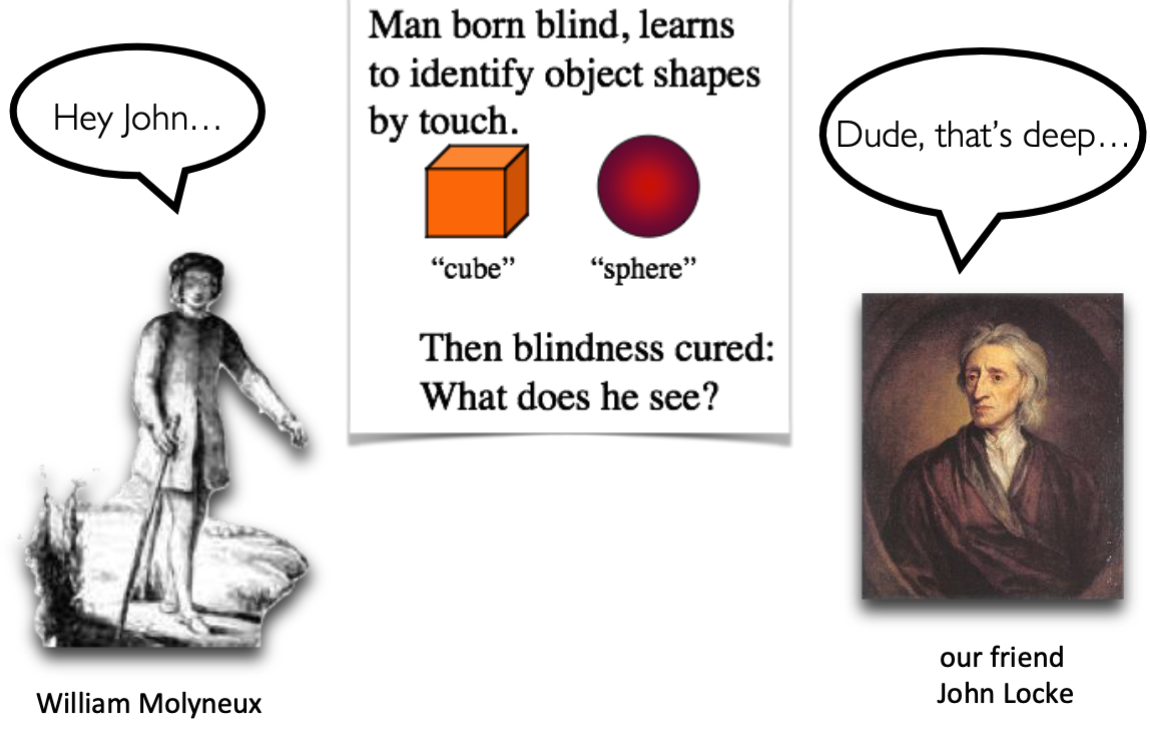
Two Hypotheses
You have to learn the correspondence between touch and vision
The ability to recognize things across modalities is inborn, or innate
A test
tactile familiarization:
1 month olds were allowed to mouth (but not see) either a bumpy or a smooth pacifiier
visual test
shown two pictures, one of a smooth object and one of a bumpy object
preferential Looking
Infants looked longer at the picture matching how the pacifier felt
Ability to detect correspondence between tactile and visual modality doesn’t need to be learned
hearing and movement?