Chapter 7: Tempo and Dynamics
Chapter 7: Tempo and Dynamics+
Composers indicate tempo and dynamics as a means of expression
Timbre
Definition: the sonorous quality of a particular instrument, voice, or combination of instruments and/or voices
the idea that different acoustic instruments produce sounds in different ways (the different tone differences)
influenced by the size, shape and proportions of the instrument
How something sounds
Manipulating Timbre = suppress or enhance a certain tone. frequency of the different tones (can also do color change)
quality of the sound that distinguishes it from others (timbre or tone color)
accounts for the striking differences in the sound quality of musical instruments
Example: for electronic instruments, different amplifiers for electric instruments (e.g. electric guitar) have different sonic characteristics. (old tube-based amplifiers have a very different sound than transistor- based amplifiers)
Dynamics
Definition: used to refer to the variation in loudness between notes, or phrases, or sections in a piece of music
denotes the volume
indicated by specific musical notation indicators
When deciding how to play the dynamics in a composition, a performer must place them in a socio-musical context
Examples discuss
17th century vs 18th century (volume wasn’t as important as the hall in which people sang in were smaller, didn’t have to project music as much)
19th century etc (huge concert halls, means louder music needed)
Where does the term Dynamics originate from?
Most come from Italian language (first in Italy, the central cultural force)
Italy is where many of the notational and musical developments originated in the Renaissance period
Other languages are also used in later music , like english (19th, 20th and 21st century)
Dynamics: Musical terms indicating degrees of loudness (not absolute, as scales change with time)
Dynamics = indication as to volume or loudness (how loud or soft the music is played)
can also affect our emotional response
Fortissimo (ff) - very loud.
Forte (f) -loud (one of the two root words)
mf - moderately loud (mezzo-forte)
mp - moderately soft (mezzo-piano)
Piano (p )- soft (one of the two root words)
Pianissimo (pp)- very soft
“mezzo” = “moderately” (adjective)
“issimo” = “very much” (suffix)
Musical terms indicating processes
not dynamic, it is a process
Crescendo (cresc) = get gradually louder
Diminuendo (dim) = get gradually softer
Sempre = always (stable, the same)
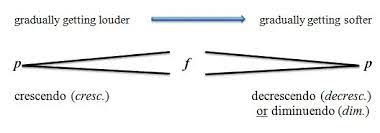
Musical symbols are sometimes used for localized dynamic gestures in music
Tempo Indications and Terms
the speed of the underlying beat of a piece of music (the pace of the music)
(Phrase, rhythm and meter patterns) and tempo words are used to further differentiate which archetype is wanted
also carry emotional implications
recent music (20th century) might use “mood words” (especially in languages other than Italian) to give the performer and idea “how” to perform
Tempo Markings
Most tempo terms come from Italian language (French and German words but Italian is majority)
Italian music domination in Europe from 1600 to 1750
this was when performance directions were established
Tempo means “time” in Italian
tempo markings indicate the character of the music and pace of it
Alot of tempos come from culture
Common tempo markings
Grave: solemn (very very slow)
Largo - very slow (large, slow)
Adagio - slow
Andante - slow, but not too slow
Moderato - moderate tempo
Allegretto - fast, but not too fast
Allegro - fast
Presto - very fast
The tempo of a piece can be indicated by:
1. Metronome marking (M.M. =120/ quarter note) (M.M. = Maelzel's Metronome)
2. Terms that indicate a general tempo
Tempo Modification Words
molto = very much
meno = less
poco = a little bit
non troppo = not too much
Terms indicating a change of tempo
Accelerando = getting faster
Ritardando = holding back, getting slower
a tempo = in time, returning to original pace
if tempo and dynamics are the domain of the composer, what is the role of performers and conductors in interpreting a musical work?
performance directions can be somewhat imprecise as what is loud for one person might not be the same for another (even when composers give precise tempo markings in their scores)
performers have the final say in choosing a tempo that best delivers the message of the music
composers indicate tempo an dynamics as a means of expression