Integumentary
Integumentary Issues
Bacterial Infection: Impetigo
Types of Impetigo
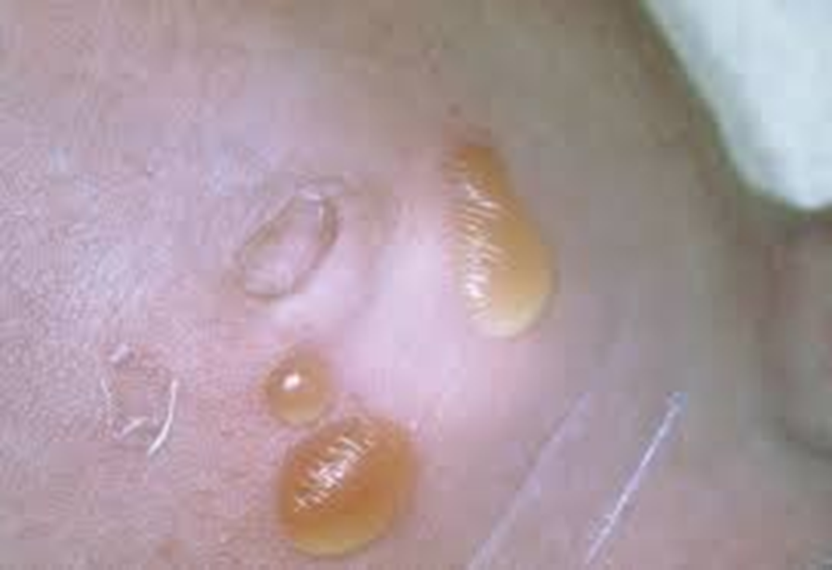
Bullous Impetigo (think Blistery)
Forms bullae that rupture and crust.
Commonly found on trunk, face, buttocks, perineum, limbs.
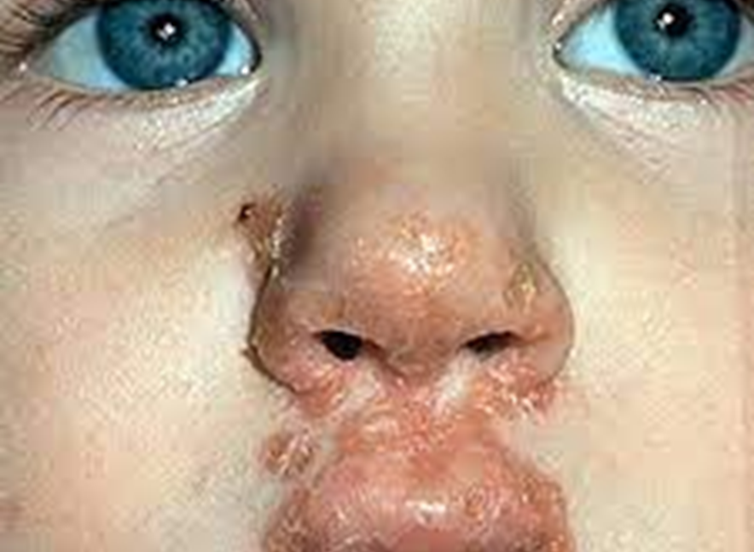
Non-bullous Impetigo
Small vesicles develop into plaques with honey-crust.
Typically occurs around the nose and mouth.
Common causes: staph aureus, staph pyogenes, group A strep
It is an epidermal skin infection that spreads person to person. Age 2-6 is most common. Summer months
Self-limiting but topical abx speed healing & decrease spread.
Severe case or immunocompromised may require systemic oral rx
Risks: secondary infections from scratching & spread
Nursing Considerations/Education
Emphasize hand hygiene with antibacterial soap for all family members.
Avoid sharing personal items (towels, washcloths, toys).
Topical antibiotics: Remove honey crusts 1st with warm water and antibacterial soap. Contagious until 48 hrs on abx
Oral antibiotics: Complete the full course of meds! Strep incompletely treated can cause other issues. Not contagious once on abx for 24 hrs
In hospital: place on contact precautions.
Acne
Bacterial Process
Propionibacterium acnes: (gram positive)
Normally present on skin, can cause inflammation leading to acne.
Acne can also lead to secondary skin infections
Common sites: face, neck, back, trunk.
Self-limiting, not life-threatening but can lead to body image issues, depression, permanent skin pitting & scarring
Manifests as: blackheads, whiteheads, pustules, papules, nodules and/or cysts
Risk Factors
Genetic component, male gender, hormonal flares in females, cosmetics with lanolin or petroleum, exposure to cooking grease (fast food workers), high glycemic index foods, and dairy products
Treatment: gentle cleansing- avoid abrading skin. ~topical or oral medication~
Treatment Options
Topical Treatments
Tretinoin: Vitamin A derivative, anti-inflammatory, helps prevent acne. Irritating to skin. Avoid sun exposure or SPF
Benzoyl Peroxide: Kills acne-causing bacteria.
Topical Antibiotics: Monitor for allergic reactions and watch for photosensitivity. Using every other day helps lessen skin irritation
Oral Agents
Antibiotics: Tetracycline, doxycycline, erythromycin, minocycline.
Watch for allergies and photosensitivity/SPF
Oral contraceptives: Can help females by decreasing androgen levels (which cause acne)
Takes 4-5 months for efficacy
Isotretinoin: For cystic acne or unresponsive to other treatments.
Only dermatologist can prescribe
Teratogenic!! IPLEDGE form:
Females agree to 2 forms of contraception starting 1 month before until 1 month after final dose
Cannot donate blood until 30 days after final dose
Can cause depression or violent behavior- monthly monitoring
Can cause transient elevation in cholesterol & triglycerides
Viral: Human Papilloma Virus (HPV): Warts
Anywhere on skin
Single or in clusters
Elevated, rough, firm papules
Plantar- foot
Flatter with hyperkeratosis of sole of foot (hardened skin)
Once hyperkeratotic area removed, wart with black pinpoint areas present
Treatment
Individualized destructive treatments: Cryotherapy, laser, electrocautery, surgery, topical caustics.
Padding for painful plantar warts (with holes around wart help)
Competent immune systems can eventually heal infection. Above tx can “jump start” immune system ability to heal warts, wart clusters
HPV Vaccine- HPV related cancers, genital warts
Gardasil 9: (covers 9 HPV types) given at age 9-14 years. CDC has two dosing schedules depending on when series is started (2 or 3 doses)
15-45 years (3 doses). Recommended before age 26 years but have expanded to people up to 45 years
Reason to give: Protects against HPV related cancers (cervical, penile, anal, mouth, throat) & genital warts (HPV 6&11)
Vaccine (o.5 mL IM) can cause fainting
Observe for 15 minutes after injection- any vax can cause a vasovagal fear response
Fungal Infection: Tinea (Ringworm)
Fungal pathogen- trichophytons, microsporums, epidermophytons
Types of Tinea
Tinea Capitus: Scalp, may cause hair loss around area
Tinea Corporis: Body.
Tinea Cruris: Thigh and scrotum (jock itch).
Tinea Pedis: Foot (athlete’s foot).
Highly transmissible through person-to-person contact, pool surfaces, showers, sports equipment, clothing, combs, moist soil
Trichophytons can come from pet cats. May need to treat pet as well- keep reinfecting owners
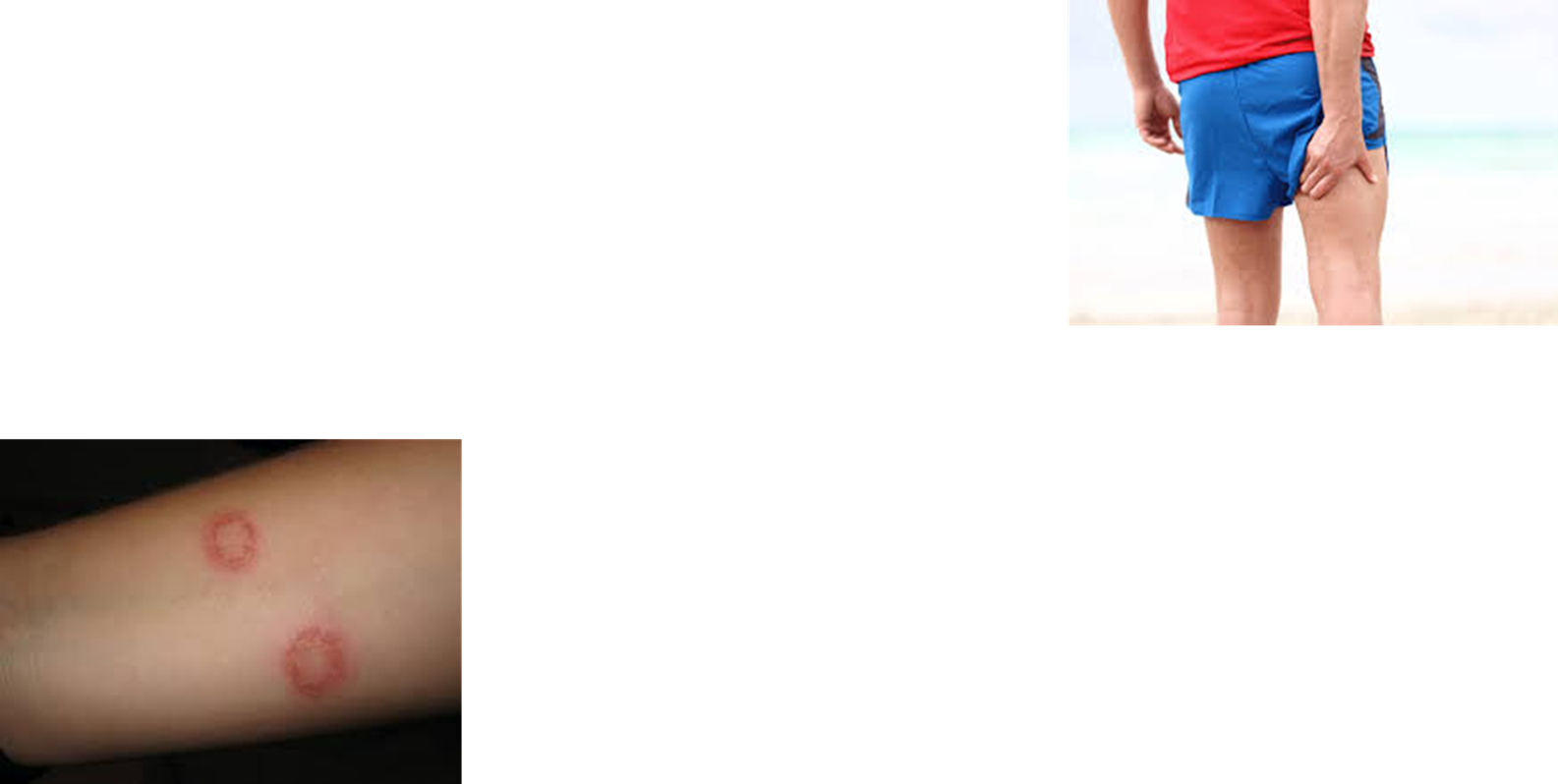
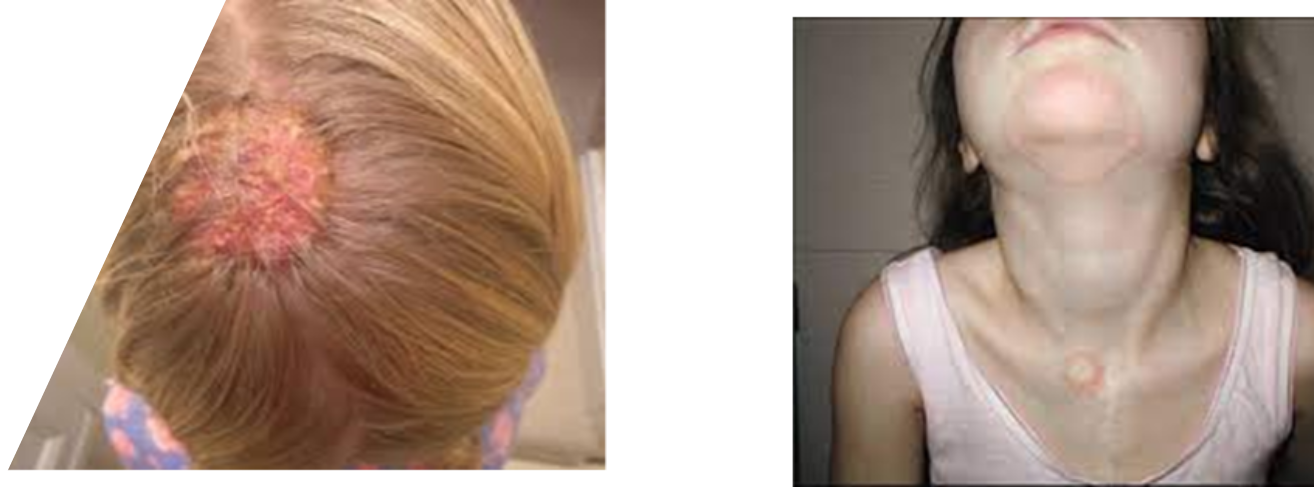
Tinea Treatment: Topical or oral
Tinea capitus: selenium sulfide shampoos, oral griseofulvin, oral ketoconazole
Tinea capitus, pedis or cruris: topical antifungals or oral griseofulvin, clotrimazole or ciclopirox
When dressing child/getting dressed: put socks on first if tinea pedis present~ lessens chance of spread to other parts of body
Treatment can take 2 weeks to 3 months depending on severity & immunity status
Pediculosis Capitus (Head Lice)
Overview
Most eggs (nits) found around the scalp, nape of neck, and ears.
Spread through direct contact or shared items.
Treatment Options
Treat with permethrin 1% shampoo (kills lice but not nits).
Combing out the nits with a fine-tooth metal comb (nitpicking!). Then repeat shampoo in 7 days.•
If lice resistance to permethrin, use malathion 0.5%
Wash bedding and clothes in hot water and detergent.
Use treatment shampoo on combs and brushes for 1 hour or boil for 10 minutes.•
Items which can’t be washed, seal in a plastic bag for 14 days to kill lice.
Non-chemical treatments:
Lice resistant to permethrin shampoos exist•
Tea tree oil and lavender oils
Olive oil and nit picking (can take a month)
Heated air treatments ($$) but kill both lice and eggs
Infestations Pediculosis Capitus
Spreads: Direct “head-to-head” or “hair-to-hair” contact w. infected person, objects (combs, brushes, hats), or bedding
Lice can live up for 48 hours w/o human host; live 1 month w/ host
Risks: Daycare, crowded conditions, schools, sharing combs, brushes, hats. ~ Developmental: dress-up, sharing masks, hats, crowns, bows
Appearance: lice are small, gray/tan, no wings. Nits look like dandruff on hair shaft BUT firmly attached (won’t flake off)
Symptoms: itchy!!
Prevention and Management
Wash bedding and clothes in hot water, seal non-washable items in plastic bags.
Lyme Disease
Overview
Nearly 476,000 cases/year in the U.S. CDC: 30,000
Caused by Borrelia burgdorferi bacteria spread by ticks. (deer & mice)
Vaccine: not currently avail- phase 3 trials
Vaccine works by introducing antibody formation, so if a human is bitten by a tick, when it drinks our blood, the antibodies neutralize the bacteria in the tick so it can’t transmit it
Highest incidence in 5-9 year-old age group and those outdoors in wooded areas frequently.•
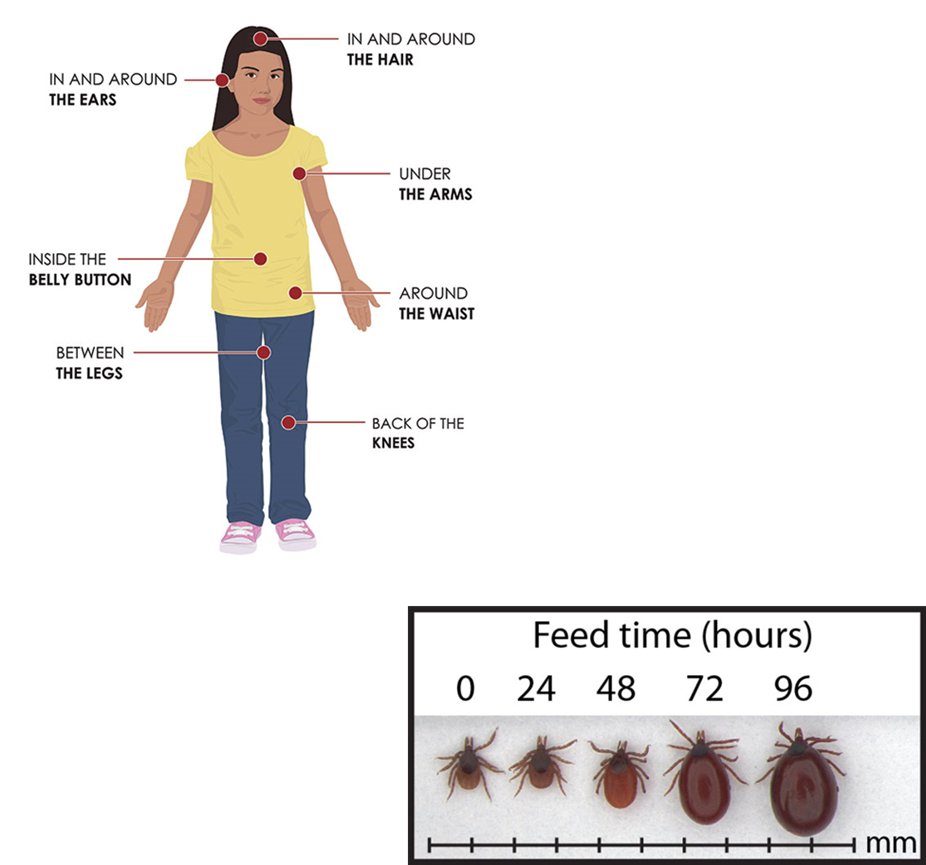
Tick needs to be attached for 36-48 hours for infection to transmit.•
Incubation up to 32 days after an infected tick bite… symptoms can appear a month later
It is not contagious human to human but is considered a communicable disease with the TICK being the VECTOR from animal to human.
Often: Bull’s eye rash
Erythema migrans
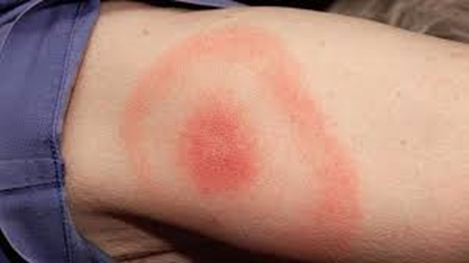
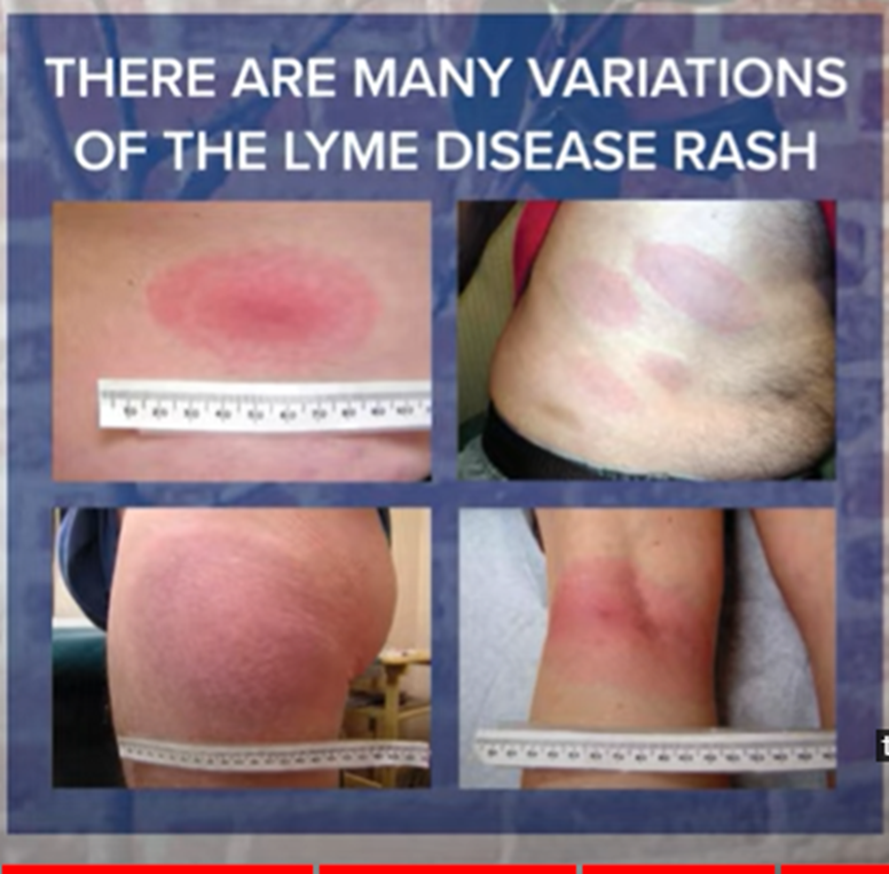
Not always a perfect bull’s eye*
Where ticks like to hang out ~ will fall off themselves when full
Stages of Lyme Disease- 3
Localized Disease: (LD)
Erythema migrans (bull's eye rash)- painless annular (ring shaped) red rash (70-80% of cases)
Fever, chills, flu-like symptoms, swollen lymph nodes
Early Disseminated Disease: (EDD)
Multiple smaller erythema migrans
Generalized lymphadenopathy
Fatigue
Meningitis
Facial nerve palsy
Joint pain
Carditis
Late Disseminated Disease: (LDD) (2-12 months)
Lyme arthritis
large joints~ knee; most common in kids
carditis
encephalitis
meningitis
Treatment Options
Localized: 10-21 days of antibiotics~ amoxicillin, cefuroxime, or doxycycline
Early Disseminated Disease: 21-28 days of antibiotics
Late Disseminated Disease: up to 28 days of antibiotics
**IV antibiotics may be used for persistent arthritis, carditis, meningitis, encephalitis
Nursing Considerations
Teach: Full body check for ticks after outings in woods/tick areas (people & pets)•
Teach parents how to remove ticks–
Grasp tick firmly with tweezers where mouth is attached to skin and pull gently until the tick releases, then cleanse with soap and water– Do not burn ticks off!
Educate parents on completing antibiotics: adherence to full regimen is an issue!
Avoid sun exposure with doxycycline
Promote rest
Pediatric Skin Assessment Instruments
Braden-Q:
Braden Q-D
Assess risk for pressure injuries
Address risks associated with medical devices.
Use tubing ties to the top of the crib to alleviate pressure
Risk for pressure injuries from medical devices must be addressed