Antipychotics
D2 antagonists have various other pharmacological properties, including muscarinic cholinergic antagonism, antihistaminic actions (H1 antagonism), and α1-adrenergic antagonism
Dopamine 2 antagonists/partial agonists are generally dosed for antipsychotic action so that at least 60–80% of D2 receptors are occupied
Blockade of muscarinic cholinergic receptors is associated with dry mouth, blurred vision, and risk of paralytic ileus as discussed earlier blocking H1 histamine receptors is associated with weight gain and sedation and blockade of α1-adrenergic receptors is associated with sedation as well as cardiovascular side effects such as orthostatic hypotension
In an attempt to improve the efficacy and the tolerability of the first-generation classic drugs for psychosis with D2 antagonist properties, a newer class of drugs with antipsychotic action combines D2 antagonism with serotonin (5HT) 2A antagonism, so-called second-generation antipsychotics or atypical antipsychotics. We will refer to them as 5HT2A antagonists/D2 antagonists with antipsychotic properties. Antagonism of serotonin 5HT2A receptors appears to improve both the efficacy and the side effects of D2 antagonism
Motor side effects. Adding 5HT2A antagonist actions to D2 antagonism has also proven to lessen unwanted motor side effects such as drug-induced parkinsonism.
Hyperprolactinemia. Adding 5HT2A antagonist actions to D2 antagonism lessens the elevation of prolactin caused by D2 receptor blockade.
Adding this theoretically reduces release of dopamine in the emotional striatum
blocking 5HT2A receptors on the specific glutamate neurons shown in leads to disinhibiting (i.e., increasing) dopamine release downstream in the motor striatum, precisely what is needed to reduce motor side effects
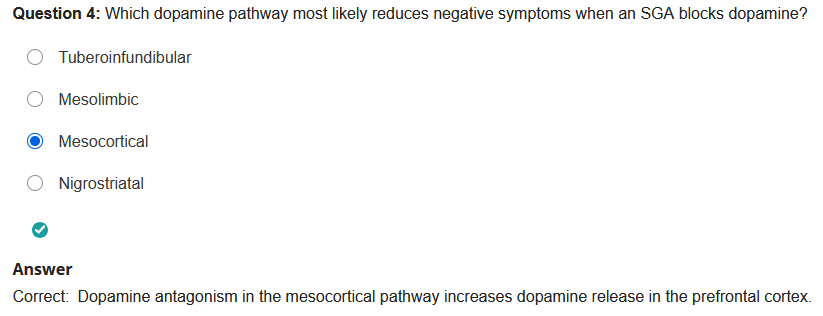
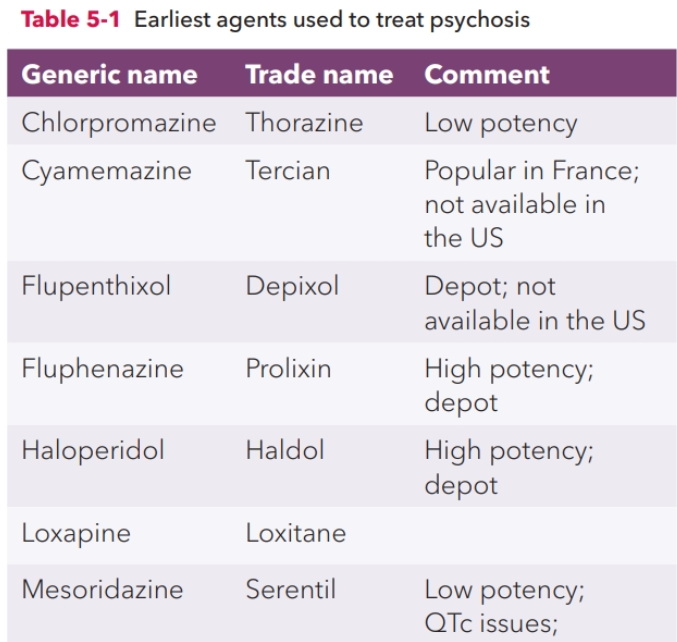
will lead to disinhibiting (i.e., increasing) dopamine release in the prefrontal cortex. This is just what you need to improve negative symptoms of schizophrenia
D2 Partial Agonism - not too hot or too cold just right. too much block antipsych action but DIP and prolactin. too hot (amphetamine) too much DA and psychotic sx. mid tries to balance it.
5HT1A partial agonism also does what 5HT2A ANTAG does and produces downstream DA via mult paths
- side meme - brexpiprazole promising PTSD/dementia results trials -
ANTIPSYCHOTICS USUALLY AVOIDED IN DEMENTIA BC OF CV EFFECTS AND BAD OUTCOMES
FIRST GENERATION
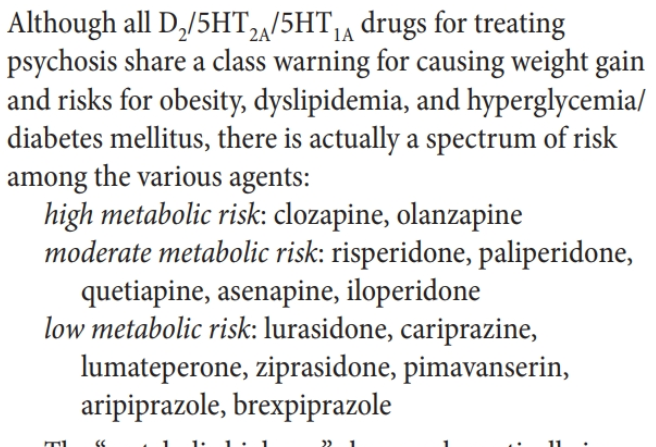
Chlorpromazine - often prescribed to exploit its sedation in patients who do well with sedation, particularly short-term orally or as a short-acting intramuscular injection when needed to treat agitation or a sudden worsening in psychosis
Fluphenazine - more potent than chlorpromazine and less sedating
Sulpiride - particularly at lower doses, it may be a bit activating, and have efficacy for negative symptoms of schizophrenia and for depression for unclear reasons
Amisulpride - reports of amisulpride’s efficacy for the negative symptoms of schizophrenia and for depression at doses lower than those used to treat positive symptoms of psychosis. some d3 antag 5HT7 antag
THE PINES
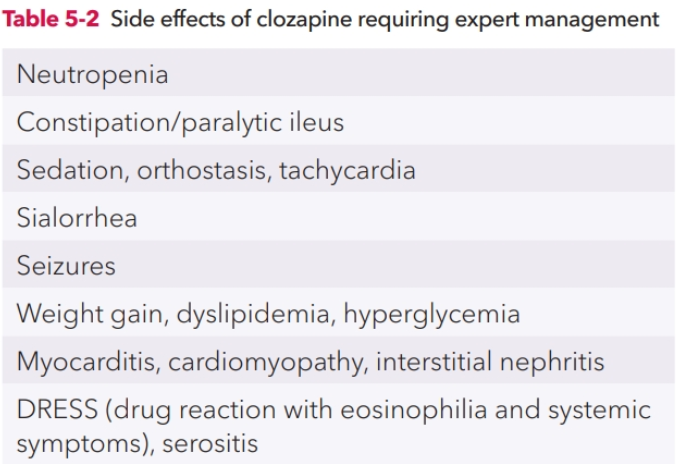
Clozapine - effective in use when other antipyschotics fail, gold standard for schizo. documented to reduce the risk of suicide in schizophrenia and may have a particular niche in treating aggression and violence in psychotic patients. Can cause rare “awakening” sx improvement across the board. causes little in the way of motor symptoms, does not seem to cause tardive dyskinesia and may even be effective in treating tardive dyskinesia, and also does not elevate prolactin
One life-threatening and occasionally fatal complication of clozapine treatment is neutropenia, requiring patients to have their blood counts monitored for as long as they are treated
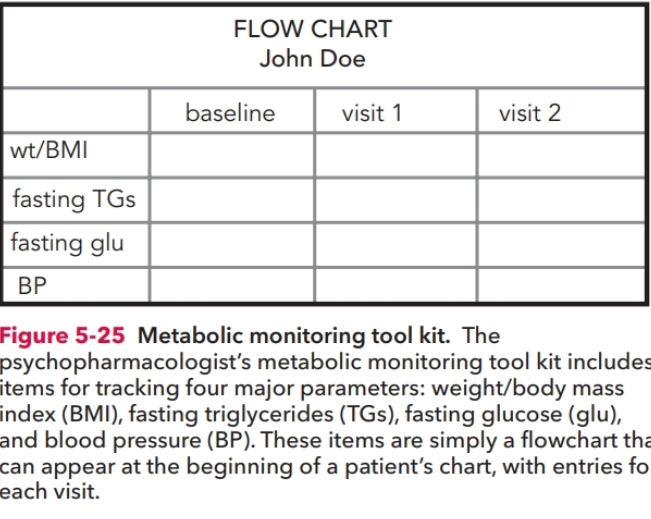
also has an increased risk of seizures,especially at high doses. It can be very sedating, has an increased risk of myocarditis, and is associated with the greatest degree of weight gain and possibly the greatest cardiometabolic risk among the drugs for psychosis. excessive salivation
may have the greatest efficacy but also the most side effects among the atypical antipsychotics
Olanzapine - antagonist at both 5HT2A and D2 receptors. next best effective, also high metabolic risk. approved for schizophrenia and for maintaining response in schizophrenia for agitation associated with schizophrenia or with bipolar mania (intramuscular), acute bipolar mania/ mixed mania and maintenance (age 13 or older), and in combination with fluoxetine for both bipolar depression and treatment-resistant unipolar depression. oral, IM or last lasting 4week IM admin.
Quetiapine - antagonist at both serotonin 5HT2A and dopamine D2 receptors. Norquetiapine (metabolite) has unique pharmacological properties compared to quetiapine, especially norepinephrine transporter (NET) inhibition.
prescribed for indications other than psychosis, including frequently as a hypnotic for insomnia, a drug for depression, for anxiety, for Parkinson’s disease psychosis, or as an adjunct for psychosis with other 5HT2A/5HT1A/D2 drugs
For psychosis, quetiapine is an 800 mg Papa Bear. For depression, quetiapine is a 300 mg Mama Bear. For insomnia, quetiapine is a 50 mg Baby Bear
causes virtually no motor side effects nor prolactin elevations. However, quetiapine has at least moderate risk for weight gain and metabolic disturbances
Asenapine - 5HT2A, 5HT2C, H1, and α2 antagonism (similar to mirtazipine) but also D2 antagonism. given as a sublingual formulation, because it is not absorbed if it is swallowed
approved for schizophrenia/maintenance in adults and in the US for bipolar mania
can be used as rapid-acting oral PRN antipsychotic to “top up” patients without resorting to an injection
One side effect of sublingual administration in some patients is oral hypoesthesia (numbness)
may not eat or drink for 10 minutes following sublingual administration to avoid the drug being washed into the stomach where it will not be absorbed.
can be sedating, moderate weight gain.
Zotepine - has 5HT2A and D2 antagonist properties and is not as popular as other drugs for psychosis because it has to be administered three times a day. elevated risk of seizures
Risperidone - favored uses in schizophrenia/maintenance (age 13 and older) and bipolar mania/maintenance (ages 10 and older). off-label low dose in tx of agitation and psychosis associated with dementia (black box warning). approved for treatment of irritability associated with autistic disorder, including symptoms of aggression towards others, deliberate self-injury, tantrums, and quickly changing moods. HYPERPROLACTINEMIA
Paliperidone - active metabolite of risperidone, is also known as 9-hydroxy-risperidone and like risperidone has 5HT2A and D2 receptor antagonism
paliperidone tends to be more tolerable, with less sedation, less orthostasis, and fewer motor side effects, although this is based upon anecdotal clinical experience
urinary not hepatic metabolized
main advantage of paliperidone over risperidone is that the long-acting injectable for paliperidone is easier to load, easier to dose, and has both a 1-month and a 3-month formulation
Ziprasidone - 5HT2A/D2 antagonist with the major differentiating feature being that it has little or no propensity for weight gain or metabolic disturbances. short acting more than 1/day w/ food. approved in schizophrenia/maintenance and in bipolar mania/ maintenance
Iloperidone - 5HT2A/D2 antagonist properties. most distinguishing clinical properties include a very low level of motor side effects, low level of dyslipidemia, and moderate level of weight gain associated with its use. most distinguishing pharmacological property is its potent α1 antagonism - orthostatic hypotension and sedation, especially if rapidly dosed. approved in the US for schizophrenia/maintenance
Lurasidone - 5HT2A/D2 antagonist approved for use in schizophrenia and much more popular for use in bipolar depression. good tolerability, especially lack of weight gain, often preferred for the treatment of children bc of this.
glutamate modulator D-cycloserine combined with lurasidone, called NRX101 (Cyclurad) potential anti SI ideation med
Lumateperone - more recently approved 5HT2A/D2 antagonist for schizophrenia. It has very high affinity for the 5HT2A receptor. little or no weight gain or metabolic disturbances. Low d2 blocking SE bc of downstream DA plus blocker combo. magic presynpatic meme activity leading to less d2 blocking necessary postsynaptically bc not being produced presynaptically
Aripiprazole - D2/5HT1A partial agonist. relatively low motor side effects, mostly akathisia, and actually REDUCES PROLACTIN rather than elevating it.
effective in treating schizophrenia/maintenance (age 13 and older) and also agitation (intramuscular) and bipolar mania/maintenance (ages 10 and older), and is also approved for use in various other child and adolescent groups, including autism-related irritability (ages 5 to 17) and Tourette syndrome
approved for adjunctive treatment to SSRIs/SNRIs for major depressive disorder, and this is by far its major use in clinical practice in the US
Brexpiprazole - more potent 5HT2A antagonism, 5HT1A partial agonism, and α1 antagonism relative to its D2 partial agonism. approved for the treatment of schizophrenia
Cariprazine - approved for schizophrenia and also for acute bipolar mania. very low propensity for weight gain or metabolic disturbance.
D3 antagonist/ partial agonist action may block key postsynaptic D3 receptors in limbic areas to reduce dopamine overactivity in emotional striatum and key somatodendritic presynaptic D3 receptors in the ventral tegmental area/ mesostriatal/integrative hub to increase dopamine release in the prefrontal cortex and improve negative, affective, and cognitive symptoms
Selective 5HT2A Antagonist
Pimavanserin - only known drug with proven antipsychotic efficacy that does not have D2 antagonist/partial agonist actions. This agent has potent 5HT2A antagonist with lesser 5HT2C antagonist actions
THE OTHERS
Sertindole - 5HT2A/D2 receptor antagonist. QTc-prolonging potential, NEED CARDIAC MONITORING.
Perospirone - 5HT2A and D2 antagonist. generally administered three times a day, with more experience in the treatment of schizophrenia than in the treatment of mania
Blonanserin - 5HT2A/D2 antagonist. unique property of higher affinity for the D3 receptor than dopamine has for the D3 receptor (like cariprazine), suggesting possible utility for the negative symptoms of schizophrenia and for bipolar depression
POSSIBLE FUTURE
roluperidone (MIN-101) - 5HT2A antagonist with additional σ2 antagonist actions, which is in study for schizophrenia
Trace Amine receptor Agonists and SEP-363856 - An exciting new potential mechanism of antipsychotic action is trace amine agonism specifically acting at the trace amine-associated receptor type 1 (TAAR1). hypothesized mechanism of antipsychotic
action for TAAR1 agonists is that they act tonically both presynaptically and postsynaptically to prevent the dopaminergic hyperactivity of psychosis and mania
cholinergic Agonists
Activation of central muscarinic cholinergic receptors, either directly or by allosteric modulation, is under investigation as a novel antipsychotic mechanism.
M4 receptor agonism may reduce psychotic symptoms whereas M1 receptor agonism may be most relevant to improving the cognitive deficits of schizophrenia