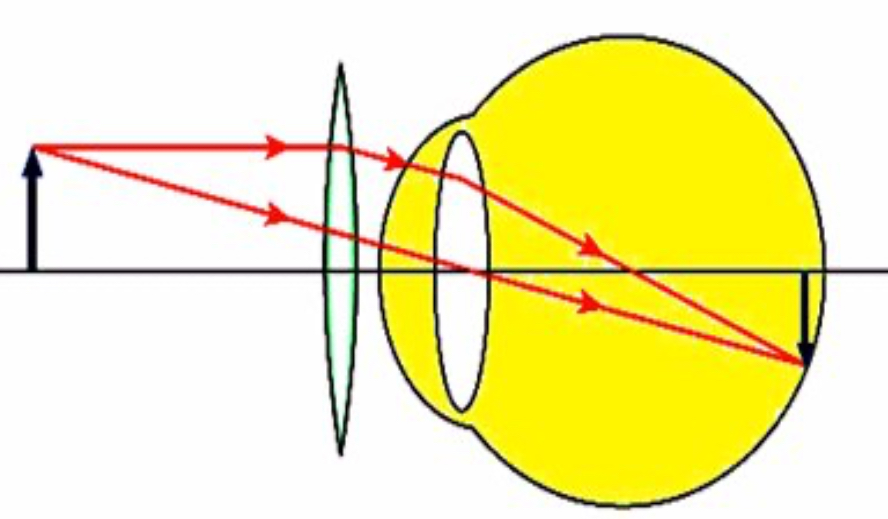
Lenses
Convex
Bulges outwards
Changes a parallel beam into a converging beam
Concave
Bulges inwards
Changes a parallel beam into a diverging beam
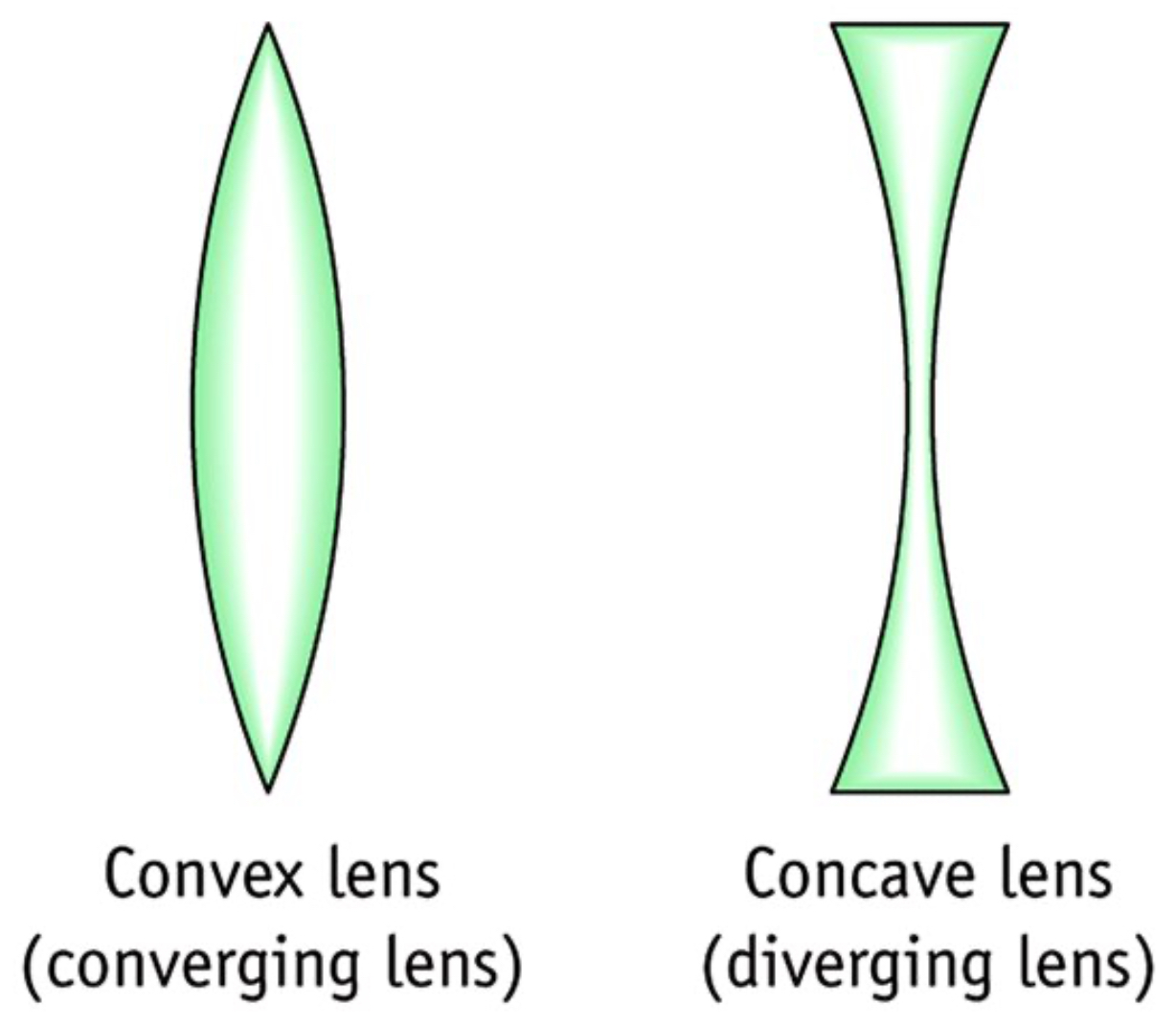
Centre of a lens is called the optic centre.
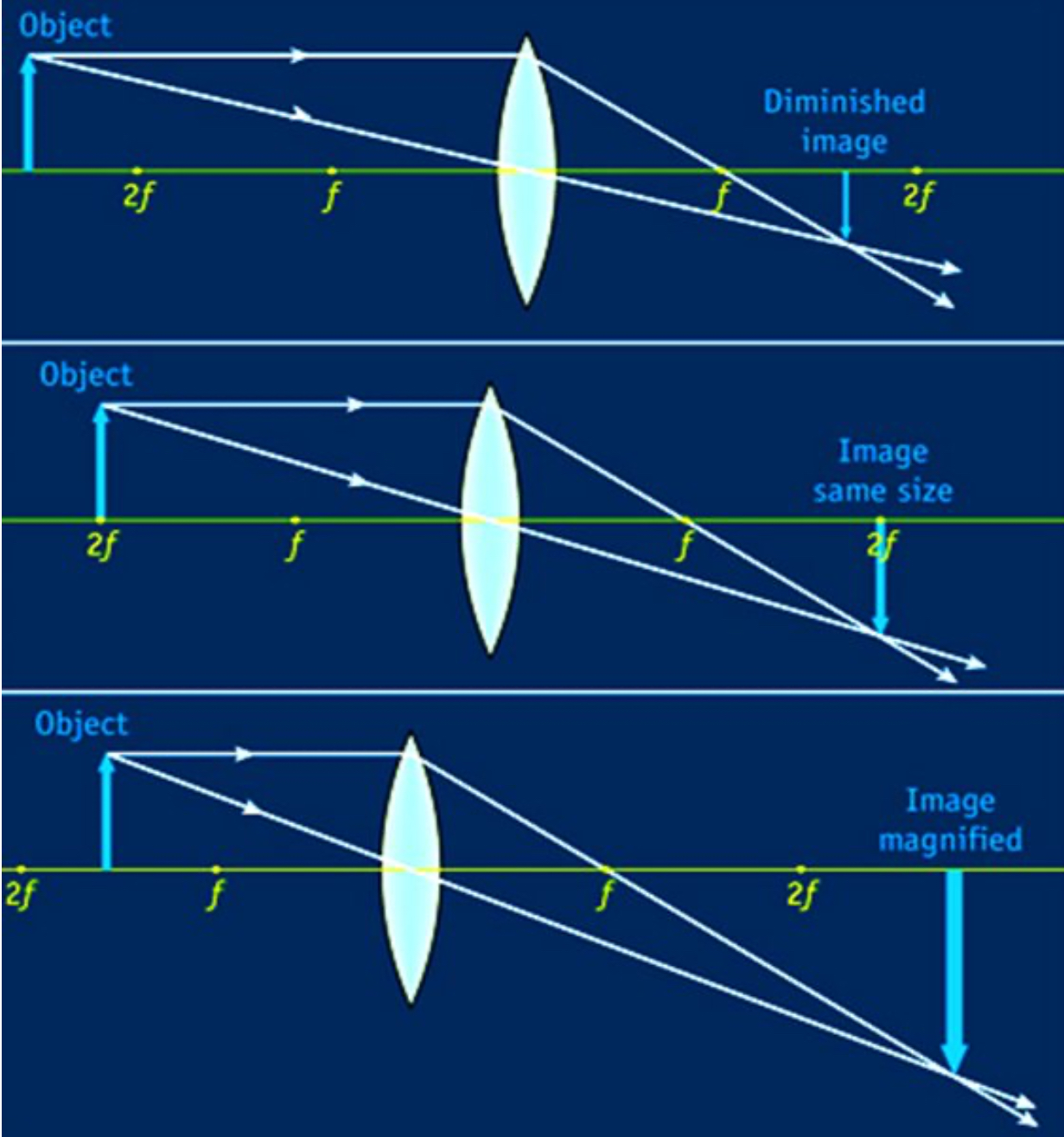
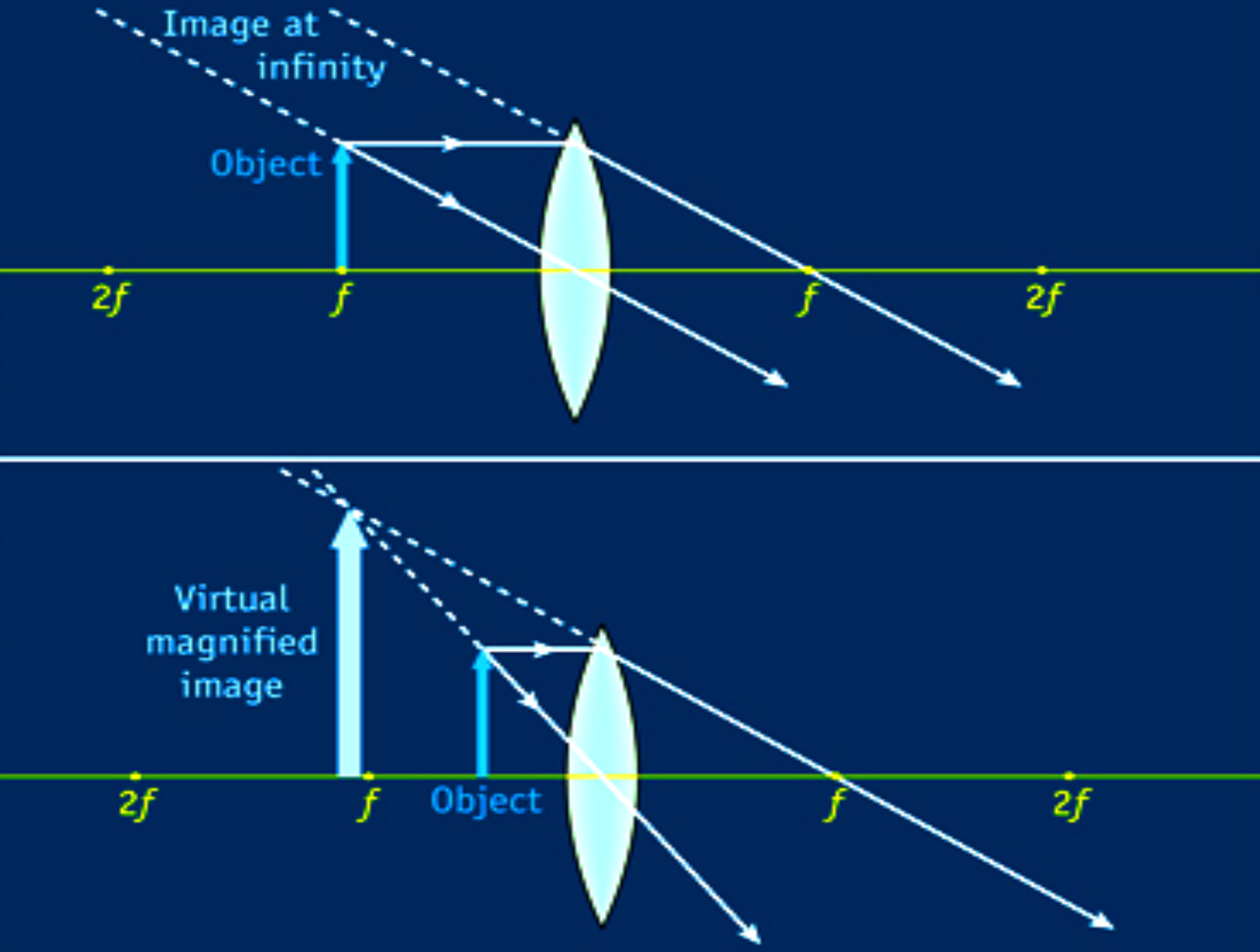
Rules for Converging Lenses
Rule 1
Ray that passes the optic centre passes straight through the lens.
Rule 2
Ray that travels parallel to the axis passes through the focus.
Rule 3
Ray that passes through the focus emerges parallel.
Formation of a Real Image in a Converging Lens
Formation of a Virtual Image in a Converging Lens
Converging Lens Formulae
Real Image
Formula for real images in a concave lens
Virtual Image
Formula for virtual images in a concave lens
Magnification
Formula for magnification
Rules for Diverging Lenses
Rule 1
Ray that passes through the optic centre passes straight through the lens.
Rule 2
Ray that heads towards the focus emerges parallel to the axis.
Rule 3
Ray that travells parallel to the axis emerges as if it came from the focus.
Image in a Diverging Lens
Virtual, upright, and diminished, on the same side of the lens as the object.
Diverging Lens Formulae
Power of a Lens
Power of a Lens
Converging lens has a positive power.
Diverging lens has a negative power.
SI Unit: metre-1 or m-1
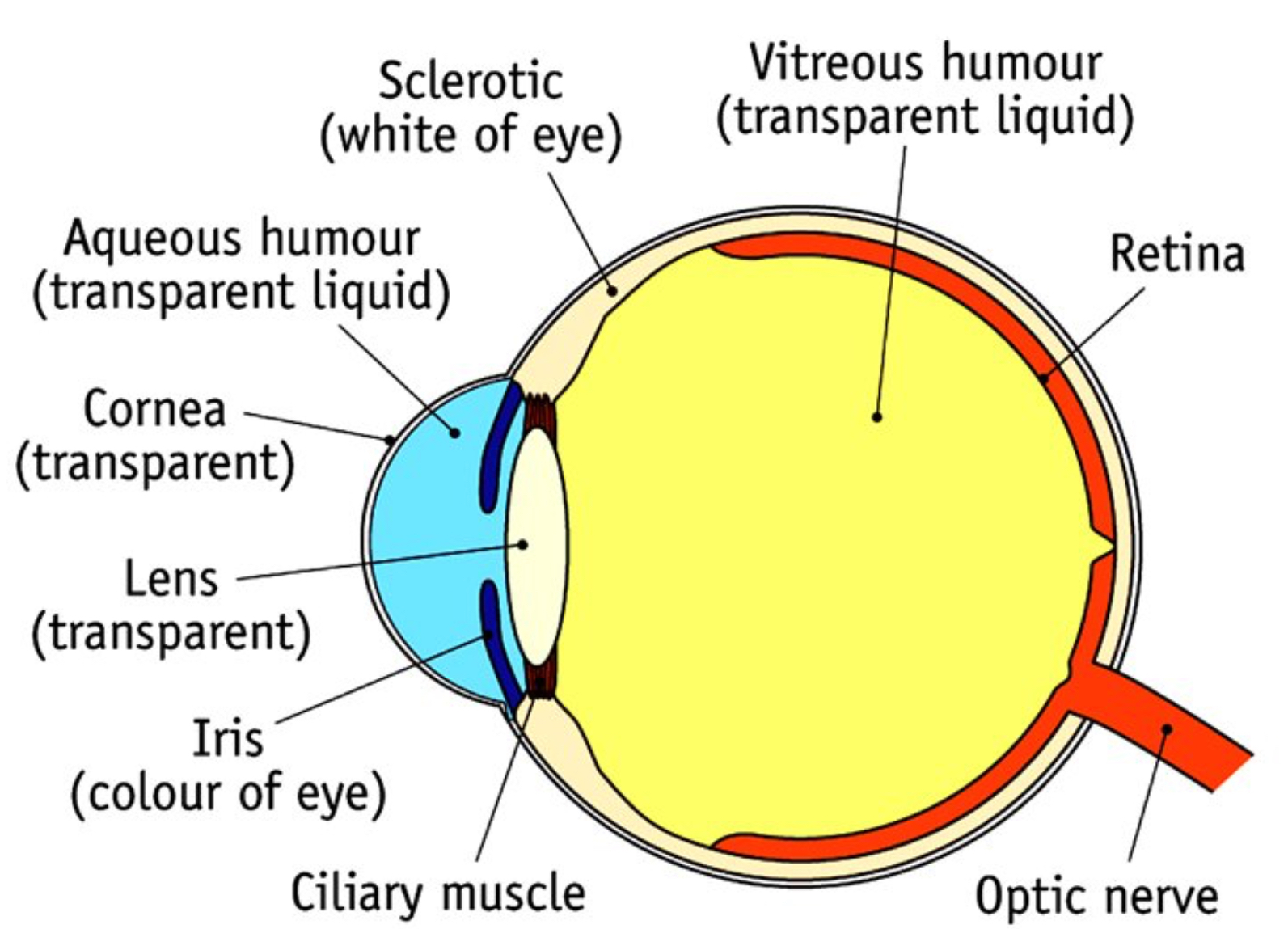
Eye
The iris controls the amount of light entering the eye. It does this by making the size of the hole in its centre - the pupil - smaller in bright light and larger in dim light.
Retina allows sight by sending electrical signals to the brain when light strikes it.
When a real image is brought into focus on the retina that object is seen clearly.
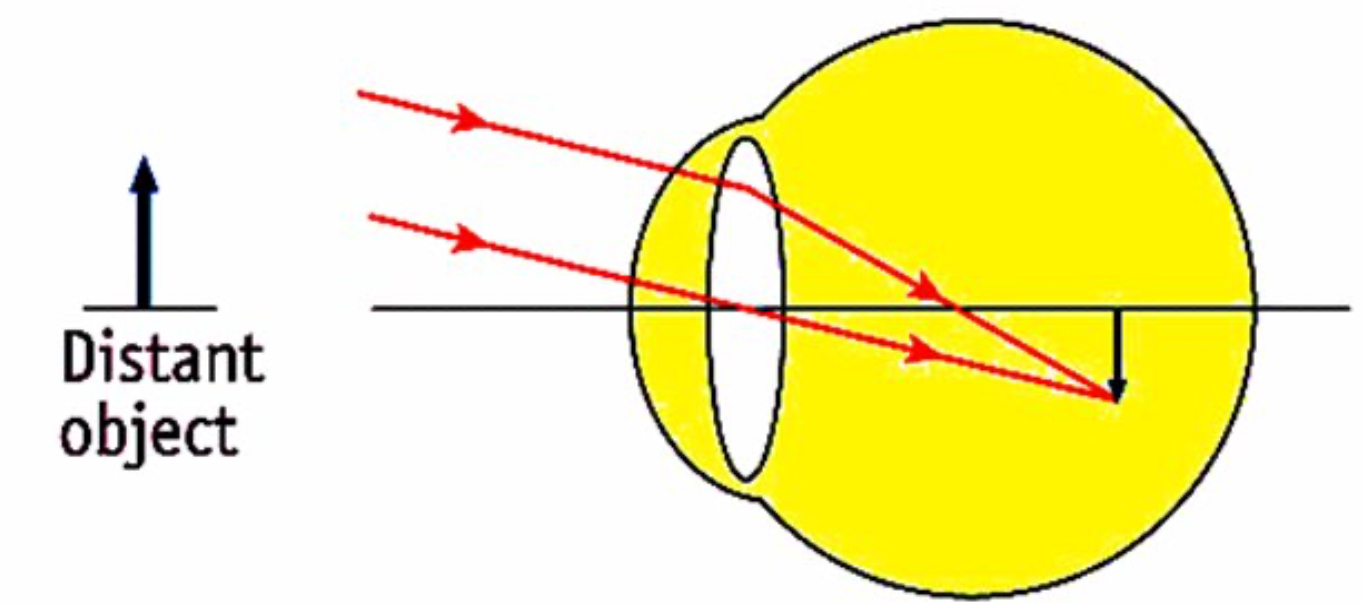
Near-Sight
Can see nearby objects clearly put cannot see distant objects clearly.
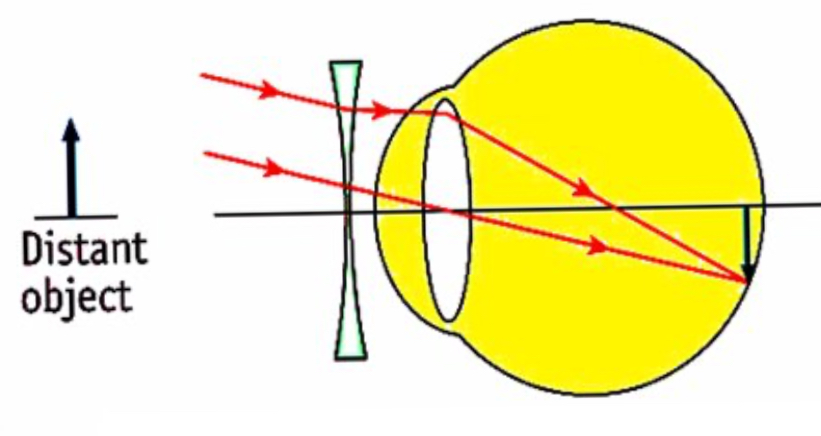
Correction of Near-Sight
Use a diverging (concave) lens.
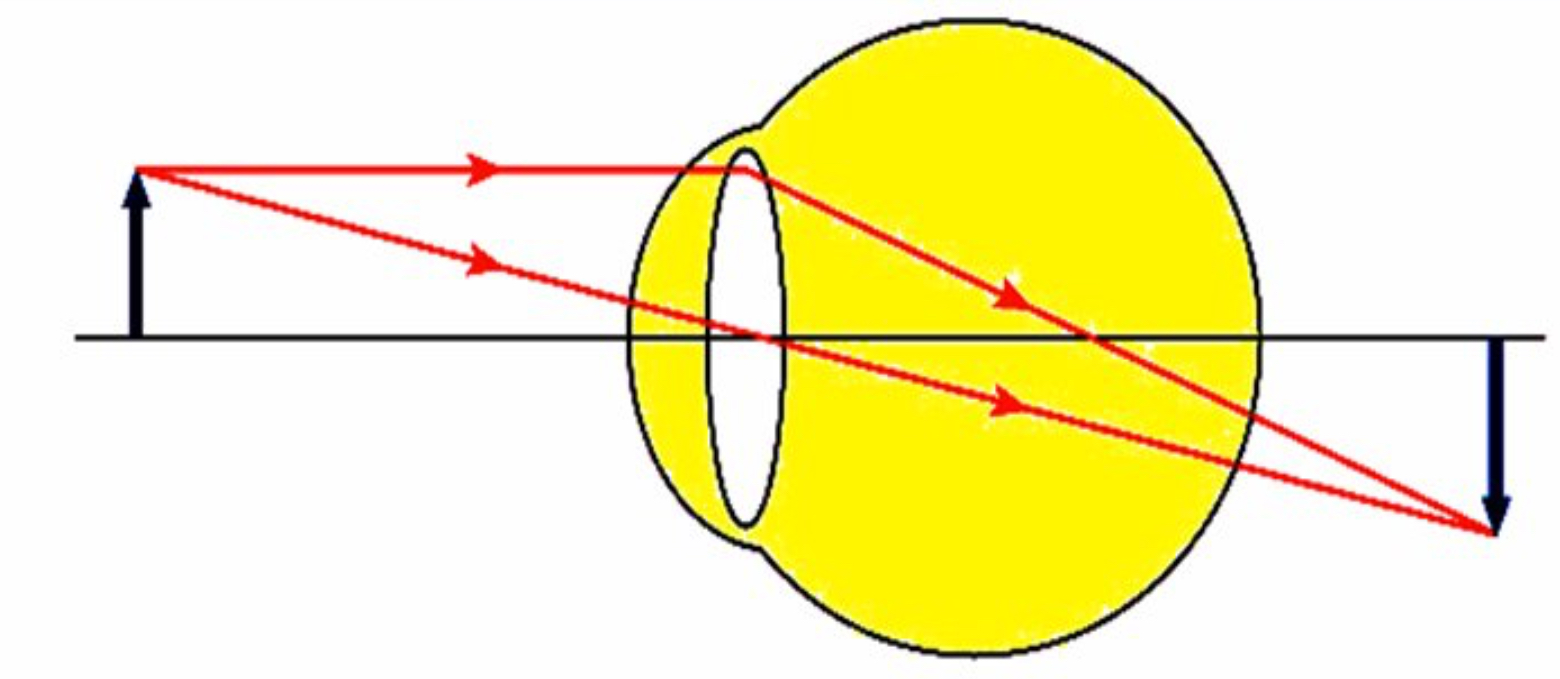
Far-Sight
Can see distant objects clearly but cannot see nearby objects clearly.
Correction of Far-Sight
Use a converging (convex) lens.