Unit 1: Chapter 5
5.1
Macromolecules are polymers built from monomers
enzymes: catalysts which speed up reactions
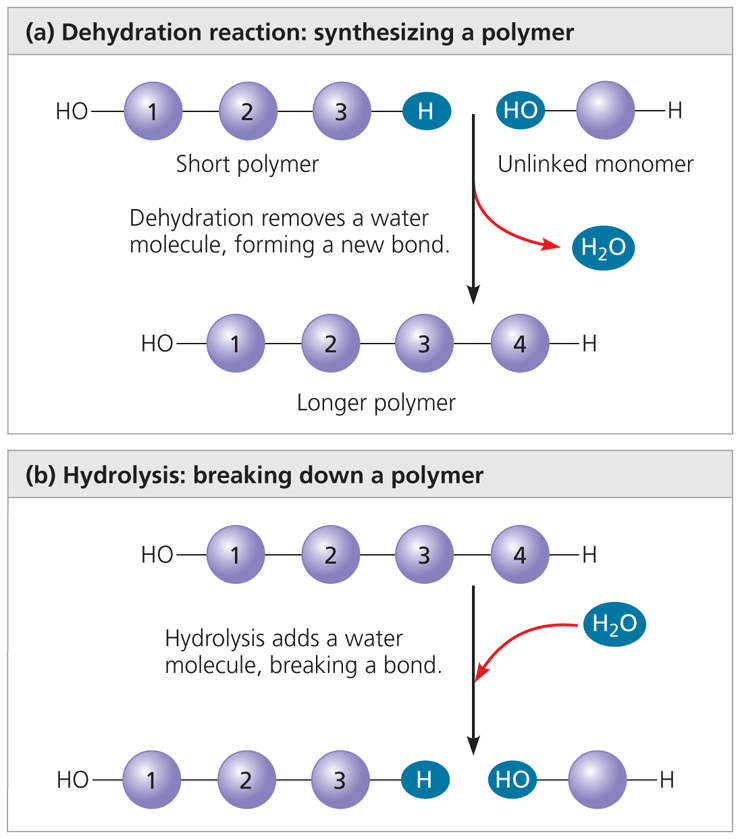
Dehydration reaction: two monomers join together by releasing water, one gives an OH and the other gives a H. Together, which can create a polymer.
Hydrolysis: Polymers being disassembled
- the bond between monomers is broken in addition to water
- one monomer gets the OH group and the other gets a H
- this is used in our digestive tract when we break down food
5.2
Carbohydrates: Sugars and polymers of sugars
- monosaccharides, disaccarides, polysaccarides
- Glucose is the most common monosaccharide
- can be aldoses or ketoses
what binds two monomers together is a glycosidic linkage
Polysaccharides
- storage material
- plants use starch to store energy
- many animals also use starch for this same reason and access to glucose
- provide sugar for cells
- protection of the cell
- cellulose is a major component of the cell wall in plants
5.3
Lipids: smallest macromolecule, fats, phospholipids, and steroids
- mix poorly with water
Fats: (triglycerol) glycerol + 3 fatty acids
- the nonpolar C--H bonds make fats hydrophobic
- made from dehydration reaction
- bonded together by an Esther linkage
- saturated: C--C
- can pack together closely and therefore are solid at room temp ex. butter
- unsaturated: C=C
- cannot pack closely and are liquids at room temp ex. olive oil
Phospholipids: similar to a fat molecule but instead of 3 fatty acids, only 2 are attached and the third attached to the OH group from the glycerol is a phosphate group. Additionally, a small charged or polar molecule is attached to the phosphate group
- Major constituents of cell membranes
- Has a hydrophilic head (glycerol, phosphate group, polar molecule) but a hydrophobic tail (fatty acids)
- Phospholipids create a bilayer which shields their hydrophobic tails from water
- The bilayer also forms a boundary between the cell and its environment
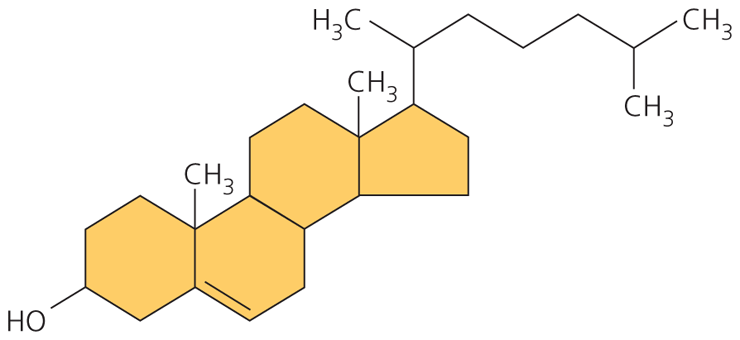
Steroids: consist of a carbon skeleton of four fused rings
ex. cholesterol
- a common component in animal cell membranes
- sex hormones
cholesterol:
5.4
Protein: made up of many polypeptides (amino acids) (possibly thousands)
- help speed up chemical reactions - enzymes
- storage
- transport - hemoglobin transports oxygen
- structural support - keratin, found in hair that makes it stronger
- defence - antibodies help inactivate and destroy viruses
- Made of many amino acids linked by peptide bonds which are referred to as polypeptide chains
Amino Acids: 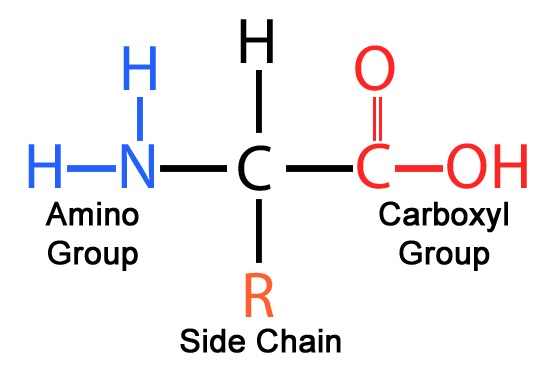
Hydrophobic amino acids:
- Glycine - H
- Alanine - CH3
Hydrophilic amino acids:
- Serine - OH -- CH2
- Cysteine - SH -- CH2
Polypeptides: amino acid polymers
- amino acids are joined together by a peptide bond
- amino end (Nitrogen and 2 hydrogens) is called N-terminus
- carboxyl end (carboxyl group) is called C-terminus
- the polypeptide backbone is the main chain
connecting smaller branches are called side chains 1
Four levels of protein structure:
- Primary Structure - its sequence of amino acids which is specific to each protein
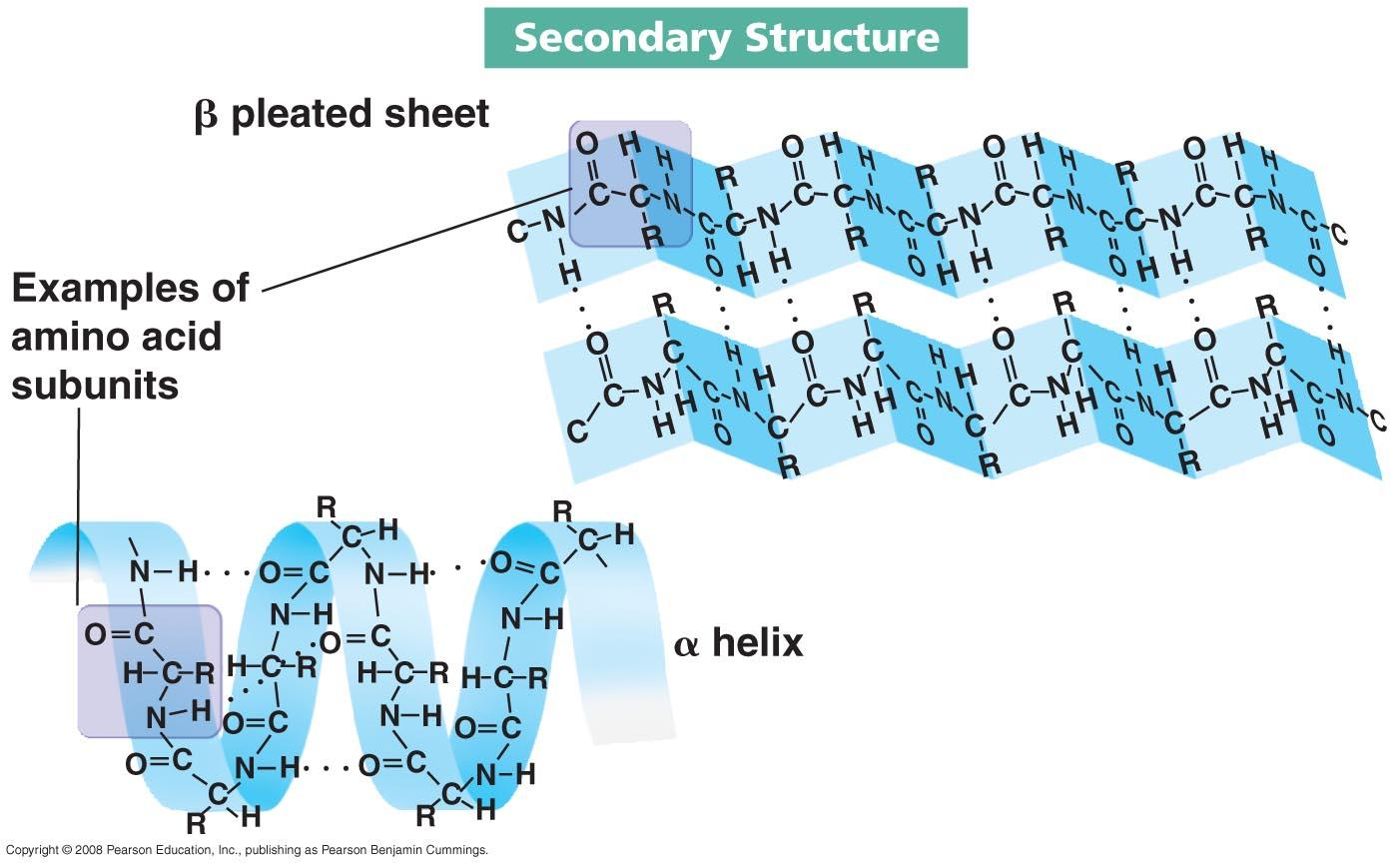
- Secondary Structure - Segments of their polypeptide chains are either coiled or folded
- are a result of the hydrogen bonds between the polypeptide chain
- ^^A helix coil^^ is found on every ^^four^^ hydrogen bonds. Some proteins will only have one while others have multiple A helix coils
- ^^B helix is a pleated sheet^^, two or more pleated sheets side by side are connected by ^^hydrogen bonds^^. The hydrogen bonds make the bonds stronger
Tertiary structure - overall shape of the polypeptide according to the interactions of its side chains (R)
- an example of tertiary structure is hydrophobic interactions
- as a polypeptide folds into its shape, hydrophobic amino acids will cluster in the core of the protein
- another example can be disulphide bridges
- two cysteines (SH) groups can interact with each other when close
- from that, the sulphur will bond together (S--S) creating a bridge
Quaternary structure - two polypeptides aggregated together to form one macromolecule
- some proteins only
denaturation - a process where a protein loses its shape due to weak chemical bonds and interactions
5.5
2 types of nucleic acids:
DNA - deoxyribonucleic acid
- applies directions for its own replication
RNA - ribonucleic acid
- synthesis
the flow of genetic information: DNA → RNA → Proteins
Nucleic acids as polymers are called: polynucleotides
a monomer of nucleic acid: nucleotide
What is in a nucleotide: 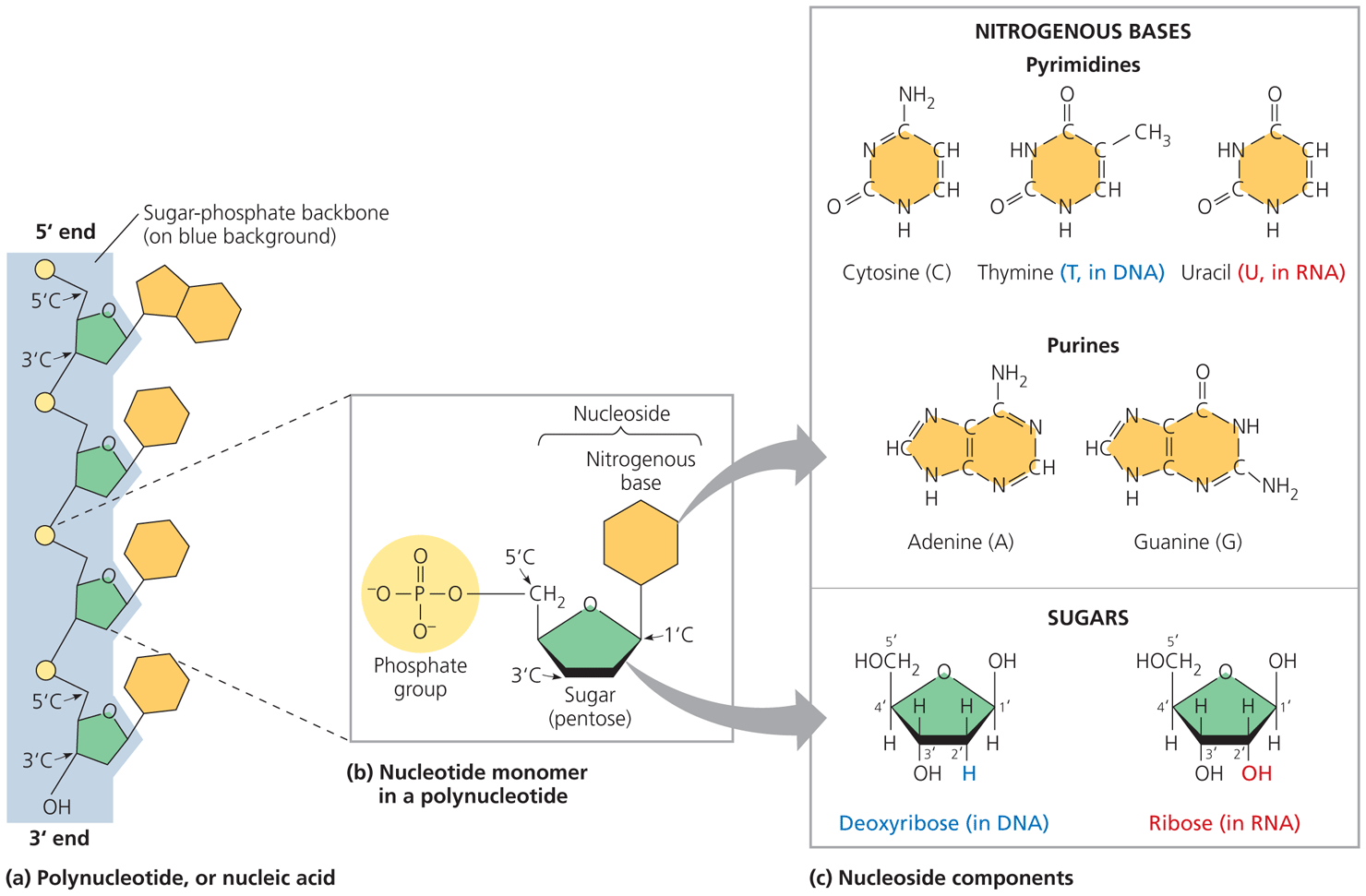 adenine, guanine, and cytosine are found in DNA and RNA while thymine is only found in DNA and uracil is only found in RNA