17: Predator-Prey Dynamics (Part 2)
Tophat
An age structure graph that appears rectangular in overall shape would likely see what in the future?
no change in size
Which statement correctly identifies the relationship between population size and extinction risk?
small populations are most likely to go extinct
What is true about the Lotka–Volterra model for predator and prey?
The model results in oscillating populations of predator and prey with the predator population lagging behind the prey population.
Chapter 13
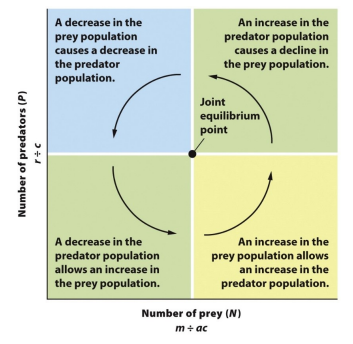
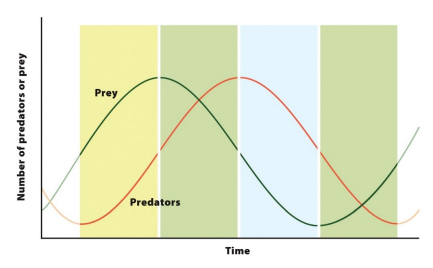
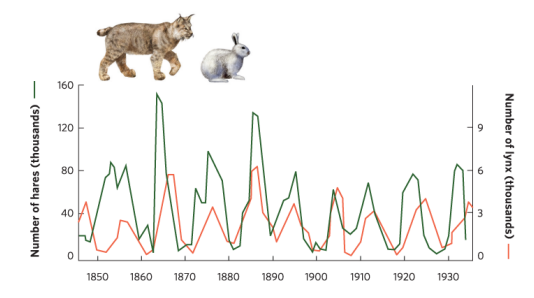
Predators and herbivores respond to food availability with functional and numerical responses
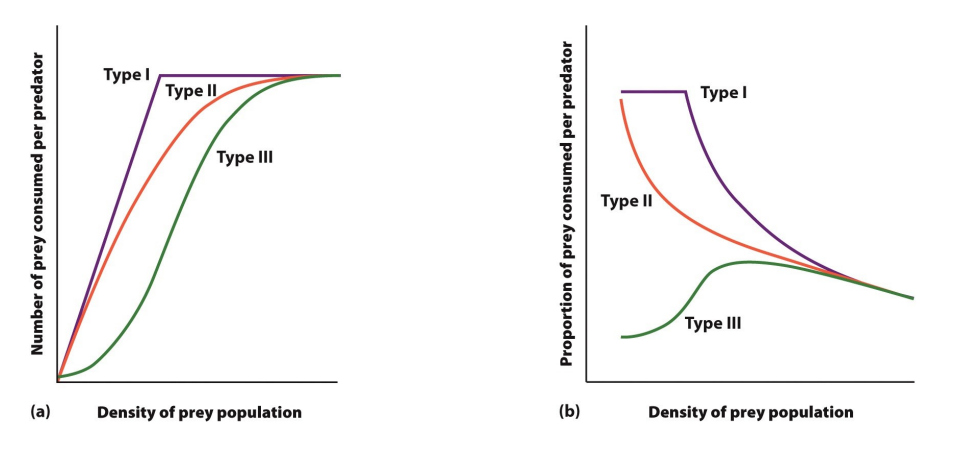
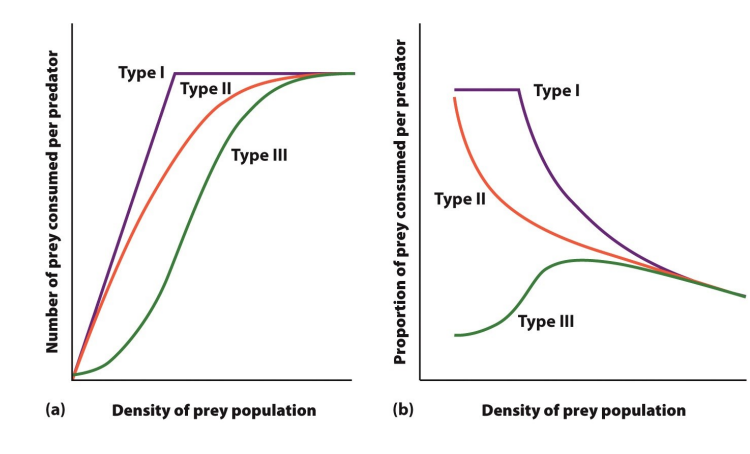
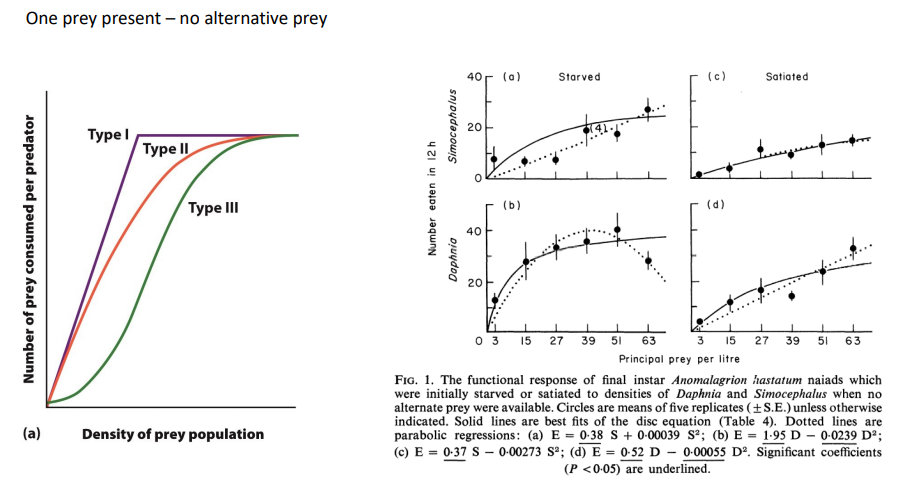
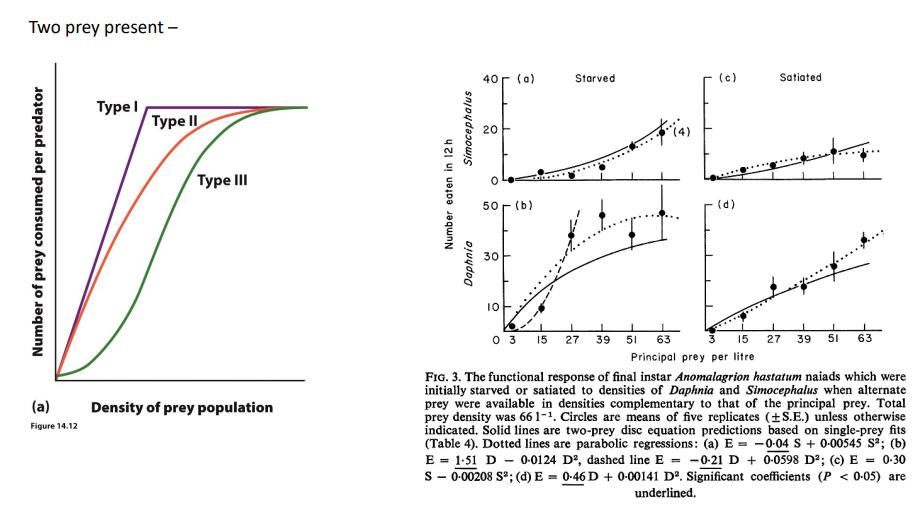
Type I functional response — A predator’s rate of prey consumption increases in a linear fashion with an increase in prey density until satiation occurs.
the more prey, the more the predator consumes
simplest relationship
doesn’t happen in all predators, happens when predators are really good at capturing prey and consuming them swiftly
Type II functional response— A predator’s rate of prey consumption begins to slow down as prey density increases and then plateaus when satiation occurs
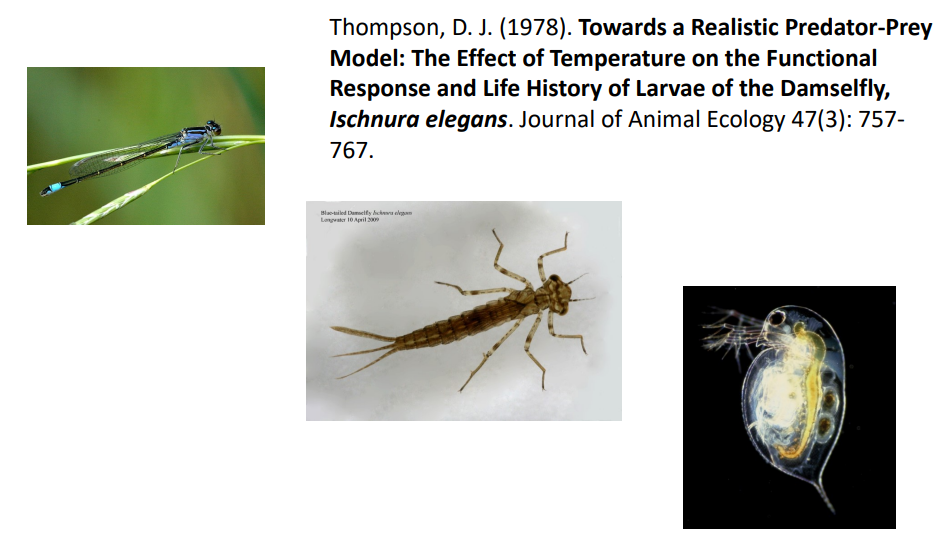
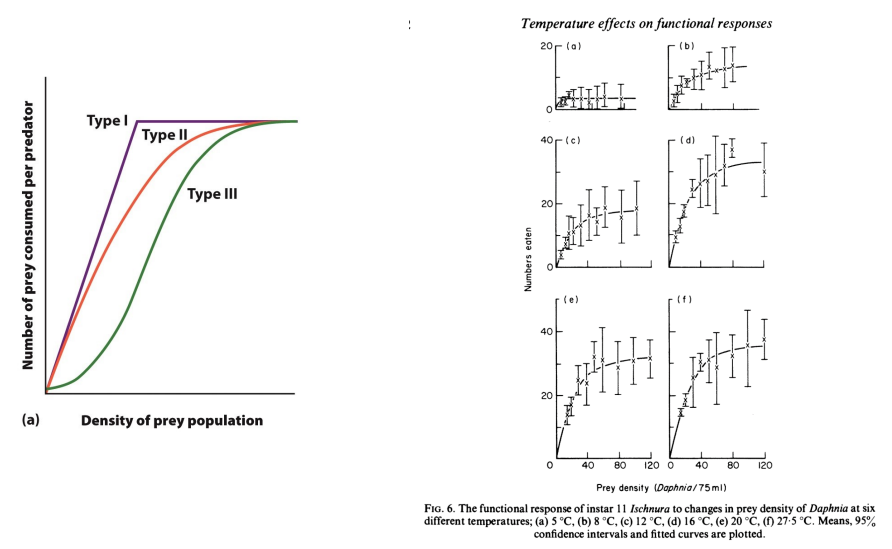
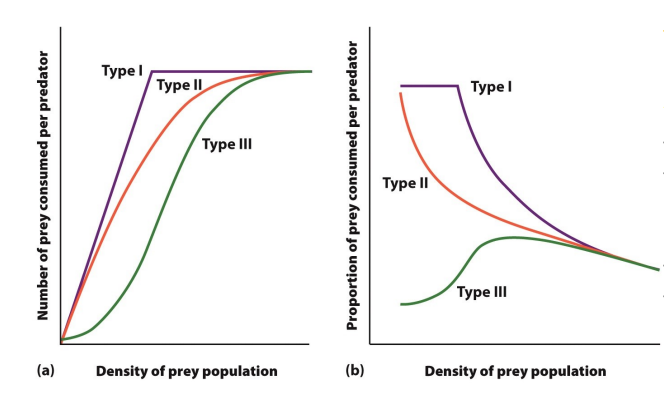
Type III functional response — A predator exhibits low prey consumption under low prey densities, rapid consumption under moderate prey densities, and slowing prey consumption under high prey densities.
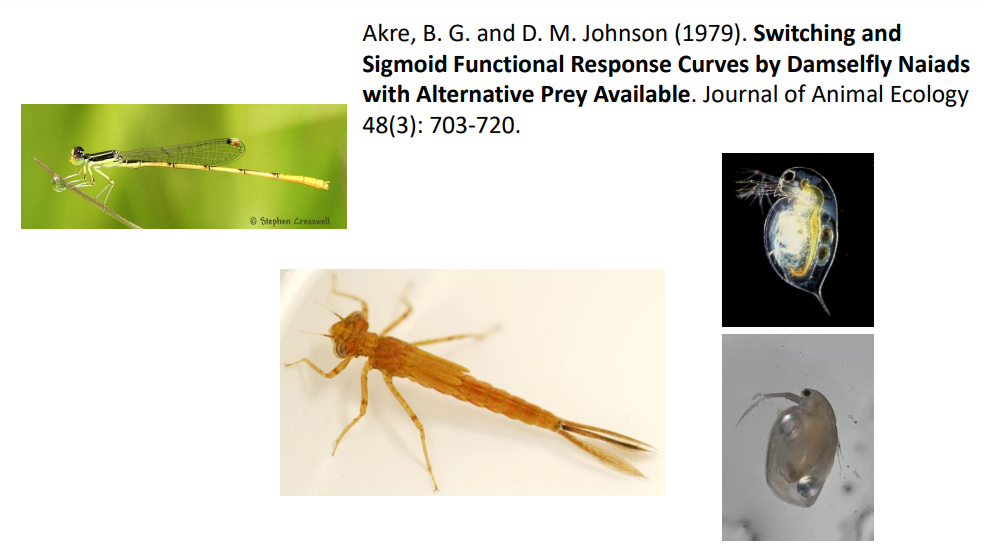
One prey present—no alternative prey
Two prey present—
Predation and herbivory favor the evolution of defenses
Behavioral Defenses
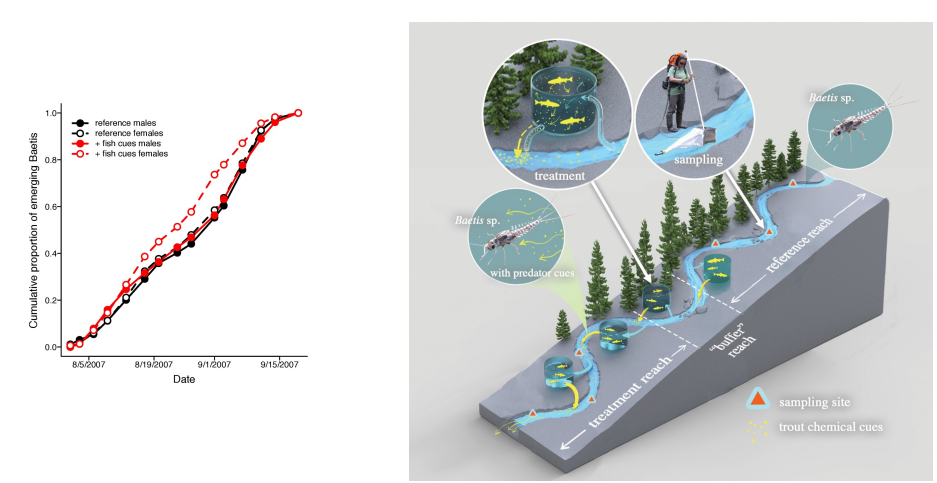
Nonconsumptive effects of Brook Trout predators reduce secondary production of mayfly prey Benjamin J. Koch, Robert O. Hall Jr, and Barbara L. Peckarsky Freshwater Science 2020 39:3, 549-558
Mayfly defense against brook trout, use smell to detect them
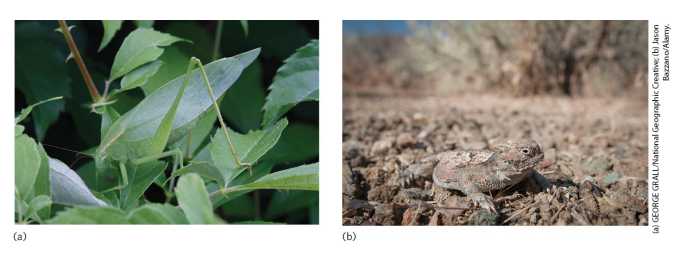
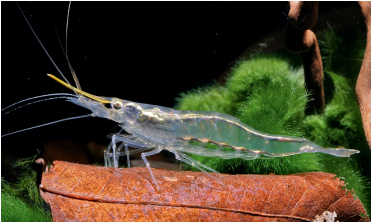
Crypsis — Camouflage
Structural Defenses
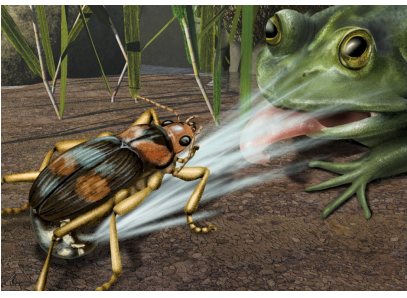
Chemical Defenses
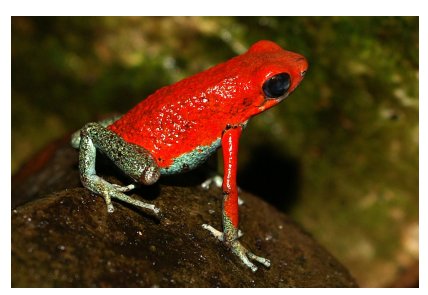
Warning coloration - aposematism
Mimicry of Chemical Defenses
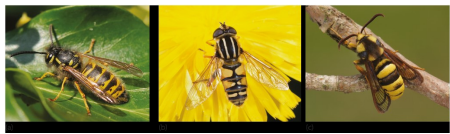
Batesian mimicry
When palatable species evolve warning coloration that resembles unpalatable species
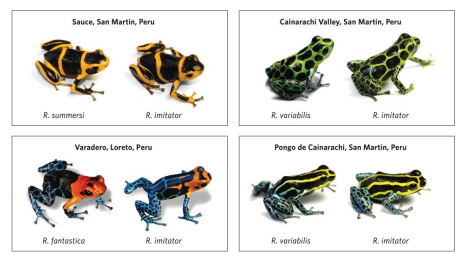
Müllerian mimicry
When several unpalatable species evolve a similar pattern of warning coloration.
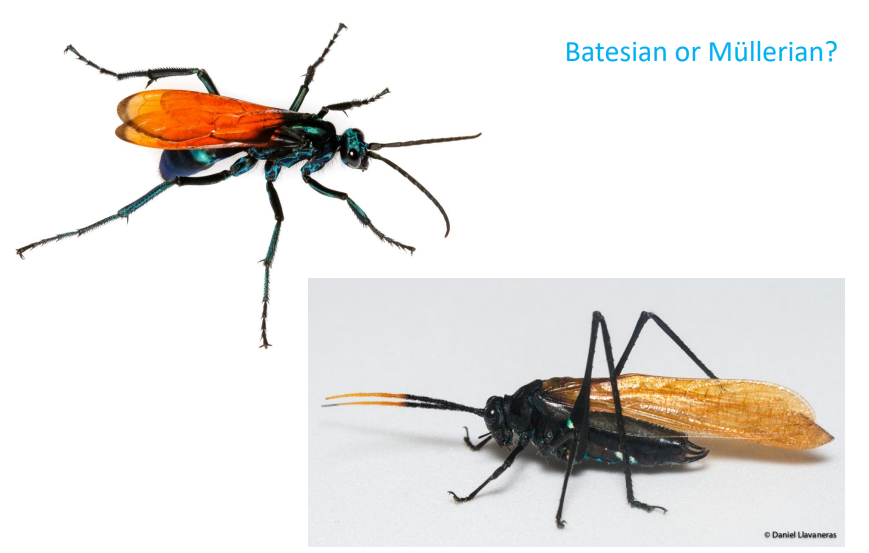
Batesian