Kingdom Plantae: Seedless Plants - Introduction to Seedless Plants and Their Diversity
Overview of seedless plants.
Focus on three main groups:
Bryophytes (mosses)
Pterophyta (ferns and allies)
Lycophyta (clubmosses)
Bryophytes (Mosses)
Classification:
Basal land plants (Embryophyta).
Key Features:
Dominant Gametophyte: The gametophyte is the dominant life stage containing gametangia.
Fertilization: Requires water for fertilization;
Flagellated sperm produced in the antheridium swim to fertilize the egg in the archegonium.
The fertilized egg remains in the archegonium and develops into a dependent embryo and sporophyte.
Habitat: Most bryophytes inhabit wet environments.
Structural Features:
Simple phylloids (leaves).
Rhizoids for anchorage instead of roots.
Vascular System: Non-vascular plants lacking xylem and phloem.
Liverworts (Hepatophyta)
Key Characteristics:
Haploid Thallus: The main body form is haploid.
Archegonial Heads: Includes immature and mature archegonial heads.
True Mosses (Bryophyta/Bryopsida)
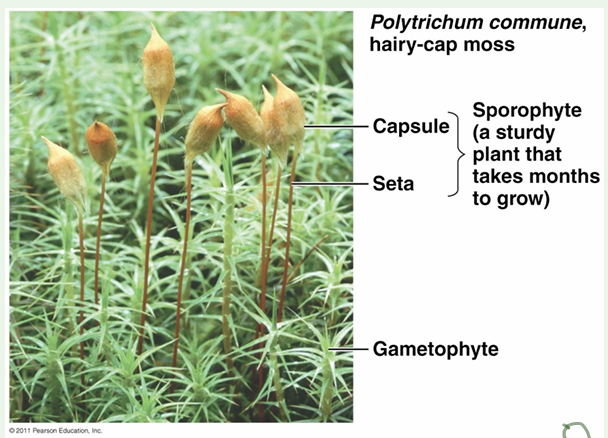
Adaptations to Life on Land:
Rhizoids: Serve as anchoring structures instead of roots.
Leaf Structure: Leaves are one cell layer thick with a very thin cuticle and no stomata, limiting gas exchange.
Transport Tissue: Extremely limited; has hydroids, indicative of non-vascular organization.
Spore Features:
Produce spores with a sporopollenin coat; are homosporous, meaning all spores are of one type.
Habitat: Typically found in moist environments, as they require water for reproduction and growth.
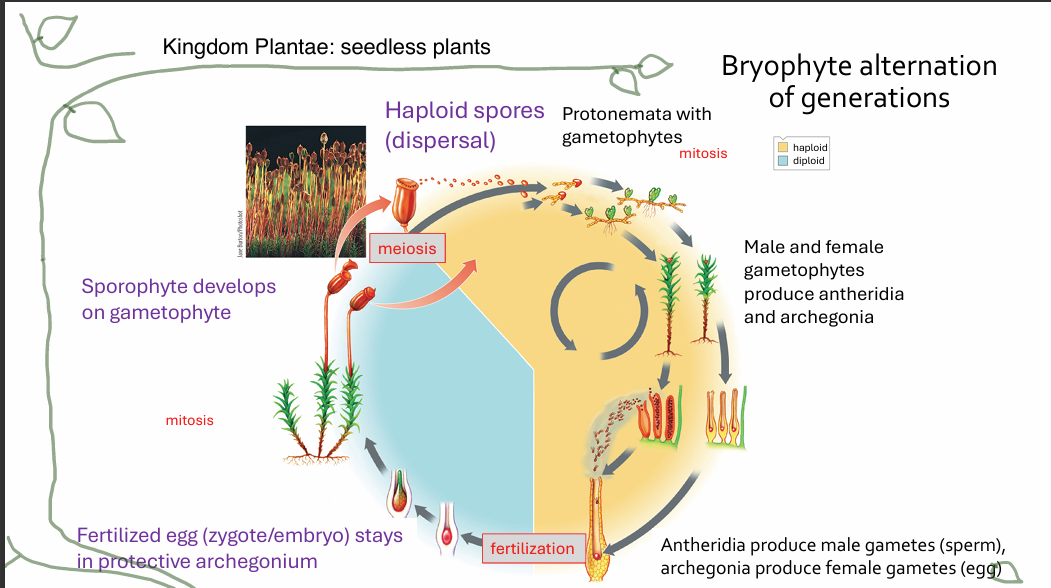
Sporophyte Development in Mosses
Morphology:
Unisporangiate sporophyte enhances plant reproduction via asexual means (similar to budding) to generate plantlets.
Lifecycle Stages:
Meiosis --> Formation of haploid spores.
Fertilization: Involves male gametophyte (producing antheridia for sperm) and female gametophyte (producing archegonia for eggs).
Development: The zygote remains in the protective archegonium, leading to sporophyte formation.
Vascular Plants (Tracheophyta)
Major Adaptations for Terrestrial Life:
Water Transportation System: Presence of a vascular bundle.
Reduced Gametophyte Stage: Dominant sporophyte life stage, generally larger than bryophytes.
Complexity: More complex structures including Pterophytes, Lycophytes, Gymnosperms, and Angiosperms.
Evolutionary Timeline of Seed Plants
475 mya: Emergence of terrestrial plants.
425 mya: Introduction of tracheophytes with the dominant sporophyte stage.
Two types of sporangiate forms: homosporous and heterosporous.
305 mya: Gymnosperms evolve with seeds and pollen (non-swimming sperm) and megaphylls.
Latest: Angiosperms appear with seeds protected inside fruits.
Pterophyta (Ferns and Allies)
Characteristics:
Types: Include ferns, horsetails, and whisk ferns.
Height: Some ferns reached up to 100 ft; have lignified tissues.
Structure: Possess rhizomes and polysporangiate reproductive structures, often homosporous.
Pterophyta: Adaptations
Habitat Preference:
Prefer moist, humid, warm environments.
Structural Adaptations:
Presence of vascular bundles.
Leaves have thin cuticles, and sporophytes dominate the lifecycle.
Largest diversity existed in the Devonian and Carboniferous periods due to evolutionary adaptations, allowing them to grow tall and further from water sources.
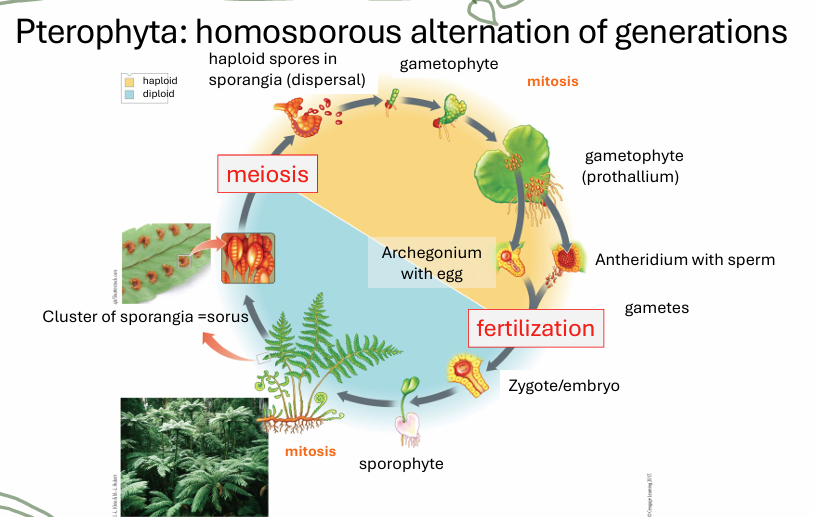
Pterophyta: Alternation of Generations
Lifecycle Process:
Meiosis: Produces haploid spores in sporangia, which aids dispersal.
Fertilization: Involves formation of zygote/embryo within the gametophyte (prothallia).
Sorus Formation: Sori are clusters of sporangia.
Gametophyte Development: The gametophyte is a dominant stage in the life cycle of seedless plants, which emerges from the spore and leads to fertilization.
Pterophyta: Diversity
Major Groups:
True Ferns
Horsetails
Whisk Ferns and Allies
Lycophyta (Clubmosses)
Unique Features:
Only group characterized by microphylls.
Possess strobili for spore production.
Historically grew to tree sizes during the Carboniferous; currently many are epiphytic.
Spore Types:
Homosporous Clubmosses.
Heterosporous Spike Mosses and Quillworts.
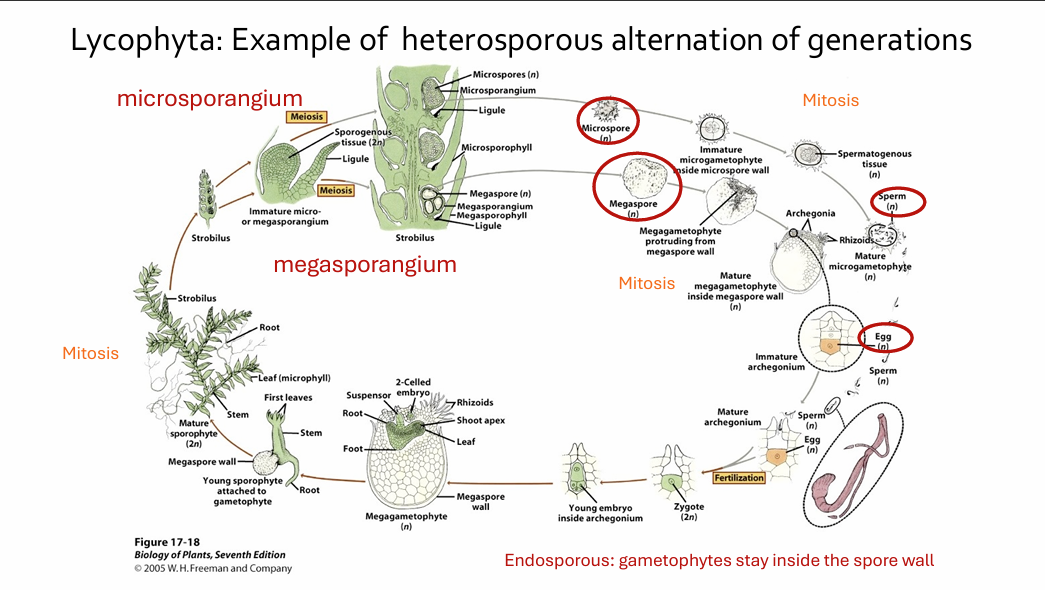
Lycophyta: Heterosporous Alternation of Generations
Mechanism:
Microsporangium & Megasporangium: Both undergo mitosis.
Endosporous Development: Gametophytes remain inside the spore wall, indicating evolutionary adaptation.
Lycophyte Diversity Examples
Example Species:
Isoetes gunnii: A quillwort.
Selaginella moellendorffii: A spike moss.
Summary of Seedless Plants
Bryophyta: Produce spores with sporopollenin, depend on water for fertilization, homosporous, exhibit alternation of generations (AoG):
Persistent, photosynthetic gametophyte remains dominant with small sporophytes arising from zygotes.
Pterophyta: Similar spore production conditions to bryophytes but has a reduced gametophyte stage; develops independent and dominant sporophyte, showing complex adaptations.
Some lycophytes show diversity in spore types (heterospory and endospory) within their alternation of generations.