Intervention pt.2
Mass Sporting events as interventions
Reading:
- Large scale, such as the Olympic Games, or local “mass sporting events: are thought to impact the PA behaviour of the population
- These mega events translates into motivation for PA
Major events may result in diverse community benefits:
- New sporting facilities
- Improved transport
- Social cohesion
- Community volunteerism
- Elite high profile events may have a “trickle down” effect on general community participation or a “discouragement effect”, where such performance levels are perceived as unattainable but support for these hypothesis is anecdotal
- The most common long-term benefits or “legacies” from hosting major events are physical facilities and financial resources, sometimes contributing to other improvement, including transport infrastructure
- Mass sporting events impact PA participation at the individual, community, or environmental levels
Questioning the Rhetoric around Major Sport Events
- Are there really ‘population-level flow” effects of major sport events on the PA levels of a population?
- Reviewed research on large-scale, one off-sporting or PA events, One-off events: large, one time only, organized
- Reviewed the evidence an explored the effects, as well as quality of research designs
Evaluating the legacy of major sport events
What is the legacy of a major sport event?
- Economic benefits: tourism, urban regeneration (transport infrastructure)
- Environmental infrastructure development (physical facilities)
- Nationalistic pride
- Social-culture benefits (social capital, improved sporting or PA culture)
- Volunteerism and community capacity building
- Sporting club memberships (proximal/primary outcome)
Evaluations of major sporting events on PA behaviour at the population level are scare
Effect of Major Sport Events on PA
- Few evaluations despite claims of mega-event organisers
2000 Olympics – pre-post National Aussie survey on PA
- Data for number of Aussies reaching health-enhancing PA levels – no change
- Rates of Aussies doing any PA or sport activity in past 12 months – rates were lower in the Olympic year compared to two prior years
2002 Commonwealth Games
- No pre-post impact for the number of people in UK doing sport activity
Evidence of increases in sport club memberships following 1992 Olympics, USA World Cup, and 2002 Winter Olympics
- however, data confined to specific sports
- No evidence that this translates to PA outcome data
Effect of Mass Participation Events on PA
- Few research on mass participation (ex. Boston Marathon, Ottawa Race Weekend)
- Research fails to track pre-post PA levels
- Most participants may be moderately active prior to the event
Philadelphia Race Weekend (Funk et al., ‘11)
Survey research; ‘pull’ and ‘push’ effects of an event (Young et al., ‘14)
Results:
- Pull effect: participants claimed that the event gave them multiple motives to pursue in advance
- Push effect: event promoted stronger attitudes toward regular exercise participation, but this effect was strongest among people who were satisfied with their event experience, and people who were least active before the event
- Mass participation sport events can serve as catalyst for widespread PA
Effect of Mass Health Promotion Events on PA
- There is even more promise shown for health-promotion discrete events
Examples:
- Australia's Walk to Work Day, Walk Safely to School Day, Ride to Work Day
- International Walk to School Day
- California Bike Commute Week
- Agita Galera
Take-Aways (Murphy & Bauman, ‘07)
There is much rhetoric but limited evidence that mass sport events impact PA participation at the individual, community, or environmental level
- Research should examine how environmental changes build capacity to further impact subsequent PA at the population level
There is more promise relating to mass participation events and health-promotion participation events
- Careful research designs could provide better casual evidence
We are missing public health opportunity to exploit mass events as a catalyst for PA
- There needs to be more evidence of mass events relying on shared inter-agency planning, with a clear public health agenda
- Mass events might influence PA more when an event is embedded within a broader strategic program, including community-wide programs, policy and environmental change
However...
- evidence does not support the step from ‘inspiration to participation’
- data from many countries shows very little participation increase after an Olympics and even less sustained participation 1988-2010:
- Canada’s medal haul has increased from 15 medals (1988 ‘88) to 44 (2010’12)
- Grassroots participation (% of Canadians over 15 year-old in a regular organised sport) had declined from 45% to 26%
They argue...
Young people are being inspired, however, there is insufficient capacity and infrastructure to accept more than a small percentage of people who have been inspired
- Not enough capacity in terms of facilities or coaches
- Canadian sport system discourages such capacity
- Athletes and national sport organisations are funded on abscess of medals
- Early talent id systems mean that resources are allocated to fewer sport participants
- Years of underfunding to accessible municipal recreation and school based PE and after school sport
Take home message
- A mass sporting event, even a spectator-orientated one, may move people to do PA but only if the necessary capacity and infrastructure exists to accommodate the initial inspiration and sustain activity over time
Interventions around the home: The case for dog ownership
Reading: Dog ownership by itself has been associated with health benefits, reduction in medical costs, and a better emotional/psychological health
- Environment influence dog walking
- Literally common sense stuff (girls walk there dogs in neighbourhoods they feel safe in)
Going to the Dogs?
- Dog ownership by itself is associated with health benefits and reduction in medical cost
- Walking in low-cost and most common form of PA for adults
- High levels of dog ownership
- Dog walking has the potential to increase overall levels of walking and has been associated with a number of associated individual and community level physical, mental, and social health benefits
The PA advantage for dog owners
- Walking dogs has been shown to promote engagement in and adherence to regular PA
- Meta-analysis (29 studies) examining dog owner and non dog owner PA found that dog owners compared with non-dog owners
- Reported more minutes per week of PA (median; dog own = 329; non-own = 277)
- Walking (median: dog owns = 129; non-own = 111)
- A direction of causation has been confirmed longitudinally by demonstration of an increase in walking on excitation of a dog
Caveat
- If all dog owners (35% of Canadians) briskly walked their dogs for at least 30 min daily, they would easily achieve the recommended level of PA
- However, the best estimates available suggest that only 60% of dog wonders walk wit their dog at all
- Approx 3.1 million Canadains do not walk their dogs
The PA advantage for dog owners
- Dogs play a role in facilitating walking in their owners, due to several factors
- The most significant regarding the dog-owner relationship, in particular the motivation provided by the dog to walk
- Sense of responsibility to walk ones dog
- Dogs provide social support by companionship
- Dogs increase feelings of safety/security particularly in women
Influence of Physical Environments on where and how people dog walk
- Built environment, especially residential neighbourhood characteristics:
- Availability, quality of sidewalks, safety, lighting, attractive parks
Facilitators | Barriers |
|---|---|
|
|
Influence of Physical Environment
- Owners with access to a park with dog-supportive features - dog litres bags, trash cans, and dog related signage within a 1.6 km street distance of their homes were more likely to walk with their dogs for at least 90 minutes per week
Interventions strategies for prompting dog walking
- Research has begun to unearth strategies for promoting DW among dog-owners:
- Educational campaigns about responsible dog ownership and etiquette in public settings
- Education on the benefits of walking for the dog
- Promoting a sense of dog walking responsibility driven more from an understanding of the value of walking to canine health and personal enjoyment than guilt
- Educating owners about how much walking dogs need: size, breed, or age
- Referral to a qualified dog training pro to address barriers such as the dogs negative behaviour
- Using vets to deliver messages about the importance of daily dog walking
Intervention strategies
- Helping dog owners develop action plans: setting schedules for DW with details on “when, where, and how” and prioritising DW above other behaviours that may be deemed “time wasters”
- Practicing a dog walking plan that included context-dependant repetition, with the temporal, social, or visual causes that preceded the activity, may be very helpful for increasing DW
- Habit may be the strongest predictor of DW, compared to factors such as attitudes of regular efficacy
- Forming habits may help cue the owner and the dog to regular walking
Social Affiliation
- Evidence for increased social interaction, social capital, and sense of community facilitated by owning and walking a dog
- For some(elderly, family caregivers, socially isolated) this benefit may be why they take the dog for a walk
Population wide considerations
- Patchwork of small-scale programs and interventions generating pilot-level evidence, with limited effort at scaling them up to the population level
A three-tiered approach to promotion
Target Individuals
- Target dog walking behaviour change advice
- Clinicians and vets roles in recommending walking to people with chronic diseases should be broadened to include dog walking
Target Groups
- Main setting for dog walking is in groups in local communities, through dog walking groups and clubs
- Encourage use of local facilities dog walking routes, animal shelter and adjacent routes, park redevelopment and odd leash areas
- Dog walking groups, buddy systems via “loaner” dogs, and family dog walking time
Population Wide-Strategies
- Mass media comapg
Guest Lecture : Culturally Sensitive Approaches to PA Promotion
Dominant Narrative
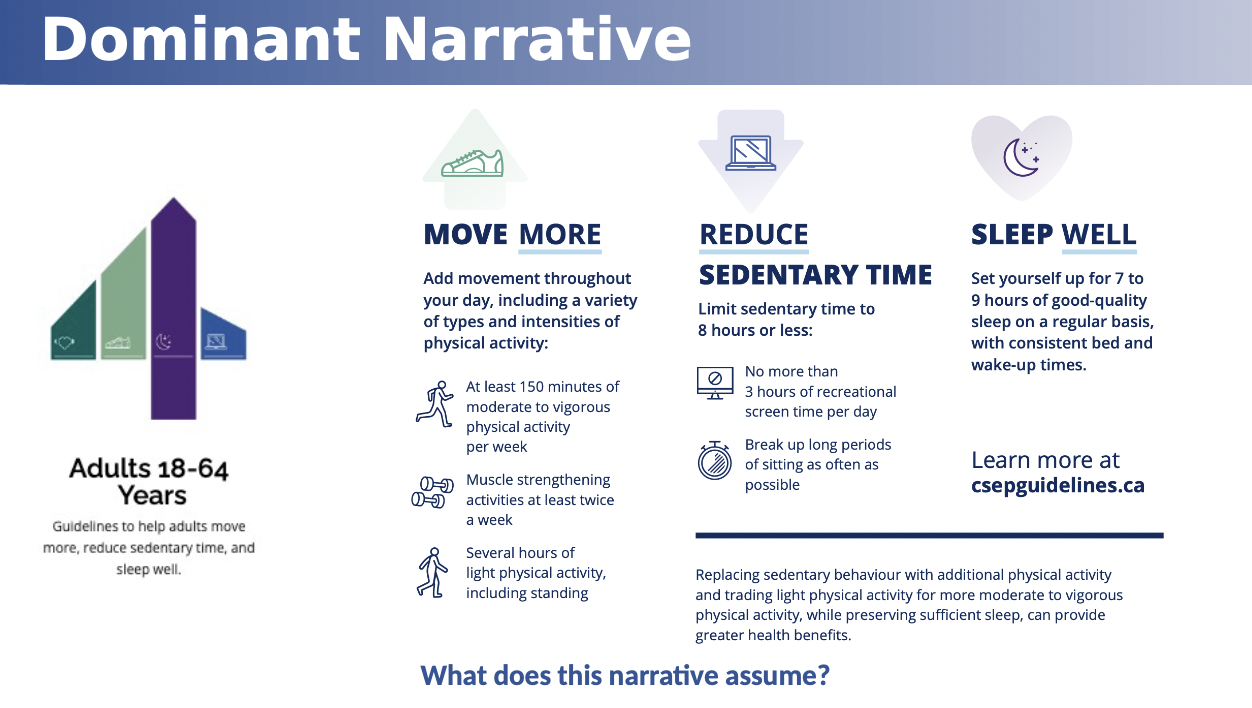
- Hitting PA requirements
- Student-athletes are usually only hitting these
- Educated tend to be more physically active
- Dominant narrative involves middle class, mostly white individuals living in urban and suburban settings
- Interventions are most effective when they operate on multiple levels
- Social and cultural environment variables cut across the other levels
Interventions schedule:
- Ensure safe, attractive, and convenient places for PA
- Implement motivational and educational programs to encourage use of those places
- Use mass medial and community organisation to change social norms and culture
However: There are likely to be environmental barriers and facilitators that vary by population characteristic and locations
Barriers in Concetial Interventions
Practical barriers
- Not enough time
- LAck of motivation
- Fear of injury
- Lack of resources
- Lack of support from others
Cultural barriers
- Social and familial responsibilities associated with deeply-rooted culture values
- Culturally constructed notions on gender appropriateness
- Clothing requirement
- Language barriers
- Age expectations and biases
- Sociopolitical/hospital contexts
Cultural Considerations
Research suggests that practical barriers (e.g., lack of time, childcare, lack of support from others)are often interwoven with cultural barriers (e.g., religious modesty or avoidance of mixed-sex activity, and fear of going out alone) and inhibit participation
Cultural Competence: Possessing cultural knowledge and skills of a particular culture to
deliver effective interventions to members of that culture (Sue, 2006, p. 237).
• Cultural Sensitivity: The recognition of the importance of respecting differences.
• Cultivate the knowledge, considerations, understandings, respect and tailoring of the
intervention to meet the cultural needs of the community.
• Getting insight into deep ethnographic details to emphasise the unique ethnic and
cultural background of the community, this practice also requires the scholars
and practitioners to reflect on their own ethnicity and culture (Resnicow et al., 2015).
• Cultural Safety: Effective care of a person from another culture as determined by that
person, where culture includes but is not limited: age or generation, gender, sexual orientation, occupation, socioeconomic status, ethnic origin, migrant experience, religious/spiritual beliefs or disability (Giles et al., 2014).
Brings us to the question (important):
- Challenging mainstream sport assumptions (assumptions, conceptions and meanings of cultural identities)
- Provide culturally relevant context of the meaning of PA is going to allow the opportunity to improve policy/programming that would engage individuals/community in PA that has culturally meaningful ways
How can my actions or plans better fit into the cultural worldview of this cultural participant group?
• How will we (i.e., scholar, practitioners, and participants) together negotiate any differences to create a culturally appropriate intervention?
Key Considerations
Delivering interventions that are culturally-friendly or culturally-nuanced are
especially needed:
• Determine the environmental and policy factors of most relevance to low-income groups, specific racial/ethnic populations, older adults, youth, and rural residents.
• The frameworks for practice are to be consistent with the reality of diverse community contexts and individuals engaging in pluralistic options and hybrid approaches of PA.
• Require approaches that involve targeted communities in designing and implementing programs, and also, examine how key community resources, needs, and policies interact and influence community-level variables.
• Ideally should be integrated into settings that have the infrastructure, culturally competent staff, access to exercise specialists, and experience to provide outreach and deliver the program to diverse population
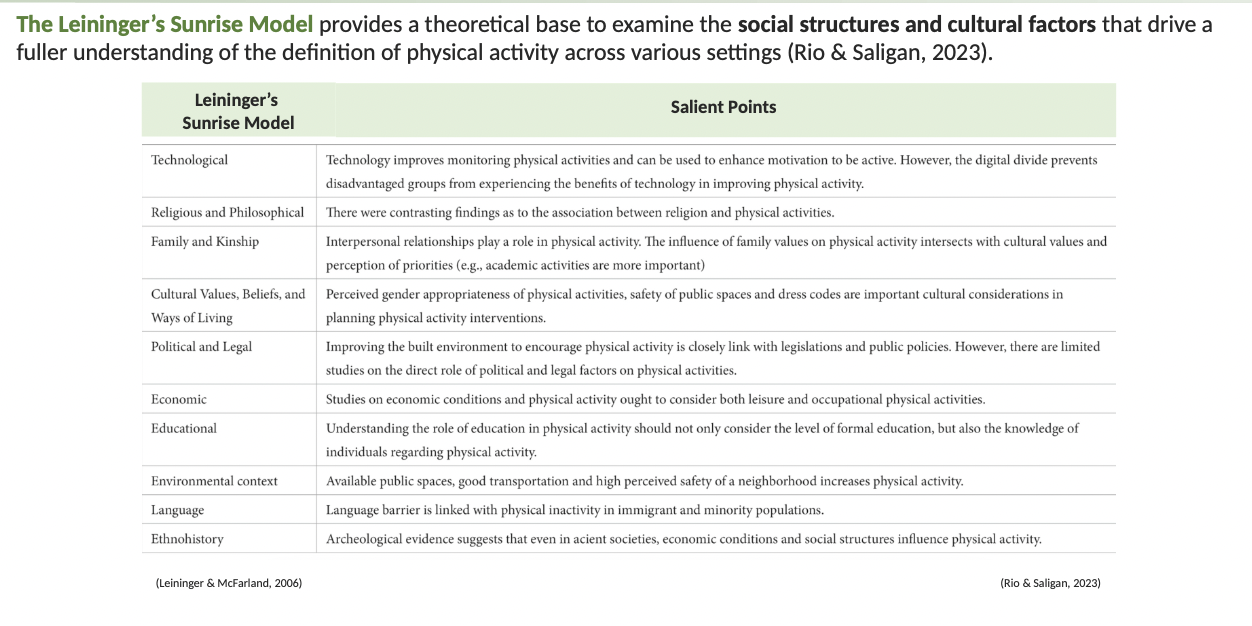
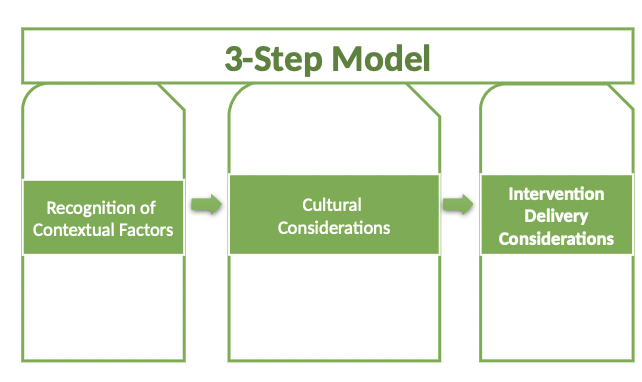
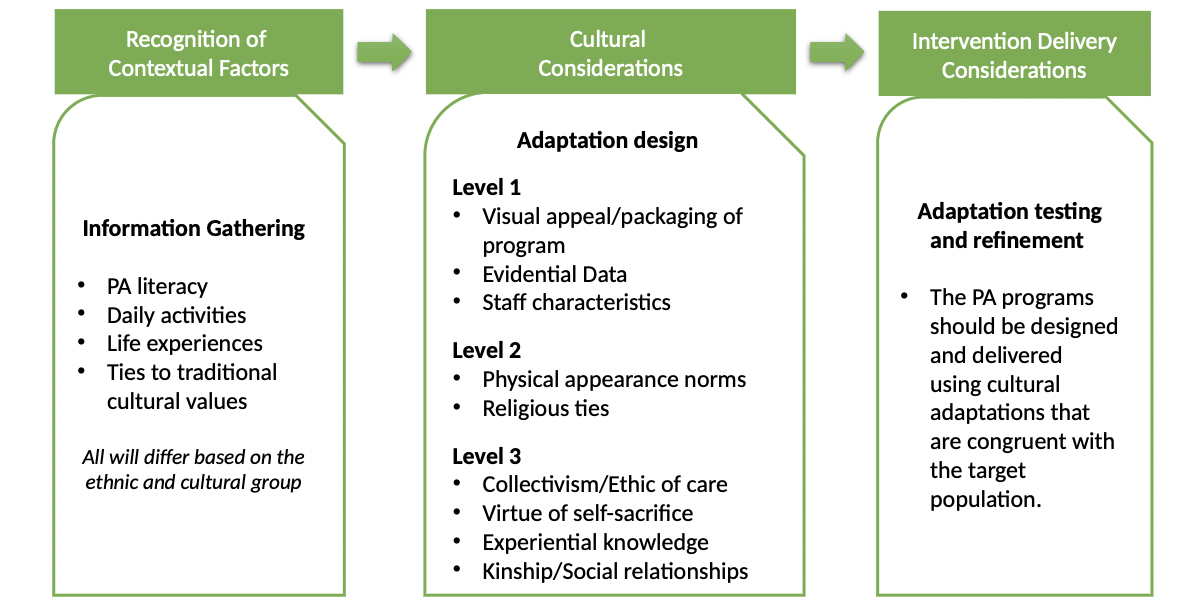
Characteristics for Culturally Nuanced PA Promotion Strategies ⭑
3-Step Model | Designed, promoted, implemented, and supported by languages
|
|---|---|
Recognition of Contextual Factors: Information gathering | Culturally tailored physical activity programs are informed and guided by:
|
Cultural Considerations: Adaptation Design | Level 1: A culturally informed design increases:
Strong partnerships better insight with who u are working with (community keyboard, feedback) Level 2: Adaptations ensure that the needs of these populations are met in the PA interventions. These adaptations include (but are not limited):
Level 3: Preliminary modifications are tested , to get first impressions of the culturally-informed changes and to receive feedback for further adaptations. Updated modifications continue to be tested in follow-up trials. |
Intervention Delivery Considerations: Adaptation testing and refinement | Refinement is based on feedback that has identified issues related to the clarity and cultural fit of the program. Minor changes are made as needed. |
MIDTERM
Reading: The four stages to help PA for the population of Somali Women
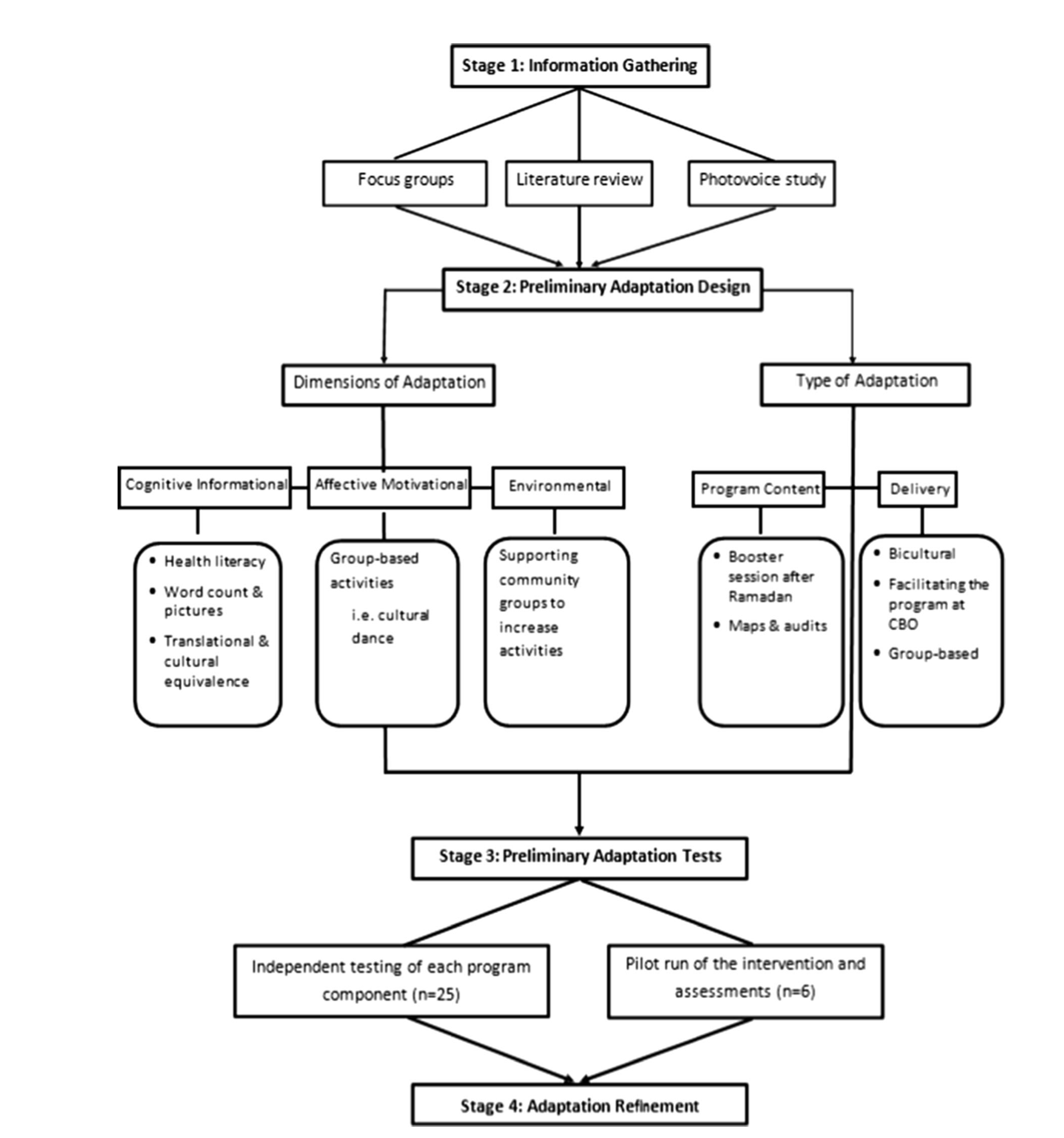
Culturally-Nuanced Intervention
Information Gathering: Identify dimensions of cultural mismatch and strategies to address cultural differences | Goal: The goal was to identify strategies to address sources of intervention mismatch with a new population.
Discovered:
|
|---|---|
Preliminary adaption design: Based on identified challenges and solutions | Goal: Making initial modification to the intervention based on data gathered in Stage 1 Type of Adaptation: to help relay message to Somali women and modify ways to reduce the ways the og program may not be culturally compatible or compatible
Dimensions of Adaptation: Gender, race/ethnicity, religion, and socio-economic factors were critical factors that affected the adaption.
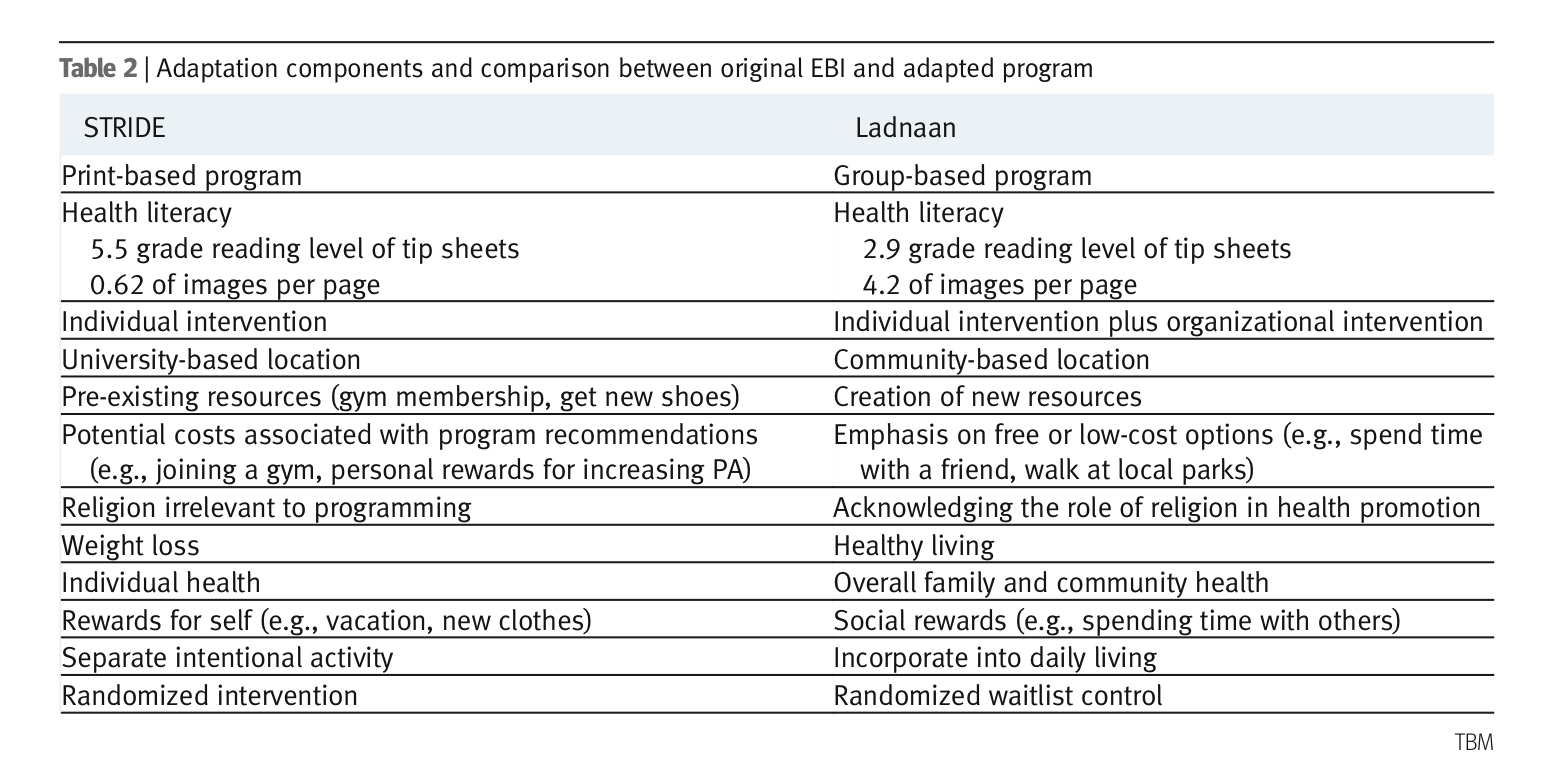 |
Preliminary adaptation tests: | Goal: Initial case studies or small pilot studies are conducted to test the initial modifications
Discovered: Despite the need for further adaptation, the trial indicated some improvement in weekly PA and related measures for participants in the trial. o Participants reported increased awareness of the importance of PA and strategies for increasing PA in their daily life. They highlighted the importance of social support as a motivating factor for PA |
Adaption refinement: | Goal: Reflection on initial tests in Stage 3 and making additional adaptations as needed Two primary areas for change occurred following the pilot program in Stage 4
|
Guest Lecture: Contemporary Interventions in High Performance Sport
Reading
- Effective coaching is context-dependant and reliant on the knowledge that the coach has at his or her disposal to evaluate a particular situation or case
- Discipline in sport requires control of athletes bodies through the acquisition of skill and a sophisticated body of knowledge focused on how to produce skilled athletes
- “What athletes do may be more important than what coaches do.. What coaches say is much more important than what athletes say”
Focault disciplinary techniques: Focused on the body as the “object and target of power” in a manner that shaped and trained the body into a specific form of resistance or being”
Social Theory: Allows coaches to be able to anticipate unforeseen outcomes and reconsider how they manage their athletes or teams training
Science of Periodization: Effective planning means the efficient use of time and schedules, where the year is broken into phases and the acquisition is prioritised and layered one on top of the other to produce a fully-prepared athlete
Foucault's understanding of Power: That an individual's action, within a relationship of power, does not determine or physically force the actions of others
- Freedom was a precondition for a relationship of power
Foucault's understanding of Dominance: Dominant individuals, groups, corporations and states do not arrive at their position because they have power, but they have become influential due to the contingent workings, and at times, tactical usages of the knowledge that informs and supports their power
Foucault's understanding of Docility (compliance): How bodies become, passive, manipulable...and moulded”
Foucault's beliefs on disciplinary power: That disciplinary power, as a form of power that “insidiously controls and shapes social life and subjectivities...and is difficult to discern...nevertheless, contributes to a general discomfort that pervades life”
Docility (compliance) vs Resistance: A quandary athletes find themselves in as they try to understand and negotiate conflicting thoughts and feelings related to upholding their sporting ambitions while at the same time beginning to get tired of being discipline.
- Foucauldian perspective to coaching could begin to shift or influence coaches perspectives regarding the origin of manu problems common to athletes (psyching-out)
To succeed in sport a degree of discipline is required:
- Coaches and athletes must decide on a plan
- Adhere to a schedule
- Word hard
- Expect difficulties and challenging times
Relationally Informed Coaching
- Thinking and challenging what it means to be a ethical coach
- Misuse of power on athletes from coaches
- Breaks code of conduct, ethical principles
Modern High-Performance Coaching Practices
• What types of knowledge is privileged here?
- Scientific information,
• How does this influence how we see the body?
- Builds your understanding and knowing of it to help with future career or schooling
- Problem solving in the future
• As future practitioners how will this shape your problem-solving activities?
- Knowledge of biochem, physiology, the body,
Deeply rooted in objective and scientific approaches to understanding movement, athletes, and sport
• Shapes how we see the body and understand movement
• Biomechanics – engineering principles to analyze movement
• Physiology – how the body adapts and responds to stimuli
• Motor Learning – predictive stages of learning that define skill acquisition
Prioritization of these knowledges leads to implicit assumptions:
- Body as a machine
• Something that can be tinkered with
• Response/Adaptation can be predicted and controlled
- Take the human element of it, know how they respond to training and adapt and try to control it during workouts and practices
- Power as hierarchical
• Power is held by the coach
• “Good” athletes are obedient, disciplined, conform
- The coach dominate, control it, if they have good athletes it means there obedient, discipline, and self motivated
- Learning through transmission
• Coach is sole knowledge holder
• Coach’s role is to deliver that knowledge to the athlete
- Athlete learn implicity, transfer info from coach to athlete
• Goal is to maximize development and efficiency
• Practice techniques are effective but not without problems
• Reliance on implicit and gentle disciplinary techniques to produce efficiency and compliance
• However, these techniques are associated with:
- Anxiety, depression, and eating disorders;
- Drop out, and early retirement;
- Underperformance
Athlete Centered Approaches (ACA)
• Last couple of decades there has been a rise in athlete centered approaches
• e.g., teaching games for understanding, game sense, problem-based learning, etc.
• ACA aims to increase athlete autonomy by using various strategies to increase athlete decision-making during practice
• Goal is to
1) support motivation,
2) increase game time decision-making
• However, most ACA do not problematize and challenge inherent disciplinary techniques of modern coaching practices
• Relationally Informed Coaching requires coaches to challenge long-standing tassumptions around “best practices”
Rationally Informed Coaching
Problematize (1):
- An open ended and continuous form of critical reflection that questions taken for granted norm and considers the untinted consequences of one's action
- How ur structuring stuff
Problematizes coaches’ practices based on three techniques:
1. Art of distribution
2. Control of activity
3. Organization of genesis
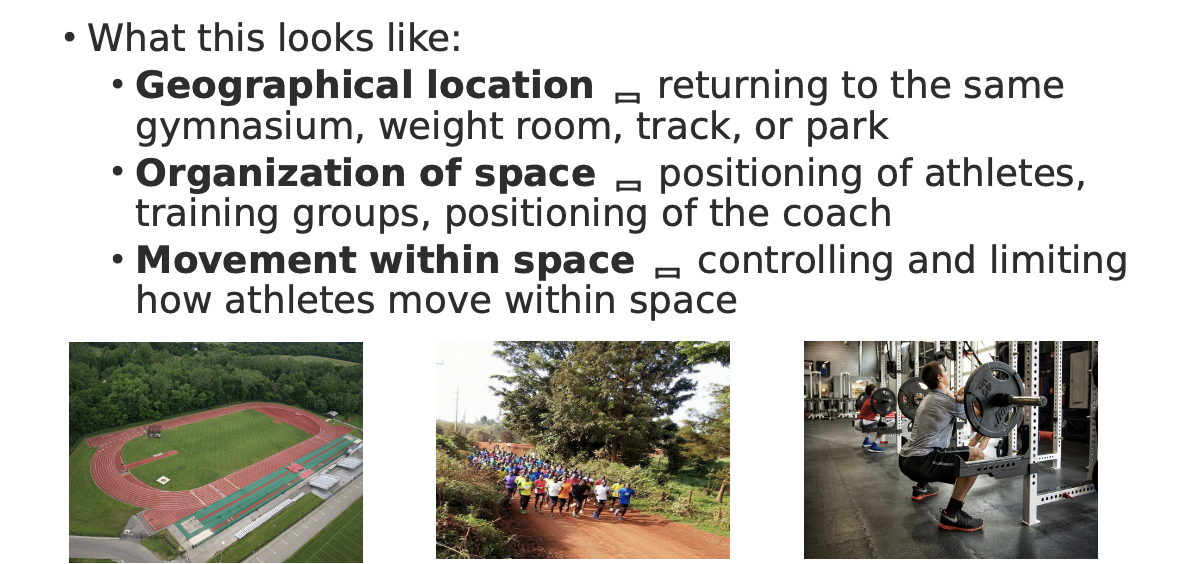
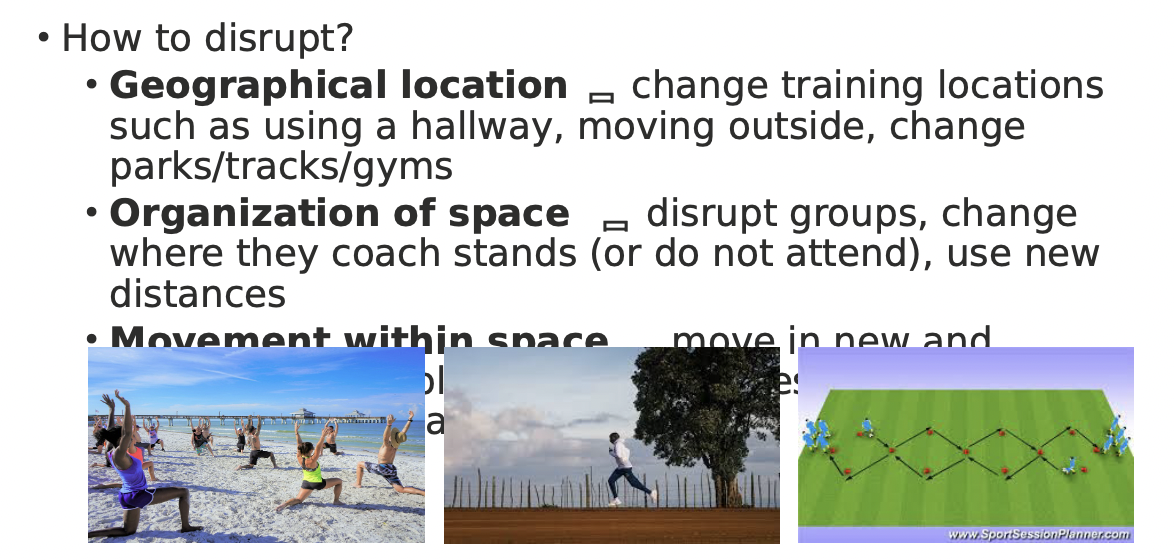
- Art of Distributions
• How space is used to manage and control practices/athletes
• Belief that effective coaches design programs that select specific places for training to occur
Allows coaches to:
- Control athlete development
- Measure and monitor progression
- Classify and rank athletes
Unintended Consequences:
- Limits athlete autonomy and experiences
- Makes it difficult for athletes to move beyond their “rank”
- Control of Activity
• How time is used to manage and control practices/athletes
• Belief that effective coaches maximize and exhaust every second of practice
• Good coaches control every aspect of an athlete’s life
• Allows coaches to:
- Prioritize certain activities
- Maximize practice times
- Control and monitor work and rest intervals
- Supervise activities
Unintended Consequences:
- Closely monitoring time may limit what a coach sees at practice
- Limits what an athlete experiences and feels
What this looks like:
• Timetable of practice → when practice starts, ends, and what activities are performed when
• Timing of activities → tightly controlling and regulating the time of activities (e.g., work and rest)
How to disrupt:
• Timetable of practice → change practice times, meet athletes one-on-one, create practice ‘menus’
• Timing of activities → remove watches, use atypical training time (e.g., 17s or 63s or spell words), use the sport as a model
- Organization of Genesis
• How time can be broken down and applied in specific segments and applied with precision
• Belief that effective coaches can plan, predict, and linearly progress athletes training (i.e., periodize it)
Allows coaches to:
- Measure, compare, and predict progression
- Linearly progress training
Unintended consequences:
- Reduces complexity and individuality of athletes
- Limits potential of athletes (be in X shape at Y time)
What this looks like:
• Training plan as a ‘blueprint’ → linear time frames laid out to progress athletes to a fixed point
• Training as repetitive → use of objective, benchmark sessions to monitor and compare
progression
How to disrupt it:
• Training plan as a ‘blueprint’ → periodization that is fluid, fragmented, non-linear, and
individualized
• Dynamic, ever-evolving, and circular
• Hard-first progression or whole movements rather that part practice
• Challenge weekly training cycles
• Training as repetitive → limit the use of objective, benchmark workouts, allow self-determined reps, and remove expectations for fitness
Relationally Informed Coaching (3)
1. Better consideration for athlete individuality
• Athletes are not simply a cog in the machine
• Uniqueness must be at the forefront of coaching practices
2. Find ways to strategically reduce constant monitoring and evaluation of athletes
3. Promote athlete curiosity and decision-making
4. Focus on big picture ideas and don’t get lost in the minutia
5. Have athletes learn from themselves – answer questions with questions
6. Afford athletes to take ownership over their own
How frequently should we implement alternative practices?
1. Ethical coaches need to constantly problematize their unintended actions
2. Many traditional, modern high-performance coaching strategies are effective!
3. Alternative practices support traditional practices by supplementing them
• Do not replace as that changes the method of controlling athletes
• Based on key moments pertaining to individual athletes
A move towards thinking about:
- Body as holistic
• Complex and individual
• Physical, social, mental, emotional, etc.
- Power as relational
• Shared between coach, athletes, and others
• Derived from knowledge that is co-created
- Learning as reciprocal
• Not centralized to one teacher/coach learn from each other
• Emergent, nonlinear, and unpredictable
Study guide for exam questions: 1. Define and explain what problematization is and its role is in high-performance sport coaching 2. With respect to art of distributions, control of activity, organisation of genesis: A. Critique dominant practices for their unintended consequences B. Consider what alternative practices could challenge these unintended consequences 3. Differentiate and explain what being a relationally informed coach means for how we see an athlete’s body, power, and learning |
|---|
Mass Media and Messaging
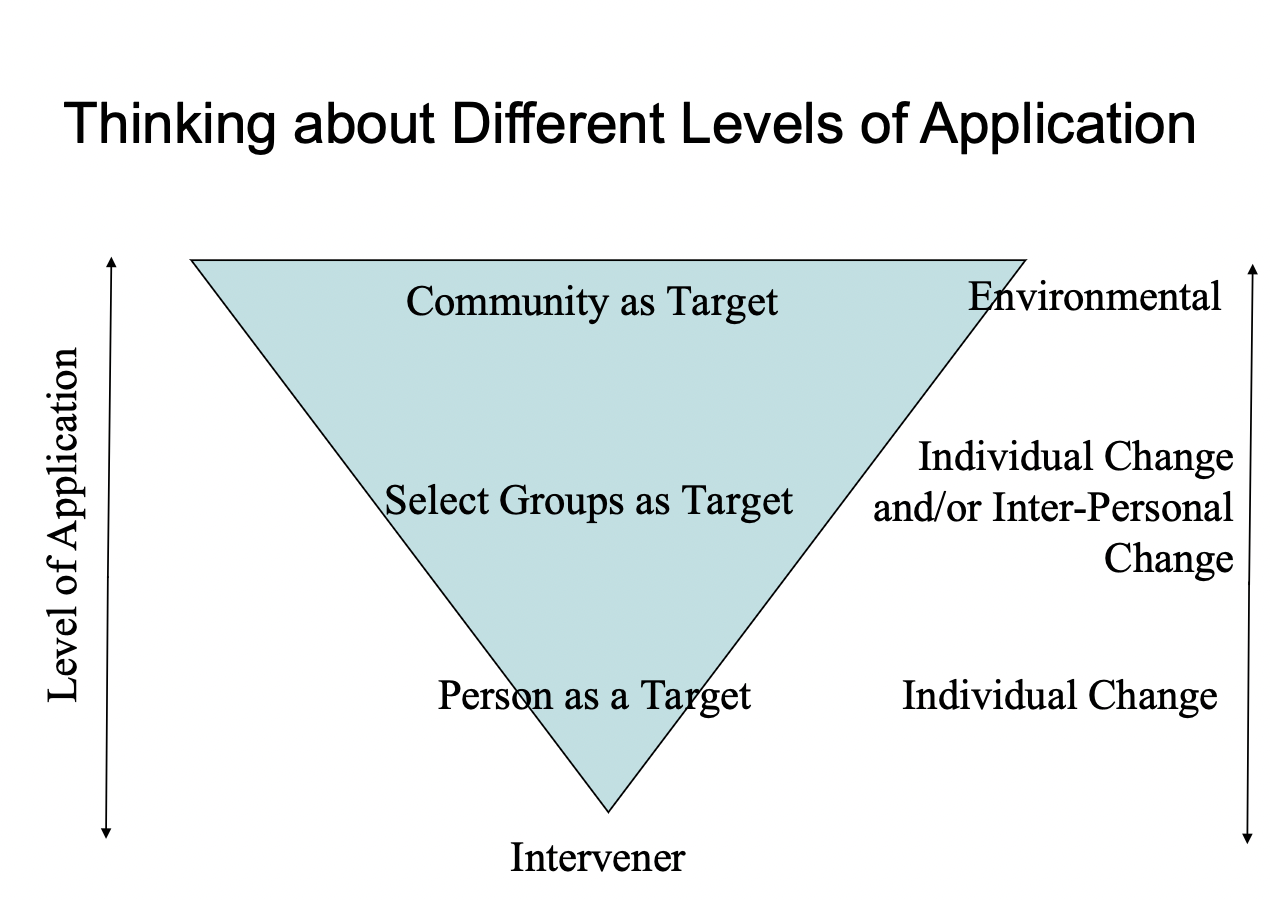
- At Community as a Target, using media to make a change among a wide amount of people
- Systemic amount of change around social norms of PA
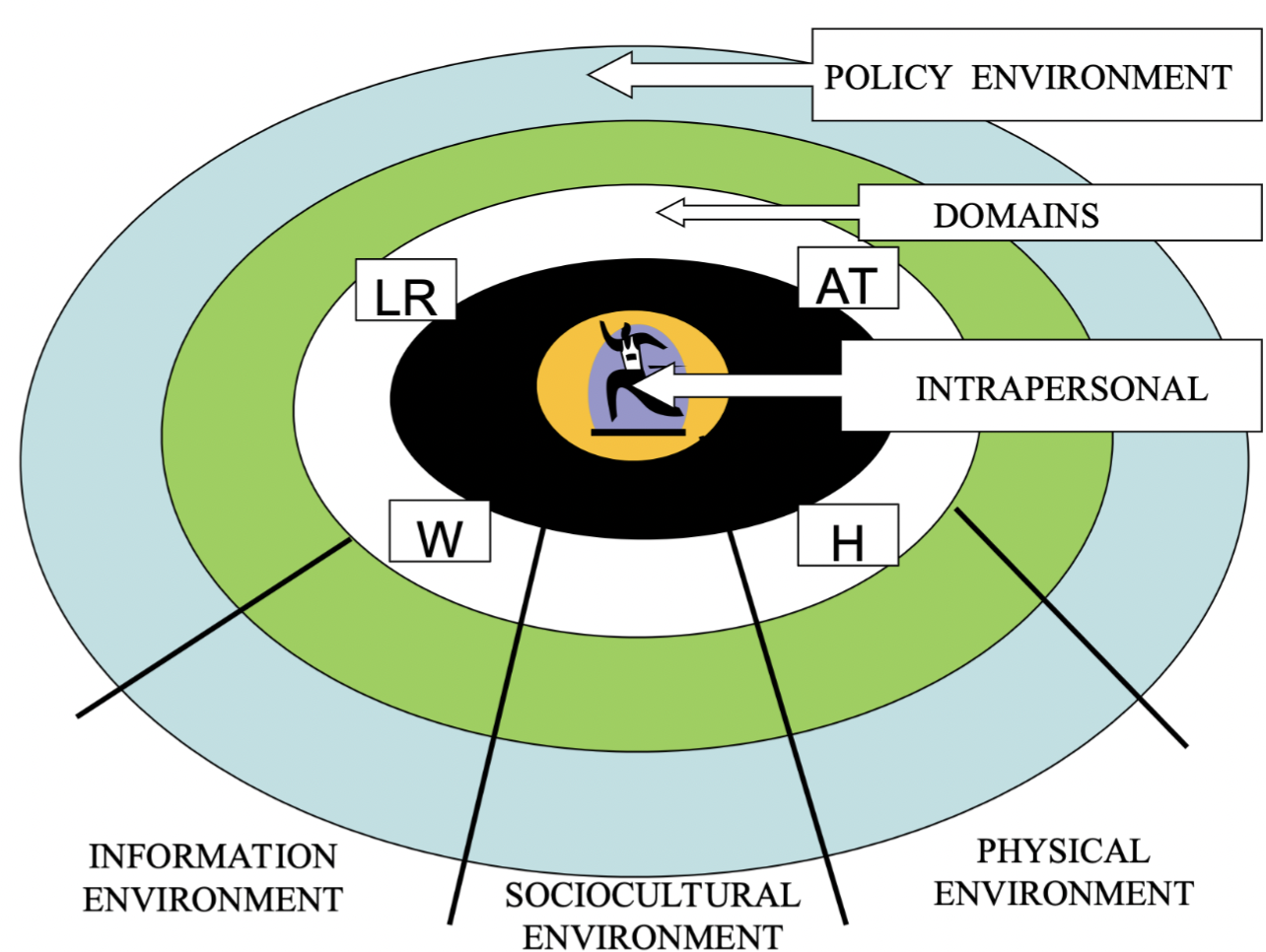
- Informational environment
Mass media interventions (Cavill & Bauman, ‘04)
• purposive attempts to inform, persuade, and motivate a population
using organized communication activities
- Change community-level perception on PA (social norms)
- Specific channels(broadcast, print, electronice, media, internet, social media)
- with/without supportive community activities (exposure, website, supportive resource)
- Requires intervention that has a large number of people at relatively low cost, using social marketing techniques (nike, borrowing stuff from marketing and apply it to a public health agency to promote the social capital of are society for PA)
- Focus on the benefits for consumers of adopting the product (daily moderate-intensity PA)
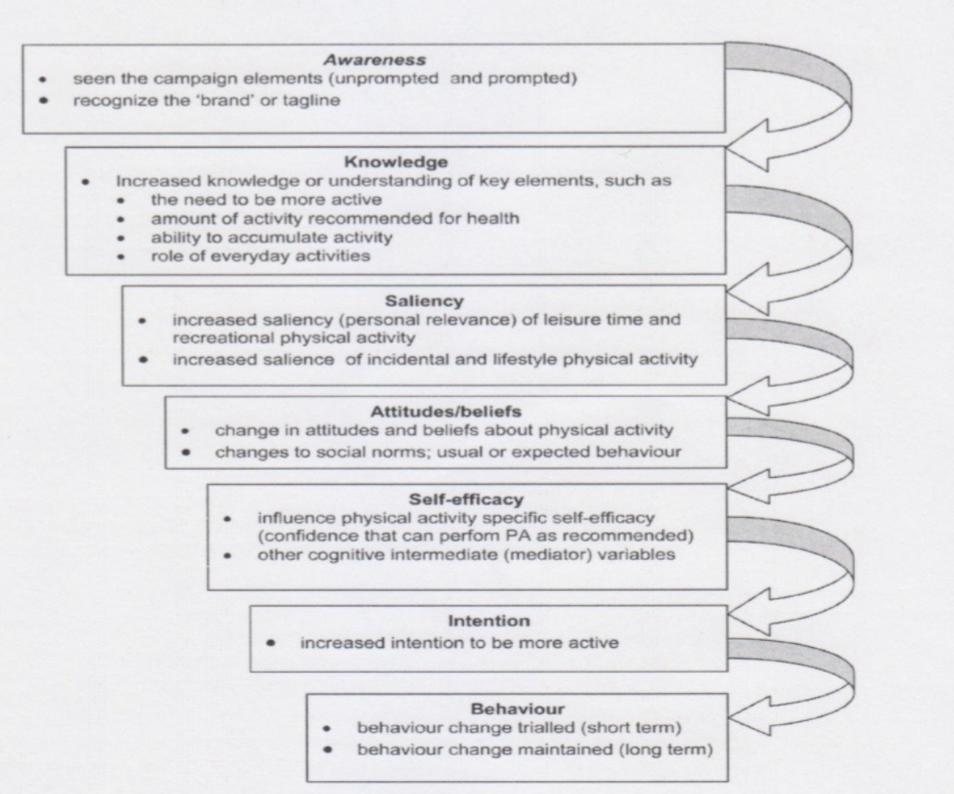
- PA is not most likely outcome of media messaging or is any outcome that would come from mass media messaging
Awareness |
|
|---|---|
Knowledge |
|
Satiency |
|
Attitudes |
|
Self-efficacy |
|
Intention |
|
Behaviour |
|
Main Take-Aways (Cavill & Bauman, ‘04)
• Campaigns in which there is more tailoring to a target audience produce greater change
- 4 P Marketing Principle (Product, Price, Place, and Promotion)
Targeting:
- Selection of the target audience based on agreed upon criteria (epidemiological data, attitudinal variables, media usage)
- Tailoring of the message to the attitudes of the selected target group
- Using the media most likely used by the group
• Campaigns appear to reach large segments of the population with specific PA messages/ and promote awareness; however, equivocal effects beyond awareness
- Tailor your message to the tailor audience more success towards behaviour
- Median 70% for prompted recall across all reviewed studies (will give u a success response if prompted)
- Recall decays with time
- Effects on knowledge, beliefs, intentions, global PA?
- There are sub-group effects
Campaigns in which there is more contact with the target audience produce greater change
- Few are sustained and focused initiatives on PA over a number of years
- Need for more research on a within-person basis
Main Take-Aways
• Change is greater when mass media campaigns are combined with supportive community-wide intervention pieces
- Change Is greater when we fill in behind the mass media campaign
- Ex: support and self-help groups, counselling, screening and education, community events, walking traits
- Including long-term policy and environment changes that support PA
- Part of a sustained and coordinated multi-level strategy to finally change social norms towards inactivity, and to then increase population-level PA
- Difficult to isolate effects of mass media alone
Conclusion
• Mass-media campaigns focused on PA promotion can make a difference with respect to early antecedents of behaviour change, especially awareness, but they are likely not enough on their own
- Little evidence of pop-level changes in intention or PA behaviour
- Evidence of change in motivated but insufficiently active groups
Strategically Adapting the Message
Three Approaches
• Latimer, Brawley and Bassett (2010) reviewed three approaches designed to optimize messaging in a PA context:
- Tailoring: involves presenting information in a manner that suits the individual characters of the message recipient
- Almost all studies trailord messages to individuals stage of change
- Some studies tailored messages to an individual's age group, gender
(B)
Recommendation: Tailored message have advantages over agencies message; when the medium for dissemination allows for it, tailoring should consider, Tailoring worth best when receptions have multiple exposes to the message
- Efficacy enhancing: involves information designed to increase individuals beliefs in their competency to successfully participate in a target behaviour
- Very few studies
- Messages have been adapted to increase peoples belfies that mastery of PA is “easy, not hard”
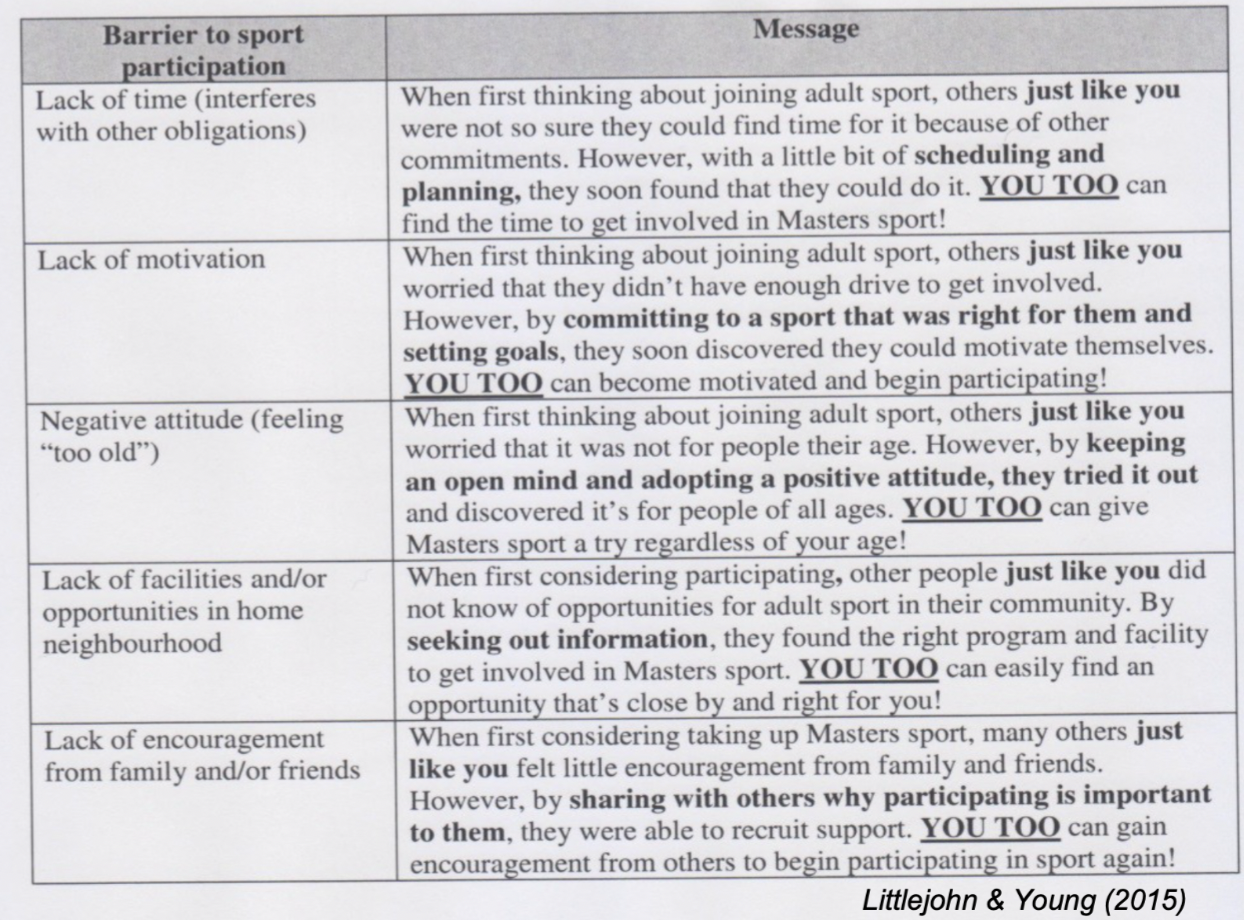
- Describe an exercise prescription as straightforward and ‘easy to control’ (up to you)
- Describing how “people like you” have taken up a program and persisted with it
- Providing information one ways to overcome common barriers (hope, adaptive info)
IN TABLE:
- Scheduling and planning (adaptive information)
- Set goals, foster commitment (adaptive info)
- Open mind, find info near you (adaptive info)
Efficacy Enhancement (C)
• when adults read structured messages that incorporate information known to increase confidence and control, their intentions and self-efficacy beliefs can be significantly affected
Recommendation: The construction of efficacy-changing messages is a strategy that holds promise and should be considered
- Framing: involves emphasising the benefits of adopting or the costs of failing to adopt a target behaviour
- Manipulating how info is framed to affect decisions
- Comparing gain-framed vs loss-framed
- Sedentary adults who receive gain-framed messages reported more PA than : those who received loss-framed messages to those who revived mixed-framed messages, those who were in a non-message control condition
- Effects depend on recipients viewing the source of information as credible (more credible greater effects)
Gain-framed messages: Emphasize benefits of performing a behaviour (positive)
Ex: eating your greens will make you big and strong
Loss-framed message:Emphasize costs of not performing a behaviour (negative)
Ex: not eating your greens will make you small and week
More Percussion Associated with GFM:
GFM have higherer intention and higher PA more than LFM in various Pa setting include cardio activity, strength training, fitness centre use in adults
A place for LFM?
- Certain people receive a “prevention” message better than a “promotion” message - LFM is more effective for “preventers” than GFM
- Certain at-risk populations may receive a “prevention” message better (ex, obese)
- Don't know enough about mixing GFM and LFM?
In the video: Pictures, role model, social, friends/team,
Recommendation: Messages accompanying PA should be gain-framed rather than loss-framed. Until further evidence is available, it is prudent to use gain-framed to cougar PA rather than mixed-framed (B)
Emphasize the Benefits of the Product
GFM & Masters Sport
- Can GFM be used to recruit more middle-aged adults back into organized Masters sport?
- Target audience: use media messaging to get adults back into sport?
- What gain messages were used?
Anticipated benefits: that arise only from participation in adult sport (called “involvement Opportunities) (opportunity to travel, compete, …)
- Embedded in a 3 min audio-visual track
Methods
- Experiment groups: GMF, Quiz Group
- Asked the GFM group to recall messages from the audio visual script (manipulation check, recall themes in the video)
- Did the GFM?quiz get you to think about a possible self that you would like to become? Tell us about it..
- GFM vs Quiz: Interest in requesting a Newsletter
- GFM vs Quiz: Registering for Masters sport event/league
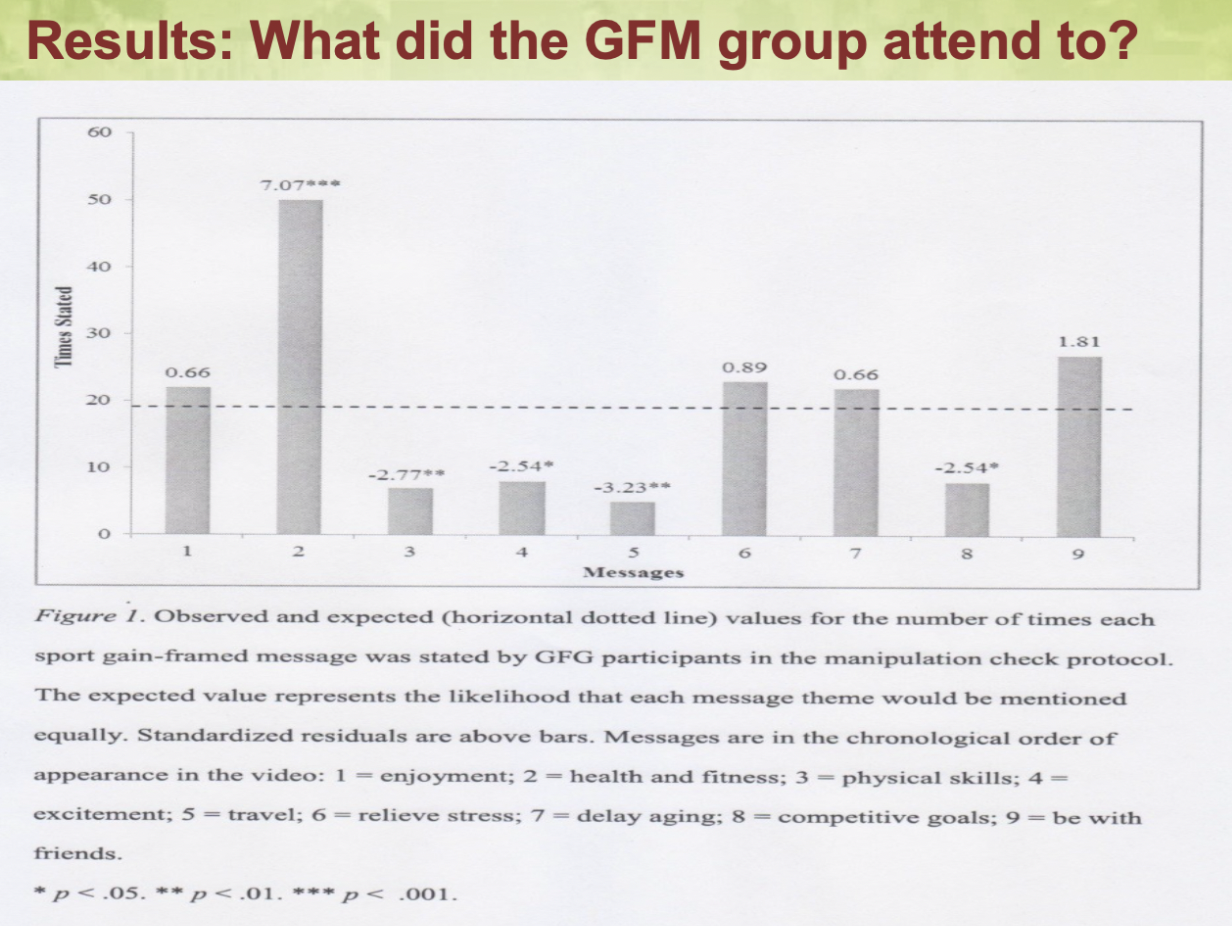
Ones that resonate with them for recognition
Results: GFM vs Quiz Group
- GFM group more frequently activated a future possible sport self
- In these future sport selves, the GFM group elaborated more than the QG on two particular messages - using sport as an opportunity to delay effect of against, and as an opportunity to be social and make friends
- Overall, results suggest three benefits that should be promoted, (opportunity to grain health and fitness, delay effects of ageing, and social and friends)
Immediate after the intervention:
- More GFM participations (68.5%) requested a newsletter outlining activities and opportunities to do adult sport in the community than the Quiz group (55.2%)
One month later:
- More GR participants (19.5%) had registered for Masters sport events/leagues than the Quiz group (9.2%)
Summary
- Crucial components when designing a mass media intervention
- Define the target audience
- Adapt the media and the message accordingly
- Emphasize the benefits of the product rather than the product itself
- Do formatize work to inform the intervention, use quality designs to evaluate the intervention
Interventions in rural contexts
Reading: Meyer Moore Abildso Edwards Gamble and Baskin 2016
Rural residents are less physically active than their urban counterparts and disproportionally affected by chronic diseases and conditions associated with insufficient activity. The purpose of this article was to assess the evidence base for an ecological model of active living for rural populations and outline key scientific gaps that inhibit the development and application of solutions.
Intrapersonal
- There are no differences between rural and urban residents within the intrapersonal domain
Home/Neighbourhood
- At the neighbourhood level, residents who recreate activily and engage in PA tend to have access to sidewalks, street lights, and traffic calming methods
- Rural residents living in homes with high levels of social support, and more exercise equipment and residing in communities with traffic safety, aesthetics, access to recreation facilities, etc are most consistently associated with PA
- Outdoor activities are often unsafe in rural communities due to fast moving traffic and infrastructure challenges
Schools
- Rural children have few opportunities to accumulate PA outside of school
- Increasing time spent in physical education and active recess, and incorporating PA into instruction time are important strategies to increase PA
Workplace
- Very little research done
- The notable challenge posed by greater commuting distances for many rural residents reinforces the need to examine how workplaces impact active living
Transportation
- Rural residents may be less able to engage in active transportation because of greater physical distances, limited public transport, low pop density, and parking availability
- Rural roads are structurally designed to facilitate higher speed traffic and rarely provide bike lanes, sidewalks, trails, etc
Policy
- Policy approaches have the potential to impact behaviour settings if widely adopted and fully implemented
- Policies vary in focus and scope including pragmatic adoptions (eg. safe routes to school), instructional policy (PE mandates), etc.
Rural Canada
- Nearly 6 million people (16% of the total Canadian pop) lived in rural areas in 2021 census
- Rural areas have fewer than 1000 inhabitants and a population density below 400 people per km^2
- Rural adults report higher levels of obesity and chronic conditions that are associated with lower levels of PA
- Rural adults are not physically active as their urban counterparts
- Disparities cannot be addressed by treating rural communities merely as small urban ones
- Can treat rural communities as small urban ones, can't transfer models
Examining the behaviour settings in rural contexts
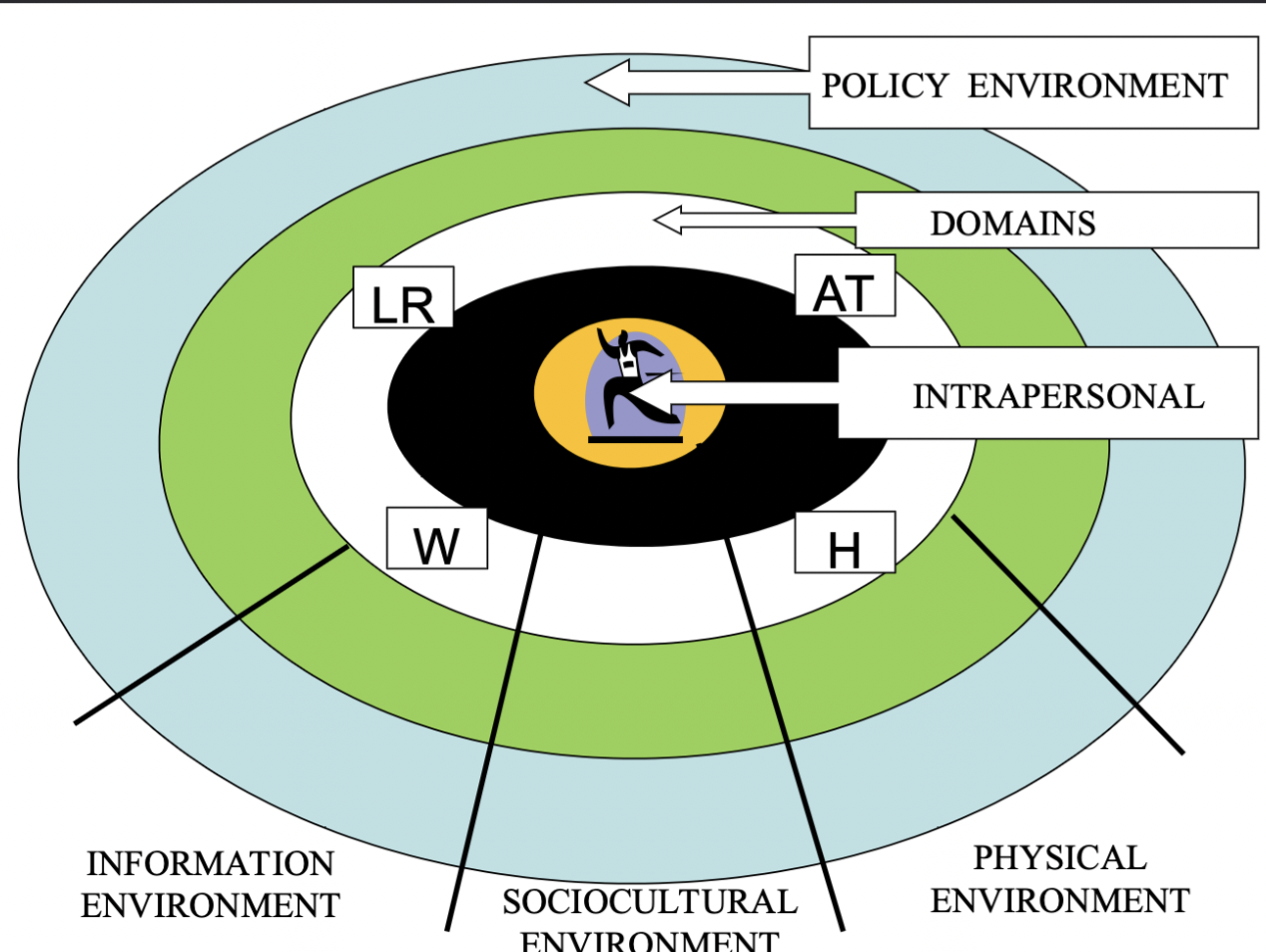
Behaviour settings
Home/neighbourhood:
- Barriers: Walking/cycling are often unsafe in rural due to auto-centric toutes(fast moving traffic, competition with commercial traffic)
- Opps: living in a home with high social support; neighbourhood with pleasant aesthetics; access to recreation facilities, trails and parks
Recreation settings:
- Barries: access to outdoor recreational opportunities is limited; trails and open spaces are informal, unmarked and poorly maintained
- Opps: trails; partnerships and alliances; salience of school and places of worship; other non-traditional community assets
- Nuance; proximity to places may not be as important; people willing to travel further to gain access
- Partnerships and alliances to optimise resources
- Non traditional alliances that can be used an maximised in rural areas
Schools:
- Barries: rural children have dewar opps for PA outside of school
- Opps: increasing time in PE; active recess; incorporating PA into instructional time; increasing frequency of short0bout activity breaks during school
- Nuance: rarely are there practical options for active community to school (due to school consolidation)
- School teams, school intramurals
- Not an option to walk or bike to school in rural areas
Workplaces:
- Barriers: increasing commuting distance and times due to retraction of traditional industry in rural settings
Active transportation settings:
- Barriers: limited public transit; low pop density; lack of of parking; lower walkability
- Nuances: AT has an altogether different meaning in rural (ie: availability of transportation to get a PA resource venue)
- Opps: walkability is associated with highly valued interactions rather then travel (sidewalks)
Further rural considerations (Meyer et al., 2016)
- rural residents are more likely to lack facilities and programs and experience geographic isolation, leading to less social support
- rural residents may have more collectivist social norms, which means social connections should be emphasized in informational approaches (use social media as leverage for social connection)
- Due to limited number of community PA resources, giving access to schools outside of school hours, and building joint-use partnerships have promise (after school hours, open to the community, joint use partnerships, insurance, janitorial services,