Replication and Repair
Semiconservative Replication
semiconservative → partly saving the old
when DNA is replicated we untwist DNA strand and separate it into 2
GOAL: creates 2 identical DNA molecule with one parent strand and one new strand
Replication
Step 1: Strand Separation
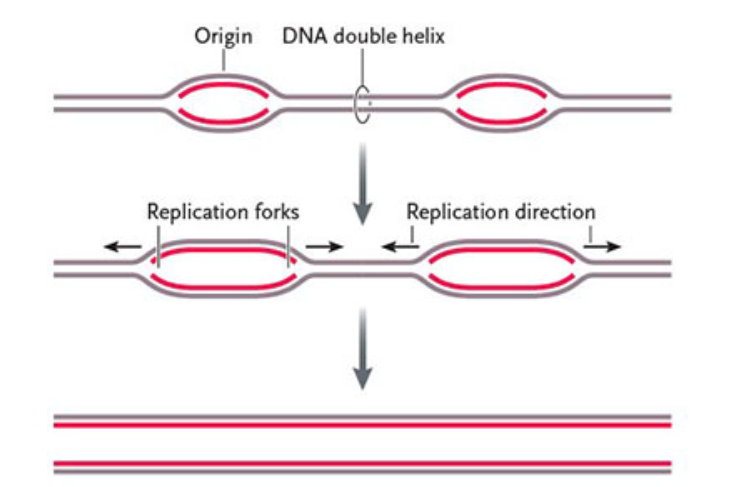
takes place in replication origin → the specific location of where it’s happening
there’s several replication origins = replication bubbles
eventually the helicase meet and the DNA becomes 2 strands
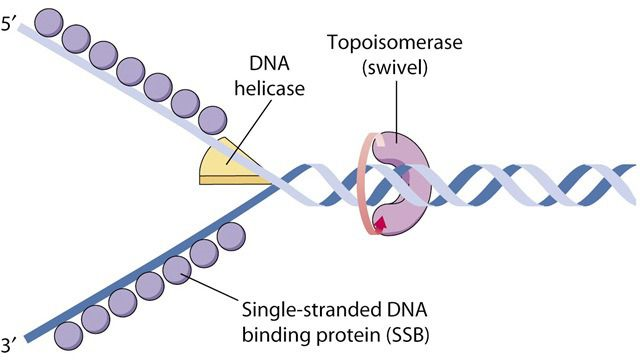
Helicase unzips the DNA by breaking up h-bonds
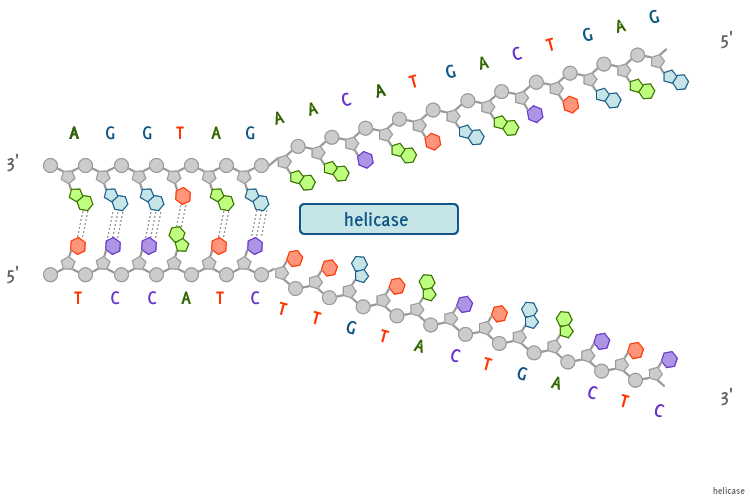
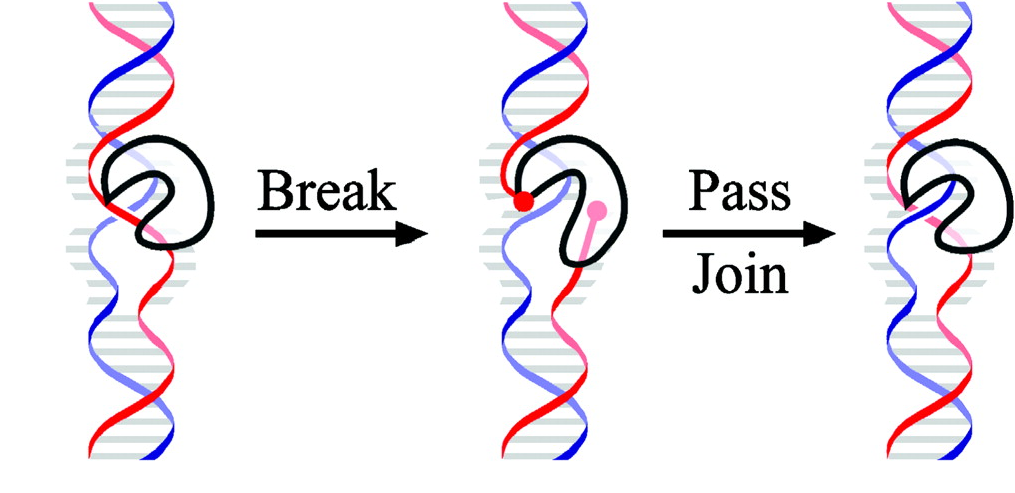
Problem #1 → when untwisting DNA it will tangle at the lower on the strand
ex: untwisting hair
SOLUTION → topoisomerase enzyme will cut the DNA, then reattach it
Problem #2 → the 2 strands of the DNA while unzipping want to reconnect because they’re attracted to each other
SOLUTION → Single-Strand Binding Proteins (SSBs) will hold the 2 strands inplace to prevent it from reattaching
Step #2: Building Complementary Strands
DNA polymerase III uses parent strand to match the complementary nucleotide pair
ex: AT GC
To build it uses nucleoside triphosphates
breaking the 2 extra phosphate groups off produces energy
Problem #1 → polymerase III only works if it has something to attach to
can’t lay it’s first nucleoside
SOLUTION → RNA primer creates something for the DNA polymerase III to attach to
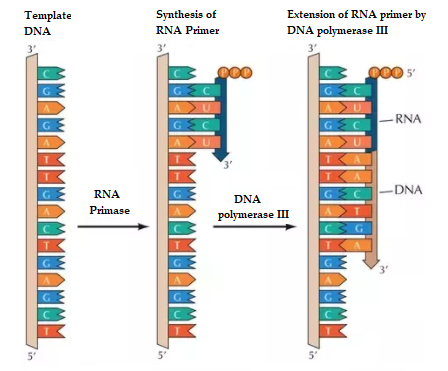
Problem #2 → DNA polymerase only reads from 5’ to 3’, making the leading strand easy to build as long as the RNA primer is at the end because it follows helicase
The lagging strand needs to be done in chunks because it’s not going in the same way as helicase
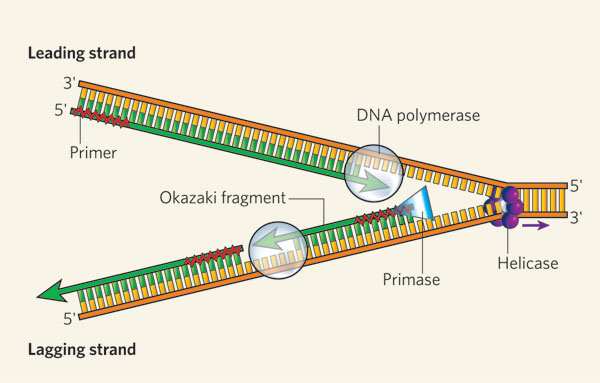
Problem #3 → RNA primer are not allowed in the Final DNA strand
SOLUTION → DNA polymerase I replace RNA nucleotides to DNA ones and DNA ligase binds together the last 2 nucleotide fragments when primer is removed
Step #3 →