344 week 10
Onward to Cavities of the Vocal Tract
Cavities of the Vocal Tract
The vocal tract consists of several key cavities that play significant roles in speech production and resonance. These cavities include:
Oral Cavity
Buccal Cavity
Pharyngeal Cavity
Nasal Cavity
Pharyngeal Tonsil (Adenoids)
Orifice of the Eustachian Tube
Oropharynx
Laryngopharynx
Nasopharynx
Velum
Detailed Description of Vocal Tract Cavities
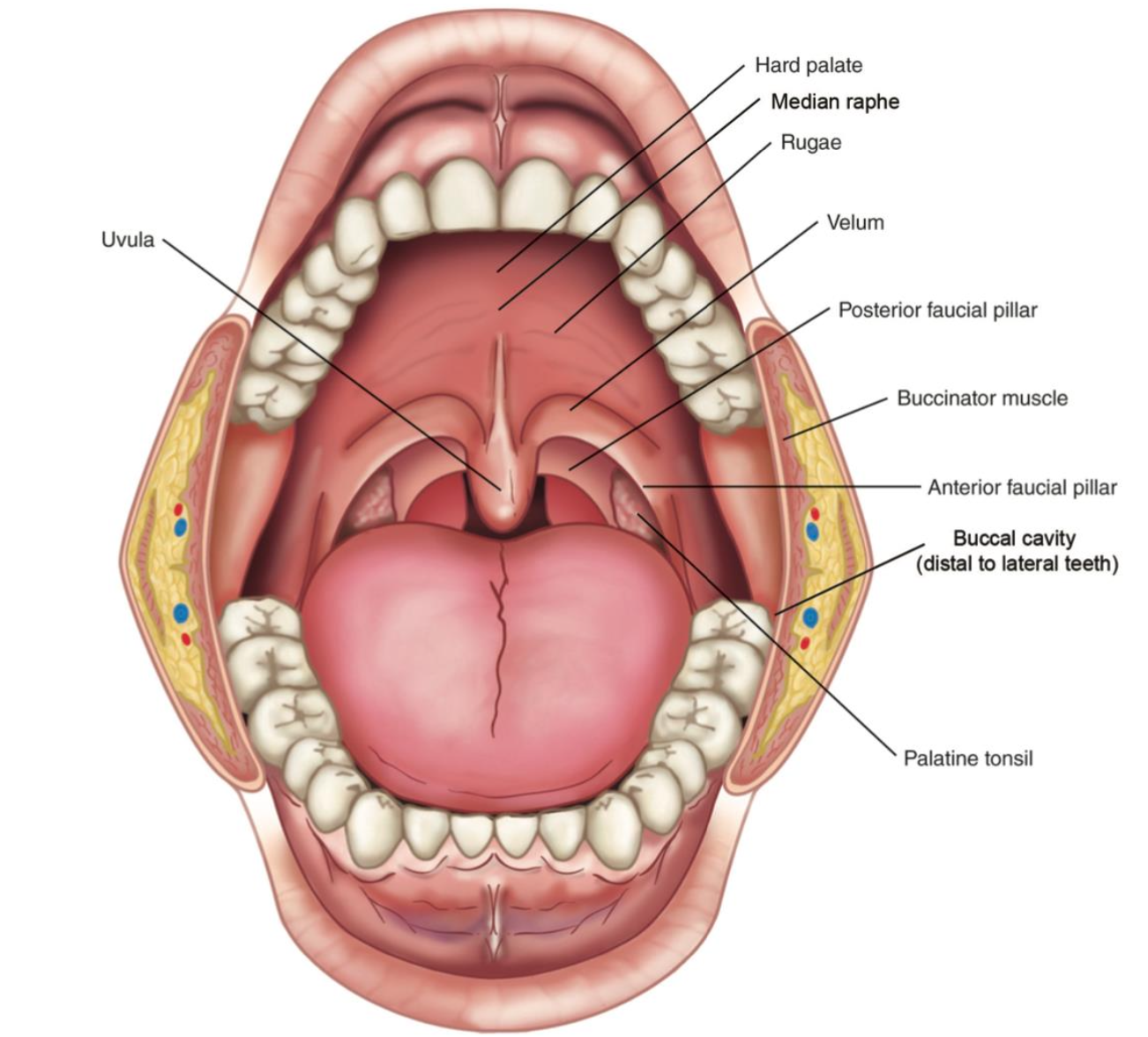
Oral Cavity
Definition: The oral cavity extends from the oral opening (mouth) at the front to the faucial pillars at the back.
Components:
Hard Palate:
Composed of rugae (folds) and the median raphe (a seam).
Soft Palate and Uvula:
The muscular extension of the hard palate in front of the palatine bone.
Faucial Pillars:
Function to trigger the swallow reflex; muscles elevate the tongue and pharynx.
Palatine Tonsils:
Masses of lymphoid tissue located in the oral cavity.
Buccal Cavity
Definition: The buccal cavity refers to the space between the teeth and cheeks.
Boundaries:
Lateral: Cheeks
Anterior: Lips
Medial: Teeth
Posterior Margin: At the third molar.
Functions:
Plays a role in speech resonance and swallowing.
Nasal Cavity
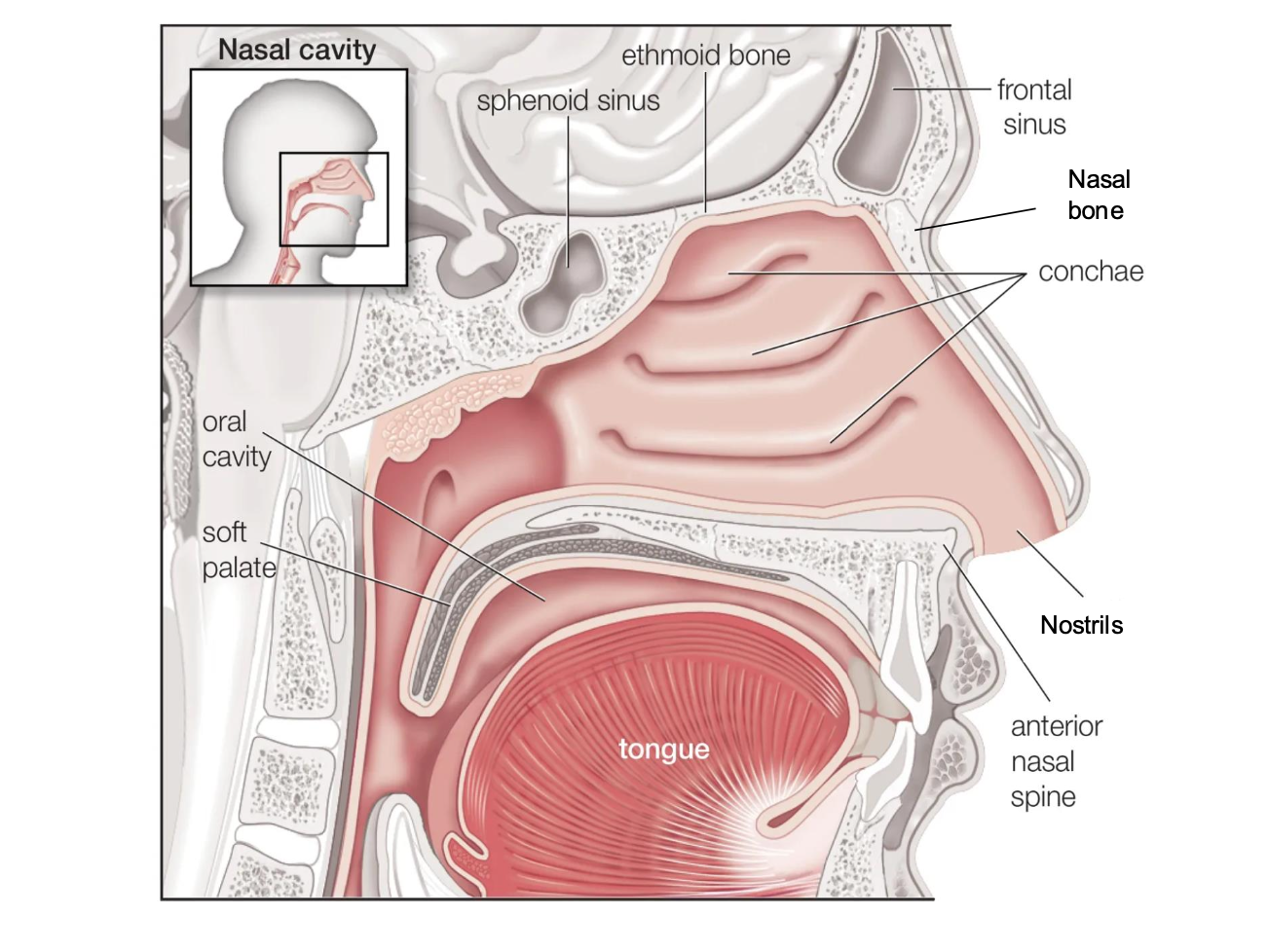
Anatomical Features:
Two chambers divided by the nasal septum.
Composition of Nasal Septum:
Made up of the vomer bone, parts of the ethmoid bone, and cartilage.
Borders:
Superior: Nasal bones and ethmoid bone internally
Lateral: Frontal process of the maxillae
Inferior: Hard palate formed by the paired palatine processes of the maxillae and palatine bones.
Nasal Conchae:
Function to increase surface area to create turbulent airflow.
Pharyngeal Cavity
Definition: Extends from the vocal folds (below) to the region behind the nasal cavities (above).
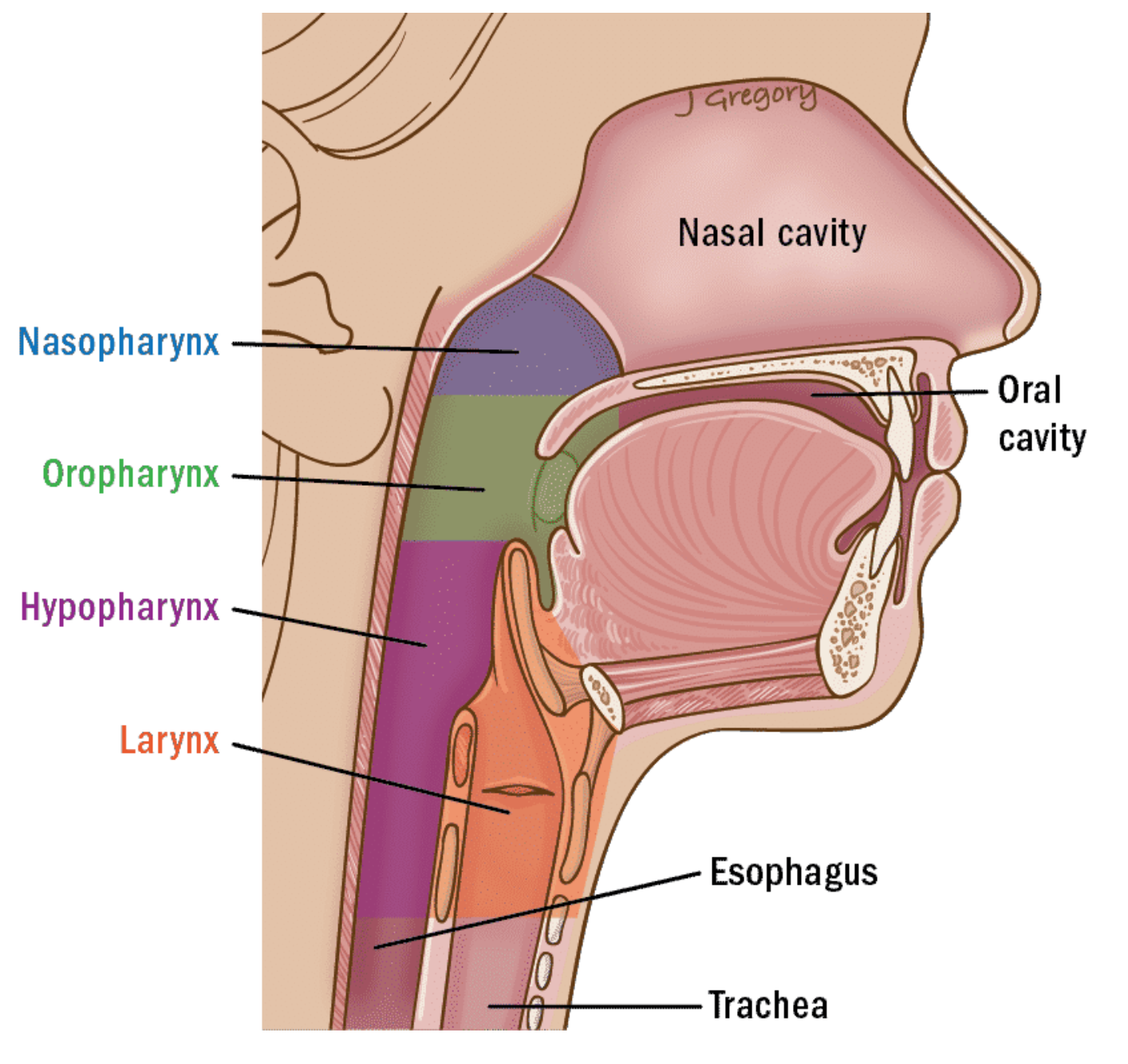
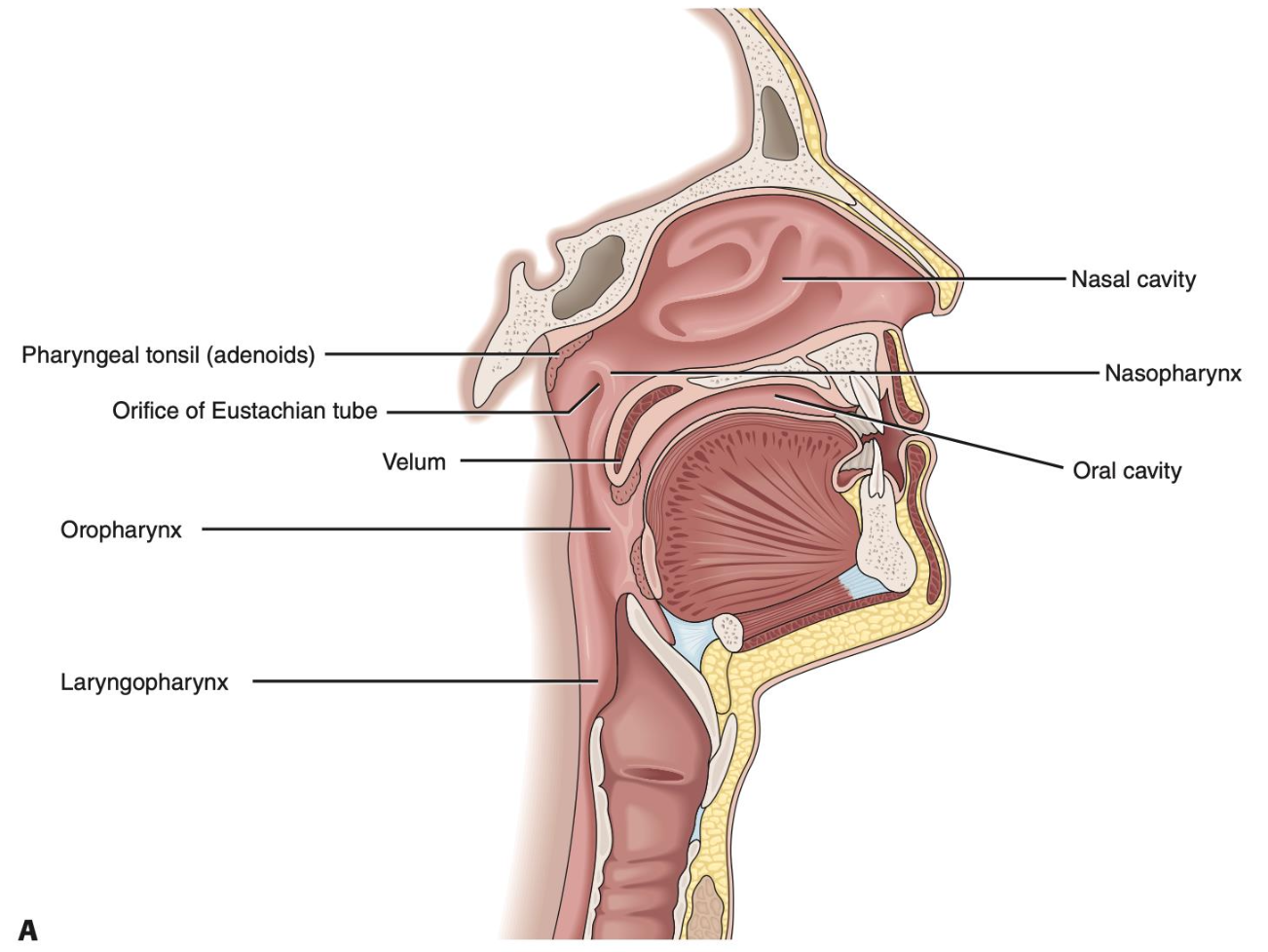
Subdivisions of the Pharyngeal Cavity
Nasopharynx:
Located above the soft palate.
Anteriorly bounded by the posterior opening of the nasal cavity.
Contains the Eustachian tube.
Oropharynx:
Located behind the oral cavity, bounded above by the velum.
Lower boundary is marked by the hyoid bone, which is the upper boundary of the laryngopharynx.
Laryngopharynx (Hypopharynx):
Anteriorly bounded by the epiglottis.
Inferiorly bounded by the esophagus.
Schematic Understanding of the Pharyngeal Cavity
Factors Influencing Layout:
Relationships with surrounding structures such as the nasopharynx, oropharynx, laryngopharynx, larynx, esophagus, trachea, and oral cavity.
dysarthria is the impairment for speech, slurred speech
another motor speech deficit is apraxia of speech: motor planning
aphasia is a language impairment