Module 3: Crime Scene and Death Invesigation
Crime scenes
Large variety of different crime scenes
No one way to define a crime scene but some examples include
Location
Site of original criminal activity is the primary crime scene and any subsequent locations are secondary crime scenes
Does not assign any priority or importance to scenes
Size
A macroscopic crime scene such a house may be composed of many microscopic crime scenes such as the rooms within the house
Type of crime
Homicide, robbery, sexual assault
Condition
Physical location
Indoors, outdoors, vehicles
Type of criminal behaviour
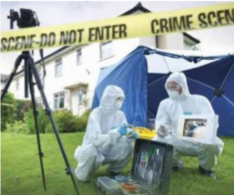
Processing a Crime Scene
As every crime scene is different, there is not one way to process a crime scene
Assessments and boundaries of the crime scene can and will change as the investigation proceeds
Objective→recognize, preserve, collect, and interpret all physical evidence at a scene
Physical Evidence
Forensic testing of physical evidence can provide many different kinds of information
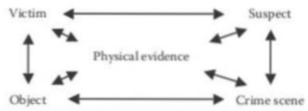
Linkage between persons, scenes, and objects
Based on Locard’s Exchange Principle: whenever two objects come into contact there will be a mutual exchange of matter between them
Investigative leads
Information on the corpus delicti (“body of the crime”)
Information on the modus operandi (“mode of operating” or “M.O.”)
Proving or disproving witness statements
Identification of suspects
Identification of unknown substances
Reconstruction of a crime
Crime Scene Procedures: Scene Management
Crime scene requires management of
Information
Manpower
Technology
Logistics
Different police forces will use different models and personnel depending on demand and availability

Crime Scene Procedures: First Responding Officer
Police officers, emergency medical personnel, and/or fire department are typically the first to arrive on scene
View the crime scene in its most original condition
Their actions will determine the basis for a successful or unsuccessful resolution of the investigation
Upon arrival safety is the primary concern then initiate crime scene measures:
Assist the victim
Search for and arrest suspect if still on scene
Detain any witnesses and keep the separate from each other and the scene to preserve objectivity
Protect and secure crime (barrier tape, official vehicles, ect.)
Establish a crime scene security log to record any persons entering and exiting the crime scene and limit access
Crime Scene Procedures: Crime Scene Survey
Investigator will perform a preliminary scene survey or walk-through
Note any transient or conditional evidence that may be present that requires immediate protection and processing
Be aware of weather conditions
Note any points of entry, exit, or paths of travel within scene
Notify superior officers or other agencies required
Crime Scene Documentation and Forensic Photography
After walk-through, the scene’s condition must be documented for a permanent record before processing
4 major tasks of documentation:
Note taking
Videography
Photography
Sketching
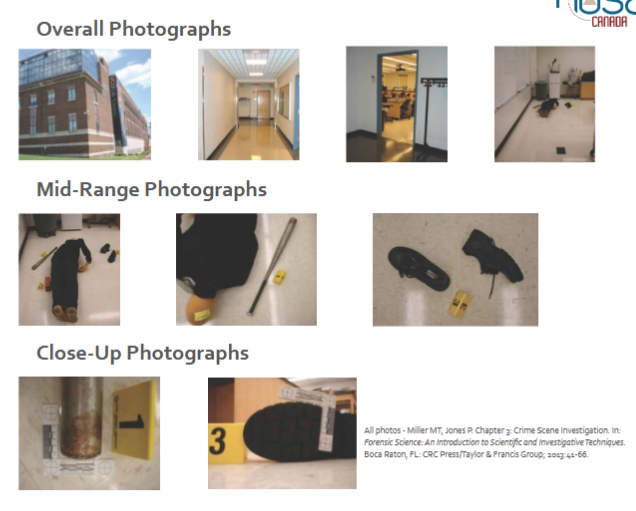
Crime Scene Documentation: Photography
Photography of the crime scene provides a permanent, true, and accurate pictorial record for any legal concerns
Digital images provide instant access, easy integration into existing electronic technologies, and no need for expensive film processing equipment
Disadvantages include court admissibility due to ease of image manipulation
Software now used that provides logs and records of all changes made to the original
Amount of photos varies by crime scene
Rule of thumb: too many is better than too fre
All photos must be recorded in a photo log
Crime Scene Documentation: Notes
Written record of all crime scene activities
Taken as they are completed
General guidelines considered are the W’s (who, what, when, where, and why?)
Notification information
Arrival information
Scene description
Victim description
Crime scene team
Crime Scene Documentation: Videography
Has become routine practice in crime scene documentation
Crime scene video should:
Follow the scene survey in a scientific crime scene manner
Not include any crime scene members or their equipment
Not be narrated or contain any audio recording of subjective information at the scene
Provides an overall, accurate impression of the crime scene that can’t be accomplished with photo alone
Crime Scene Documentation: Sketching
Final task of crime scene documentation
For obtaining and recording accurate measurements of the scene and the physical evidence
Typically from overhead or side-view perspectives
3 techniques used to obtain measurements for the sketch:
Triangulation
Baseline (fixed line)
Polar coordinates
All techniques identify 2 starting or fixed points and all subsequent measurements of the crime scene are in relation to those points
Require their own documentation
Picture- slide 17

Crime Scene Documentation: Searches
Preliminary search is an initial quasi-search for physical evidence for obvious items before documentation
After documentation a more efficient and effective search for less obvious of overlooked items of evidence is completed
All pieces of evidence must be subjected to the same documentation
Crime scene search patterns meant to give organization and systemic structure to ensure no evidence is missed
No single method, each have their own advantages and disadvantages
Most commonly employed search methods:

Important items are not touched or moved during the search
Items should be marked without altering them
Items must be documented before they are moved and as they are moved
This is part of the chain-of-custody procedures
Searching will frequently require the usage of field testing and the use of visualization and the enhancement reagents for biological fluids or impression evidence
Collection and Preservation of Physical Evidence
After documentation and search
One team member is designated as the evidence collector who collects, packages, marks, seals, and preserves in a consistent manner
No rigid order for evidence collection
But some evidence should be given priority due to its nature
If evidence is moved/collected and more evidence is found then documentation must be performed immediately
Most items of evidence are packaged in a primary container that is then placed into a secondary container
Large pieces of paper are used to fold around large items to secure trace evidence(ie. Pants with traces of hairs or fibres)
The folds are then placed into outer containers

Outer containers are completely sealed with tamper resistant tape
Seal tape initialed by collector
Additional information included such as date, time, and location
Most items are solid and easy to collect
Liquid or volatile items should be placed in airtight containers
Biological evidence can be temporarily packaged in airtight containers but should be allowed to air dry in a controlled environment and repackaged
Each item of evidence should be packaged separately to prevent cross-contamination
Crime Scene Reconstruction
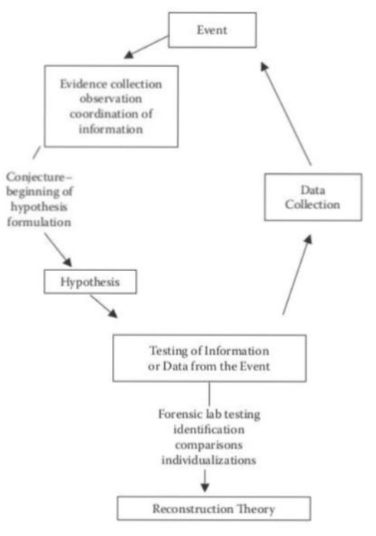
Process of determining or eliminating the events that could have occurred at the crime scene by analysis of the crime scene appearance, location, and position of the physical evidence and its examination
Based on observation, scientific experimentation and relevant past experiences of the investigator
Follows the basic scientific principles, theory formulation, and logical methodology
Any reconstruction is only as good as the information provided from the crime scene
Death Investigation
An unexpected death or one thought to have been caused by injury or poison is always investigated to determine if it was homicide
Any investigation is completed by a trained death investigator
Mathis of death investigation vary greatly in different places in the world

Systems of Death Investigation
The cause of death is important for determining inheritance and taxes, criminal activity, or public health issues
Not exclusively forensic but a public service
English speaking countries have coroners that are government agents responsible
The office of the coroner has existed in England since before the 10th century
Systems of Death Investigation: Medical Examiners
Before, coroners has quasi-judicial function and determined the causes of death but no particular education or training was required
Late 19th century established standards of education and training for certain professions
Massachusetts was the first state to license doctors and nurses and legislature passed a statute that replaced coroners with medical examiners
Medical examiners are required to be licensed and practice medicine
System was adapted by many big cities around the time of WW1
In recent years, more laws have established medical examiners and thus eliminated/weakened the position of the coroner
Rural areas tend to still have elected coroners that don’t require education and training in medicine or forensic pathology
Some states have coroners that require training and continued education
And some states have both coroners and medical examiners

Systems of Death Investigation: Forensic Pathology
Pathology- “Pathos” Greek for “suffering” or “disease” and “logos” meaning “word” or “writing”
Forensic pathologists are physicians specializing in pathology (diagnosis of disease) who then subspecialize in law and medicine
Began to appear in hospitals in the middle of the -9th century after advances in the microscope
Later began to manage the labs where blood and urine samples were tested
Police and coroners recognized they needed help of pathogens in death investigations
Thus pathologists began completing autopsies
Investigation of Death
Purpose is to determine its cause, manner, mechanism, and time of death
Forensic pathologist is required to present physical evidence to support his/her conclusions
Draws conclusions from investigation, descriptions of the scene, case histories, and autopsy results
Investigation of Death: Cause and Mechanism of Death
Cause of death is the disease of injury that initiated the lethal chain of events, either briefly or prolonged, that led to death
Mechanism of death is the biochemical or physiological abnormality produced by the cause of death that is incompatible with life
Injury takes precedence over disease in determining cause of death
Paper-thin skull fable
A person with a paper-thin skull was knocked down in an altercation. The paper-thin skull was a severe disease; the person would have survived the altercation likely with no injuries if they didn’t have this but the cause of death was blunt force trauma. The paper-thin was a contributing factor

investigation of Death: Manner of Death
Manner of death is the fashion in which the cause of death came to be
Hundreds and thousands of possible causes of death but only 5 manners of death
Natural
Accidental
Homicidal
Suicidal
Undetermined
Natural deaths are cause solely by disease, without intervention of trauma
Accidental, homicidal, and suicidal involve trauma
Investigation of Death: Time of Death
When a person dies, changes in the body occur that can be used to estimate a time of death
Livor mortis - discolouration of the body that occurs from the settling of red blood cells after the blood stops circulating; slowly disappears with decomposition after 36 hours
Algor mortis - cooling of the body after death assuming the ambient temperature is lower than body temperature
Rigor mortis - stiffening of the muscles that occurs ~4 hours following death; chemical reaction when glycogen normally found in muscles is not reformed; generally disappears 24-36 hours after death

Tools of Death Investigation
Reviewing medical history
First issue is to determine whether jurisdiction exists to investigate the death
Is the death sudden? Unexpected?
Reviewing witness statements
Helps determine jurisdiction in cases where injury is not obvious
Can potentially create prejudice of the forensic pathologist
Scene examination
Ideally forensic pathologist would examine the scene of death themselves but impractical due to costs
Usually only sent to unusual or complicated scenes
Autopsy
Dissection of the human body to determine the cause of death
Some religions forbid/restrict dissections
Objections by next of kin to an autopsy are respected as far as possible
In the US, autopsy is mandatory if death is within the jurisdiction of the coronary or medical examiner and cause of death cannot be determined otherwise
Autopsy: The process
Removal through incision of the internal organs of the chest, abdomen, and head
Inframammary incision- beginning at each shoulder, extending to the midline of the body in the lower chest, and extending to the top of the public bone (T-shaped incision)
Examination of the brain - an incision is made from behind one ear to behind the other, reflection of the scalp by peeling it upward and backwards then sawing the skulls in a circular cut followed by removing the skull cap
After removal, organs are weighed and dissected to determine disease or injury

Autopsy: Documentation and specimens
Proper documentation in death investigation is an important as in crime scene investigation
Autopsy photos are required
Forensic pathologist collects samples for other forensic professionals (toxicologists or DNA analysts)
Blood is usually taken from the aorta or other large veins
Some drugs redistribute postmortem and venous blood is considered more reliable than heart or aorta
Blood and urine are routinely used to determine the presence of common drugs or abuse
Small portions of internal organs are put in solutions of formaldehyde to fix and preserve them
Will also preserve a specimen from the autopsy for future DNA analysis
Investigation of Traumatic Death
Traumatic deaths can be:
Natural
Accidental
Suicidal
Homicidal
Each can be classified as:
Mechanical
Sharp Force
Blunt Force
Non-firearm
firearm (high or low velocity)
Thermal
Chemical
Electrical
Trauma surgeons classify trauma as penetrating (gunshot or stab wounds) or non-penetrating (motor vehicle collisions or falls)
Investigation of Traumatic Death: Mechanical Trauma - Sharp Force Injury
Mechanical trauma occurs when an applied physical force exceeds the tensile strength of the tissue
Caused by sharp implements (knives, swords, axes)
Sharp objects produce incised wounds
Blunt objects produce lacerations
Difficult to determine the size of a sharp object from examination of the characteristics of the wound
Most commonly causes death by exsanguination or bleeding to death
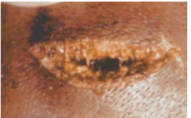
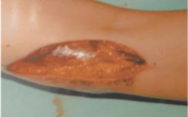
Investigation of Traumatic Death: Mechanical Trauma - Blunt Force Trauma and Firearms
Causes death most commonly when the brain has been significantly damaged
Can lacerate the heart or aorta leading to exsanguination
Firearms cause a special kind of blunt force trauma
How an injury is produced depends on the velocity of the projectile
Penetrating gunshot wounds have an entrance wound but no exit wound thus projectile must be recovered during autopsy
Perforating gunshot wounds have both an entrance and an exit wound
When a firearm discharges, the bullet is ejected from the barrel along with hot expanding gases, unburned propellant, and other residues
How far each component travels can be used as an estimate for determining the distance of the barrel from the deceased at the time the weapon was discharged
Skin will show variable amounts of laceration due to gas blown into the wound that it tears it apart
Gases can be seen as blackening of the skin
Carbon monoxide reacts with hemoglobin and myoglobin in the wound to produce carboxyhemoglobin and carboxymyoglobin (bright red)

As the distance from the barrel to the skin increases, the effect of the gas diminishes and only the unburned powder and the bullet penetrate the skin
Unburned powder produces stippling or tattooing around the bullet hole
Intermediate-range gunshot wounds

Distant gunshot wounds lack the effects from smoke and powder
Range cannot be determined from these types
Typical wound will have a circular skin defect with a rim of scraped skin around the edges
Diameter of the skin defect is some indication of the diameter of the bullet but not reliable
Exit wounds are typically lacerated

Most common are motor vehicle collisions
Generally, homicidal blunt trauma in adults requires lethal head injuries
Blunt force trauma to the head leads to copious bleeding due to the vascularity of the scalp
Most common mechanism of death then is drowning in the blood that has aspirated into the lungs

A single or even multiple blows to head rarely produces loss of consciousness
Defensive wounds are typically found on the victim
Unless the victim is restrained by physical or chemical means
Contusion is an accumulation of blood in the tissues outside the blood vessels
Hematoma or blood tumor is a contusion with more blood
Investigation of Traumatic Death: Chemical Trauma
Deaths that result in a use of drugs and poisons
- increasing degrees of coma followed by cessation of breathing and subsequent death
Alcohol
Barbiturates
Benzodiazepines
Opiates

Central nervous system stimulants - results in seizures, extremely high body temperatures, and uncontrolled quivering of the heart
Cocaine
Carbon monoxide (CO) odorless, colourless, explosive gas produced by the incomplete combustion of carbon-containing fuels
Common in accidental, homicidal and suicidal deaths
Investigation of Traumatic Death: Thermal Trauma
Exposure to excessive heat or cold
Hypothermia - excessive cold
Hypothermia - excessive heat
Both cause death via breakdown in the normal mechanisms that maintain body temperature around 37 degrees Celsius
Death from burns are usually delayed and arise from complications after medical treatment
Deaths at scenes of fire are usually due to smoke inhalation not burns
Investigation of Traumatic Death: Electrical Trauma
Passage of electricity through a person may produce death by a number of different mechanisms
At low voltage, the heart can be experience ventricular fibrillation a quivering that leads to non-resuscitability
At high voltage, heart is more likely to experience defibrillation
Forces the heart into tetany, a sustained contraction that is broken when the circuit is broken
Flow of electrical current through tissues creates holes in the membranes of cells called poration
Investigation of Traumatic Death: Asphyxias
Asphyxia is the interruption of oxygenation to the brain by:
Manual strangulation
Strangulation by ligature (hanging)
Drowning
Thermal
Chemical
Summary
Materials at a crime scene become evidence when they are documented and collected
Evidence requires context provided by proper documentation including notes, photos, video, and sketches
Proper documentation is imperative to maintain chain-of-custody
Medical examiners are trained and educated in forensic pathology and are typically those responsible for investigating sudden and unexpected deaths
There are many different causes of death but only 5 manners of death: natural, accidental, homicidal, suicidal, and undetermined
Traumatic deaths are classified as mechanical, thermal, chemical, or electrical
Sample Questions
T/F? There are many different types and kinds of crime scenes.
What is the principle that states “whenever two objects come into contact there will be a mutual exchange of matter between them”?
What are the 4 major tasks of documentation
Name 2 search methods used by crime scene investigators?
T/F? All evidence should be packaged individually and sealed with tamper-free tape and initialed by the collector
Who re the present-day professionals typically responsible for death investigations?
What are the 3 changes that happen to a body after death?
What are the 5 manners of death?
Module 5: Forensic Anthropology
Forensic Anthropology
Defined most broadly as the application of the theory and methods of anthropology to forensic problems
Most forensic anthropologists are specialized in physical anthropology: the study of human biological function and variation, particularly skeletal
Application of knowledge regarding human skeletal biology with specializations in
Forensic taphonomy - the interpretation of primarily outdoor death scenes and postmortem processes
Forensic arcaeology - the recovery of scattered or buried remains
Modeling soft tissue form based on underlying skeletal form (e.g., facial approximation)
Biomechanical interpretation of sharp and blunt force injuries, primarily to bone
Complements the forensic pathologist’s emphasis on soft tissue
Examination of human remains focuses in 3 tasks:
Identifying the victim or at least providing a biological profile (age, sex, stature, ancestry, anomalies, pathology, individual features
Taphonomic assessment, a reconstruction of the postmortem period based on the condition of the remains and the recovery context
Providing data regarding the death event, including evidence of trauma occurring at the time of death (perimortem period)

Forensic Anthropology as a Profession
Typically serve as consultants to medical examiners, coroners, and law enforcement
Modern forensic anthropology began 1939 with the FBI Bulletin article by W.M Krogman
Anthropologists were involved during and after WWII and the Korean War identifying the war dead
1977 - American Board of Forensic Anthropology (ABFA) was formed to examine and certify forensic physical anthropologists at the postdoctoral level
Study human variation and evolution in relationship to behavioural patterns, including culture
Explanations about patterns of human shape and size (skeletal, dental, and soft tissue morphology) include growth and development, pathology and population development
Many forensic anthropologists specialize in osteology and odontology as bones and teeth survive over time

Adult skeleton has approximately 206 bones
Can vary between inviduals
Children and infants have many more as some bones have ossification centers that have not yet fused together yet
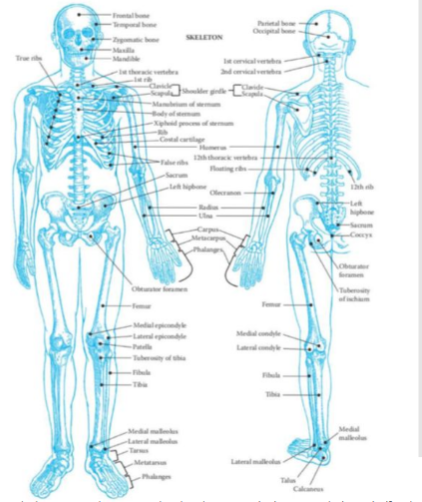
Knowledge of the human physical form and function is combined with scientific input regarding postmortem changes (taphonomy) to interpret the condition of human remains
Outdoors scenes may have changes such as:
Normal decomposition
Alteration and scattering by scavengers
Movement and modification by flowing water, freezing
Mummification
Postmortem alterations must be differentiated from the antemortem condition to estimate the time since death, reconstruct place of death, interpret the data and properly identify the remains
Locating Human Remains
Frequently will help law enforcement and medical examiners in recovery searches and recovery of remains in mass fatality incidents or human rights investigations
Can be terrestrial or over water
Role of forensic anthropologist ranges from search team member to leader depending on type of case and jurisdiction
Will generally do onsite identification of scattered remains and skeletal inventory
Recovering Human Remains
Often remains are recovered from outdoor scenes, on the surface or buried
Archaeological techniques are used to improve the recovery success and provide careful documentation of how remains are positioned
Initially, a grid will be superimposed on the area to be intensively examined in order to preserve information regarding spatial distribution
Marked on the ground or computerized
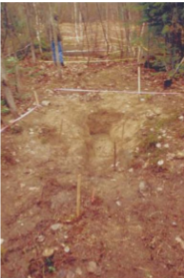
Entire area is photographed and documented
Remains are removed gradually noting the position of skeletal parts and artifacts
Plants and insects associated with the body are also collected and preserved
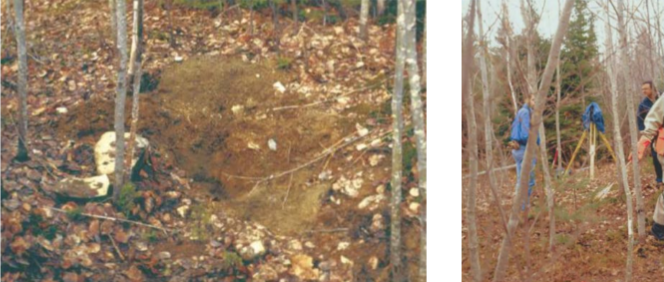
Screening area is set up close to the grave where material from the grave and around are systemically sifted through
Next, excavation several yards in every direction from the grave is completed
An attempt to learn the position of the body prior to excavation is ideal
As soon as hands, feet, and head are exposed and photographed it is best to collect them to prevent the loss of small bones, fingernails, teeth, ect.
In cases of burned bodies or small children it may be necessary to remove the body along with surrounding sediment to prevent any loss of tiny bones
All sediment removed from a grave is screened to search for additional remains and evidence
same considerations applied to graves as crime scene for documentation
If remains are very fragile, they may be strengthened with preservatives or splints
Are They Human?
Differentiating human from nonhuman animal bones and teeth is a critical function
Mammalian and avian long bones are similar to human long bones
Bear paws are notoriously similar to human hands and feet
Bones and teeth of immature humans and other animals can be particularly ambiguous
Newborn human skull consists of many bony elements that have not yet fused together and not readily recognizable

Are They of Forensic Importance?
In most jurisdictions, when skeletal materials are found unexpectedly, they are turned over to the medical examiner or coroner and then a forensic anthropologist
Some tend to be unmarked historic or prehistoric graves
Laws govern the final disposition of remains judged to be historic or prehistoric graves and state-specific procedures are followed
Taphonomic Assessment of the Body in its Environment
Close attention should be given to the immediate environment and surrounding where the body is found, the taphonomic context
Helps with:
Interpretation of the condition of the remains
Postmortem interval
Determining if the death took place where the body was found or another location
Important to note how much heat, moisture, and precipitation has reached the body to help interpret decomposition
Postmortem interval estimation is stated as a range, as it is probabilistic and conditional
Soft Tissue Examination and Processing
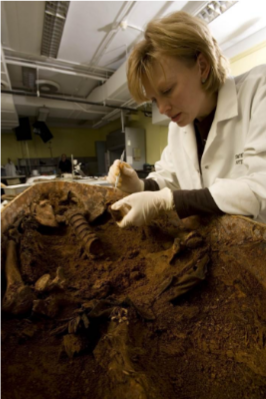
After documentation, the remains are processed for skeletal examination
In decomposed or partly skeletonized cases, some soft tissue examination may still be possible
Fingerprints are sometimes still possible
Done in collaboration with the forensic pathologist
X-rays and examination of soft tissue completed to locate embedded or hidden bullets or teeth
Developing a Biological Profile
Forensic anthropologist plays a key role when the identity of victim is unknown to develop a biological profile
Estimation of: age, sex, population/ancestry, stature
Goal is to describe the victim is such a way law enforcement or acquaintances can narrow the range of possible identities
Uses statistical descriptions of various populations that have been studied and reported on previously
Difficult when different populations are encountered in investigations, using US standards is not applicable
Requires population-specific studies
But human populations do not have fixed boundaries, ability to assign a remains a fixed age and sex can be significantly impaired
Developing a Biological Profile: Estimating Age
Familiarity with dental and skeletal development at each stage of life
Size is a common indicator of age in infants and children using the length of long bones (diaphyses)
Skeleton is formed by the development and growth of ossification center
Timing of the formation, growth, and ultimate fusion of the ossification centers is patterned depending on age, sex, bone element involved, nutritional and hormonal status, and individual variation
Patterns of bone development differ slightly between males and females between populations

Humans have two sets of teeth
Deciduous dentition shed in childhood (20 teeth)
Permanent dentition most adults have 32
Patterns of tooth development also differ slightly by sex and population
Number of skeletal collections including children with documented ages at death are few; thus, knowledge of population differences is limited
Comprehensive radiographic studies for bone development
But bones that are partly or recently fused have a different appearance in x-rays than they do the naked eye
Standard for dental development tend to be slightly more precise
Bony skeleton is not fixed in adulthood; it changes continually until death
In general, bone density peaks in the 20s and stays fairly high until decline in the 40s
Females experience a significant drop in bone density around menopause
Females are more likely to experience osteoporosis, serious bone density loss
Common to see some deterioration in join integrity as well, osteoarthritis
One of the most reliable indicators of age is the pubic symphysis
Area on the pelvis where the right and left pelvis halves join in the front of the body
Flattened area at the end with a band of cartilage joining the two symphyseal faces
With age, these surfaces change from billowed to more flattened and rimmed
Several published standards exist
Standards also published for age-related changes in the end of the fourth rib to the breastbone/sternum
Bones of the cranium tend to fuse together along the suture connections between them
Generally older persons have more fusion

Developing a Biological Profile: Determining Sex
Sexual dimorphism is the differences in size and shape between the sexes
Indicators of sex:
Size
Muscularity
Overall size
Presence/absence of certain traits
DNA methods produce very accurate determinations of biological sex
Gender is the psychological and sociocultural attribution of sex and may be different from biological sex which is based on genetic and hormonal differences

Prior to puberty the skeletal differences are so small a forensic anthropologist won’t attempt to assign sex
After puberty skeletal differences increase and the accuracy rate is well over 90% in sex attribution
Skull and pelvis are the most sexually dimorphic areas
Female pelvis has additional breadth and increased diameter of the pelvic inlet and outlet for birth
Male skulls tend to be larger, more robust at areas of muscle attachment and biomechanical stress (brow ridges, chin)
Developing a Biological Profile: Estimating Population Ancestry
Humans are a single species - no absolute physical or genetic reproductive barriers even between major human groups
Definitions of race are socially constructed typologies characteristics is difficult and often impossible
Methods should utilize comparable reference populations based on statistical measurements, but are limited
Estimation of living height or stature is not as straightforward as one would believe as stature is not a fixed trait
Adult stature changes (shrinks) from morning until night and over lifetime
Missing persons reports are usually a rough estimate of height
Stature can be calculated for decomposed or skeletonized remains using reliable methods
If the body is essentially complete, the length can be measured
Loss of muscle support will loosen joints and lengthen the body somewhat
If the body is skeletal and the joints are no longer held together with soft tissue (disarticulated), but some long bones are present, stature can be estimated using formulas, a concept called allometry
Identification
Identifications are often based on visual identification or circumstantial evidence (i.e., clothing, location, or pathological condition)
In suspicious death cases, positive identification is required, this is identification beyond a reasonable doubt
In practice these identification methods are legally accept and include
DNA analysis
Fingerprints
Dental records
X-rays
Uniquely identifiable medical apparatus (i.e., artificial joint)
Facial approximation is a method of recreating the soft tissue appearance based on the shape of the bones of the face
Significant limitations and not a positive identification method
Key description features such has hair length, facial hair, glasses have to be guessed

Description of individual characteristics may help narrow the number of possible identities but may also reveal features the victim, family, or friends were not aware of, examples include:
Congenital anomalies
Antermortem medical conditions or disease
Domestic abuse
An anthropologist may contribute evidence towards making an identification but the legal authority of this lies with the medical examiner or coroner
Evidence falls into one of 3 levels of certainty:
Possible - where biological and medical profile for the set of remains is consistent with characteristics reported for a given individual
Probable - where it is more probable than not that this individual is so-and-so and often includes circumstantial evidence
Certainty - beyond a reasonable doubt
Trauma
Forensic anthropologist can also contribute evidence to the forensic pathologist to determine the cause and manner of death
Human remains frequently exhibit sins of trauma:
Antemortem trauma - healed or healing prior to death
Perimortem trauma - occurring at or around the time of death
Remains may undergo postmortem modification by taphonomic damage
Bone damage is divided into
Blunt force trauma
Sharp force trauma
Possible for different agents of bone modification to produce similar types of damage, known as equifinality
Documentation and Testimony
Documentations and record are crucial
Recommended that the basic forensic anthropology report include 5 components:
Chain of custody
Taphonomic assessment
Biological profile
Identification characteristics and interpretation
Description of trauma
Forensic anthropologists are typically asked to testify as expert witnesses in court and essential they uphold the principle of scientific neutrality
Summary
Forensic anthropologists are key members to death investigation teams participating in recoveries of remains that are decomposed, burned, or skeletal
Generally work as consultants to medical examiners/coroners/law enforcement
Their examinations complement those of the forensic pathologist in the assessment of identity, trauma, and circumstances of death
Their examination will include a taphonomic assessment of the body’s condition in relationship to the environment and will often include an estimate of the postmortem interval
By careful examination of all skeletal elements, a biological profile can be developed and used to seek and identification
Quizlet
Most forensic anthropologists are specialized in what area of anthropology?
Forensic anthropologists typically serve as consultants to who? (3 possible answers)
What sort of techniques are applied to improve the recovery success and provide careful documentation of how remains are positioned?
What is a taphonomic assessment?
What type of information does the taphonomic assessment provide?
A forensic anthropologists examination is typically complementary to the work of the ______?
What are the 4 features estimated by a biological profile?
What are some of the limitations associated with methods used to determine a biological profile?
Module 7: Identification of Blood, Bloodstains, Biological Fluids and Stains
Introduction
Violent crimes typically involve the presence of blood at the scene
Many times the patterns of the bloodstains can be used to infer the events of a crime

Bloodstain Pattern Evidence
Geometric analysis of human bloodstain patterns at crime scenes
Forensic tool that assists the investigator to better understand what took place
Form of crime scene reconstruction
The analysis is only as valuable as the information available and the ability of the examiner performing the analysis
History of Bloodstain Pattern Analysis
Bloodstain pattern analysis has been documented for centuries but the modern science of it began in the 1800’s
Has been used as a recognized forensic discipline since 1955
2002 SWGSTAIN (Scientific Working Group on Bloodstain Pattern Analysis) was formed
Properties of Human Blood
Biological Properties
Extracellular fluid
Characteristic colour red comes from the complex formed between hemoglobin in red blood cells (RBCs) and oxygen
Blood consists of a fluid portion referred to as plasma
Plasma contains the cellular components consisting of red blood cells (RBCs), white blood cells (WBCs), and platelets
When blood clots, the liquid portion that doesn’t clot is referred to as serum
Nuclei of white blood cells contain the source of DNA for blood
A person who loses a significant amount of blood can die bleeding to death called exsanguination
Physical Properties
Exposed human blood is not much different from other fluids
Blood is held together by strong cohesive molecular forces that produce a surface tension
Surface tension is the force that pulls the surface molecules of a liquid towards its interior
This decreases its surface area and causes it to resist penetration
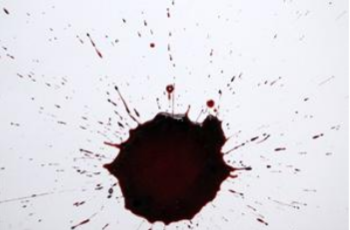
To create a spatter of blood, an external force must overcome the surface tension of the blood
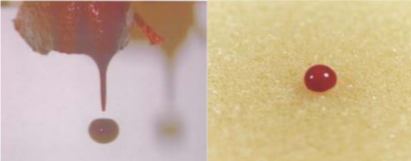
A drop of blood in mid air assumes the shape of a spheroid
Not a teardrop shape as commonly illustrated
Viscosity is the resistance required to change form
The more viscous a fluid, the more slowly it flows
Specific gravity is the weight of a substance relative to the weight of an equal volume of water
Blood is ~6x more viscous than water and has a specific gravity slightly higher than water
These physical properties of blood tend to maintain the stability of exposed blood or blood drops and help them to resist alteration or disruption
A blood drop falling through air will increase its velocity until the force of air resistance that opposes the drop is equal to the force of the downward gravitational pull - terminal velocity
A free-falling drop of blood at increasing heights will produce bloodstains of increasing diameters
Heights greater than 7ft will not produce increased diameters of bloodstains
Despite all this, it is difficult to estimate the height a passive drop of blood has fallen as the volume is unknown
Target Surface Considerations
No matter how far a drop of blood falls, it will not break into smaller droplets or spatters unless something disrupts the surface tension
The physical nature of the target surface the drop strikes will affect how the surface tension is broken
Hard, smooth, nonporous surface (glass or tile) will create little to no spatter
Rough texture (wood or concrete) can create a significant amount of spatter

Size, Shape, and Directionality
geometry of individual bloodstains will generally allow determination of direction of flight priot to impacting an object
Examine the edge characteristics of individual stains
Narrow end of an elongated bloodstain usually points in the direction of travel
Determine the directionality of several bloodstains
Draw a straight line through the long axes of the bloodstains to determine the area of convergence, the relative location of the blood source in a 2-dimensional perspective
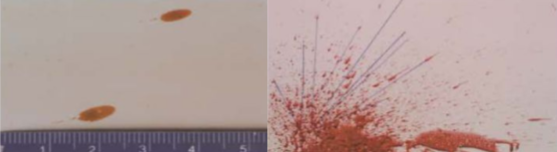
Area of origin can also be determined in a 3-dimensional perspective
Establish the angles of representative bloodstains
Project their trajectories back to a common axis extended at 90 degrees from the 2-dimensional area of convergence
an approximate location of where the blood source was when it was impacted may be established

If the angle of impact is 90 degrees, the resulting bloodstain generally will be circular (A)
Blood drops that strike a target at an angle less than 90 degrees will create elliptical bloodstains (B)

Mathematical relationship between the width and length of an elliptical bloodstain allows for the calculations of the angle of impact for the original spherical drop of blood
Measure the width and length of the bloodstain
Width is divided by length to produce a ratio less than 1
The ratio is the arcsine of the impact angle
Circular bloodstains will have a ration of 1, which corresponds to an impact angle of 90 degrees
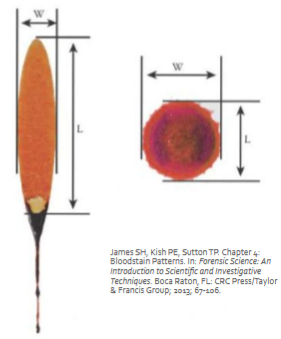
After the angle of impact for each bloodstain has been established, the 3-dimensional origin of the bloodstain can be determined
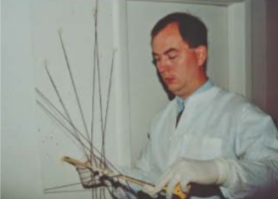
Stringing involves placing elastic strings at the base of each bloodstain and projecting these strings back to the axis that has been extending 90 degrees up or away from the 2-dimensional area of convergence
Each string corresponds to the angle of impact previously determined
This method is being replaced by automated digital methods but the underlying concepts are the same
Spattered Blood
Random distribution of bloodstains that vary in size
May be produced by a variety of mechanisms
Size and range of the spatter is affected by the amount of blood and the force applied
Categories of blood spatter:

Analyst must identify a pattern as a spatter before attempting to ascertain the specific mechanism that created it
Identification and analysis of blood spatter patterns are significant because
May allow for the determination of an area or location of the origin of the blood source when the spatter-producing event occurred
If found on a suspect’s clothing, may place that person at the scene of a violent altercation
May allow for determination of the specific mechanism by which the pattern was created
The size, quantity, and distribution of these spatters vary depending upon:
Quantity of blood subjected to impact
Force of the impact
Texture of the surface impacted by the blood
These factors are easily controlled in laboratory settings but vary greatly in actual casework
Impact Spatter Associated with Gunshot
May produce minute spatters of blood less than 0.1mm in diameter called misting indicative of gunshot
Impact spatters associated with gunshot often exhibit a wide size range
Dependent on the quantity of available blood, caliber of weapon, location, number of shots, and impeding factors such as hair, clothing, etc.
Misting impact spatter most commonly associated with gunshot but can also be produced by explosions, high-speed machinery, and high-speed automobile collisions
2 sources when associated with gunshot
Back spatter when associated with and entrance wound found on the weapon and shooter
Forward spatter when associated with an exit wound has a larger quantity and distribution of blood
Photo-slide 21
Impact Spatter Associated with Beating and Stabbing
Generally exhibits a size range from 1-3mm in diameter
Exposed blood must exist for impact spatters to be created
But the blood or bloodied area itself does not have to receive the impact
A sharp object or a blunt object and the number of blows inflicted will have an effect on the resulting bloodstain pattern
Size ranges of spatters produce By the different mechanisms can be very similar
Not always possible to determine the mechanism
Sometimes there are also multiple mechanisms (i.e., combination of gunshot (A), expirated blood (B), and beating (C))
Photo-slide 23
Significance of Satellite Spatters Resulting from Dripped Blood
Several factor influence appearance of satellite spatter, including:
Blood drop volume
Freshness of blood
Surface texture
Distance of the vertical target from the impact site
Castoff Bloodstain Patterns
Subsequent blows to the same general area where a wound has occurred and blood has accumulated produces cast-off patterns
Blood will adhere in varying quantities to the object that produces the injuries
A centrifugal force is generated as an assailant swings a bloodied object
If this force is greater than the adhesive forces holding the blood to the object, blood will be flung from the object to form a castoff bloodstain pattern
The blood that is castoff will strike objects and surfaces at the same angle from which is was cast
Size, distribution, and quantity vary
Often seen in conjunction with impact spatters
Studying both impact and castoff patterns may help determine the relative position of the victim and assailant
Photo slide 27
Bloodstain Patterns Resulting from Large Volumes: Splashed and Projected Blood
when a quantity of blood>1.0ml is subjected to minor force or free falls onto a surface, a splashed bloodstain pattern is produced
Usually have large central areas with peripheral spatters
Secondary blood splashing or ricochet may occur from deflection from one surface to another with large volumes of blood
Photo slide 28
Projected bloodstain patterns occur when blood is projected or released as the result of force exceeding that of gravity
Exhibits numerous spine-like projections with narrow streaking
Photo slide-29
Expirated Bloodstain Patterns
As a result of trauma, blood will often accumulate in the lungs, sinuses, and airway of a victim that is forcefully expelled from the nose or mouth to free the airways creating expirated bloodstain patterns
Similar to impact patterns associated with beatings and gunshots
May appear diluted if mixed with sufficient saliva or nasal secretions
May be visible air bubbles within the stain from air from the airway called vacuoles
Presumptive indicator of expirated blood but not conclusive proof
Photo-slide 31
Arterial Bloodstain Patterns
Occurs when an artery is breached and blood projects from it in varying amounts
Size varies from very large gushing to small spray types of patterns
Depends on the severity/location of the injury to the artery and position of the victim
Analyst should verify their hypothesis of an arterial bloodstain pattern with the autopsy or forensic pathologist
Figure shows an arterial spurt pattern produced by victim who sustained a severed right carotid artery
Phot slide 32
Transfer Bloodstain Patters
When an object wet with blood comes into contact with an object or secondary surface, a blood transfer pattern occurs
Sometimes a mirror image of the original surface may be produced to help determine the object (I.e., knife, shoe, ect.)
Class or individual characteristics may be determined from distinct blood transfer patterns such as fingerprints
Partial blood impressions are often chemically enhanced by to resolve additional detail
Photo-slide 33
Altered Bloodstains
Bloodstains deposited on surfaces at a scene are subject to various forms of change
Importance to recognize and understand these alterations to reconstruct the events at a crime scene
Drying and clotting of blood is initiated when it exits the body
Depends on volume, texture of target surface, and environmental conditions
Drying is accelerated by increased temperature, low humidity, and increased airflow
The outer perimeter of the bloodstain will show evidence of drying and proceed toward the central portion
Skeletonized bloodstain is when the center of a dried bloodstain flakes away and leaves a visible outer rim
Bloodstains change colour as they age from red to reddish brown and eventually to black
Estimating the age of a bloodstain based on colour is difficult due to a number of environmental factors that play a role in this process
Photo-slide 25
Clotting process is initiated when blood exits the body
Appearance and extent of clotted blood may be an indication of the amount of time that has elapsed since the time of the injury
Normal clotting time is 3-15 mins in healthy individuals
A clot will form a jelly-like mass and retract from the serum
Photo slide 36
Moisture, such as rain or snow, will dilute existing bloodstains at a scene exposed to the outside environment
May also encounter indoor scenes that have been attempted to be cleaned with water and/or detergent
Diluted bloodstains may be difficult or impossible to locate without the use of chemical enhancement such as luminal
Heat, soot, and fire can significantly alter bloodstains
Absences of bloodstains in otherwise continuous patterns of staining are called void areas
Usually due to items that have been moved that were spattered with blood
Analysis of Bloodstains on Clothing and Footwear
Clothing of a suspect is often critical evidence
2 questions arise with bloodstained garments:
Whose blood is on the garment?
How was the blood deposited onto the garment?
NA technology allows for the determination of who’s blood
A bloodstain pattern analyst will determine how the blood was deposited
Deposition of blood on garments falls into one or both of the following:
Passive bloodstaining
Transfer, flow patterns, saturation stains, and stains resulting from dripping
Active bloodstaining
Impact spatter, arterial spurts, expirated bloodstains, and castoff
Always necessary to identify and document the specific patterns prior to attaching any case-related significance to patterns
This analysis often centers on substantiating or refuting the suspect’s version of how the clothing became stained
Analysis of bloodstains on clothing can be very difficult
Requires a lot of experimentation and extensive experience
Bloodstain patterns on textiles are unpredictable
Much caution should be taken when interpreting the patterns
Documentation of Bloodstain Evidence
Same documentation considerations and procedures for crime scenes are required for all bloodstain patterns
Refer to presentation “Crime Scene and Death Investigation”
Absence of Evidence is Not Evidence of Absence
In many cases, the presence of bloodstains originating from the victim and found on the suspect is powerful evidence to link the suspect to the violent act
BUT the absence of blood spatter on a suspect does not preclude their active participation in a bloodshed event
Not uncommon for an assailant to have little if any blood on their person after committing a violent crime
Assailant may have changed clothing
Site of injury was covered with clothing during assault thus reducing the amount of spatter
Forensic Serology
Forensic serology is the examination and analysis of body fluids in a legal context
Blood
Saliva
Semen
Urine
Frequently samples are stains and often degraded or deteriorated making successful analysis more difficult
DNA analysis is much more powerful and discriminatory far exceeding that of serology
Blood
Identification of a stain as blood is one of the most important preliminary tests performed on physical evidence
This is called screening and presumptive testing and is an important step as DNA analysis is very expensive and timely
Cellular component (45%)
RBCs (transport oxygen and bicarbonate)
WBCs (active in fighting disease)
Platelets (for clot formation
Noncellular component Plasma (55%)
Serum (carries proteins and electrolytes)
Fibrogen (material that forms clots)
DNA typing targets nucleic DNA thus requires WBCs
Identification of Blood
Employs a presumptive test followed by a confirmatory test
Presumptive testing always requires further testing for absolute identification
No single test is absolutely specific for blood
Presumptive tests may consist of colour change reactions or a release of light
Both rely on catalytic properties of blood
Catalytic Colour Tests
Employ chemical oxidation of a chromogenic substance by an oxidizing agent catalyzed by the presence of blood, specifically hemoglobin
Solution of the chromogen is added to the bloodied sample in question
Followed by addition of the oxidizing agent
Rapidly developing colour constitutes a positive test
False positive results (a positive result from a substance other than blood for example) and false negative results (a negative result even when blood is present) are inevitable with presumptive tests
Usually can be attributed to the presence of chemical oxidants not from blood
Proper use of positive and negative controls should always be employed
Benzidine (Alder Test)
Extensively used as a presumptive test for blood
Reaction results in a characteristic blue to dark blue colour
Benzidine is a carcinogen and is seldom used now

Tetramethylbenzidine and Hemastix
Derivative of benzidine
Reaction results in a colour of green to blue-green
this chemical reaction has been made portable with the use of Hemastix for convenience and safety at crime scenes

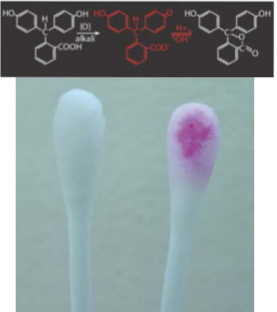
Phenolphthalein (Kastle-Meyer Test)
Commonly used in many forensic labs
Simple acid-base indicator
Produces a bright pink colour
Reagent consists of reduced phenolphthalein in alkaline solution which is oxidized by peroxide in the presence of hemoglobin in blood
Tests Using Chemiluminescence and Fluorescence
If blood has been cleaned up it sometimes cannot be seen under normal lighting conditions
This is when luminol and fluorescein tests are employed
A chemical mixture is sprayed on a suspected area and observing the result in darkness or reduced light with the aid of an alternative light source (ALS)
Light is produced from the reaction of luminol with blood
Often enables the observer to determine the limits, shape, and some degree of detail in the original bloodstained area
these tests can have potential for contamination
Luminol relies on chemiluminescence the process by which light is emitted as a product of a chemical reaction
Most sensitive presumptive test
Fluorescein relies on fluorescence which occurs when a chemical substance is exposed to a particular wavelength of light and light energy is emitted
Confirmatory Tests for Blood
Completed after positive presumptive testing
May proceed directly to DNA typing as only human DNA is detected in this method
Crystal tests target the non-protein heme group of hemoglobin where crystals are observed microscopically
Teichmann test
Takayama test
Species Origin Determination in Bloodstains
Based on immunological reactions in which an antigen (Ag) reacted with an antibody (Ab) to produce a visible solid or precipitate as a positive result (blue line in picture)
Use antibodies found in the serum of human blood
Not as commonly done anymore as DNA typing is human specific

Prelude to DNA: Genetic Markers
Genetic marker systems were used to characterize blood prior to DNA typing
Targeted inherited characteristics under hereditary control
ABO blood group system
Types A, B, O, and AB refer to the antigens present on the surface of RBCs with corresponding antibodies present in the plasma (Table)
Forensic testing using the ABO system identifies both the antigen and antibodies present in a bloodstain or person

Enzyme Markers
Again, used before DNA typing became prevalent
Enzyme systems identified different types of enzymes mainly by electrophoresis and isoelectric focusing methods
Greater ability to discriminate between individuals than just ABO blood grouping
Methods have been developed for a number of different enzymes
Seminal Fluid
Most common body fluid in forensic science besides blood
Produced by post-pubescent males and ejaculated following sexual stimulation
Semifluid mixture of cells, amino acids, sugars, salts, ions, and other organic and inorganic materials
Volumes range from 2-6 mL and typically contain between 100-150 million sperm cells
Principle cellular component of semen is the spermatozoa (sperm cells)
Common method of detecting semen is to stain the sperm cells to allow for visualization under a microscope
Azoospermia semen lacking spermatozoa
To identifying semen without relying on sperm, cells, characterization of enzymes are used instead
Seminal acid phosphatase (SAP)
Acid phosphatases (APs) are a class of enzymes that can catalyze the hydrolysis of certain organic phosphates
SAP found in seminal fluid at uniquely high levels
No correlation between the level of SAP and the number of sperm cells present
Presumptive test for semen identifies SAP by producing a colour
Picture - slide 59
Identification of spermatozoa or prostate-specific antigen (PSA) is the generally accepted standard for confirmatory test for semen
PSA test is used for an SAP positive specimen with an absence of spermatozoa
Important to note other body fluids may test AP positive
Saliva
Slightly alkaline secretion comprised of water, mucus, proteins, salts, and enzymes found in the mouth to aid in the initial stages of digestions
No test specific for saliva
Traditionally relied on detection of alpha-amylase enzyme
Found in many body fluids and tissues but at levels 50x higher in saliva
Starch-Iodine Test - in the presence of iodine, starch appears blue
Proteins from other body fluids (e.g., blood, semen) will compete with starch for iodine and produce false positive results
Phadebas Reagent is commercial product in which starch is linked to a dye molecule to form an insoluble complex
When starch is cleaved from the dye by amylase, dye becomes soluble and can be measured with a spectrophotometer
Urine
Urine testing is performed less frequently due to the insensitivity of the tests and low success rate with DNA profiling
Detection relies on identifying 2 organic compounds
Urea
Creatinine
Use urease, an enzyme that breaks down urea to ammonia and carbon dioxide and ammonia is detected using an indicator chemical
Vaginal Secretions
Identification is especially important for sexual assault cases
Identified on the basis of detecting glycogenated epithelial cells using periodic acid-Schiff (PAS) reagent that stains the glycogen bright magenta
Not a conclusive test
Amount of glycogenation depends on the stage of menstrual cycle, are absent from pre-pubescent females, and uncommon in postmenopausal women
This test is also destructive to the sample impeding the available amount of DNA for profiling
Summary
Bloodstain patterns are found at most violent crime scenes
Treated as any other piece of evidence and properly documented, analyzed, and interpreted
Scientific analysis of bloodstain patterns helps reconstruct the events of a crime
Forensic serology has advanced greatly is the last 20 years
Establishing a degree of identity with minute samples are possible now with DNA
Quiz
Bloodstain pattern analysis is a form of ______.
A drop of blood falling onto a wood surface will create _________ amount of spatter.
What is the method used for determining the 3-dimensional area of origin of a bloodstain?
What are the 2 sources of blood spatter associated with gunshot?
T/F impact Spatter associated with a beating or stabbing is always a result of a bloodied wound receiving the impact.
What is the term for the examination and analysis of body fluids in a legal context?
What is the second most common evidentiary body fluid found at crime scenes?
Urine testing relies on the detection of what 2 compounds?
MODULE 9: Forensic Psychology and Psychiatry
History and Development
The history is entwined with general and inpatient psychiatry
Forensic psychiatry proliferated in the 1960’s and 1970’s
Forensic psychology did not gain licensure as an independent profession until late 1970’s
Prior to this they were not able to consider specific psycholegal issue
1962 - Jenkins v. United States landmark decision allowing psychologists to testify as expert witnessed in criminal matters
Testing Tools
Personality is assumed to dictate behaviour that is reflected in evidence left a crime scene
Critical to investigations to explore the personality of both the offenders and victims
Psychological testing is quasi-quantitative method of evaluating personality, psychopathology, and metal functioning
Projective tests are based on the notion that, if an individual is shown an ambiguous stimulus and asked to respond to it
The response will reveal aspects of their personality
Inner thoughts, wishes, conflicts, and feelings will be projected onto the ambiguous stimuli
Most commonly known is the Rorschach Inkblot Test
Assess personality structure, dynamics, presence or absence of a thought disorder, and accuracy of reality testing
picture slide -6
Thematic Apperception Test (TAT) shows a subject a number of pictures depicting various everyday situations and is asked to create a story based on the pictures
In the precess it is assumed the subject will reveal his wishes, thoughts, conflicts, feelings, and motives
Personality inventories are psychological tests that are highly standardized and have considerable empirical validation for what they are designed to assess
Assess personality traits and characteristics and provide a general personality profile of the subject
Objectively provide characteristics of the offender that might not otherwise be discerned, or to corroborate a finding
Intellectual and cognitive evaluation is essential in any forensic assessment for determining an offender’s criminal responsibility or competency of a crime
A number of specialized tests have been developed that attempt to focus directly on specific legal questions
Majority of information is gathered from the clinical interview
Forensic Applications of the Behavioral Sciences
Uncovering Deceptive Behaviour
Distortion and exaggeration of symptoms commonly occur for a variety of reasons
Malingering is a conscious attempt to feign a (mental) illness
Criminal offenders may feign mental illnesses to avoid criminal responsibility or to be released from prison
Dissimulation is a conscious and deliberate attempt to minimize or deny symptoms of a mental disorder
Some offenders who commit irrational acts may claim (and actually believe at some level) there is a rational motive for their conduct
Sexual burglars will steal insignificant objects to convince themselves they were there for a robbery not for pathologic reasons
Competency to Stand Trial
The question is really “Competency to do what?”
Stand trial
Make a statement or give a confession
Competency to make a statement is a retrospective assessment
Often a case hinges on whether a confession of the defendant is valid
Often great differences in interpretation by different assessors about the validity of a confession
picture -slide 10
Most defendants consider themselves competent to stand trial
To be found competent, the defendant must be free of mental illness that impacts their ability to know what is happening in their case
A defendant must understand
Nature of the charges
Consequences of the charges
Proceedings and roles within the courtroom
In the event a defendant is found incompetent to stand trial, they will be hospitalized for treatment until found competent
Rare cases where the defendant is found incompetent to stand trial for the foreseeable future
Definition of insanity varies by jurisdiction
Most states follow the McNaughten rules, cognitive tests for insanity:
“A person would be found not guilty by the reason of insanity if, at any rime of the commission of the crime, the person was suffering from such mental infirmity or disease that they did not know the nature and quality of their actions.”