Cell Wall (Cellulose)
- Animal cells do not have a cell wall.
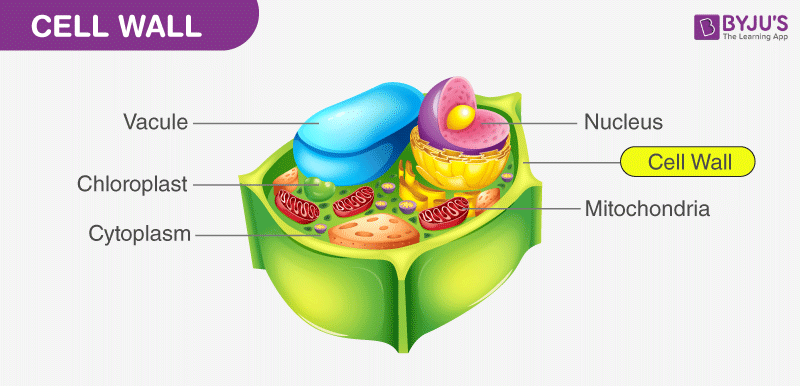
- Cell walls to cells that have them, most notably plant cells. If a cell without a cell wall bumps into something sharp, it can pierce the cell and kill it. Cell walls, however, solve that problem.
- and can be up to 100 times thicker than the cell membrane. This means that the cell wall provides added protection for the cell against environmental dangers. It looks very similar to fiberglass.
- A common misconception is that a cell has either a cell membrane or a cell wall. This is not true. Cell walls are present in cells as an additional layer of protection and support for the cell.
- In bacteria, the cell wall protects the cell from being compromised or attacked.
- For example, if a bacterial cell with a cell wall enters your body, the cell wall makes it more difficult for your immune system to target and harm the bacterial cell. So, the cell wall is good for the bacteria in this situation, but not for you.
- In plants, the cell wall also provides support, which allows the plant to stay upright. Plant cells can stack together similarly to children’s building blocks. (see Hyper/Hypo and Isotonic Solutions).
- In a hypotonic solution, the cell membrane expands, but once the cell membrane reaches the cell wall, it can stretch no further and does not burst. On the other hand, when an animal cell is in a hypotonic solution, it can burst (lyse) because the cell membrane expands too far. This inability to burst when exposed to fresh water is very beneficial to plant cells because plants are constantly exposed to fresh water. This benefit also protects bacterial and fungal cells that have cell walls.
 Edited: 05 October 2022