Chapter 2 - Thinking Like An Economist
1. The Economist As A Scientist
Economist follow the scientific method
Observations help to develop theories
Collect data to analyze & evaluate theories
Historical data + dynamic society
Assumptions make the world easier to understand
Economists use economic models to explain the world around us
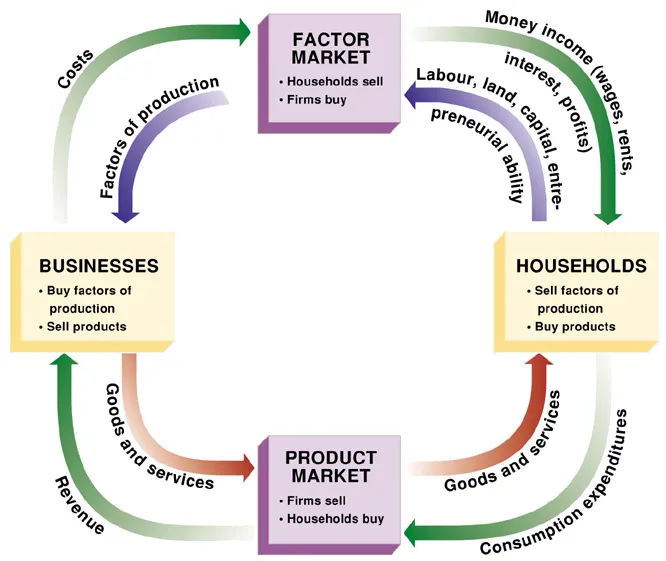
The First Model: The Circular Flow Diagram
Circular Flow Diagram - a visual model of the economy that shows how dollars flow through the markets among households & firms
Factors of Production (FoP/inputs) - land (N), labor (L), + capital (K)
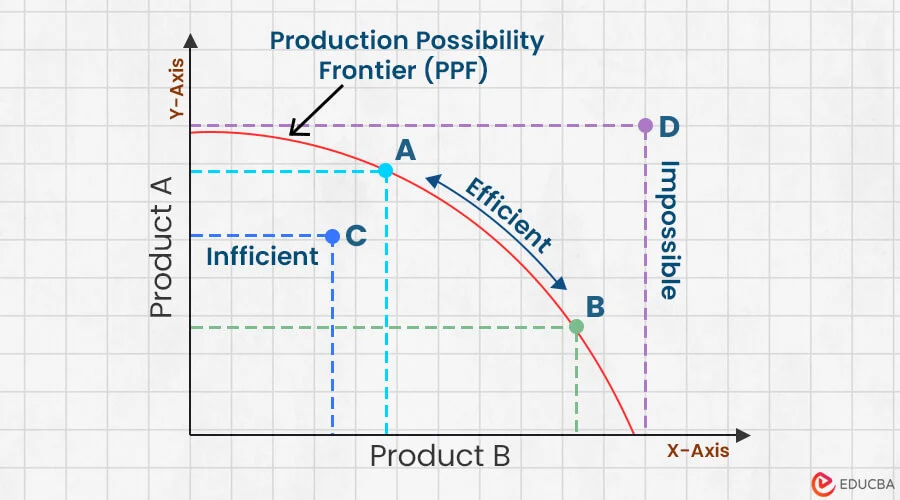
Second Model: The Production Possibilities Frontier (PPF)
PPF - a graph shows the combinations of output that the ceremony can possibly produce given the available factors of production & the available production technology
(represents what the nation could possibly produce)
Microeconomics & Macroeconomics
Microeconomics: the study of how households & firms make decisions & how they interact
Macroeconomics: the study of economy-wide phenomena; inflation, unemployment + economic growth
Phenomena - things we can’t control